

Charles Pakana:
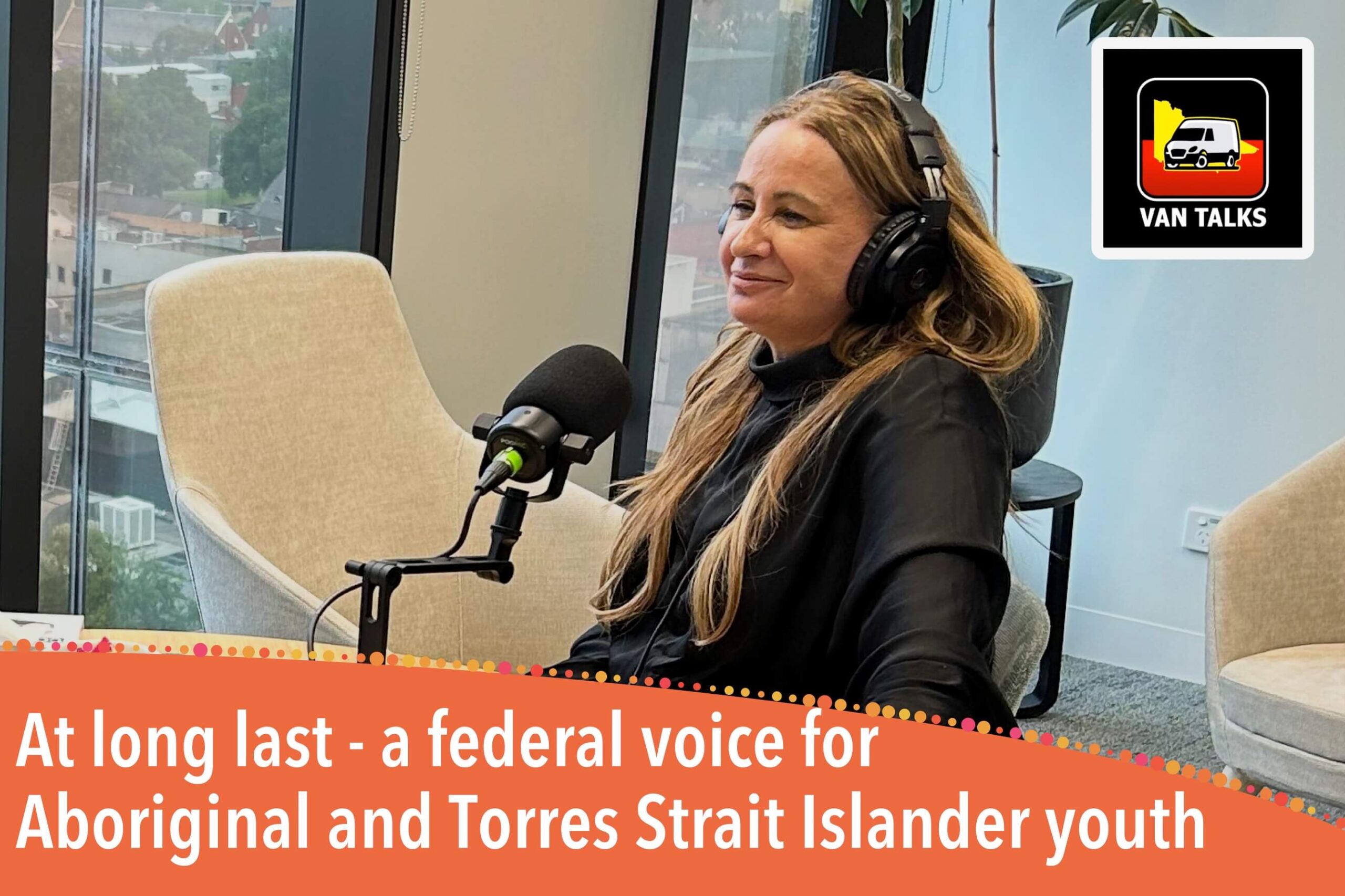
Over the years we’ve interviewed the previous CEO of the Federation of Victorian Traditional Owner Corporations, Paul Paton, a number of times. Paul has moved on to other things and other ventures. In his place is the interim CEO, a proud Koori woman with connections right across. She joins me today on the podcast, Kaley Nicholson. Kaley, thanks so much indeed for joining me.
Kaley Nicholson:
Thanks for having me.
Charles:
Kaley, it was a great opportunity to sit down with you. We’ve done a lot of things over the past several months or almost a year, but always virtually, so a great opportunity to actually sit down and yarn. And with this role on top of everything else you’re doing, you’re doing a lot of stuff with the Traditional Owner Group and the Taungurung. You are on the first People’s Assembly of Victoria as the reserved seat holder for the Taungurung, and now the interim CEO supposedly for a six-month period, but we’ll get into that, of the Federation. Why take that job on?
Kaley:
I guess I’m really passionate about advancing the rights and interests of traditional owners. I’ve been in the space now as the chairperson of Taungurung Land & Waters Council for I think the better part of four years. And in that time, I’ve seen that there are, I guess, collective issues that caused challenges and throw up barriers to advancing the rights of traditional owners. So when Paul made the decision to move on, I had a chat with a couple of people and I said I’d be interested in stepping into the space in the interim, and just providing a steady set of hands to make sure relationships stay on track and to make sure that our priorities are still remaining on the top of the agenda for Aboriginal rights in the state.
Charles:
Kaley, you mentioned just a second ago that there were challenges facing Traditional Owner Group across Victoria and you saw opportunities for the Federation to assist in addressing them. What are some of the challenges and how can the Federation assist?
Kaley:
I think there’s a broad set of challenges. Post-referendum, I think that there’s perhaps a lack of political will in terms of people knowing what should be a priority and having the will and the backbone, I guess, to progress those things. And I’m very proud to be a Victorian and to see the deadly work that we’ve been able to keep wishing for and achieving, but there’s been a lot of negative campaigning around the rights of traditional owners. And so things like the Cultural Heritage Act, economic development taking place across our state, the transition to renewable energies, all of those sorts of things happen across varied and broad landscapes in terms of traditional owner country and the resources, and I guess the environment that they can take place.
And so I think the Federation plays a very unique role in terms of bringing the collective together and being able to engage with the right kinds of expertise to put forward really sensible policy positions that create a floor, I guess, rather than a ceiling. That’s the aim in all things policy development from the Federation’s point of view, to create a floor that traditional owner groups can build on and to make sure that if you’ve got a wrap status or not, that the policy environment, the legislative environment is going to be right where traditional owners can be a part of emerging economies to make sure that we are not left on the back burner as new economies emerge. But that also we are able to capitalize on those economies, but also to be playing a role in caring for country and guiding the shaping of those economies and those kinds of developments on our lands. And so, again, this is a space that I think only the Federation has the positioning and the political landscape. And secondly, the knowledge and know-how to be able to drive and really push strongly forward.
Charles:
It could be argued that already a lot of the traditional owners are seeing a great deal of success in those areas. Your own mob, the Taungurung, have been doing great work. We are looking at Djaara up in the Bendigo area have been doing amazing work. The Gunaikurnai Land and Waters Aboriginal Council, GLaWAC. Of course, Gunditjmara have been doing great work even when it comes to renewable energy. So a lot of these things are being done already, but are you seeing that this is the Federation at least is a way to bring those successes up to the government level, the state government level?
Kaley:
Yeah, exactly. I think it’s really deadly when we see traditional owner corporations leading the way. We contribute massively to the local economies and that’s really deadly. But what about areas where there isn’t a registered Aboriginal party or a TOC in place? I’m a Barapa Barapa Wamba Wemba person as well. I grew up in Kerang and Swan Hill. And up until very recently, Wamba Wemba didn’t have representation in that area and there was solar farms and things like that being set up and established. And same thing on Barapa Barapa Country. We still don’t have a registered Aboriginal party and the local community are working really hard to establish that collective decision making and those really important mechanisms for cultural governance.
But in the interim, developments are still taking place on those countries, and so we want to be able to capitalize on what the really strong traditional owner corporations are doing to get behind them and blow more wind in their sails, and to strengthen any position to work strategically across the entire landscape to make sure that whatever is developed and put in place serves the needs of the entire traditional owner landscape of the state as well, not just those that already have representation.
Charles:
You’re touching on the point of actually facilitating the sharing of cultural knowledge as well, and knowledge fought for and hard gained. And I just want to go back to the Dja Dja Wurrung under Rodney Carter. There was so many amazing initiatives being made there with forest gardening strategy and so much other, especially to do with the environment. Do you see that the Federation under your leadership for the next… Well, let’s assume it’s going to be longer than six months, but do you see that the Federation actually can facilitate sharing and crosspollination, if you will, of these ideas initiatives right across the traditional owner corporation group across Victoria?
Kaley:
Yeah, absolutely, and I think not only can we, but it’s a vital piece of the puzzle of the work that the Federation does. So, our chairperson, Cassandra Lewis is our Djaara woman, and we’ve got representation on our board from across the various traditional owner groups right across the state, and we have a CEO forum, the Secretariat for the TOC, which is a Traditional Owner Corporation caucus. So we constantly in these deadly culturally led communal spaces where we’re having these conversations, we’re ensuring that knowledge share is there, and what we want to do is be able to leverage those conversation and spaces to put together shared positioning, which when people are coming together and they’re sharing those ideas, it’s sort of down to an individual corporation about what kind of information they might tap into or what they might think is important to them.
And there definitely needs to be a space for that, but there also needs to be a space and a role for a group to bring those collective positions together to put a lasso around all those deadly yarns and just bring it all into one space and give the traditional owner corporations and the unrecognized groups, and give everybody a shared toolkit that we can all whip out and utilize as we need.
Charles:
It does bring up the challenge of membership of the Federation. Over the years, let’s say the past 10 years, there has been a bit of a decline in membership to the point where it’s less than I believe, 50% membership of the traditional owner corporations that are formally recognized across the state. What are some of the initiatives that you believe need to be brought into place in order to get that membership back up to hopefully and aspirationally 100% of all formally recognized Traditional Owner Corporations?
Kaley:
I think it’s an important question and one that I’ve really been grappling with since coming into the space since my appointment, I’ve received a very clear directive from the board about the need to be a lot more accessible and have a lot more interface with the Traditional Owner Corporations, and it’s been a huge priority of mine to spend some time out on country with the various traditional owner groups if they’re a member or not. It’s important for us to build those relationships, establish trust, and help people to understand what is it actually that the Federation can do, and how will they do that? And then to trust us to engage with us and to be a part of that collective decision making.
Now, we might not have everybody as a member, but that doesn’t mean that we don’t have all of these touch points where we spend time listening to Traditional Owner Corporations, traditional owner groups across the state, and we get their input and we get their guidance around decision making and collective positions.
Charles:
So you are working with all the traditional owner groups?
Kaley:
Absolutely, yeah. That is a core part of our mandate and something that I think has to be a vital part of what we do because even if we had 100% of the membership of all the TOCs, that doesn’t cover 100% of the state. And so to my mind, we need to be able to have our resources be accessible to the broader traditional owner community and to be able to advocate for them and to support them in their aspirations, in their expectations, wherever they might be.
Charles:
That does bring up the point then you’ve pretty well touched on it a couple of times, but those areas of the state which have no formal government recognized or authorized Traditional Owner Corporation, how do you see the role of the Federation is in working with those communities and elevating them up to the point where they do have that recognition?
Kaley:
I think first and foremost, I’m a community person, and so I make sure that I’m operating from those cultural protocols. I want to be accessible, I want to make sure people know that this isn’t a hierarchy in terms of our operating environment. If you’ve got an issue, ring me, have a yarn with me, I’ll come and make time, and me and my team will come and see you and we’ll spend time listening to you about what it is that’s affecting you locally, and we’ll share information. Often, you don’t know what you don’t know, so if you have a yarn with someone and they feel like, “Oh, everything’s crap. We are having all these challenges,” and we’re a part of that conversation, we can say, “Actually, this mob also went through this and this is how they navigated it. This is what’s been done in this space already. Here’s some support. Here’s a strategy that we already developed as a collective position. Take what you want out of that.”
So it’s those policy positions, it’s the political advocacy, it’s the resource sharing, and then it’s also some of the admin things as well that when an organization is small and just getting off the ground, they might need that little bit of extra assistance with, and all those sorts of things are a big part of what we want to do and what we already do for traditional owner groups.
Charles:
Political lobbying, you mentioned that just then. Obviously, you’ve got a degree of experience in lobbying with the existing state government. November 2026, no one knows what’s going to be happening then. So I would assume that you are – looking at you questioningly – working also with other political parties in Victoria. How does that play out?
Kaley:
Again, our view is I guess one to be a little bit apolitical. We will work with any government of the day to drive and advance the rights and interests of traditional owners across the state. And so that should go without saying that that would happen regardless of who’s in and who’s out. We’ve been able to achieve some really deadly rights under the labor government, under the various premiers that have led the labor government, and we’ll continue to work with the Labor government to provide support and advice and guidance and push really hard [inaudible 00:11:26].
Charles:
Do they listen to you though? Do they actually listen to you or do the Federation, I should say?
Kaley:
Yeah, I wouldn’t say we’re living a perfect world. I can be diplomatic. I think that in a perfect world, we’d just tell government what we need and it would get done.
Charles:
Yeah, never going to happen.
Kaley:
Yeah, that’s it. And we live in reality where there’s all sorts of competing interests and rights and lobbyists and all different sorts of things. And so the government of the day, whoever they are, are going to have to balance all of those sorts of things. So our priority in all of our advocacy is around putting forward the best, strongest case possible for change or for locking in or for preserving existing rights and building on those things. So if it’s a more conservative government, we might talk more about things that align with their ideology and the things that they think are important. They’re not necessarily at odds with what traditional owners want to do or the things that we need to be able to have in place to lock in and advance those rights.
And if it’s a more progressive government, we might talk about other things, but again, it’s a little bit of horses for courses. Every person you talk to is going to have their own interests and priorities-
Charles:
Biases.
Kaley:
And all of those sorts of things.
Charles:
Yeah.
Kaley:
So yeah, our messaging always needs to be honed and shaped to be able to have cut through with the various groups to understand that advancing the rights and interests of traditional owners and seeing economic development and ensuring caring for country, helping them to understand that that doesn’t come at your expense. Actually, it makes this state a much, much better and deadlier and safer and prosperous place for all Victorians, not just for traditional owner groups. So you’re not losing if traditional owners are winning, we all win. And that’s part of the messaging that we really want to drive home.
Charles:
It is important, I think to point out at this stage that you mentioned before that in a lot of areas, Traditional Owner Corporations are some of the biggest employees in the regions. And just for our listeners, that’s just not for Aboriginal people because you walk into any of these places such as Djaara or GLaWAC, and you see non-Aboriginal people being employed there. It’s just employers right across the spectrum.
Kaley, what about prioritizing the agenda, the topics that you want to touch on? Before we actually started recording today, I mentioned to you my interest in the current bail laws and the changes happening there, and your response was that’s best left up to Victorian Aboriginal legal service. And I’m sure Nerita agrees with you on that one, but how do you actually prioritize and determine what are the key messages and causes that you want to champion?
Kaley:
Well, I definitely think Sistergirl Nerita would agree with that one, and I think she’ll be happy to see that we’re staying in our lane, but what is our lane? You’re right. How do we figure those things out? When we talk about traditional owner rights, I feel very lucky that it’s not from this, which often happens when people talk about Aboriginal people and issues and culture. It is always from this deficit perspective.
Now, the Traditional Owner Corporation space is one from land rights, cultural knowledge, cultural rights, communal decision making, all of those really deadly things that come from thousands and thousands and thousands of years of cultural governance. And it is this exciting, positive, deadly space to be in, and one that I feel really passionate about helping the broader community to understand more about. We have, for millennia had, international relations, international trade. If you think about the various nations that make up this continent that we now know as Australia, we had economies, we had all sorts of deadly things that we grew and capitalized on through our care for and relationship with country in place. And so the work that we do is about re-establishing that economic base through the care for country, through our inherent rights as traditional owners.
And so if I talk about what’s on our agenda, it’s things like the economic development roadmap, which looks at increasing productivity through unlocking new economies in Aboriginal Victoria. We are hearing government talking about productivity across the board here, and often Aboriginal community is not necessarily something that’s part of that conversation. And absolutely, we should be a part of that conversation. We are innovative, we’re deadly. My Auntie Esther used to always say, “That’s a bit of blackfella ingenuity right there.” And if we’re not in this positive space that’s creating and doing all these deadly things, people don’t get to learn about our blackfella ingenuity. So I really want to be able to highlight and talk about those deadly innovations that we’ve been able to achieve.
We’ve got the TONFABS, Traditional Owner Native Food and Botanicals Strategy. We’ve got the Cultural Fire Strategy. We’re working with government at the moment, really pushing hard on ensuring traditional owner rights in the critical mineral space with the development of new mining industries across the state.
Charles:
This brings up a point and that is there going to potentially be a bit of a blurring of the lines between Assembly 3.0 and the Federation? Because obviously the bill that’s being developed now to take to Parliament to bring about the statewide treaty is for an independent assembly, an assembly that actually advocates to government for possibly some of the things about which you’ve just been talking. Is there a potential conflict? And if there is, is this one of the reasons why you as a member of the assembly have been brought in to be the… Oh, you’re smiling. To be the CEO of the Federation?
Kaley:
Look, I don’t think it’s necessarily a deliberate course of action if that’s what you’re asking. What I will say though is you can’t take off one hat and forget everything and put on another hat-
Charles:
Yeah. Of course.
Kaley:
… forget everything that you were just talking about. There is I guess a bit of a blur in me being in this space, but it’s all aligned.
Charles:
Not for you personally. I’m talking about for the organizations.
Kaley:
No, I’m going that way. Don’t worry.
Charles:
Okay. All right.
Kaley:
So within that, I think that it’s all aligned. So, again, this is the conversation we’re trying to reassure the broader community about in that you don’t lose anything if we win. You don’t lose anything if we grow our rights. And the same thing needs to be kept in mind for Aboriginal community. If the assembly gets bigger and stronger and they have levers for accountability and all of those sorts of things, that doesn’t mean that the broader community is weaker. What it means is that we need to get a lot more coordinated and we need to be a lot more strategic. So I am pushing really hard to make sure that when the assembly is stood up, the federation is there and ready and we’ve got a bunch of deadly runs on the board, that the assembly can be like, “Oh yeah, they’re no-brainers, let’s lock those in.” And that’s part of that accountability that’s embedded into that role. And so again, it’s not to say one or the other is better or more important or stronger, it’s about understanding the role that we all play in advancing the rights of the collective.
Charles:
How long have you had this role for?
Kaley:
About a month and a half.
Charles:
Okay, so four and a half months to go?
Kaley:
Yes, definitely.
Charles:
Goals?
Kaley:
Goals. I touched on it earlier. I’m a community person, so I really want people to know me and know my family and know my values and what I care about. And so it’s really important to me to get that face time with all the different traditional owner groups. So my travel is… It’s a small state when you compare it to the rest of the country, but if you are the one driving those Ks, I’ll tell you what, they-
Charles:
They add up, don’t they?
Kaley:
… they feel long, but it’s deadly and it’s worthwhile. So for me it’s about getting in front of the community first and foremost. And then secondly, it’s, “All right, what are our strategic priorities? What do we need to do to get those on government agenda? What do we need to do to push for those things and to get some runs on the board?” And then the last part is going to be around, “Well, what’s the shape of our organization looking like? How are we best placed to do this work? Is our strategy right?” There’s a bit of work that I need to do to understand our strategy and to make sure that aligns with the aspirations of everyone else.
Charles:
This sounds more than someone’s going to really be doing in four and a half months. It seems like the seat in which you are sitting right now is very comfortable for you. Do you have any goals beyond the six month, four and a half months from now?
Kaley:
I think it’s an interesting question. One I wasn’t expecting. I think it’s comfortable for a lot of reasons. This is my bread and butter. I did politics and policy, I did business in my undergrad and post-grad, so these are the kinds of things that I just love and I really get a lot of energy from. Plus, I’ve been the chairperson of Taungurung Land and Waters Council for a few years now, and these challenges that we’ve been having as an individual organization, once you move into a role like the Federation and you are part of the conversation to see just how much those shared challenges really throw up issues for traditional owner corporations, it really just lights a fire in me to want to do something about it. And so-
Charles:
You’re not really answering the question and I’m not going to push you. I’ll leave it as that in four and a half months time, whether on your way out or you’re dusting off the seat to stay there a bit further, we’ll catch up again and talk more about the future for Kaley Nicholson.
Kaley:
And that sounds deadly.
Charles:
Kaley, thanks indeed for joining me today.
Kaley:
Thank you.

0 Comments