

Charles Pakana (VAN)
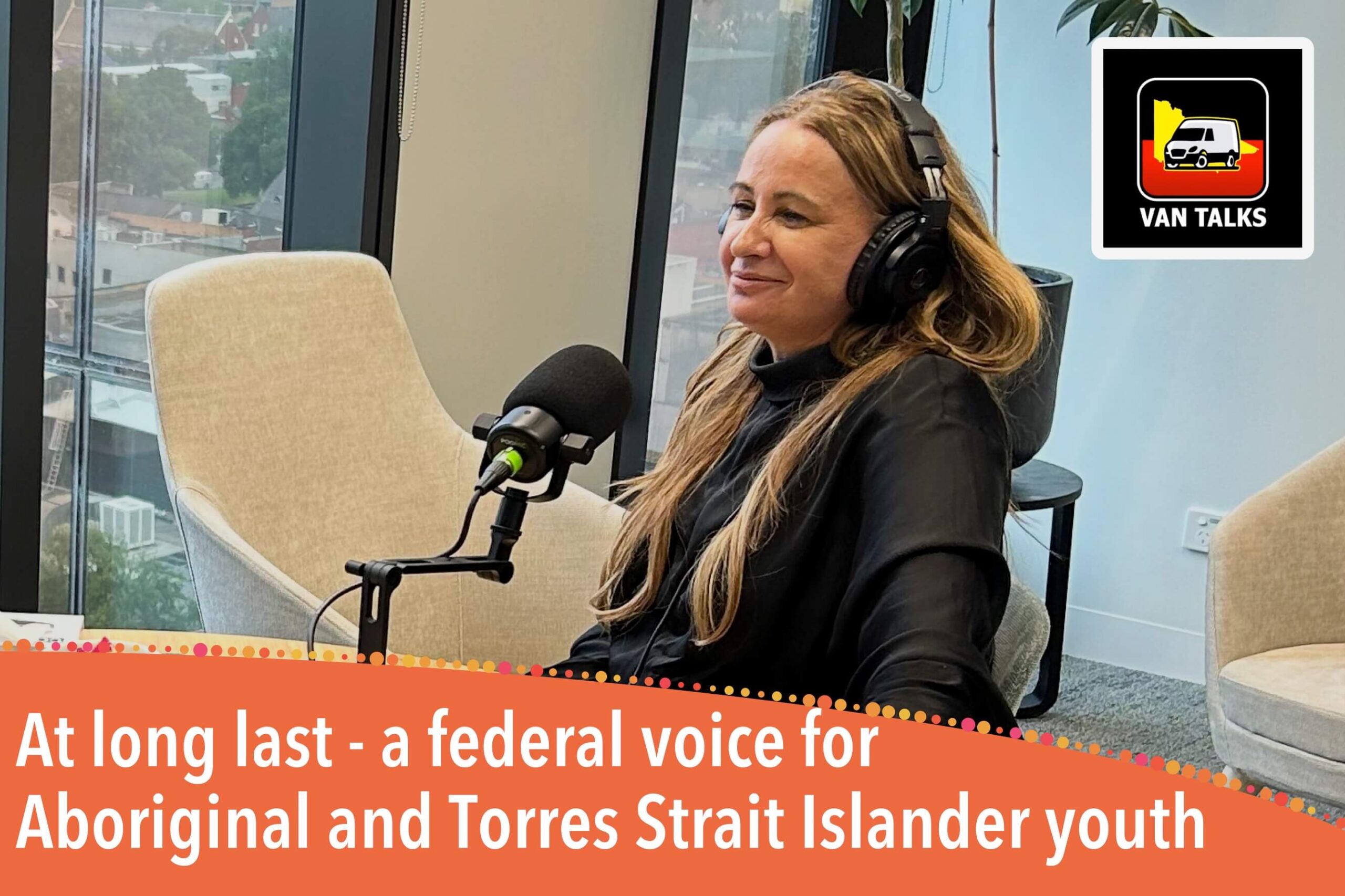
As Victoria continues its journey into the age of modern treaty, there will undoubtedly be a growing call for young Aboriginal and Torres Strait Islander people with specific skill sets that can assist First Nations communities achieve, at long last, equity. Playing a key role in all this are Aboriginal educators and critical support teams in our tertiary education institutions. Joining me today on the program to dive into this is Bundjalung woman, Talia Elliott, who works as the Senior Advisor, Indigenous Access and Engagement at RMIT Melbourne. Talia, welcome to the program.
Talia Elliott:
Thank you very much for having me.
Charles:
Talia, you work here at the Ngarara Willim Center at RMIT. Before we get into explaining exactly what that does and its role in assisting First Nations students, can you just outline some of the key challenges historically that have been facing First Nations students who’ve been wanting to enter tertiary education but have been held back by one way or the other?
Talia:
Yes. Historically, Aboriginal and Torres Strait Islander people have faced numerous challenges. It starts really back in the schooling education system, I think. Thinking about education opportunities for future, a lot of people go into school and are told to drop out, to not continue with their studies. Their aspirations are usually kept quite low. People around them looking to see what role models they have, people in connections in industry, that can be a huge challenge. So, a lot of people leave the schooling system feeling like there’s not a place for them in higher education or tertiary education.
And that’s a big part of the work that we do is building up those aspirations so that they can start to even think about those opportunities. We also work with students who are coming from regional areas. So, there is a big disconnect between living somewhere in a regional or rural location needing to come to a metro-based location and study. It can be a very weird, alien type of environment. Universities are obviously a very colonial construct. It can be very bizarre to come into this type of system and try and succeed. So, those are some big ones.
Not to mention it takes money to move to study. It really is a big luxury that people have to be able to do full-time study. A lot of people have to go into work to support themselves, their families, so financial stress is a huge one as well, that we work with a lot of people, a lot of individuals. Particularly 9 out of 10 of our learners here are people that are non-school leavers, so they’re probably supporting themselves, family members, children. It can be hard to change that and jump into full-time study.
Charles:
So, how does Ngarara Willim set about to assist students achieve these ambitions that they were so often told, just forget about?
Talia:
It starts really with the aspirational side of things. Like I mentioned, working in outreach teams with people who go out to schools, working with our staff who will engage with schools, teachers, community members to talk about those aspirations, to bring them onto campus to make sure it’s not such a strange environment, to get them to experience what it’s like, to see what skills they could develop and how that leads into an area of study and a career one day. Those are the areas that we like to start with.
And then for other people, it’s looking at very practical basic things, like scholarships, making sure that we have the ability to support accommodation, scholarships for those people that are coming from regional or rural or interstate locations, making sure that we have a space set up for them that is really supportive, that has those wraparound services, whether it’s for their learning services support that they need, whether it’s cultural activities and connection with other people, things as simple as a weekly lunch every week to get together and feel like it’s a second home.
Those are the sorts of things that we like to do to support students. And then making sure that we have within our team, people who can really support each of those areas holistically, whether it’s an indigenous counselor, career support, chatting about afterwards, “Do you want to do more study?” Those kinds of things.
Charles:
What about role models though? Because one of the things that has kept a lot of First Nation students from pursuing a tertiary education career has been the lack of role models, the teachers that they would like to see, and also others who’ve pursued successfully a tertiary degree. How do you address those particular challenges?
Talia:
With those challenges? We love to look back to our own community. People who’ve come through the studies here at RMIT in Ngarara Willim and have gone to the other side who’ve achieved success.
Charles:
The other side, that sounds a bit ominous.
Talia:
The other side, it is. It can feel like the other side of the moon. It can feel like a huge journey that it takes.
Charles:
So, those who have graduated you mean?
Talia:
Yes.
Charles:
Got you.
Talia:
That’s right. So, alumni, we call them our Deadly Alumni. So, working with either current students as mentors that come out with us and chat about what they’re doing and how they got into what they’re studying is a great way for people to be inspired. And then alumni coming back and being able to talk about those opportunities. Often when they share their journeys, their journeys aren’t a smooth journey. They’ve encountered a lot of hurdles and a lot of setbacks, and that can be really inspiring because people can know that they can have challenges while encountering study, but that doesn’t mean that they can’t complete it.
It’s all part of that. And sharing stories is such a big part of our culture as well. So, where people can have those yarns, share those stories, share that information, I think that really helps people to be able to grab on and hear those stories and those journeys and really aspire to do similar things.
Charles:
Now, I know the program’s been going, and I’m going to take your thunder here for 29 years. So, 30 years next year, and we’re hoping for something really big to celebrate that. But we’ll talk about that maybe in 2026. What are some of the challenges that are facing the program because even though it’s been going for nearly three decades, you can’t honestly expect me to believe that it’s just been going smooth sailing the entire time.
Talia:
That’s right. There’s always challenges. I think we definitely saw from 2019, 2020 onwards challenges with a lot of our learners encountering social well-being, mental health challenges, particularly now in this post-COVID world, a lot of challenges were brought up there with people managing their mental health and well-being. And that’s become a big part of how we work with students now, making sure that we keep these spaces really safe for them, that they have opportunities to engage with help and support when they need it.
And I mean, in general, funding is always going to be a big part of any program when it’s working with Aboriginal and Torres Strait Islander communities, the risk of funding being cut or changed, what that looks like, how we can keep scholarships, services and support going despite funding changes, making sure that we really advocate and fight for that funding to make sure that we can continue to offer those opportunities and those supports to the indigenous community and students here is a big part. So, those challenges will always be ones that we face and making sure that we stay relevant to what community needs as well as a big thing.
Charles:
So, how do you stay relevant? You’ve got to go out there and be looking at what’s happening because obviously in recent years we’ve had the COVID lockdowns and we’ve had the referendum and now we’re, as I mentioned at the intro into the program, we’re in the modern treaty age. Do all these things factor into how you deliver the programs and support here?
Talia:
Yes. It’s a big thing in making sure we understand what community needs and wants. What are the skills that community are needing to do their jobs, to do their roles, what skills do community need to really empower and support themselves, and then how can we take those needs back to places like these learning institutions to say, “These are the programs that we need to deliver.” So, working with treaty in mind, thinking about what are the programs that we can establish that are community-led programs, that are MOB only programs so that they have a safe learning environment? Teachers are being brought in that are really culturally aware or MOB themselves is a really important one as well.
In these safe learning environments, you can really support cohorts of people coming through from different organizations or ACOS and making sure that these people are getting constantly skilled up to work with community is a big thing, and listening to those needs and then taking that back to bigger people who are making decisions to say, “This is what you need to provide.”
Charles:
When I was out here recently having a yarn with some of the staff for an outside broadcast we did for a radio station, I was really impressed when I spoke to one of the team members who were saying that they’re simply spending the majority of their time out on the road, going out to schools, working with students, even in primary school, for goodness’ sake, to build up these aspirations. How important is that in the long-term goals of the center here and other centers, which I know operate across Victoria? How important are these to the ongoing well-being of First Nations students?
Talia:
Yes. Working with the younger generations is hugely important. I think if you look at it from a purely university recruitment, they’re always looking at those later years because they’re so close to graduating, choosing which institutions they’ll go to. But thinking for us from a community-minded perspective, thinking back to people in these young years, it is such an influential time of their lives. This is when they’re deciding things like, “What do I want to do when I grow up? Who can I be? What aspirations do I have?” So, that’s hugely important. Making sure that they can make those decisions so that they don’t get to high school.
They’ve already made decisions about subjects or certain things that are going to remove them from certain opportunities because of decisions they’ve made. Then without having known all the information and supporting those years early on is really important in building those aspirations.
Charles:
How difficult is it for some of the staff when they get out there or the team members, I should say, when they get out there to communities? Because all communities right across Victoria, the First Nations communities have got some degree of transgenerational trauma. How much, I suppose pushback do some of the team members get when they’re out there yarning with students?
Talia:
Yeah. It can be a difficult one to navigate, particularly working with people that are often working with indigenous students in schools may be doing it as part of a role. They may be doing it as part of an extra burden on their role. So, even finding the opportunity to connect with those students can be difficult from the start. I know a lot of people working in those school systems are trying to focus solely on getting those students to school, and so engaging with extra programs or activities can be an additional pressure put on them that doesn’t necessarily always translate into we turn up and they’re ready to hear what we’re sharing.
So, a big part I think is also looking at what’s already happening in the community, what’s already been arranged in terms of community events or programs and how can we bring ourselves to those different events to be a part of them and support and be there as educational institutions to offer those opportunities for them to hear about. I think rather than trying to duplicate work where we can join in community events or programs already happening is a big one because we know that community will already be coming and getting involved.
And even just hearing about opportunities, they may not be ready to engage with us yet, but I think becoming more familiar with that idea and seeing us there, and that’s a really great part of just even connecting and getting them familiar with us.
Charles:
You mentioned at the beginning of the interview that a large cohort of the current students were, I’m going to paraphrase, mature-age students, those that already pursued their secondary education degree but now might be supporting a family supporting themselves with a job. What percentage of your First Nations students are in that category, those who are not just coming through from matriculation?
Talia:
Yes. So, 9 out of 10 of our learners are non-school leavers. So, we have roughly around 300 students that are part of our cohort overall. So, around 90% of those will be non-school leavers. Particularly working in the space of vocational education, we see a lot of learners who are working while wanting to study at the same time to upskill themselves or potentially make a career change and get further studies under their belt to be able to have better employment opportunities, to be able to support themselves into higher paid roles or different opportunities and experiences.
So, we often need to be able to find ways to work with them, either offering part-time opportunities, delivering community-led programs where they can study after hours. So, it’s really important to be mindful of that and to try and create those opportunities for programs that are going to meet the needs of community.
Charles:
Now, I realize you haven’t been here the entire 29 years of Ngarara Willim’s existence, but going back on data and experiences that you’ve heard from other people, what impact is this having on the communities, but more importantly, what impact is it having on the increase in the number of students enrolling?
Talia:
Yeah. We’re definitely seeing more interest from current workers in ACOS or community-led organizations that see further education as an opportunity to upskill themselves. So, you’re seeing them as well as their children and their families be aware of those educational opportunities. And I think even with the degrees that we see a lot of people applying for, there are degrees which perhaps 10 years ago, I don’t think indigenous people would’ve thought about applying for certain things like cyber security or aerospace engineering.
But there are people applying for that now because they’ve either heard someone talk about it or they’ve seen something or been able to come and experience something on campus where they’ve learned more about it. So, even seeing more representation in those underrepresented industries that we need to see more indigenous people becoming those role models for the next generation. I think it’s really cool to see more people applying for those degrees that people didn’t even think about 10 years ago.
Charles:
What about in those degrees where typically first nation students have not applied? Now, you’ve mentioned some of the more, well, out there aeronautical engineering and those sorts of things, but what about things such as those with a political bent or legal, are we seeing an increase or potential increase in the enrolments in those areas?
Talia:
Yes. I think legal studies, bachelor of law, criminology, psychology, those areas definitely has a big interest and hearing from the individuals applying for those, it’s usually because they’ve seen things happen to community, family members, and they’re inspired to be able to go work in those industries themselves to see better representation of Aboriginal and Torres Strait Islanders who are helping community and able to support them.
They often are doing it out of a place of they’ve seen injustices, they’ve seen things happen where they want to be able to work in that space now and create a change. Teaching as well is a big area, wanting to be the teachers who can go into the classroom environments and inspire and be a supportive place for indigenous students rather than potentially the experiences they had when they were at school.
Charles:
Let me throw you a bit of a curveball. What would you say to those critics within community who may well say, “Well, why are these First Nations students getting something that isn’t being offered to every student that has enrolled at RMIT?”
Talia:
I think looking at what Aboriginal and Torres Strait Islander communities have had to navigate in terms of the setbacks, the historical injustices, I will say that their communities have had to experience being able to be supported. And we’ve seen that indigenous learners do need more support to be successful, I think is a huge part. And I think if we can see them going into community in roles that are supporting our community members, that’s only going to make society and community better.
So, I think in terms of supporting them in their educational aspirations, no one’s receiving free cars here. That’s a myth, which we can definitely rule out. But I think receiving scholarships towards living expenses, study expenses, those are things which we just know that historically indigenous learners are going to need more support in those areas because they’re often coming up against larger barriers than other people.
Charles:
It’s about achieving equity.
Talia:
Exactly. And a lot of the time these learners want to study these areas to then go back and give back to community. So, I think their aspirations are helping community and society overall. So, why wouldn’t you want to support that?
Charles:
While we’re on a roll with what would you say, sort of questions, we’ll now make it a little bit easier for you, I hope. And that is, what would you say to schools that are looking to encourage their students, their First Nations students to post-matriculation, go on and pursue tertiary studies?
Talia:
I think thinking about those things within the school program overall and looking at how you can tie in those experiences for students as part of the core learning, it’s not just an added extra. I think really embedding those experiences or workshops from educational institutions to come out and talk about those opportunities, making sure that there are pathways, discussions about further education or employment after school and making sure that they’re really supported and I think making it a priority as well.
I know that there’s lots of other things that can compete for priorities within the system, but making sure that they get those opportunities to be involved in those types of experiences will really open up the door for them to be able to decide then if that’s something they want to engage in and they’ve had the opportunity to be exposed to it and then make that decision. It may be for them, it may not be for them, but that’s where it’s important that they’re given the choice to determine what they want for their future lives rather than just not having that opportunity or experience offered to them.
Charles:
Now, if a school out there anywhere across Victoria wants to have someone from RMIT come in and yarn with their students about potential tertiary careers, what do they do? They simply reach out and grab you and say, “Look, come on out.” What’s the process?
Talia:
Yes. Definitely. We would love to hear from them. So, they can Google Ngarara Willim or RMIT Indigenous, and our webpage should pop up. They can reach out. Our outreach coordinator would love to come to their campus and visit. We work with the colleges here at the university to deliver workshops on campus at the schools as well, so we can come out and run a workshop, a STEM workshop or a business workshop or anything like that, or we can just come and have a yarn and talk about what’s possible, the supports we provide, and then go from there.
Charles:
The options are there. Talia, thanks so much indeed for your time.
Talia:
Thank you so much.

0 Comments