

Charles Pakana (Victorian Aboriginal News):
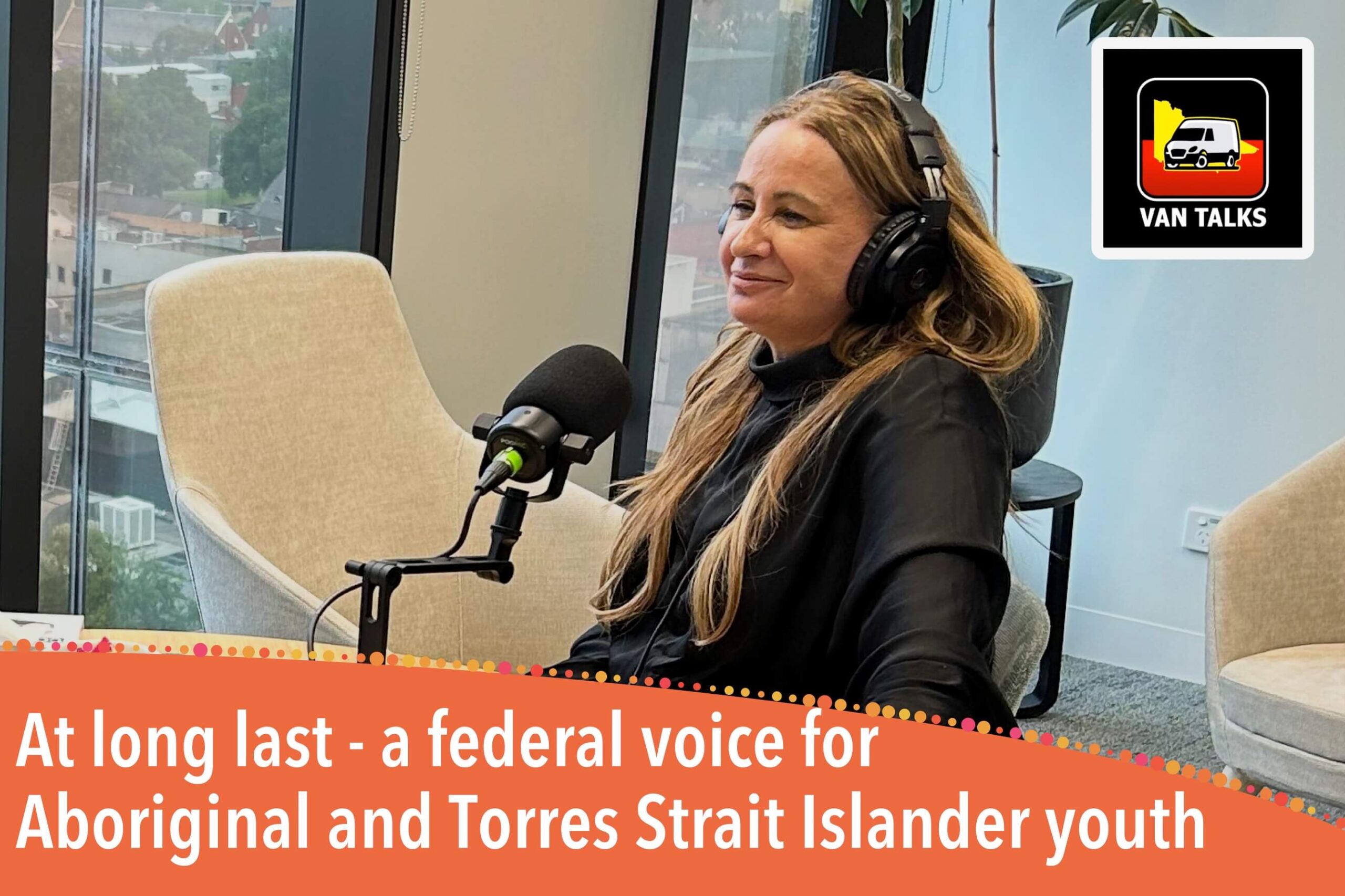
With Victorian Treaty legislation now tabled in the Victorian Parliament, advocates and supporters are keen to ensure the state’s elected politicians hear the message that treaty is broadly supported. Joining me on the program today is Larissa Baldwin Roberts, a Widjabul Wia-bul woman and co-founder of Common Threads, a First Nations led and focused advocacy group. Larissa, thanks for speaking with me today.
Larissa Baldwin-Roberts (Common Threads):
Thanks for having me.
Charles:
Larissa, you’ve joined with two other very strong First Nations activists, Jackie Huggins and Millie Telford in founding Common Threads. Before we get to the treaty work that your team is championing, just what’s the foundation of the organization?
Larissa:
Common Threads is a First Nations campaigning capacity-building organization, and then also we help resource activism and campaigning communication work across the country at a grassroots level. We focus around rights country and people and also helping in a lot of First Nations teams that are in NGOs and that sort of stuff around how we put our best foot forward around persuasion, legislation change, all these types of things. The fightback for justice more generally because persuasion and campaigning for First Nations people is very different on any other issue. You have to persuade these country over and over again. And if you move into deficit, you can also do the opposition’s work for us.
But Common Threads, it’s been around for about seven years in different forms. So, originally, it was about ten First Nations campaigners, organizers from across the country who were just in NGOs and trying to help build the capacity of the next generation of campaigners that were at a grassroots level. So, doing trainings, getting people involved in research, understanding. I think my grandparents and that sort of stuff really did a lot of campaigning, but they weren’t paid campaigners. And so, for a lot of mobbers, how did you get that job and how do you work in this space professionally and what does it look like?
So, we offered different trainings and heaps of people would apply from them right around the country from inner city to remote communities. And so, there was just a huge uptake, but Common Threads really formalized as an organization. Originally, we went from that and then we scaled up to doing national summits.
Charles:
A lot of that was environmental, wasn’t it?
Larissa:
Yeah, so big focus on frontline fightbacks around climate change and particularly gas and coal. It’s probably six big front lines around gas extraction around the country. And there is big community activism on all of them.
Charles:
This is fracking you’re talking about?
Larissa:
Around fracking, yeah, particularly in the issue with water and stuff like that as well, where the environmental regulation isn’t there either and the heritage protection isn’t there either. So, there were massive campaigns and then a lot of work on climate and working out how we reframe that and put First Nations people at the table. We talked about protecting country versus Western frames of climate change and that sort of thing, talking about what it is because a lot of mob are doing the work around adaptation of climate change, but I don’t see it as climate action, but it’s really important to see it through that lens because a lot of the stuff that we’re doing is working really well.
Charles:
I’ll just jump in there because what I find is really fascinating. See, based on what you’ve said just now, I wouldn’t be surprised if the audience is thinking, right, all these angry Aboriginal and Torres Strait Islander people working together. But what really impressed me when I went to the first Common Threads event for treaty a couple of weeks ago at Footscray, I believe it was, there were very few First Nations people. There were what, about 150 people there I believe, something like that. It was a hell of a lot of people regardless, this is all about treaty, but they were all allies and collaborators. So, is that a renewed focus or is that something that you’ve been pushing all these years?
Larissa:
We have built it out through all the years, but I think coming out particularly in the lead up to the referendum campaign, there was a really big gap in how people could talk about us. And the language around referendum was incredibly challenging. It was a lot of legal stuff. It was a terrible campaign to try and explain to people. And so, we did a lot of training and supporting people. We trained thousands of people during the referendum and I think there was one part of like, yes, we can just train mob and help build movements, but also we are trusted in a space of bringing lots of allies in and people want to campaign for First Nations justice. They don’t want to get it wrong.
So, instead of getting it wrong, not that they’d rather do nothing, but they’re like demobilizes them.
Charles:
They run scared a lot of times, let’s be frank, right?
Larissa:
That’s true, that’s true. Yeah. And so, I think when you have First Nations leadership of campaigns, you bring in a lot of allies. And in a campaign like treaty, I would say the movement for treaties or what it’s going to take to get treaties right across the country, it’s going to take the better part of a decade. You need a movement and we see ourselves as movement builders. So, yeah, we’ve moved into doing a lot more ally events and then we have still big First Nations events and that sort of stuff as well.
But part of that is also helping community at a local level or even mob right across Victoria to help build the movements where they are as well, because there’s a lot of work not just to do the work of negotiating when we can talk about that around treaty or whatever issue it is, but also to have the people that need to stand with you. Because the reality is, is a lot of the things that we are working on require legislative change. And I think we’ve seen the vote in the referendum, which is 6.5 million people said yes.
Charles:
Yeah, exactly.
Larissa:
That’s really a vote for First Nations justice, so how do we galvanize that vote? So, we’ve been thinking about that really.
Charles:
Okay, well that does bring up something you said legislative change, and there’s no doubt that’s what’s happening with treaty yet. Surely, you’ve seen the various media releases out there and the headlines which say, “We voted against this in 2023.” How do you as an organization actually work with your collaborators to word them up and get them trained in explaining to other people this is not something that the country’s going to vote on, we simply need the support to pressure the local politicians around the state?
Larissa:
Yeah. And it’s tricky, right? I feel like sometimes First Nations people are the only people that have to campaign for something more than once. You win it-
Charles:
Been there a few times.
Larissa:
… the government gets nervous, it’s over and over again. It’s like it sucks, but also it’s the work that we have to do to get things done that really gets some standing change done. I think in terms of wording people up around persuading, the other thing that you need to do is not step into the opposition’s frame and start saying, “We’ve done a lot of messaging, persuasion research.” And if we say the refugee sector used to do this a lot, they used to say that asylum seekers are not terrorists and all you’re doing is actually repeating the opposition’s frame. But we know when people hear the rebuttals and the myth busting, they don’t hear the qualifier. They just hear asylum seekers are terrorists.
And so, you’re reinforcing that narrative and we have so many of those narratives that are really stigmatized about our communities that really exist in conservative media. And honestly, I think the Howard era really done a number on us in terms of the way that those narratives still exist and still mobilize against us.
Charles:
No argument here, yeah.
Larissa:
So, one of the things that we do also within the treaty piece is we learned this in the referendum, stop talking about the detail because we say in campaigning, when you’re explaining, you’re losing. So, what you need to come out and do is go forceful, I support this thing because you need to model a conversation to other non-Indigenous people because that’s the majority of the vote in this country, right? So, if you’re persuading non-Indigenous people because you want to persuade politicians, then you need them to say authentically within their own voice and not get caught in the rebuttal around what’s good for First Nations people and what’s not, because they don’t feel like experts in that space and then they revert to really deficit narratives.
Charles:
But during the referendum, it was a case of we needed to sit down with individual people and groups because those votes were needed. Here, it’s a little bit different because what we’re trying to do as I mentioned before, is sway the opinions of those conservative politicians. So, strategically from Common Thread’s perspective, what’s the strategic change? What needs to be done at the grassroots level?
Larissa:
Well, honestly, I think what we need to do is mobilize a narrative that actually I would say basically scares the opposition into coming in and pushing back and saying, “We’re going to repeal this thing,” right? We need to show that there’s so much support for this thing because they’ve seen the federal election, they’ve seen Peter Dutton run this Trumpian election campaign. And a lot of the liberals are not sure around why they lost that federal campaign, but they feel like tonally, it didn’t make sense. People were really afraid of what happened with Trump. We don’t want to be America. But also the other thing is the referendum played large within the election campaign, because people thought that was a really awful campaign.
It was the first time that style of campaigning had been imported into Australia, seeing it just over the ditch as well with know Māori model and the treaty stuff over there and the appeal work and the language stuff, it’s awful. That’s just what we are dealing with. I think we just need to play within that space. So, what we need is non-Indigenous people or more recent arrivals that have come to Australia to basically say, “These are my values and this is why I support this thing.” And the values align with the same values that First Nations people have.
But when you come out in a conversation that states your values and states that you are for equality and these types of things or that you support First Nations justice and you support righting wrongs across this country and you know the true history of this country, that becomes a really hard thing for people to rebut because that’s a solid stance. And so, when you’re rebutting that, then you are getting into someone’s individual identity and people actually face-to-face don’t feel comfortable doing that. So, they’re more likely to move into a space that’s I guess less argumentative and more accepting in the conversation. So, what we try to do is train people to be like, have these conversations, be nice to people.
And that’s the other thing, the first person that you meet that maybe doesn’t agree with treaty might be the person to persuade people. In campaigning, people need to see messages multiple times before they’re persuaded if they’re not persuaded to an issue.
Charles:
But you did make mention before that one of the challenges that faced the Yes Campaign in 2023 was this constant focus on the negative narrative. There’s no doubt at all that was a huge problem. There wasn’t enough focus on the positives of a voice to parliament. Are there difficulties in getting across to the supporters, the allies, the collaborators? Here are the positives of treaty in Victoria specifically, because there’s not a lot out there of exactly how it’s going to be beneficial.
Larissa:
Yeah. And you can step in the mud really easily. We say to people, if you run with this narrative that Aboriginal and Torres Strait Islander people are sick and sorry people, and this is the terrible state that we’re in.
Charles:
It’s just reinforcing it.
Larissa:
It’s reinforcing it. But then you say, and therefore they want control and self-determination. It doesn’t logically make sense. So, people are like, “Why would I give them control?” Particularly with allies, I know you mean well, but don’t say these things because it works against us and you’re doing the opposition’s job for us. The other thing I would say within the referendum campaign is that they didn’t realize that some of the oppositional narratives that were poured out early in the year and back to I think the 5th of January that Peter Dutton came out and he had 15 points of what he didn’t understand on the referendum.
And it was rubbish, he knew all these things, but all they had to do is, and we need to remember this because it’s the same for things like treaty is create confusion. If you can create confusion, then people feel unsure about something. The work that you have to do to step around that, instead of talking about just values, but moving around to the space, it’s just like, well, what is tangible? How is treaty tangible? How is it different? And so, actually what treaty is about, is about self-determination, is about Aboriginal and Islander communities taking control of their own futures and working with governments to have better policy outcomes.
When you say things like that and then talk about the difference that will make in health, housing and education, those things that we care about, those are things that everybody cares about, doesn’t matter what color your skin is. And so, people are like, “Oh, that logically makes sense.”
Charles:
Now the Common Threads treaty events that I’ve been to, and there have been two I believe here in Melbourne, one the workshop and then the trades hall and online as well. But they seem to me to be foundational works for other campaigns that you envisage being carried out right across the country. So, what’s your strategy in regard to that approach?
Larissa:
Yeah. So, the campaign is called Together for Treaty. And the way that we envisioned it is, first of all, we had 180 mob at the last Common Thread Summit up in Gimuy in Cairns. And we were talking about the big kind of things that were on the table. And in a lot of places, like we’d seen the NT in Queensland walk away from their treaty positions, which is really terrible and it devastated a lot of mob in Queensland in the way that it’s done. And in NT, they really didn’t explain it to community. But when we’re talking about what’s on the table treaty and how if you want to close the gap, treaty is the way to do it.
Charles:
Oh, it’s without a shadow up a doubt.
Larissa:
Exactly. And so, you can have the opposition table, ‘We really care about closing the gap.” You’re like, “This is the method to do it. What you’re doing, we can prove in every single report that you do every single march when it comes out, it doesn’t work your approach.” So, in terms of treaty and a national campaign, I guess we’d say it’s a national solidarity campaign because we also know that the opposition has the easy job where they’re like the big opposition to treaty is going to come from Queensland and WA. We know that. What’s happening down here in Victoria, and I know that you mob down here act like you’re the biggest state, but the opposition is going to come from other states. And so, we need allies in other states to stand up and be celebrated.
Charles:
And we’ll get to that, we’ll get to that.
Larissa:
Right. Yeah, I bet. But the other thing is there are other treaty processes that are moving in South Australia and New South Wales, which also are at a very vulnerable stage as well. And so, we know that the media’s going to step in and weaponize. If you take treaty back in the conversations that were happening in community six years ago, people are still working it out. There was some arguments around what strategy was. That’s going to happen in New South Wales for sure because we know what New South Wales will look like.
Charles:
Oh, God. Yes, yeah.
Larissa:
But that’s part of the process as well. And so, how do we defend the processes that are happening when treaty is going to look like in the media? They can tell a national story very easy and a few campaign. So, really Together for Treaty campaign is like building national solidarity for Victorian treaty, but also understanding and I really believe that if we win treaty here, signed here and the opposition doesn’t play with the repeal campaign, you’ve won it. And that’s a momentum for the rest of the country as well.
Charles:
So, that does bring me to the point, or the question just how is our process down here in Victoria being regarded and seen right across the state? Because you’re all over the place all the time. Obviously, you’re talking up what we’re doing here because this is leading the way right across the country. Just what is the degree of recognition and respect for the work that the First Peoples’ Assembly of Victoria has been carrying out here over these years?
Larissa:
When you get in a conversation and talk to non-Indigenous people particularly, and I also say sometimes we just think of non-Indigenous people as just white fellows, but…
Charles:
Multicultural.
Larissa:
Multicultural communities.
Charles:
That’s so critical.
Larissa:
There’s a lot of pride. A lot of people don’t know about the process, but are really excited to hear about the process. And I know that mob will be like, “Well, we’ve been in this process for always a decade, why don’t people know about it?” But the reality is, is people don’t pay attention to politics. It doesn’t affect them.
Charles:
Of course.
Larissa:
And so, when we get out there and have conversations with people, and you talk about how this is such a historic moment, it’s not just in Australia, there hasn’t been a modern treaty sign. So, there’s global recognition that this is happening because we’re not just talking about one treaty, we are talking about a process of treaty.
Charles:
Absolutely.
Larissa:
Treaty just means negotiation, right? So, we’re changing the relationship and the way that we do things, which means that you don’t do one and done. You build the relationship and we move through at the local level as well as the local traditional and treaties. And so, when you explain those types of things, first of all, treaty has enormous. I think part of it is because of the song, but also the campaign for treaty has been around for decades. And so, when you tell people it’s finally here, people get really excited.
Charles:
But you mentioned pride.
Larissa:
Yeah, there is a pride in it.
Charles:
And this is with the non-Aboriginals and the multicultural community as well. Yeah?
Larissa:
I mean even when we were talking about how do you message and I guess persuade people around transformational change for First Nations people, one of the things that really works in Australia is to point to Aotearoa New Zealand and look at the culture, because people believe that the centralization of multicultural, like you have the sport you do, the Hakka, all these types of things is part of the national culture as well and there’s a pride in that. And a lot of Australians think that that’s something that’s aspirational. People want our culture, people want to have the relationship. And I think what we have is these vested interests that do these scare campaigns on the side and divide us and then accuse us of the division.
And that’s not what it is. So, I think, yeah, there’s enormous amount of support. There’s a lot of multicultural communities that want to get engaged in how do we win this thing? And especially when you’re explaining there’s a role for you, getting on board, calling your politicians saying you really support this, that actually matters because you have a really important voice right now as well to help persuade politicians that this is the way to go. And Victoria should be proud of where we’ve got to in terms of the legislation going in, but get it done, vote for it. We want to see the politicians, doesn’t matter what side of politics you are voting for this legislation and moving it forward.
Charles:
So, what are some of the key aspects of what’s been happening here in Victoria that you envisage taking around the rest of the country to motivate the supporters?
Larissa:
Well, first of all, I think getting Vic mob out who’ve been part of the process, I think a lot of people don’t understand that’s thousands of mob. And also the other thing is explaining the model of the first people.
Charles:
And the hybrid model as well with local and statewide treaties?
Larissa:
I think it’s about telling the story around how it’s been done. And so, even when you’re talking to mob nationally, because you don’t hear about it outside Victoria in a lot of ways. And so, it’s like, “Wait, where did this come from? What’s the process?” And we’ve talked to a lot of mob who’ve been part of and part of the assembly over the years. There’s a real desire for mob in New South Wales and SA to hear from you and to understand what can be achievable. Because if it’s just local mob and I’m sure that there was this point where Vic mob felt like this, and it’s just you with the government, you’re like, “Well, how far are we going to get with this process?”
But you have something tangible and what you share across the country, it creates momentum and also ambition. And it’s like, well, maybe the aspiration is tangible. If that mob down in Victoria have done it, we can do it too.
Charles:
So, what’s your first call to action to community out there that may not want to join in an organized group of activists and advocates? What’s your general call to action to the community out there to support the treaty process in Victoria?
Larissa:
I think as an individual where you are, lots of people on social media writing and saying that you support this thing, helping spread the message that treaty is here because just because it’s in the papers doesn’t mean everybody reads it. The good news, spreading the good news is a really important thing and saying that this is a good thing for this state and this country. And I think that it is the social license of saying, “Yep, let’s move forward on this.” And so, when non-Indigenous people say those types of things, it gives license to other non-Indigenous people who may not feel like they’re experts or they know about it, but they’re excited about it to start posting about it.
I think that’s important. But I also think not just being on social media, actually picking up the phone and calling your local MP…
Charles:
This is a big focus on the campaign, isn’t it?
Larissa:
Yeah. And just saying this is a good thing. Tell them good job. Politicians sometimes, particularly labor governments need to hear that it is popular within the community. They don’t do anything that isn’t popular. And so…
Charles:
You’re saying the labor government?
Larissa:
The labor government, but it’s also like how forcefully they will say that we’re doing treaty. Because remember on the referendum campaign, I’ll bring it back to this just for this point, Albanese wouldn’t say anything about the referendum campaign and didn’t have a leader at the front of it.
Charles:
Exactly.
Larissa:
So, someone needs to own the legislation and you need all parts of… I don’t think that the moderates in the liberal party are lost on this either. I think that you need to create people that are within those seats as well are very influential. Especially we know that the Victorian opposition is not bound on a party line. So, having a free vote on something like this is really important for people to vote their conscience and vote what their electorate thinks. And then that’s more democracy basically, right? And then it matters.
So, if you are living in one of those seats where there is an opposition, well actually if you’re living in Brad Battin’s seat, call him up and say you’re really disappointed that they’ve walked away from it because for the last two elections been bipartisan support. So, what’s changed now that it’s tangible, don’t play politics with this, and you should call him and tell him that.
Charles:
There you go. There’s a call to action for everybody living in Brad Battin’s seat. Larissa, what about those people who do want to be involved in the organization and the movement? What do they do? Here’s the plug for Common Threads.
Larissa:
So, for all allies and the supporters on, go onto togetherfortreaty.org.au, sign up, even if you can’t get involved in the campaign and just get involved in where the campaign is so you are understanding what’s happening. And that will put you on our broader list. But for First Nations people, we have first of all, next year in February, early February, we have a big treaty national campaign training here in Melbourne. So, that’s open to all supporters to learn about what their campaign and that big campaign for support will look like. For mob, we will have big national gatherings across the country. We know that we are very close to winning the big international conference around climate the cop.
And so, getting mob ready to be at the forefront of that, of hosting the world basically in the negotiations is a really important thing that we are at the forefront of that. So, there’s lots of work that we’re doing, but I would say just get on our social media, follow us, get involved. Politics and democracy is the thing to be involved in it, and it belongs to the people, and we absolutely believe in that. So, more people is more power to us, and there’s a lot of ways that we can utilize it.
Charles:
Larissa Baldwin-Roberts, thanks for your time.
Larissa:
Thanks for having me.

0 Comments