

Charles Pakana:
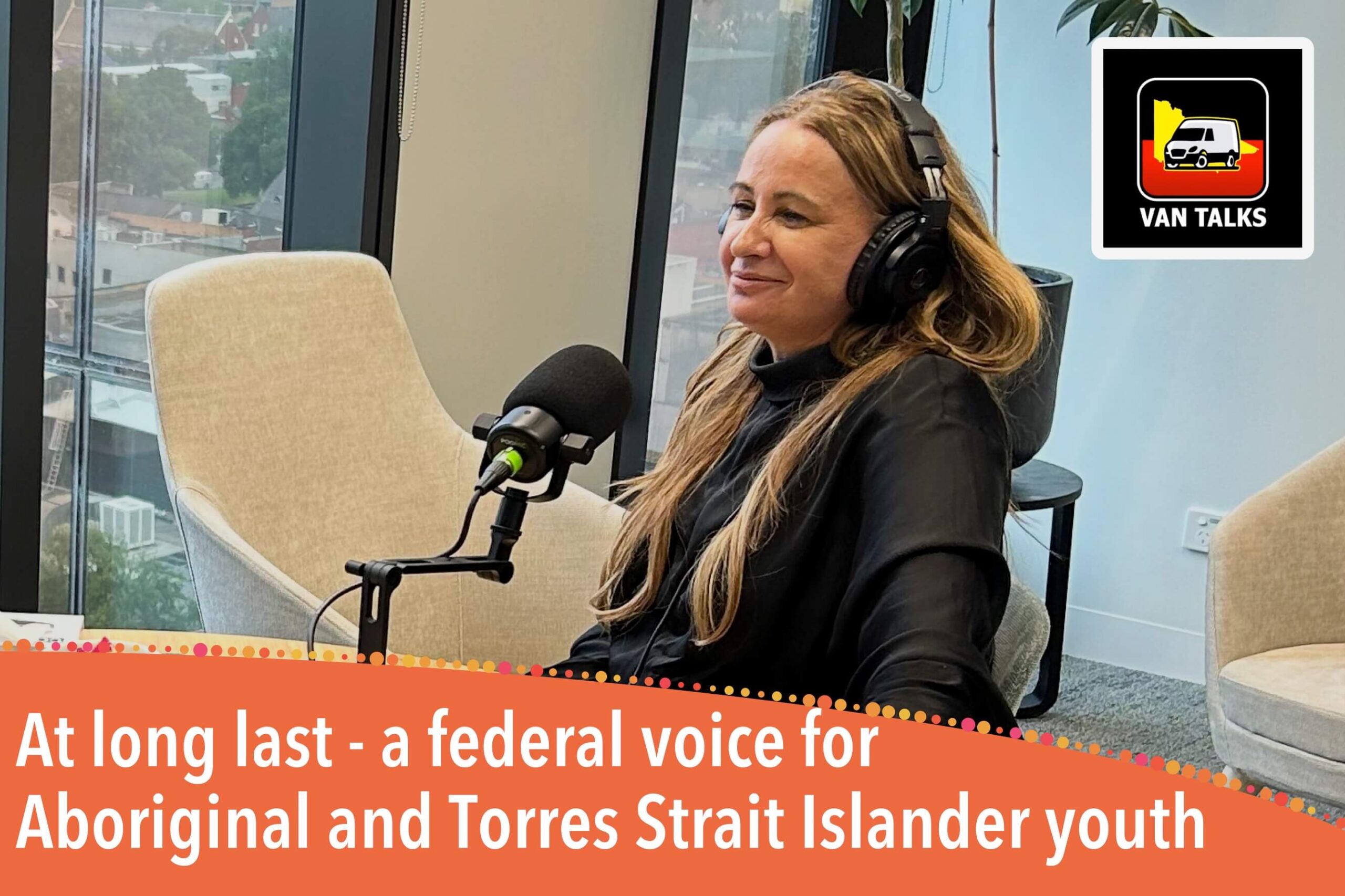
Several weeks ago, I was fortunate enough to attend a seminar, a seminar of people who were contributing their thoughts on the future of local government in Victoria, and I happened to meet an amazing woman by the name of Tahlia Azaria. Now Tahlia is the executive director of the Young Mayors Program at the Foundation for Young Australians. And a lot of what she was saying there, really, while it didn’t have a black focus on it, brought to my mind that there was so much that can be done for young Aboriginal people if we simply look at some stuff that’s already been developed.
Tahlia joins me today on the podcast to talk about the project and explore ways in which it can be given more of a black focus. Tahlia, thanks for joining me today.
Tahlia Azaria:
Thank you so much for having me.
Charles:
Tahlia, give us a bit of a heads-up on what the Young Mayors program is, how long it’s been going, and what the main goals are.
Tahlia:
Yeah, absolutely. So, the Young Mayors Program really is designed to embed young people at the local level in the decisions and the systems that govern their lives because young people tell us, they tell their local councils, they tell state and federal government all the time. They want to be part of the decisions that impact their lives, but they don’t quite know the pathway through to be able to participate in those decisions. And so, the Young Mayors program has been set up to democratically elect youth councils in partnership with local councils around the country focusing on 11 to 17 year olds.
So, young people are elected, they go through a term in office, they get a fund to be able to deliver on projects that meet the priorities of their constituents and ultimately, they learn about how to participate in democracy and they get a real say in what’s happening in their local community.
Charles:
You’ve already got a number of these young councils up and going across Australia. What are and where are some of those?
Tahlia:
Yeah, so we have four LGAs participating in the pilot at the moment across Victoria, New South Wales and Queensland. And we’ve had additional two other local councils participate, so six over the lifetime of the pilot. And we’ve been setting this up very intentionally to learn about what the environment needs to be for young people to thrive, and importantly what the adults in those decision-making roles within councils need to do to create space for young people to really meaningfully participate in those communities.
Charles:
So, before we get into some of the decision-making and the programs that these young people are advocating for, you mentioned in Victoria, what are the local government authorities in Victoria that are participating in this?
Tahlia:
Hume City Council is the council that’s participating in Victoria at the moment, and we have had two other councils in Victoria participate who finished up their time in the program and taught us a lot about what we need, what ingredients we need to have in place for the program to work really, really well. And we have grand ambitions to expand to other local councils in Victoria with support hopefully from the Victorian government. That’s what we’re really hoping for, that a consortium approach of investors will come into this program to be able to scale it up across councils both across the state and nationally.
Charles:
You mentioned two other councils that had done their time. What were those two councils? Can we mention them?
Tahlia:
Yeah, sure. We had Horsham Rural city council participate and we also had Hepburn Shire join the program briefly.
Charles:
You mentioned briefly.
Tahlia:
Yes. So, as I said, part of the design of the pilot is to learn about the different conditions that exist in councils, and one of our key insights actually from the first few years of the pilot is that it’s not enough just to elect a youth council and give them a fund and guidance to run with. Actually, a big part of it is making sure that there is the capacity and the capability within the council itself to really support the young people to do what they need to do. Part of that is having really difficult conversations internally, identifying the barriers that exist and being able to push to pull those barriers down, so that young people can really truly participate.
And so, we are learning a lot from the councils that are in the pilot about where those barriers are and what the ingredients need to be to be able to pull down those barriers.
Charles:
I can imagine there would be some pushback from some councils that you would approach in order to get this project up and going. What are some of the key pushback points that you may have received regardless of the state about, or from local governments about whether it should be taken up or not?
Tahlia:
We actually have really great demand for the program. So, there’s 130 councils on our wait list who have expressed interest in taking on the model of young mayors. But what we have found is that there are parts of the system that are really sticky. So, I’ll give you one example is that to be where young people are at a time of day that suits them means that there are budget implications for councils because they have to work after hours and sometimes, that’s impossible. And so, programming then takes place in working hours, business hours where young people are otherwise at school or have other extracurricular things happening.
So, that’s one area that we trying to push from the inside to try and find ways to incentivize staff of councils to work outside of those hours, noting those budget implications because those are the times that work best for young people. There are other processes like procurement processes in place that mean if the young people have decided that they would like to use a particular supplier to deliver on some of their projects, but that supplier is not part of the procurement framework already set by council, there’s pushback in that space.
Charles:
Yep, yep, I can see that.
Tahlia:
There’s all sorts of different elements of the system that have been really institutionalized over many, many years, which makes sense. But what we’re trying to do is redesign the system from the inside to better suit young people, and we think that if it better suits young people’s participation, it’s going to work more broadly for other communities too.
Charles:
Just give us a bit of an overview on the construct in Hume Council for example. We’ll use that as a case in hand, how many young people are involved and what positions do they hold and then we’ll talk after that about the election process.
Tahlia:
Well, at the moment actually we are at the beginning of election week for the very first youth council to be elected in the Hume City council area. So, later this week, we will with the VEC, the Victorian Electoral Commission, be setting up all of the voting screens and have the ballot papers and setting up proper polling places in about 10 schools across the LGA and the 26 candidates who have put their hand up to run for election will be campaigning across the week. They’ve already held their meet the candidates event, where they came and presented their campaign platforms to a room of about 80 people and they’re all vying for one of 12 spots on the youth council.
So, once they are elected, they are then supported by the program officer who works for Hume City Council, supported by us currently, who is also a young person and her role is a pseudo chief of staff. She will support the youth council to connect with the community to be continuously going out to community and consulting with their constituents about their priorities, building their priority agenda, and then delivering it over their term in office. And that program officer is supported by other staff within youth services at Hume. And I have to say that we’re so lucky to be partnering with that council, because they know what is involved in meaningfully engaging young people in their community.
They do it really well and they have a really fantastic solid team of people there, just servicing young people so beautifully. So, it’s a real privilege to be partnering with them.
Charles:
Once selected, how long are they in office for?
Tahlia:
So, the Hume Youth Council will be in office for a 12-month term. Are they youth councils in other LGAs are on an 18-month term. And this is partly one of the things that we’re testing, how long makes sense for young people as a transient group of people who have lots of competing priorities, often in mid to late high school, and then thinking about what comes next once they finish high school. We are really conscious of the demands on their time and don’t want it to be too much time for them, but also I want to give them enough lead time to be able to really think about how they spend their fund, they get $10,000 and how they deliver their projects so that they’re not rushed either.
Charles:
And let’s talk about some of the projects that you’ve seen championed by these young politicians. It’s what they are over the years.
Tahlia:
Yeah. So, we have some really fantastic examples of one youth council planted one tree for every voter in the election, so they ended up planting over 1500 trees, which was really fantastic. We’ve had examples of bus safety. So, a youth council was particularly conscious of safer public transport. That’s what young people and their LGO were telling them. And so, they partnered with one of the local bus companies and created an awareness campaign for safety in the LGA. We’ve also had youth council members participate in federal inquiries.
So, there was an inquiry last year on civic participation and the youth council both put in a submission and presented to the panel and were then quoted in black and white in that report, some of the experiences they’ve had and some of the recommendations they have for better civic education across the country. And that is a growing area of concern, I must say, because the Australian Curriculum Authority released data last year that showed 75% of year 10 students don’t understand the fundamentals of democracy. And so, there is a growing need for programs that address civic engagement in this country to complement what’s happening or as it happens is not happening in the classroom.
Charles:
Let’s try and give it a bit of a black lens now. Can you see that such a model could be rolled out to communities where there is a predominantly First Nations element within the community to empower those First Nations voices within the local government area and its decision making?
Tahlia:
Yeah, this is an area that we’re really interested in. So, we have just undergone a big review of our program led by Abstarr Consulting, who very generously spent months with us and our team and did a consultation with a group of young people with the councils in the program, the other stakeholders to really learn about how the model has been set up so far and how we can evolve the model to make sure that it truly is inclusive of all young people, including First Nations young people.
And without getting too much into the detail of the recommendations, because we’re still sitting with a report and haven’t actually looped back yet to the young people and to the councils who’ve participated in that review and want to respect that and make sure that we’ve got a chance-
Charles:
Sure.
Tahlia:
… to do that with them first. But we have sort of in a broad brush stroke sense, heard a lot about how we can bring an anti-racist lens to the work with everything from really interrogating the paradigm that we sit within and thinking about how we communicate the benefits of the program to thinking about civic engagement and not just taking the system as it exists now, but pushing the envelope to redesign that system and what civic engagement can be, thinking about also how we engage all young people in different ways in that model and everything from that to symbolic things like the name Young Mayors actually doesn’t resonate with a lot of people. That was quite unanimous that came through the report.
So, one of the things that we’d really love to do now is co-design a new name for the program that feels inclusive and doesn’t create a barrier to participation from the outset. We had feedback that said young mob feel excluded just by the name of this program. So, we really want to listen to that and think about how we can do better in all elements of the program.
Charles:
Do you think that Victoria is a fertile ground for this sort of project, especially when it comes to incorporating the voices of First Nations youth?
Tahlia:
Absolutely. And the fact that we are just about to move into this transformative decade really with Treaty in Victoria means there’s an opportunity there to bring young people along on that journey too. So, how do we embed young people in the decisions that impact their lives in Victoria and do that alongside this very important process of treaty?
Charles:
Now, obviously the project itself is aimed at empowering young people, giving them their voice, letting them know their voices can be effective, and also informing them about democracy as it plays out in this rather colonial system here in Victoria. What are some of the other objectives that you’re seeking to achieve?
Tahlia:
Yeah. So, for us, it’s more than just informing them about democracy. It’s actually involving them in democracy and helping them participate in democracy. So, what we’re wanting young people to do is learn how they can participate in democracy in their community and feel more of a sense of connection to their community and to the structures that exist so that they have a better chance to improve those structures as well and inform them for the future. Because young people will be leading communities in a very short amount of time. So, to feel the ownership over the community and to feel that they have a vested interest, they need to be able to participate now in their most formative years.
Between the ages of 11 and 17, that’s when young people are learning about themselves and their identities and their values. So, being able to participate in a program like this should hopefully, if we get it right, help them figure out their place in the world and the influence that they can have on the world starting with their own backyard because we know that global change starts locally and we want to give young people those tools and knowledge to be able to do that for themselves and for their generation because it’s not enough for adults to just sit around the table and design a future for everybody else. Young people actually have to participate in that and they want to participate in that.
Charles:
Give them a voice.
Tahlia:
Absolutely.
Charles:
We’ve heard that before, haven’t we?
Tahlia:
What a novel concept.
Charles:
Indeed. What about going post their terms now? You mentioned that Hume City Council is 12 months, others are 18 months. Is there any follow up with these young potential future political leaders post the project itself?
Tahlia:
Yeah, so because we’re three years into the pilot, we’ve only just started seeing alumni come out of their terms in office essentially. And so, what we’re doing right now actually is think dreaming up. I should say we’re dreaming up what it can look like to keep those alumni engaged and have pathways for them beyond the program. So, some of them will run for re-election again to the youth council. They have until they turn 18. But then we’d love to see those young people consider either running for their own local council, running as a state or a federal MP, but not strictly as a pathways to politics program. It is broader than that.
We want to see young people participate in their community in a range of ways, and we’ve already seen young people, for example, in one of the LGA’s, a young person finished up her term in office. She then started her own not-for-profit organization, giving scholarships to young people in her community to go overseas and learn and then bring those insights back into the community to improve the community based on all of the things that they learnt from overseas models. We’d love to see more examples like that of young people contributing to their community civically as a civic leader, whatever that looks like for them.
Charles:
You mentioned that there are 11 councilors elected.
Tahlia:
Twelve.
Charles:
Twelve. In Hume, for example, how many candidates were there?
Tahlia:
There’s 26 candidates in Hume.
Charles:
Is there any follow up with those 14 that don’t make it through?
Tahlia:
Yes. So, we put a lot of emphasis on all of the candidates. It is not just about the young people who get elected, it’s actually about the journey for all of the young people who participate. And thankfully in Hume, there are a range of other youth services run opportunities so that we can navigate that for those young people, help them find something else if the youth council is not where they find themselves. And once those youth council members, either they’re elected or non-elected, young people are part of our network, they have that opportunity to hear from us again if they would like to.
They stay on as part of our network and we send them opportunities both at the foundation for Young Australians offers, but also the council that they’re operating within.
Charles:
You mentioned that they’re given $10,000, and I assume that might change in different councils, or is that standard right across?
Tahlia:
At the moment, that’s standard right across. So, that’s a fund that we at FYA provide to those youth councils over their term in office that they can use for a range of different outcomes.
Charles:
So, this is the $10,000 from the program, it’s not from council?
Tahlia:
At this stage, yes, it’s from the program.
Charles:
Yes. At this stage you said, do you see this changing?
Tahlia:
Potentially, yeah. So, we have lots of conversations with councils about the kinds of contributions that they could make. And what we’re designing for is a future where the program is embedded within the local council. So, they do make a financial contribution that could be to the staff member that supports the program. It could be to stipends for the young people to participate because we really believe that young people should be recognised for their time financially. It could be for that youth fund to deliver on the projects. This is where we see some of the barriers that I was talking about before where we really want young people to have decision-making power, and that means control over that budget.
That’s really difficult in a local council environment, where there are layers and layers of approvals that need to be made. And so, one outcome could be that a fund exists externally from councils and operates as a grant making system where those youth councils receive the money from an external organization just to remove some of those layers of approvals to make sure that they can actually have decision-making authority.
Charles:
Let’s get down to the brass tax of it. Obviously money’s going to be the key thing. And you made mention before about state government involvement. Just how involved is the state government here in Victoria at least given, and I might just add here that the state government is very keen to see young First Nations people and multicultural people enter into the political sphere, especially at the local government area. What sort of support are you getting?
Tahlia:
So, we had 4-year funding through the Department of Families Fairness and Housing to pilot the program in Horsham Royal City Council. So, that was really fantastic. It was seed funding essentially to test the idea. What we’re looking to now from the Victorian government is 2- to 4-year funding beginning in 2026 to be able to bring more councils into the program and doing it really gradually and slowly and intentionally because we don’t want to go from zero to a hundred in one breath. We want to be able to really spend time with councils to bring a couple on each year so that we are doing it to a high-quality standard. And we are recreating essentially best practice of how you engage young people at the local level.
So, that’s going to take time. This is actually decades-long systems change that we are embarking on here. So, we are looking to the Victorian government to be able to support that in Victoria and have had similar conversations in other states with other state governments and with the federal government to really hopefully have a consortium approach where everybody has a hand in making this happen and sustaining it forevermore.
Charles:
Ultimately and we’re speaking blue sky here, do you see that this program could be implemented across all 79 local governments in Victoria, for example?
Tahlia:
That is my great hope that that could happen. We are very mindful of council readiness and where different councils are on their journey of meaningfully engaging different members of the community. And so, in some places, we are really…
Charles:
You’re being very diplomatic.
Tahlia:
Oh, yes. Well, we’re really ready to support councils at whatever stage of the journey they’re on. So, some councils to be really pragmatic about it, they don’t have a youth services team, they don’t have a youth strategy. The idea of engaging young people is a new one. And so, for them, there’s extra support that needs to happen before we can move to electing a youth council because we do not want to set young people up to have an experience that isn’t going to be rewarding for them and doesn’t truly embed them in decision-making.
So, in councils like that, for example, there’s more of a strategy development phase and a consultation phase with the community and with schools and with young people and councilors and traditional owners in that area to learn more about what the ingredients are that are needed in those communities to be able to embark on a program like this. But then you see other councils like the Hume City Council for example, who have years and years of experience working with young people, a really robust youth strategy, very strong partnerships with schools and other community organizations and are ready to move very quickly actually to electing their own youth council, so process.
Charles:
How can community members and youth within local communities push to get this implemented in their own local government authority? And I recognize that state funding and other funding is required, but how can they ensure that their local government is actually on that waiting list with you?
Tahlia:
Well, we’re taking inquiries very actively. Every week, it feels like there’s another email in my inbox or in my team’s inbox with another council who’s interested in learning about the model. So, we are very actively building that list because we want to understand where the demand is and notice also where the demand isn’t so that we can really tailor our outreach to communities to make sure that we are not just operating in council areas that are most privileged. Actually, we really want a cross section of councils participating in the program, and that then changes the inputs that we use to be able to support those councils to do the work really well. So, we have a website on the fya.org.au website.
There’s the Young Mayor’s page, and there’s a contact page that people can get in touch with us, really welcome people to get in touch, but at the same time, often need to manage people’s expectations because we don’t yet have that funding to be able to bring new councils in, but we would desperately love to do that over the next couple of years. So, we are hopeful coming into an election year next year for the Victorian state government that there might be a willingness to lend their support to an initiative like this.
Charles:
We can only hope. Tahlia, thank you so much indeed for your time.
Tahlia:
Thank you so much for having me.

0 Comments