

Charles Pakana:
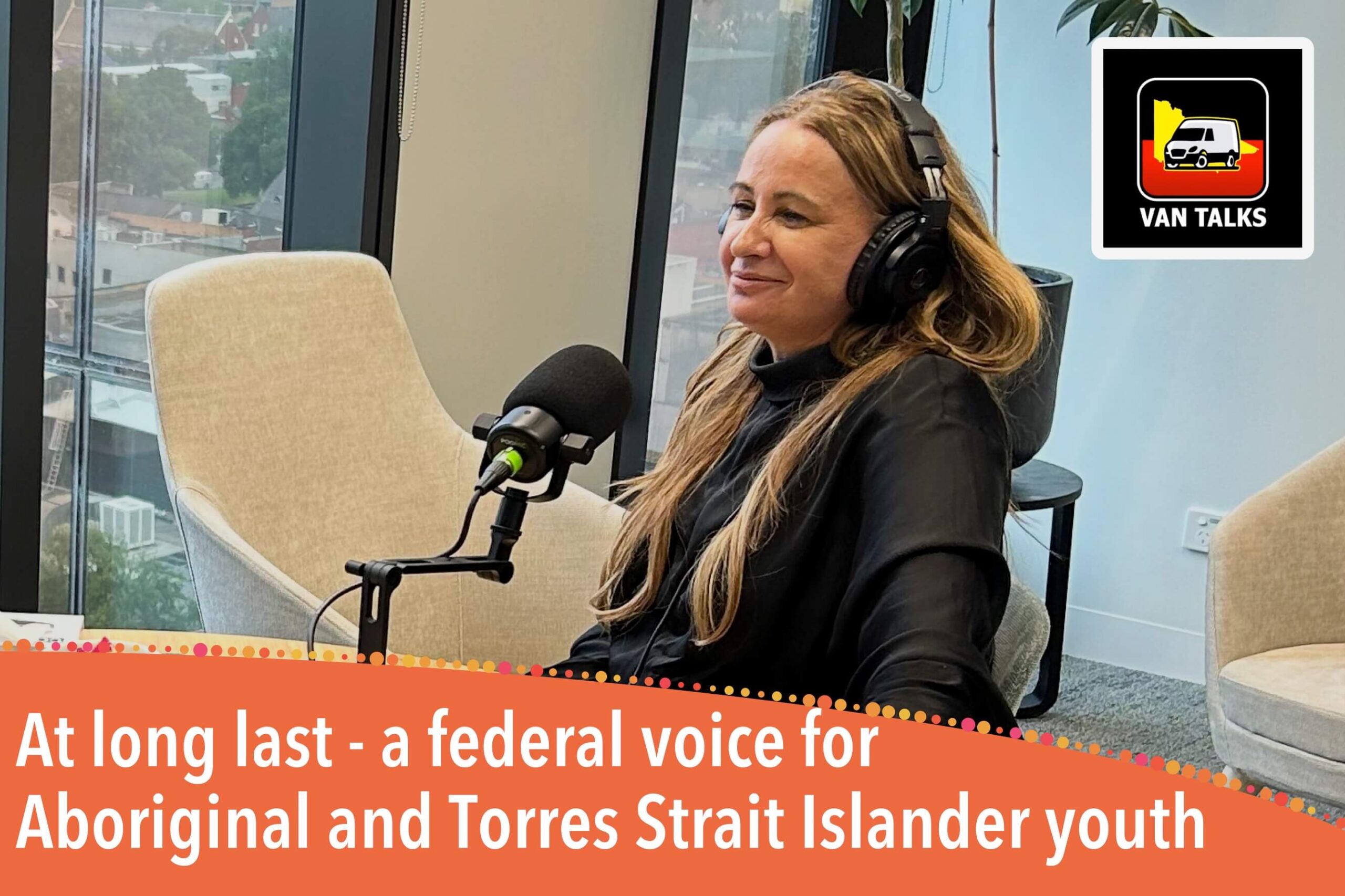
Joining me this morning on the program is Yuin woman and former trade commissioner to Malaysia and Brunei, Melanie Harris. Earlier in 2025, she became Austrade’s first Head of Indigenous Engagement and Export, and this is a role created specifically to unlock global opportunities for indigenous Australian businesses. Melanie, thanks for speaking with me today.
Melanie Harris:
Thanks, Charles. Great to be here.
Charles:
Melanie, let’s start off the episode with understanding just what First Nations or indigenous businesses are because let’s be frank, you speak to a lot of people out there on the street and they’re going to be saying, well, they sell Bush tucker, or they sell art, something that’s a cultural bent, but it’s well beyond that, isn’t it?
Melanie:
It absolutely is. I hear all the time that exact thing, that indigenous businesses are very small, they’re not ready to export that they’re just in food, bush foods in particular, or art or even a musician. And typically that’s what we have seen. But what we’ve seen over the last 10 months is businesses in cyber security, med tech services, and even wellness and beauty.
Charles:
And we still, of course, do have the great artworks and of course the bush tucker food. Tell us about the award, the new First Nations award that’s coming out.
Melanie:
So it’s the First Nations Export award category at the Australian Export Awards. So it’s the first time in the 63-year history of the awards that we’ve had, and it’s a really great chance to spotlight and showcase the great work that indigenous businesses are doing on the global scale.
Charles:
So why do you think Austrade has all of a sudden got this interest in promoting First Nations entrepreneurship in the export area?
Melanie:
I don’t think we’ve just recently got it. I think what we did this year is, especially with me coming back to Australia, I think what we did was we just refocused our energy and our efforts and took advantage of me coming back from offshore and creating this role so that we could put more effort into it. We’ve always helped indigenous businesses export because we help Australian businesses export and indigenous businesses are Australian, but we just wanted to put a bit more focus and energy and be a bit more deliberate on what we were doing.
Charles:
I could read into that that there have been some traditional barriers in that case to First Nations businesses really cracking the export market, which we know is so critical. Australia has a limited market potential. Obviously the more overseas exposure and market opportunity you have, the better it is for the company itself. But what are some of the barriers that First Nations businesses, regardless of where they’re operating and may have been confronting over the years?
Melanie:
I think some of it from my conversations with Mob is that some of it is just not even aware of exporting, and that again, is not just exclusive to indigenous businesses. We’ve even seen it with non-Indigenous businesses because it’s not something that’s been traditionally in our generations. We haven’t seen our parents exporting and stuff like that. So it hasn’t been multi-generational exporters, but if you take it all the way back to our ancestors, we were the first exporters.
Charles:
Absolutely.
Melanie:
So it really is in us to do it, but we’ve just had this sort of big block of time over years where we haven’t seen it firsthand and now we are seeing it firsthand. So some of the barriers are that awareness, as I said, but also access to market opportunities, just knowing what’s going on and support and advice. Again, oftentimes we see exporters getting advice from other exporters, and if you don’t know any other indigenous exporters, you’re not getting advice from somewhere. But we’ve seen Jenni Walke from Elephant in The Room. She was exporting basically from day one, but didn’t ever consider herself as an exporter. So something that Austrade is trying to do is promote awareness of exporting to indigenous businesses.
Charles:
So how do you go about doing that?
Melanie:
We promote good stories, success stories. The export awards is obviously an opportunity for us to do it, but also going out there and talking to businesses. Earlier this year we did a roadshow around Australia talking to businesses about exporting and exploring opportunities overseas.
Charles:
So when you say you’re talking to businesses, these are First Nations businesses?
Melanie:
Absolutely, yes.
Charles:
Right.
Melanie:
Yeah, it was a specific roadshow for indigenous businesses because Southeast Asia’s got millions of people and they’re right on our doorstep and not always thinking about going over to the US or the UK, which we often think is more of a like-minded export opportunity. But when we’ve got Southeast Asia, we’ve had such a great history of people-to-people ties, and again, we were exporting to Southeast Asia, like our ancestors were years and years and years ago, long before any of us were on here.
Charles:
And as Professor Dennis Ritchie from Federation University has said, we were the very first entrepreneurs, for goodness sake.
Melanie:
Yes, the very first diplomats.
Charles:
Yeah, exactly. Exactly. So there’s really quite a heritage there to follow through with. So let’s just talk a bit about the roadshow now. When did that take place and how many businesses would you have touched with?
Melanie:
It took place from about April to June this year. We went to every capital city in Australia, and it was always trying to be more of a face-to-face thing so that we could have a conversation about exporting so that they could come and meet actual people that would be able to give advice on exporting. We did it in collaboration with our state and territory partners and DFAT and other Commonwealth agencies so that they could see a few different people at once.
I think our numbers, overall, was about just under a hundred businesses, indigenous businesses that we spoke to. But I think some of the really good stories that have come out of that is some businesses, like there’s a business that we met in Brisbane and she was thinking about exporting and had already been overseas for another trip. And since then she’s done two trips with Austrade. Just recently, she was in Dubai, she was in Japan in August, but she had never heard of Austrade or thought of Austrade when exporting. So knowing that we helped at least one business is like a success for us.
Charles:
One of the things you mentioned earlier was that a particular challenge was that there weren’t many First Nations businesses out there with which existing businesses, potential exporters, could partner for advice. So do you see that there is a potential for Austrade to set up a mentoring program where it can be First Nations to First Nations businesses helping each other break through this market?
Melanie:
I think we do that already, not in a official capacity of being mentoring, but by bringing businesses together through our landing programs and trade missions and events, they actually create a cohort. So when you go on a trade mission with Austrade, it’s not like, oh, you just rock up to the country and that’s the first time you’ve met the other people that you are going to be spending three days with on a booth, right? You have pre-briefings before you go on your mission. There’s emails, there’s a WhatsApp group. There’s all these ways that you’re creating a cohort and comradery between all of the people on the mission.
And so what we see, and I saw this firsthand when I was in Malaysia, that those businesses wrap around each other and they support and cheer each other on and share information, and we’ve seen it with another indigenous business that is now partnering with a non-indigenous business to do other events around the world so that they’re sharing those costs and those experiences together. So I think we do it as part of what we do is our business as usual. It’s just not a formalized mentoring.
Charles:
What’s the potential, the real potential, I’m not going to ask you for dollar figures and all that sort of stuff or the exact number of businesses, but let’s be frank, rough numbers are as percentage of the population, we represent about 3% or thereabouts, and it fluctuates from state and territory. Do you see the point in time where First Nations businesses could represent three plus percent of the export market?
Melanie:
I think there’s probably a really good chance of it. I don’t know whether I would necessarily see it in my lifetime because I’m getting older.
Charles:
But people have said this in the past and it surprised them.
Melanie:
That would be absolutely fantastic if I could see that. What I am really proud of, of us at Austrade and the role that I’m in, is that we are making a good step in that direction.
Charles:
And what about the impact on all of Australia, the Australian economy? Because quite frankly, it is a small percentage, and as you said, look, we’re not anywhere, it seems, near that 3% of the export market right now, but it pays, I think, that if we’re going along the path of busting some myths as we did at the beginning when it came to what is a First Nations businesses, let’s bust the myth here. From your experience with First Nations businesses, just what’s their role in the Australian economy, in the employment area, for example, because they’re not just employing family, they’re not just employing mob, are they?
Melanie:
No. And it’s a well-known fact that indigenous businesses employ more mob than anyone else, and that money goes back into community. We see a lot of businesses actually donating back into rural communities, and we see that Mt. Yengo Wines, for example, will donate a lot of their money profits to the National Indigenous Culinary Institute, which is helping indigenous people become chefs. So there’s all these great things that indigenous businesses do for mob, that’s great. But what we have seen, though, is that indigenous businesses that export, employ over seven times more workers than indigenous businesses that don’t export. So that’s a massive impact on the economy. They also generate about 670 million in exports.
Charles:
Wow.
Melanie:
That was about two or three years ago, and it was a small study that we did with Supply Nation. But that’s the impact. Those numbers are only going to get better, the better our data is, the more that we are showcasing indigenous businesses and the more that businesses feel comfortable to come forward and say, I am an indigenous business.
Charles:
Now that’s an important point that you bring up. And of course, in any conversation about First Nations business, and you nodding is obviously indication you know what I’m going to be asking, the issue of black cladding. How does Austrade and you, as that person on the ground, deal with that issue and work to identify those businesses that are legitimate First Nations businesses and not just a couple of our mobs sitting up there as figureheads to give it that black cladding? It must be a challenge.
Melanie:
It’s always a challenge, and as a government agency, we abide by and work within the guidelines that Australian government has for indigenous businesses. So under the IPP, generally, this is how we work.
Charles:
So what’s the IPP?
Melanie:
The Indigenous Procurement Policy.
Charles:
Right. Okay. And what is those rules, just generally?
Melanie:
At the moment, I’m pretty sure it’s 50%, but I think it changes to 51% ownership.
Charles:
So majority owned?
Melanie:
Yeah, majority owned by next year. But we also, again, because we help Australian businesses export and obviously we have a focus on indigenous businesses, what we do see is that when we’re talking to an indigenous business that isn’t majority owned or 50% owned, but the intention is there for it to get to that, we do work with those businesses as well because that’s helping the future and that’s making it sustainable. We don’t want to turn around to a business and say, come back to us when you’re 50% owned, because that’s what the IPP rules say. We want to say, how can we help and support you as an Australian exporter that is going to have that impact later?
Charles:
Let me ask you another bit of a curly question because we’re going to hear this no matter what, from certain sectors of the community, there’ll be cries of, oh, this is unfair. Oh, you’re giving First Nations businesses greater preference and greater focus than non-First Nations business. What about all the others out there? Why are you focusing so much effort on First Nations businesses? Bearing in mind all I’m saying right now, sis, is this is the call that’s going to be coming up.
Melanie:
I would challenge that and say that we are not just focusing on indigenous businesses, we help Australian businesses, we help Australian businesses in our priority sectors, and what we’re doing is just making sure that we get our information and support and advice to indigenous businesses as a sub-sector of the Australian business and exporters.
Charles:
Let’s talk now about the awards that have just been announced, and that’s why I’m up here in Canberra yarning with you. Whose initiative was it to introduce a First Nations business category within this?
Melanie:
It’s always been an intention, and what we needed to do is do it at the right time and have all the states and territories on board.
Charles:
So why is now the right time, do you think?
Melanie:
Now’s the right time to showcase the impact as we were talking about earlier, that indigenous businesses are having in the export world.
Charles:
And you mentioned before also a really important thing that so many of the First Nations businesses give back to their local communities, and as a result, it doesn’t just help the First Nations within those communities, but the broader economy of those small often rural areas. But let’s look at self-determination, the role that the growth in First Nations business and economy has in achieving self-determination. Do you just want to expand on that a little bit and how you see that actually taking part?
Melanie:
Well, the more that indigenous people are running businesses for themselves and having that control over a business and where they’re spending their money and whatnot, is obviously going to help the future generations. They’re going to see, hey, my grandfather or my dad or my mum ran a business and so that’s what I want to do. And they went overseas. When I grew up, going overseas wasn’t a thing. I grew up in a small country town on the south coast of New South Wales, and going to Canberra was a big thing for me. It was like, wow, you’re moving to Canberra. What are you going to do up there?
It wasn’t like, geez, one day you might live overseas. And even until I lived overseas, I never really thought it was an option for someone like me, someone from a small town. And the whole time I was over there, I kept thinking, oh my God, how did this girl go from Maria to Malaysia? It’s, I’m still that little girl, sort of thing. So you can’t do what you can’t see. So the more you see it, the more that’s going to have that impact and that economic self-determination is going to be commonplace. I think it’s going to help things. We’re going to break some of those cycles and the things that are already determined for you before you get a chance to make those decisions yourself.
Charles:
Look, before we get on to talking about some of the finalists, because we do need to make mention of some of these amazing businesses right around the country and for the audience, we will also be speaking with Sharon Brindley, who’s one of the finalists and of course being Victorian, we hope that she wins in this year’s award. Let’s talk about what you would want First Nations businesses who have maybe toyed with the idea or never even toyed with the idea of exporting, but now see the potential they have. What should they be doing? Can they come directly to Melanie Harris at Austrade or is there some other avenue that they can approach?
Melanie:
The very first thing I would get businesses to do is go to the Go Global Toolkit. So if you Google Go Global Toolkit, it’ll come up. So register on that. Look there. There’s great quizzes, there’s tools, there’s so many resources to help you look at the markets you might be interested in, but you can always reach out to me. I’m always happy to have a chat. We always work with our state and territory colleagues to make sure you have the right advice from a person that understands your sector, but also where you’re coming from.
Charles:
What are some of the first questions you might be asking a business person who came to you and said, “Sis, I’ve got this great idea for a business. Yep. I can make billions of dollars for the economy if only I could make it overseas.” You’ve got to be a little bit tough at times, obviously, because you can’t pee in their pocket. Let me be blunt.
Melanie:
Absolutely.
Charles:
So what are some of the tough questions you might be asking these businesses?
Melanie:
What I do see is that businesses that are successful in exporting, have a really good domestic base. So you might say to me, I’ve got a great idea for a business. We really do need to see how it’s working here in Australia first because you need to have the time and the energy to spend on exploring exporting, and going overseas and making those relationships. Because you can’t export if you just want to send something over there or ring up a person and go buy from me. You’ve got to make those relationships, which I think is a strength of mob, really, is that building relationships. So what’s your domestic base? What’s your unique selling proposition? Who are your competitors? Who are your customers going to be? So we ask all of those questions in the first conversation and that’s what we want to know.
Charles:
So have an established business and have an established business plan in essence, because all those things you’ve spoken about really fall into, squarely, a legitimate business plan.
Melanie:
Absolutely.
Charles:
Now, obviously we’re now going to talk about some of those businesses that have gone through that hard yakka that have established a domestic market and are now breaking into the overseas markets. Let’s just name a few and we don’t need to speak about Jala Jala Treats because, as I mentioned, we’ll be interviewing Sharon separately. Let’s talk now about some of the finalists in this year’s awards, and one that really piqued my interest was Elephant in the Room, which is just a small business exporting services rather than products. Tell us a little bit about that without a full case study.
Melanie:
Yeah, it’s a great example actually because people often think that to be an exporter, you need to be sending something physically on a boat or a plan overseas.
So services is actually quite a big thing, especially when you look at the future economies and industries like green economy. Not everything has to be something that’s physical. So Elephant In The Room has been pretty much exporting since day one, and not only does she take services, but she takes our culture and our wisdom overseas and shares that. She’s doing quite well in the US and breaking into Canada, and I think back into Europe as well.
Charles:
She’s in huge markets.
Melanie:
Yeah, she’s doing really good, I’m really proud of her. She’s just amazing.
Charles:
What are some of the others we’ve got up there?
Melanie:
We’ve got Munda Wines from South Australia, great Wine company. We have Aldridge Railway Signals. They export to South East Asia and other parts of Asia, have been exporting for over 30 years.
Charles:
Goodness me.
Melanie:
Yeah.
Charles:
Has it always been First Nations owned the entire time?
Melanie:
Yeah. Yeah, by David the owner.
Charles:
Good Lord.
Melanie:
Yeah, and those are the stories that I love, is that people think it’s just this recent thing of indigenous exporters. Some of them have been exporting for over 30 years.
Charles:
What do you think is the role for these businesses to support other emerging First Nations businesses, whether in the domestic market or the overseas market? And we touched on this a little bit beforehand when I was talking about mentoring, but I do want to focus on this a bit. Do you see there is a role for these businesses to really allocate time and resources to support other growing Aboriginal businesses?
Melanie:
I actually see them already doing it, all the time. When we reach out to any indigenous business that we work with and say, can you come and talk with other indigenous businesses? Or, hey, there’s this indigenous business that wants to know a little bit more about this, I always get a yes. And then when I catch up with different businesses, they’re always telling me they’ve done this and they’ve done that for a mob. It’s already happening. I don’t see that they need to do more. I think they’re just already doing it, but you know what mob’s like. We don’t self-promote.
Charles:
Do you see that’s actually something different within First Nations businesses in Australia, as opposed to non-First Nations businesses? That willingness and just preparedness to jump in there and support other mob businesses.
Melanie:
Actually, I’ve worked for Austrade for 20 years now, and I’ve just always seen it. I think it’s just people that are exporting have that entrepreneurial spirit and they just want to help each other have that same high of exporting, I think.
Charles:
Before we close off, what I’d like to do is just give the audience a bit of an understanding of what Austrade can bring to businesses generally, whether they’re black, white, brindle, it doesn’t matter. But what can Austrade actually do for Australian businesses to get into that lucrative export market?
Melanie:
Yeah, great question, Charles. What we have is a network overseas and in Australia, and that’s gold. We have what we call business development managers that are locally engaged. They understand the market, they speak the language. They know everything about their sector. Those people are gold, and so we tap into them. They’re the people that will connect you with the right people at the right time to have those conversations to help you export. We have those tools that I mentioned before on the Go Global Toolkit. The experience of helping exporters for years and years and years, and being able to promote your business in Australia and overseas. It sounds very cliché, but overseas, leveraging the badge of government can go a long way for an indigenous business or any business.
Charles:
Well, there you go. If you’ve got a business out there, a First Nations business, and you recognize the potential in that business to break free from the domestic and local markets, there is an opportunity out there. I’ve been speaking with Melanie Harris, the head of indigenous engagement at Export at Austrade. Melanie, thanks so much indeed for your time.
Melanie:
Thank you very much, Charles.

0 Comments