

Charles Pakana:
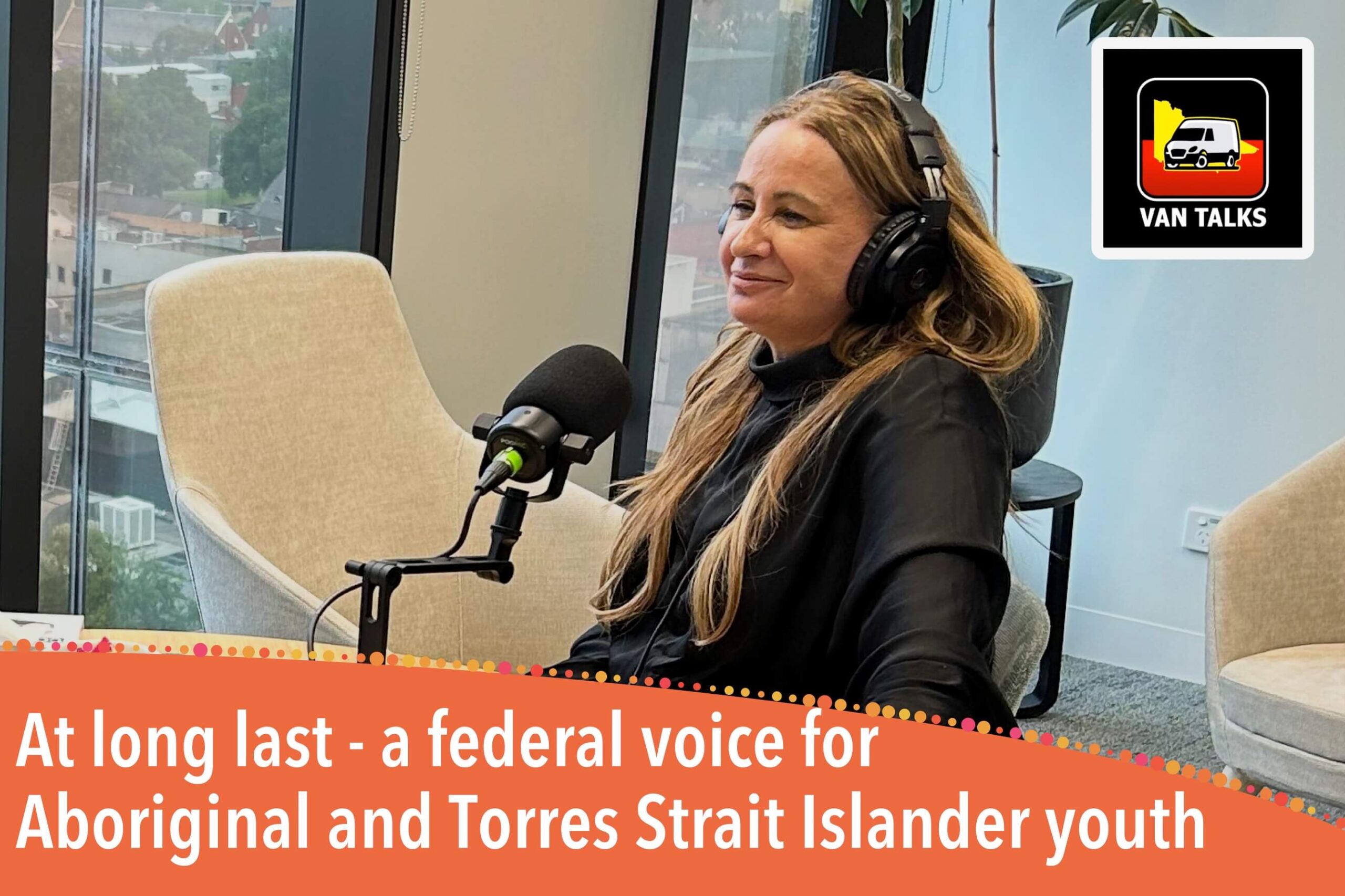
Our guest on the program today is one of Victoria’s most high profile politicians, having been elected to the Legislative Assembly in 2010 as the representative for the electorate of Keilor, and then in 2014 to the present day as the representative for Sydenham. Over the years, she’s held numerous portfolios in the Andrews and Allen governments, including Minister for Women, Minister for Corrections, Minister for Jobs and Industry, Minister for Education, Minister for Local Government, and from our perspective, importantly, the Minister for Treaty and First Peoples. Joining me today barely three days before her resignation from Cabinet comes into effect is the honorable Natalie Hutchins MP. Minister, thank you so much indeed for joining us today.
Hon. Natalie Hutchins, MP:
Thank you, Charles.
Charles:
Minister, during your first tenure as Minister for Treaty and First Peoples, then the Minister for Aboriginal Affairs, the government heard from First Nations people in Victoria what they really wanted, whether it was Constitutional recognition or treaty or anything else, and the call was for treaty. What was the reaction from the government to that call? Because I don’t think it was necessarily expected, was it?
Natalie:
No, it wasn’t. But Premier at the time, Daniel Andrews, was very committed to self-determination and embedding self-determination. So when the call came where a community was saying that the priority was truth telling and treating above Constitutional change, I think he just really stuck to his principle about self-determination and said, “Well, if that’s what the people want, let’s work on how we can deliver it.” And gave me yet another task that I thought was going to be almost impossible, but unless you have dreams and you work hard, you don’t get to achieve them. And I think there were a lot of people dreaming of this outcome and working so hard, and of course, generations before you and I.
Charles:
What were your thoughts though, personal thoughts? Forget about the premier at the time, but holding that portfolio and knowing that you had to lead the way, which ended up in the 2018 legislation, the appointment of Auntie Jill to the Victorian Treaty Advancement Commission, you had all that in front of you yet to happen, but what were your immediate thoughts?
Natalie:
Look, I was pretty committed to wanting to close the gap. And I knew what we were doing as a government and as a nation was not sufficient. It was not getting us the results. But I was seeing all these really amazing little projects as I went around the state being delivered by Aboriginal orgs that were making a difference to closing the gap, but on a much smaller scale. And I was like, “How do we scale this up? How do we make this bigger?”
And of course, it’s all about self-governance. It’s all about opportunities for Aboriginal people to have a say and a direction over their own policy and lives. And that kind of made me more determined to want to do it. And my background is as a union official and I’ve negotiated a lot of really intense agreements over the years. And I thought, “Well, whilst I don’t have all of the knowledge about Native title and everything else that comes into the portfolio space, I do know how to negotiate and I do know how to fight.” And-
Charles:
That comes with being an assistant secretary?.
Natalie:
Yeah. And I knew to take a list of claims and how to turn that into an agreement. And that is bringing parties together so that you can get an outcome.
And I’ve got to say, when I actually sat down to read the first full draft of the treaty, I kind of went, “Well, this kind of does look like a little bit of an agreement, like a little bit of an agreement I might’ve worked on in the past, but with a lot more detail.” And I don’t think I’ve ever worked on that level of agreement that is underpinned by legislation and had so much consultation built into it.
Charles:
So before we get to the treaty, let’s just go back to 2018 and the passage of the Advancing the Treaty Act 2018. Now that was with bipartisan support.
Natalie:
Yes, it was.
Charles:
What sort of negotiations and any wrangling was required to bring the opposition onto side to ensure that that Advancing the Treaty Act passed through both Houses?
Natalie:
I just think at that early stage, we had particularly the National Party very much at the forefront of all discussions around that. And I think they brought the Liberal Party along at the time.
Charles:
Now this was Tim Bull because he was the predecessor, wasn’t he?
Natalie:
No, it was Peter Walsh at the time.
Charles:
Oh, okay.
Natalie:
Yep.
Charles:
But Tim Bull had been your predecessor in that portfolio?
Natalie:
Yes, he had.
Charles:
Yeah.
Natalie:
Yeah.
Charles:
Okay.
Natalie:
But as National’s leader, it was really Peter Walsh that was at the forefront of that. And there were a few people in the Liberal Party that wanted to see this as well, and I think they helped push that through. But to be honest, at that time, our biggest challenges were with the Greens as well and trying to get them across. At the time, there was quite a intense debate around what is a traditional owner group? And how do we incorporate clans that have never been officially recognized through, say, the registered Aboriginal parties platform that we have here in the state? How do we make sure that everyone has an opportunity for a claim in the Aboriginal community?
And I thought that our legislation did allow for that, but there were some in the Greens that were saying no, that it doesn’t go far enough. So there was a lot of toing and froing there. We didn’t want to pursue legislation that would get opposed by any of the major parties, but eventually we got there with agreement.
Charles:
Was there any compromise that had to be reached in order to get the bill through both Houses?
Natalie:
No, just some word changes. I wouldn’t say compromises to any principles because our intent was to make sure that any traditional owner group that wanted to come forward and be part of the treaty would have the capacity to do that. Obviously, there were some in the Greens that were saying that that didn’t have enough detail in it. We put more detail in. We also extended the financial support that was a part of this ongoing, to make sure that the negotiating table was a level playing field between parties, between government and Aboriginal representatives, to make sure that there was ability for traditional owner groups and clans to be recognized as part of the process that may not have been recognized before.
Charles:
Now, you stepped out of this portfolio in 2018.
Natalie:
I did, yep.
Charles:
Shortly after the act came into being.
Natalie:
Yes.
Charles:
What was the decision behind that?
Natalie:
My partner had passed away from cancer after a long battle, two years of battling cancer, and he passed away. And that left my kids and myself in a really bad state in terms of our mental health. It was just time for me to take a backseat, not to leave Parliament at that point because there was so much I still wanted to do, but to reduce my hours to be with the kids and work through their issues and also get myself right post that because he was such a big, important part of our lives.
It is important to acknowledge though that he was a major support for me in my political career and someone that really got behind me in everything that I did. And you start to reassess your confidence after something like the death of a partner and how you’re going to go forward.
But then there was a moment in my life where I was like, “Well, I have life. He doesn’t.” And he’d be kicking my ass for sitting back and not taking full advantage of every opportunity I could to fight for people. So that kind of motivated me to get back on the horse and start working as much as I could to achieve whatever I could in my lifetime. So actually, he became a motivator for me. Yeah.
Charles:
So what was what some of us might call those five years in the wilderness before you came back into the portfolio in 2023? What was Natalie Hutchins doing between 2018, after the act came into being, and the 2nd of October 2023 when you came back into the portfolio?
Natalie:
Oh, well, I actually only took a break from the ministry for about 18 months and then came back in, but came back in in that-
Charles:
As a secretary.
Natalie:
No, no, that’s when I came into corrections and youth justice and then into education. So there were other portfolios that I took on. And I had corrections and youth justice during COVID. And I’ve got to say it was one of the most stressful times to be a minister, full stop. And to be a local member throughout COVID. But to be so stressed and worried about those in prison being affected by COVID was very, very hard. But when I say it was hard as a minister, making the decisions to try and protect people and balance out their mental wellbeing, I can’t imagine how hard it would’ve been to be in incarceration as a young man or woman during that time as well.
Charles:
I want to take us back to 2018 and subsequent to the act coming in. And that was the formation of the Victorian Treaty Advancement Commissioner. And of course, that amazing Gunditjmara woman, Auntie Jill Gallagher. Now, I realize that you were out of the portfolio there, but you can hardly expect me to believe that you weren’t keeping a very close eye on what was going on. Tell us a little bit about what you saw and what you perceived to be happening in that lead up to the foundation of the commission.
Natalie:
I think I actually got to maybe do one function with her, one consult, community consult before leaving the ministry. But she was a firecracker in terms of energy and passion and just the right person to actually sit down with community and start to galvanize support because there were still a lot of cynics out there-
Charles:
Absolutely.
Natalie:
… saying that this was going to take away from Aboriginal run organizations that this was going to not recognize all of the power of traditional owner groups. So she was the right person to go out and have those really difficult early conversations and bring people on board, and she did an amazing job at it.
Charles:
Was setting up the commission one of the earliest identified initiatives from the government in order to get treaty actually up and going?
Natalie:
Yeah, it definitely was because we had to have as many leaders of Aboriginal community on board with us moving forward because we knew that public disunity would lead to loss of support within the general community and we needed to make sure that everyone was working together to get their voices heard before we even got to the point of a First People’s Assembly, that they could trust in the process that was going to be ahead. And of course, a big part of that debate in forming of a First People’s Representative body was big, intense things like who gets a vote and how do we vote and who holds the voting role and all of those issues.
Charles:
I remember it well.
Natalie:
Yeah. Yeah.
Charles:
Yeah. Let’s jump now to 2023, precisely to just before the 2nd of October when you come back into that portfolio. What led you at that particular point in time, given that we were, what? Less than two weeks off a vote for the referendum for a First People’s Voice to Parliament, what led you to take up that role again?
Natalie:
Oh, because I wanted to have an opportunity at coming back around and helping to seal the deal, to really get to the table, to overseas the finish of Yoorrook’s work, and then to make sure that the negotiations happened. I knew what the political timeframes and pressures on the government were in terms of a 2026 election, government being in for as long as we have been. And whilst people say governments should be overturned every second election or whatever they believe it should be, we would not have achieved this had we not been in government so long. So there is real evidence to say that when governments get a significant amount of time in government, they can make real long-lasting change instead of this flipping of governments every three to four years.
Charles:
Tell me about the relationship that existed very early on following your resumption in this particular role with Ngarra Murray and Rueben Berg, the two co-chairs of the assembly.
Natalie:
Yeah, well, they were already in the roles when I came back into the portfolio and I was just so impressed with their professionalism, their leadership, but most importantly, watching community react to them in them leading the way. Their unique leadership style, both of them, of being able to take people with them was something that I really admire. And listening to all the arguments without themselves getting heated, but always being this just fantastic, steady hand with just an air of authority about both of them.
Charles:
Before we get onto negotiations and what actually took place there and some of the challenges there, I want to stay around about 2023 and subsequent to the referendum when the state opposition withdrew its support, hot on the heels of the defeat of the referendum. Was there any warning that this would come, to the government?
Natalie:
No. No, there was no warning, particularly because there were quite significant individuals, both in the National Party and Liberal Party who supported the yes campaign and the referendum. We didn’t have it on in our line of sight. I think, quite frankly, the referendum results almost gave a green flag to so many people walking away from their commitments. And we saw that with other states and territories doing the same thing, walking away from [inaudible 00:14:25].
Charles:
But here in Victoria, there must have been some members of the opposition, whether in the Nationals or the Liberals, who still maintain their support, but seem unable to give voice to that support. Now, I’m not asking you to name names, but you cannot expect anybody, no one can expect anybody to believe that all of a sudden everybody did an about turn on their support for treaty.
Natalie:
No, I think there was a growing influence of what I call the very far right within the Liberal and National Party, who had individuals very much campaigning for the no pause and actually stirring up some pretty bad hatred and racism in particularly country Victoria where they were very active.
Charles:
Yeah, we saw that.
Natalie:
Yeah.
Charles:
But still sticking to that point, without naming names, are you aware of any members of the opposition that, if they were given the opportunity, would lend support to the current treaty process?
Natalie:
Oh, yeah, I think there are people. And it was obvious two Tuesdays ago when we made the apology in Parliament and the opposition opposed it and then called a division where they had to say, “Vote no,” in front of a very full chamber full of Aboriginal and Torres Strait Islander peoples. And there was people on the other side who had their heads down, who couldn’t even look up because they were so disgraced by the actions of their own party. And I could pick about seven of them from their reactions.
And then there were others that were very, very vocal and proud of the stance that they were making in turning their backs on Aboriginal people. The lack of acknowledgement and understanding around what the effects of colonization have been on so many generations, it’s not just ignorance, it’s denial. It’s denial. And many of them were arguing that there was no need for an apology. There was nothing to apologize for, and that’s just naivety and disgraceful. And quite frankly, they’ve accused Labor of dividing the state. I would accuse them of absolutely dividing the state.
Charles:
I noticed that when the division of the House was called for by the speaker, the premier had some words to say to her counterpart on the opposite side of the table. Were you privy to what was being said?
Natalie:
Yeah, I could hear some of that. And she was furious, the premier was furious.
Charles:
We could see that.
Natalie:
But also the fact that one of our members who is Aboriginal, we had no heads up that they were going to do that. And usually we know when they’re going to oppose legislation and we kind of work around people. We could have ensured that our person was in a much safer space to deal with that. And instead, they were very upset by that.
Charles:
I noticed they were let out quite quickly, well, by yourself and others.
Natalie:
Yep.
Charles:
The politicization of the apology by the opposition and also, unfortunately, by the Greens took a lot of people by surprise. You mentioned that normally you would be aware if something that was going to lead to a division of the House would be forthcoming from the floor. Was there any surprise to you and your cabinet or your Parliament colleagues by that overpoliticization by the Greens and the Liberals of the apology?
Natalie:
I wouldn’t say there was an overpoliticization by the Greens.
Charles:
Really?
Natalie:
Well-
Charles:
I think, look, initially, I’ve got to say, I believe that the Greens definitely were conciliatory, but I just found that there were some [inaudible 00:18:01] digs at the government.
Natalie:
Yeah. Oh, sorry. In the speeches.
Charles:
Justified digs, I might say, but we’re not here to talk about those. But it did seem an opportunity for the entire Parliament to get up as one and be sincere to the First Nations of this state. What was the most disappointing part of it for you, apart from what you’ve mentioned?
Natalie:
I do absolutely think that the denial of history, the lack of recognition for the work that’s been done by Yoorrook Justice Commission, the fact that we now have a standalone document that documents the findings of what happened to Aboriginal people in Aboriginal Voice, they don’t acknowledge that. And that is what is absolutely abhorrent about their attitude towards First Nations people is to not acknowledge the past. So how can you ever build a new future? How can you ever close the gap?
I think the Greens in their speech, they just like to have a kick, but yeah, probably wasn’t appropriate for them to do that at that point because there’s plenty of other times in Parliament they could have done that and they could have just been on the same page for a change. But some people get in the limelight and say things that are just going to put them, they think, in the higher numbers on TikTok or Instagram when, in fact, there’s got to be some morals.
And we always say there’s kind of these unwritten rules in Parliament when we’re dealing with apologies in particular, whether that’s to Aboriginal people, whether that’s to victims, survivors of abuse, assault, domestic violence, that you just shouldn’t go to certain politicization of those subjects. But unfortunately, we do see it. It’s like that line of dignity and respect has really, the bar has dropped.
Charles:
Absolutely. Let’s head back now to the negotiations. It was 12 months of intense work between the government and the First Peoples Assembly of Victoria.
Natalie:
That’s right.
Charles:
I’m aware you weren’t there every single time. What were some of the challenges and even surprises that cropped up?
Natalie:
I think the list of tangible outcomes was a lot bigger than we ever originally thought and-
Charles:
You’re being a bit cagey there, Minister.
Natalie:
Yeah, it went on and on and on. And I understand that the assembly had to capture the desires of all of the people that they had asked and consulted. So rather than say that those things are off the table, because we were very open about everything being on the table in negotiations, we came back to having to put things in stages, even having to prioritize what gets negotiated sooner rather than later, and also looking at some of those asks that might go into future treaties and how we make sure we acknowledge that they’re on the table, but they’re not being dealt with yet.
Charles:
What were some of those?
Natalie:
Well, there were like individual asks for the building of new aged care facilities, specifically for Aboriginal communities or birthing centers. So these are new capital investments, but then with ongoing staffing commitments at a time where our budget probably didn’t allow for new investments like that. But we were not opposed to the concept of Aboriginal orgs being able to run these services into the future.
So that was a matter of saying, “Okay, how do we step this out? How do we make sure that we’ve got some sort of leverage or some sort of outcome that would allow for that to start to happen, at least the planning for the first stages of treaty rolling out? And then how do we get back to the table in the future to deal with some of these things?
And to be honest, some of those asks were geographical. So one region really wanted a birthing center, another region really wanted the aged care facility. So it might be that we look at that as part of an outcome for a Traditional Owner Settlement Act, or it might be that down the track, we look at a service that looks at all of the aged care providers having specific spaces for Aboriginal and Torres Strait Islander people, or we might do investments in new buildings.
What we did commit to is having the First People’s Assembly through the treaty now into the future, manage the infrastructure, community infrastructure fund. And that is something that would allow some of those things to happen into the future, but then that’s up to the First People’s Assembly to prioritize those.
Charles:
So the end result, which was that 300 plus page document upon which was based the 30-page treaty, what were your thoughts on that? Obviously you’re going to say decent things, but now is the time, only three days out from getting out of cabinet, any thoughts on how it could have been better on concessions that were made that didn’t need to be made or concessions that should have been made?
Natalie:
No, I think the establishment of a First People’s ongoing independent body-
Charles:
So the Gellung Warl.
Natalie:
Yeah, is an opportunity to deliver those many, many things that probably didn’t get a final tick of approval, but got a process put in place. This allows Gellung Warl to be able to pursue those things into the future and also the commitment that we’ve given to negotiate around the formation of policy and continue to consult and also buy in a First People’s voice to our legislation. These are all major steps going forward that were never in place before. Eight, nine years ago, I thought it was a big achievement, getting that flag flown over the Parliament for the first time in a permanent way, because it only ever got flown during NAIDOC week. But now to have a voice embedded-
Charles:
It’s changed.
Natalie:
… on behalf of the community. And this has been, it’s the Westminster system that we operate within, like it or not, that’s how our Parliament runs.
We need to be able to go to a central body to be able to consult quickly because things move quickly through Parliament. And before the establishment of a commitment like Gellung Warl, how do you go to 200 clans and get a quick result on something?
Charles:
The government can’t do it, that’s for sure.
Natalie:
No.
Charles:
The two successive leaders of the opposition have stated that they will repeal the legislation, which is never an easy thing to do, by the way, should they win the election in 2026. What are your thoughts and reflections on that, apart from obvious disappointment?
Natalie:
Oh, I was shocked that they would actually name this piece of legislation as the first thing they’re going to repeal. That’s the first thing they’ve announced they’ll repeal within the first 100 days. I am really shocked at that and-
Charles:
Is it point scoring with the conservatives out in the community?
Natalie:
Absolutely point scoring, but I think they underestimate that some of them, including the leader of the opposition, represent areas in Melbourne that are very supportive of the treaty and were very supportive of the Constitutional representation and the referendum and they should not forget who they represent. And I think the voices of those people need to be considered in how they act into the future.
Charles:
Minister, where to from here?
Natalie:
Where to from here? I’m going all the way from the front bench to the back bench for the next year, and I’m going to concentrate on my health, which has been … I’ve had my challenges this year, so that’s my priority next year. And then beyond that, I don’t know. I’ll wait and see.
Charles:
Minister Natalie Hutchins, very deeply, I thank you for your time and all the amazing work you’ve done.
Natalie:
Thank you. Thanks, Charles, and thanks for your support.

0 Comments