

Charles Pakana:
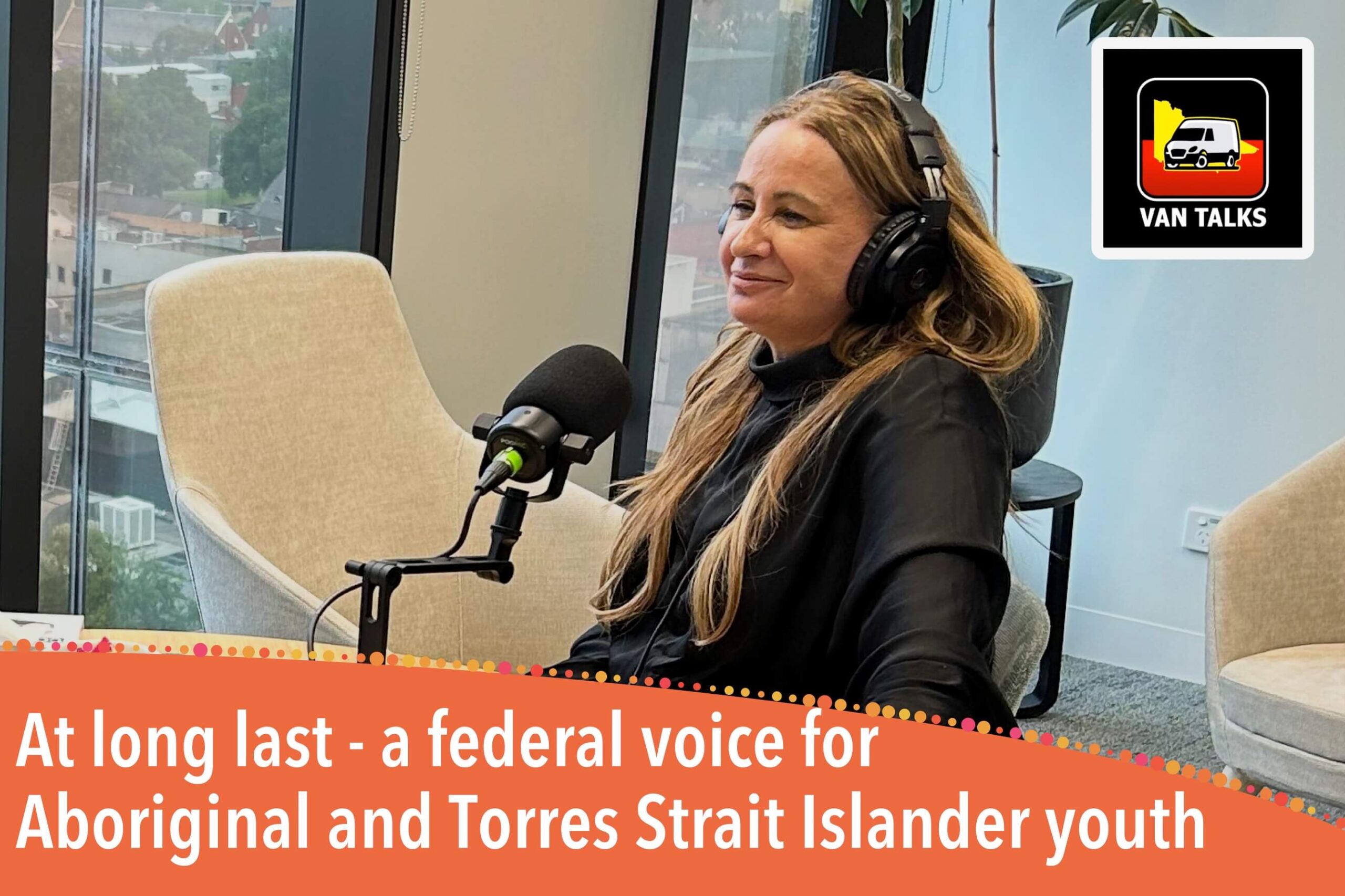
Just days after the 26th of January 2026, we’re sitting today at the First Peoples’ Assembly of Victoria’s offices in Collingwood with one of the co-chairs of the Assembly, Ngarra Murray.
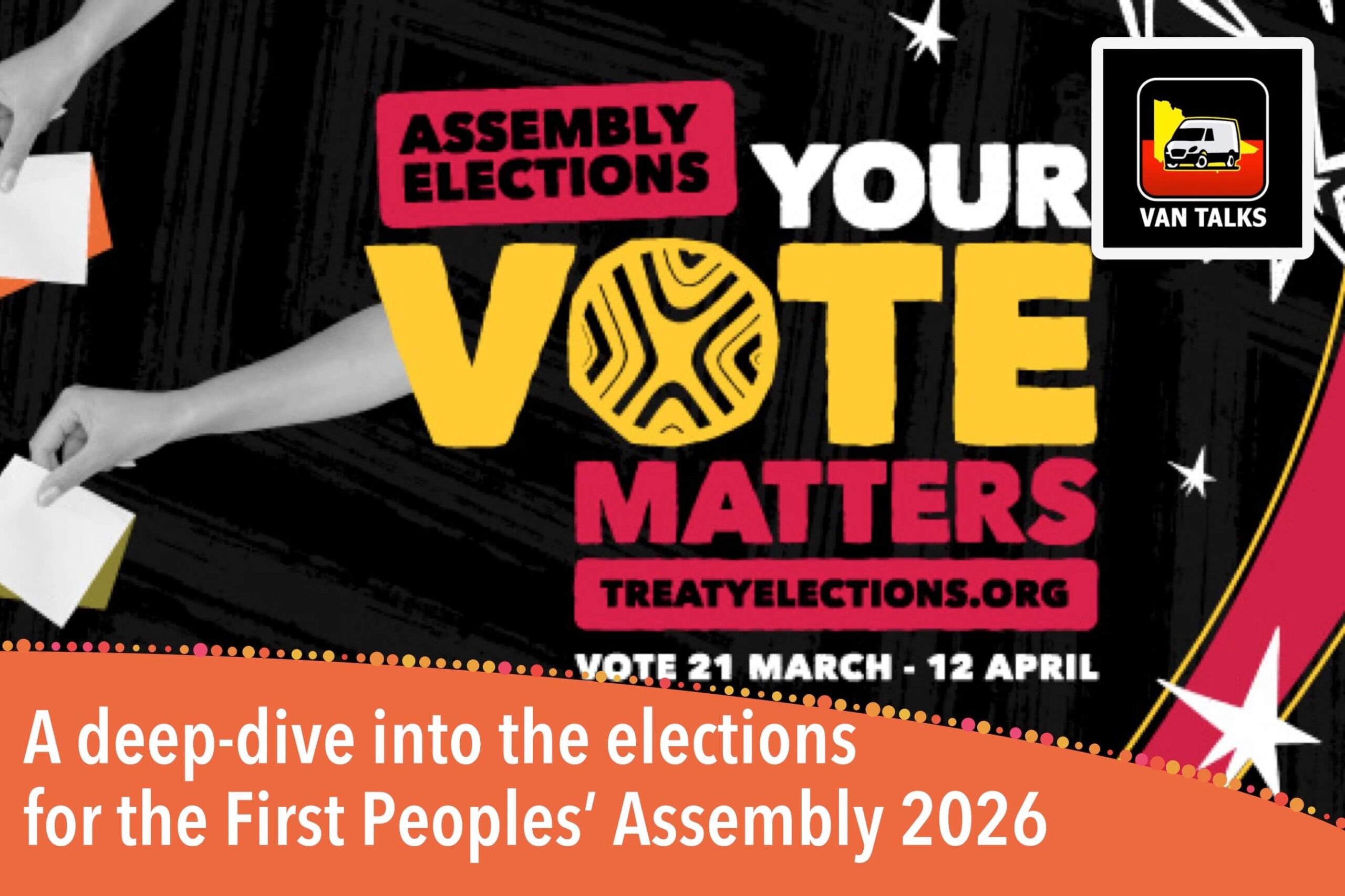
Today we’ll be speaking about a range of matters, going from Gellung Warl to the future, engagement with youth, and, of course, the all-important forthcoming elections for, as is commonly or colloquially termed, the Assembly 3.0.
Ngarra, thanks for joining me on the program today.
Ngarra Murray:
Thanks for having me along.
Charles:
Ngarra, I want to get right into it and start talking about the transition to Gellung Warl, which is set for May 2026.
Now that we have the Treaty Act 2025 in place and bedded in for the past couple of months, how do you see, or how does the Assembly see, that the day-to-day operations and the weight of the Assembly’s authority will change once it becomes a permanent statutory body?
Ngarra:
Yeah. So as we know, we’ve been on this Path to Treaty for the last 10 years, and a lot of preparatory work has gone into those years. And for the first time in this country, we have a treaty, and it is in law here in Victoria, and we’re ready to get to work.
We’ve had an incredible 12 months where we’ve seen the Statewide Treaty Bill introduced to the parliament, and we’ve had extensive negotiations over that time where we spent a good nine months negotiating with the state to deliver on the very first treaty of this country.
So we are ready to work. We’ve come back from our break. An incredible ceremony was held last year, as you know, with the signing of the Treaty on the Birrarung Marr, and also within the Government House where it was given Royal Assent to the Cultural Assent that was received in December last year.
So it’s been an incredible journey for us to get to this point, but we are ready now to set Gellung Warl up for success, and there’s a lot of hard work that we’re doing to prepare for that and a lot of different elements.
Charles:
Yeah, and we spoke to Rueben Berg about those last year quite extensively.
But from the operational perspective, let’s be fairly general, how do you see that the Assembly itself, or under Gellung Warl, will actually change from what it has been since 2019, since it was first elected with Assembly 1.0, to this Assembly 3.0?
Ngarra:
Yeah. So the last six years we established the company, so we’re going from a company now to a statutory body, which we’re morphing into, and there’s a lot more power and responsibilities that we’ll hold within Gellung Warl. So we’re making sure that the different elements that we negotiated through Treaty with the elected arm, so there’ll be an election coming up soon, which we’ll announce on Monday. There’ll be an election period.
And we’re setting up the Nyerna Yoorrook Telkuna, which is the new truth-telling component of Gellung Warl, and Nginma Ngainga Wara, which is the accountability mechanism. We’ve got the First Peoples’ Institute. We’ve got a number of obligations that we need to make sure we deliver on ensuring that the success of Gellung Warl, that the next elected arm, will pick it up and run with it.
Charles:
Well, let’s dive now into the elections then. You just mentioned that on Monday, and bearing in mind to our listeners that it’s probably the Monday just gone by the time you’re hearing this, what are we looking at? Are we looking at still the same five regions, the same number of elected representatives, and also appointed representatives from each of the traditional owner groups?
Ngarra:
Yep. So this will be the third election that we’ll be holding. So the election period will commence next month, and we’ll call for community members to put their hand up to nominate as candidates.
So we will have the same amount of seats in place across the five regions. So we’ll have the reserved seat members, which are elected through their tradition owner groups, and the general members, which are elected by the community.
So now is our opportunity to elect the right representation to lead us in the Treaty era and to make sure that they’re implementing Treaty and getting it done.
So I think it’s a big call for our mob to put their hands up. We’ve had a lot of success in the past with our elections and community members nominating.
And this is really our Black democracy in action, and thousands of our people have enrolled to vote over the last two elections. So we’re encouraging all our mob to put their hands up now and vote in the upcoming elections and to talk to their communities about what’s about to occur and to make sure that our mob are active.
We’re talking with our young people, with our elders, with the different community right across the state. We’re such a diverse community, as you know, so yeah, we’re looking forward to the upcoming elections.
Charles:
Well, let’s talk now about actually getting people to nominate.
Now, if we cast our minds back to 2018, 2019, when Aunty Jill Gallagher, as the Victorian Treaty Advancement Commissioner, was really hawking this message right across the state and encouraging people to run for this Aboriginal Representative Body, as it was known in the original act, there was a degree of difficulty. A lot of people were actually very concerned about running. They thought they were going to get negative feedback and repercussions from their communities.
And then we saw subsequently for Assembly 2.0, there was a massive increase in the number of nominations.
What are you looking at right now, and how do you intend to really get people engaged in nominating and getting them importantly trained up, or at least understanding what’s going to be ahead for them as members of the Assembly and also in just the election process itself?
Ngarra:
Yeah. Well, Treaty is our business, and I think all First Peoples in Victoria have an obligation to participate and be active in the process.
And this is a legacy that we want to continue. It’s come from the old people about our representation and how we will govern into the future, and we’re calling on community to put their hands up.
And I think that it’s the most honorable thing that you can do. I think we all have a role and responsibility to play within the Treaty era, and we’ve all contributed in different ways over the last 10 years.
Charles:
For sure.
Ngarra:
And I’d love to see more of our people, especially our young people, putting their hand up. This is a treaty for the generations, and our young people will inherit this. So we want to make sure that we prepare them as we go into the future.
And I think that, yeah, we’re really keen to get more of our mob putting their hand up, which I think they will. They’ve seen the success of the Assembly over the last few years, and I think that, as I said, there’s a lot of our mob have a role and responsibility to play, not just as traditional owners of country, but as First Peoples here in Victoria. So we should all get involved and encourage all our families and our mobs to participate and take ownership of the process.
Charles:
What have you been hearing from within the community when it comes to young people putting their hands up and expressing an interest in becoming elected members? And I’ve got to say, one of the people that comes to mind is Levi, Levi Power from up Yorta Yorta country, who I recall meeting when he was a community engagement officer with Assembly 1.0. And I remember sitting down in Shep and talking about the possibility of becoming an elected member in Assembly 2.0, which he did so successfully.
What sort of things are you hearing, though, from young people in their, I don’t know, their excitement, their enthusiasm about being a part of this, whether as an employee, whether as an engagement officer or whether as an elected member?
Ngarra:
Yeah, and that’s true. There’s many ways that young people can participate, whether it’s as an employee of the organization, which I know Levi started as, and he’s a fantastic representative for the Northeast, whether you’re voting in the election, whether you’re participating in the Youth Voice or the Elders’ Voice, there’s many pathways to being active in our community.
Charles:
Well, let’s explore some of those. Because I’m aware that recently I saw on LinkedIn that there was a call for people to be, for young people, to be involved in gaining leadership experience through working with the First Peoples’ Assembly Victoria.
So let’s talk a little bit about that, and possibly some other initiatives going forward, even through to Assembly 3.0, for young Aboriginal people, traditional owners and non-traditional owners, to be involved in this process.
Ngarra:
Yeah. I think that that’s an opportunity we put out to the young people that have a pool of young fellows that want to come and work in the Assembly or find that pathway.
I think of some of the young people that have been part of the process already, and we’ve had some amazing young people with Sissy Austin-
Charles:
Oh, yeah.
Ngarra:
… and Nartarsha Bamblett, and Levi Power, Djaran Murray-Jackson, a number of the young fellows that have been part of this journey.
And I think of two young people in particular. One is Jordan Edwards. He’s been a fantastic rep for Southwest-
Charles:
Oh, legend. Yeah.
Ngarra:
… and joined as a young father, think he now has four children since he was on the Assembly, but that journey that he’s been through on the Assembly, and he’s been a fantastic rep.
And then my own daughter, who’s only 10, but for the last six years has been part of the Treaty. She thinks she’s on the Assembly with all the chambers and meetings that I’ve dragged her along to. And that’s all she knows, and she’s already an active little community member for Treaty.
And I think that’s all they’re going to know these days, that Treaty is just part of our life. It’s who we are, and it’s our business.
So I think that, yeah, I’m confident in what the future holds for our young people and for them to inherit this, and we need more young people involved to bring their thinking in. And I know we’ve done that through the Youth Voice and our interactions with all the young mobs across the state and, in particular, in the country regions as well, getting more representation from the young people in parts of Shepparton, Horsham, Gippsland mob, all over, would be fantastic to see more than put their hands up to run.
Charles:
I’d like to explore a little bit about employment within the Treaty ecosystem, because it’s now going to be significantly more than just the Assembly. It’s going to be Gellung Warl, there are going to be other affiliated organizations and associated organizations where they’re looking at revamping the education system, the accountability mechanism, the place-based truth-telling and the Assembly itself.
Without pinning you down to exact numbers, just how big or how many opportunities do you foresee will exist for people generally to actually be employed and actively involved in this new Treaty ecosystem?
Ngarra:
Oh, there will be so many opportunities, and we’ve created a whole landscape across the diversity of Treaty and even with what truth-telling has brought to our community. And I think that there’ll be so many opportunities for people to run as an elected member.
Also within the employment with our team we started originally, think we inherited the constitution, and we have transition staff with 10 staff or something. I think Ginger’s an original-
Charles:
That’s right.
Ngarra:
… staff member and probably our longest-serving staff member.
Charles:
And just jumping in for a second, our audience probably won’t know who Ginger is. But that’s Ginger Ridgeway, who’s been one of the most staunch allies and contributors to the entire process, working very much in the background, but still here and still battling on. We might even catch up with her. It’s another interview later on down the track.
Ngarra:
Yes.
Charles:
So sorry to interrupt, but go on…-
Ngarra:
No, Ginger has been fantastic.
So there’s so many opportunities throughout the organization and we’ve grown now with such a big team. We’ve got nearly 90 staff, and Damein Bell has been fantastic leading our-
Charles:
As the CEO, yep.
Ngarra:
… operations and our strategy, and he’s been absolutely amazing, especially within the era that we’re in.
And also opportunities within the different arms of Gellung Warl because we’ll look to appoint commissioners through Gellung Warl to Nyerna Yoorrook Telkuna and Nginma Ngainga Wara, also the First Peoples’ Institute that we’re developing as well. So there’ll be so many opportunities, not just here within the First Peoples’ Assembly, but within Gellung Warl.
We’ve also got the Self-Determination Fund Trust. We’ve got amazing people already within roles, but that’ll grow over the coming years as we evolve.
Charles:
Can we talk about the place-based truth-telling at this stage, or is that something that we should be leaving a little bit later on?
Ngarra:
Yeah, so maybe a little bit later on, but obviously, yeah, preparing now for Gellung Warl to start, to establish Gellung Warl in its own right and the newly elected arm around their decision-making as to what that will look like into the future.
Charles:
What I’d be interested in touching on now, Ngarra, is addressing concerns that existed predominantly in the 2018, 2019 elections, a bit less in the subsequent elections, but that’s a feeling of distrust from within the First Nations community about even enrolling to vote.
So what have you seen over the years, and how do you see the Assembly actually making sure that people really do have that trust in the Assembly? That whilst they may not be getting everything they want right now in Treaty 1.0, there is something for everybody in future treaties?
Ngarra:
Yeah. And I think that trust we’ve had to build across the community because there’s always been that mistrusts in systems that have been imposed on us by government.
But this is an independent electoral role that we have. It’s an Aboriginal electoral role, and the data is not shared with government, and it is managed by First Peoples, the Aboriginal electoral role, and we’ve worked incredibly hard to build that role and create this Black democracy that our people can participate in because we haven’t always had strong representation at the table. And here we are now in a state where we have a treaty, it’s law.
So I think that, yeah, there’ll be time that it’ll take to build up that role. We’ve had thousands and thousands of people participating in the elections over two terms, but that trust is always a big thing for us, and also building that collective support across our communities because they’ve been part of systems that have often caused harm and imposed on us. So it’s trusting a new system that’s done by us, for us around the electoral role and how they’ll participate and be represented in the next iteration of the treaties.
Charles:
So do we have specific dates set for, first of all, nominations for candidacy for the Assembly and then the election dates itself?
Ngarra:
Yes.
Charles:
Do we have anything right now?
Ngarra:
We do. We do. We can confirm that as of the 2nd of February, we’ll put out the election notice, and then the Assembly election will be held from February to April. Candidates can nominate from the 16th of February to the 2nd of March, so we’re excited to see people put their hand up.
And just making sure that people are enrolled to vote is really important. So if you’re not enrolled, you can vote from the age of 16 as a traditional owner of country, but also as the First Peoples of this state, and as long as you’ve lived here for at least three of the last five years. So there is a criteria as to who can vote.
But, yeah, we’re excited to see the next iteration of what will become Gellung Warl and the newly elected arm, and they’ll have a big responsibility to take on, and they better be ready to work when they come in here. There’s a lot of work to be done. But yeah, it’s all very exciting, and it’s hard to believe even now that we have a treaty in place.
And it is the beginning, the very beginning of our relationship, but it’s exciting for the future and especially for our younger generation as they go forward.
Charles:
So I know we’ve done this time and time again with you, with Rueben and with other people from the Assembly, but let’s just go over and reiterate the criteria for being able to enroll in the Aboriginal electoral role because you must also be still hearing people saying, “Well, I’m not a Victorian traditional owner, therefore, I should not be involved in this process.”
Now, before we get to the actual criteria itself, why should all Aboriginal Victorians and Torres Strait Victorians, because it is for them as well, why should they be involved in this? What’s in it for them ultimately, and what’s in it for all Victorians, quite frankly?
Ngarra:
Yep, that’s a good question. And I think that that was a big conversation we had in the earlier days, and that was part of our decision around having a hybrid approach. Because Statewide Treaty is for all First Peoples that live here in Victoria and Treaty is for the generations, but for Victorians, too-
Charles:
Absolutely.
Ngarra:
… because all live here together, we coexist.
So we wanted to make sure that the Statewide Treaty would benefit all Aboriginal Torres Island people that live here and that they would be able to participate.
And that’s how our mob are, and I think we’re very welcoming and embrace all the diversity of our communities. We have had a lot of interstate mob be a big part of our history and our communities and even establishing our own Aboriginal organizations in many ways. A lot of mob that are traditional owners of country elsewhere have been here for 50, 60 years, some of the families, so-
Charles:
Yeah, and they’ve been critical to community.
Ngarra:
They have and have been instrumental with our own trailblazers over that political movement and on the forefront of that. So we want to make sure the Statewide Treaty include everyone.
And even traditional owner treaties, that’s for traditional owners of country, but we have a lot of mob that live on our country, in our communities that are part of our mob. They’re married in or they’ve been here for 50-plus years. So they will be part of that treaty in the regions and the traditional owners of those countries, they’ll determine that when they take up their own treaty pathway.
So it’s for all people here and also about resetting our relationships with non-Aboriginal people. And that was a big part of my learning through the treaty process was it is about relationships and resetting those relationships. And here we are now at the beginning of a new relationship.
And I think that when all their mob witnessed the treaty being given Cultural Assent at John Cain Arena last year, it was a moment for all of us that live here in Victoria. So it was such an emotional time for us, but I think it’s such a important way in our relationships going forward.
Charles:
Ngarra, what about those traditional owners who are multi-clan members? Now you’re a perfect example of this. I think about four or five mobs-
Ngarra:
Yep.
Charles:
… that you are connected to. What are some of the intricacies around that?
Because there’s also confusion about, do you vote where you live? Do you vote in your traditional owner’s area? And how many times can you vote? Because in the general election, I believe it’s once, you can also vote with your TO group. Can you clarify that a bit because there’s a bit of muddy water there?
Ngarra:
Yes. So there’s two different approaches. So in the general election, all Aboriginal Torres Strait Islander people can vote, and you vote where you live. So for example, I live in the Metro, so I vote in the Metro representatives.
In the reserved seat elections, where you have rights where you assert your rights in your own traditional owner groups, for example, myself, you can vote in those elections. So you could have multiple ties to different traditional owner groups, and you assert your rights and honor your ancestors. So you can vote in the Wamba election and you could vote in the Djara election. So you have that right.
Charles:
Yeah. And that’s managed, though, by the traditional owner group. That is not part of the general election for the general members.
Ngarra:
Yes. So the general elections are ran by the Assembly electoral company that they engage, and the reserved seat elections are hosted by their traditional owner groups. So the traditional owner corporations, they organize those elections, and as a member of the corporation or as that tribe, you can have rights to vote in those elections. So yeah.
Charles:
Now let’s talk about the criteria. As you mentioned, it’s for all Aboriginal and Torres Strait Islander people 16 years and over, who’ve lived in Victoria for at least three of the past five years.
Ngarra:
Yep.
Charles:
Now that’s a hell of a lot of people and probably just as many non-traditional owners as traditional owners. One would guess, anyway.
And what else? What are the other requirements, or is that pretty well it?
Ngarra:
Yeah. So that’s really the only requirements. If you are a traditional owner that live outside of Victoria, you can-
Charles:
Of course.
Ngarra:
… still enroll and vote in our elections. And if you’re already enrolled, you can even vote in future elections.
But I think that it’s a right and responsibility that we all have because voting has never been gifted to us. And I think of my own grandparents and the fight they had to get voting rights. And the importance of the vote and them old people like Uncle William Cooper and Aunty Marge Tucker and my grandfather Doug Nicholls and the fight that they had to get voting rights.
And what that led to in the ’67 referendum was absolutely vital to our democracy and representing in the mainstream votes. But also with us now, we have responsibility to participate and be active and to have ownership of the process. And that’s why it was designed for our mob. But yeah, it’s important that everyone participates.
Charles:
Now, you did open a bit of a pathway there when you mentioned Sir Pastor Doug, your great-grandfather, and his uncle, I believe, Uncle William Cooper.
Ngarra:
Uncle William, yep.
Charles:
And, of course, that brings up the editorial that was penned by you and published on the 26th of January.
Now you recently wrote that powerful piece regarding 26 January as a Day of Mourning. And in this treaty era, which we are so fond of saying, how do you see that Victoria leads the country in changing the national narrative from celebration to honest reckoning?
Ngarra:
Yep. I think for us in Victoria, it’s been an absolute journey to get to this point, and I reflect back to where we’ve come from and our elders coming from missions and reserves, and my grandfather, Doug Nicholls, being born on Cummeragunja in the early 1900s and where we’ve come from in the last 100 and plus years.
And on reflection, coming through the missions and reserves, all our families, that’s where we all descend from, all the old families and then going into that kind of Black Power Movement and that era where we started to design our own treaty control mobilization.
Charles:
And you were brought up in that, wasn’t it, with your father and your family?
Ngarra:
Yeah, and we have been on the forefront of the political movement, so it felt natural for us to go first. And despite losing that support with the referendum on the Voice, we still pursued Treaty, and that was really strong purpose for us to keep going to achieve what we have now. So I think, yeah.
Charles:
But how important, sorry to jump in, but how important do you think it is for the rest of the country, for them to see this playing out here in Victoria, this treaty process? And this is then taking us from being a celebration on the 26th of January to that honest reckoning I mentioned?
Ngarra:
Yeah. It’s been incredible the support we’ve received from all the different jurisdictions, so all the different mobs from other states and territories, who are all on their own truth-telling and treaty pathway. And it hasn’t been so kind to mobs in Queensland, for example, where they had their truth-telling and treaty repealed.
But I think that with us, we’ve really set a precedent across the country for others to follow. And they’ll do their own treaty and truth-telling in other states and the territories on their own way, on their own terms. But I think that we worked really hard and had a really strong purpose to get to where we are. And we worked really hard in the relationships within the parliament to build that collective support right across.
So we are trailblazers, our mob, and the 26th of Jan has been a long call for us, nearly 90 years when Grandfather and Uncle William and Aunty Marge Tucker and many other Aboriginal elders walked to the streets of Sydney in protest of the 150th anniversary of the First Fleet. And that was a huge call that we’ve carried over through the generations.
And yeah, I wrote that article on the 26th of Jan this year because it’s still the same call that we had nearly 90 years ago. And now we’ve had truth-telling, we’ve got a treaty, and what does our future look like? And I think that the 26th of Jan has to change.
And it’s not so much about the actual changing the date, but it’s whether Australians are ready to have that mature conversation as to how we move forward in a modern context with a treaty, with truth-telling, and what does it look like? Because for us, that has always been the Day of Mourning. It’s been a call that our old people had. It helped form our NADOC Week. You know, NADOC stemmed from that process, that protest.
So yeah, it’s a long call that we’ve had. And I think that now we’re ready to have those conversations, and we have the opportunity to sit down at the table with the state and to have those confrontations and talks about what the future will look like.
Charles:
And I suppose it’s also important for the audience to bear in mind that it’s actually been a Day of Mourning for longer than the 26th of January has been Australia Day. Aunty Jill Gallagher pointed out on the Moonee Valley City Council’s Bunjil’s Marroun Healing Ceremony just last Monday that it was in 1994 that the 26th of January became Australia Day.
But as you mentioned, it was 90 years ago that that initiative was made that the 26th of January would be a Day of Mourning. So there’s always lots of things to think about on that.
Ngarra:
There is.
Charles:
You also mentioned government and seeking support within government. And, of course, that means we do need to talk about what happened in 2023 when the opposition, I will say this, I don’t know if you can, but shamefully turned its back and reversed its position on supporting for Treaty because, as we know, the initial Act went through in 2018 with bipartisan support.
So we’ve seen that shift in bipartisan support since October ’23. How do you see, at this stage, the Assembly plan to future-proof Treaty so that it remains a permanent fixture of Victorian Law, regardless of which party is in power at 1 Treasury Place?
Ngarra:
Yeah. So that’s something that we always consider. Over the last few years, we’ve built strong relations across the political sphere, so within our own state parliament, and unfortunately, yes, we had the opposition come out and withdraw their support after the referendum. But we’ve always had an open door policy where we want to continue that dialogue with all parties, with all sides of politics. So that’s really important to us, those relationships.
There’s always the risk of parliamentary sovereignty, and that’s a whole ‘nother conversation, also around how we safeguard and future-proof. I think we’ve got 10 years of political power that we’ve built across the parliament. We’ve entrenched it within the system of Treaty. We have three laws now in relation to Treaty.
And I think that it’s going to be an ongoing dialogue because no matter what we do as Aboriginal people, it is always politicized. We’re always used as a political football. And that’s something that we put on notice to the parliament when we introduced the bill, that we weren’t going to tolerate it anymore. And we’re going to sit down and have these conversations and continue to build on our relationships so that we ensure that Treaty is for the generations.
Charles:
Now, without naming names, I don’t expect you or your co-chair, fellow co-chair Rueben Berg to make mention of specific names, but if we just hark back even 12 months to the negotiations that took place between the Assembly and the state government itself, just how important have those relationships been? Because I know that you and Rueben and others in the negotiating team were speaking to all people across the political divides, plural. Just how important will they be going forward post-November 2026 when we have a state election, regardless of the outcome?
Ngarra:
Yeah, it’s so important because we’ve had to create this middle space, and that’s a space that’s never existed before where we’ve sat down at the table to say, “Well, how is this relationship going to look from sovereign to crown,” for example? So that’s a lot of work we had to do to build that relationships, to build up that trust to be able to sit at the table.
And every conversation that we had was so valuable, so important, and I think that that will continue with the newly elected arm. They’ll have their own relationships with the parliament, and I think that that middle space is where we find that common ground as to how we move forward, how we’ll coexist.
So I think that that’s one of my learnings is around that space and the autonomous regard that’s required within that and how we sit together at the table to discuss a whole bunch of different thematic areas and to negotiate. There’ll be many treaties to come.
This is the first treaty and that sets the precedent, but in the next iteration, they’ll negotiate on other topics, other subjects. So they’re going to still have to have those relationships and to find that middle space, that common ground.
Charles:
Last question, and it’s a very short answer. Ngarra Murray, what are your plans to do with regard to the next elections for the First Peoples’ Assembly of Victoria?
Ngarra:
Oh, it’s hard to kind of process at the moment after this incredible year that we’ve had, but I’m excited for the future, and I’m excited about the elections coming up. So I’m looking forward to Gellung Warl existing and getting put into place. So yeah.
Charles:
Do you intend to nominate?
Ngarra:
I won’t answer as yet, but you’ll find out soon.
Charles:
Ngarra Murray, co-chair of the First Peoples’ Assembly of Victoria. Thank you so much, indeed, for your time.
Ngarra:
Thank you.

0 Comments