

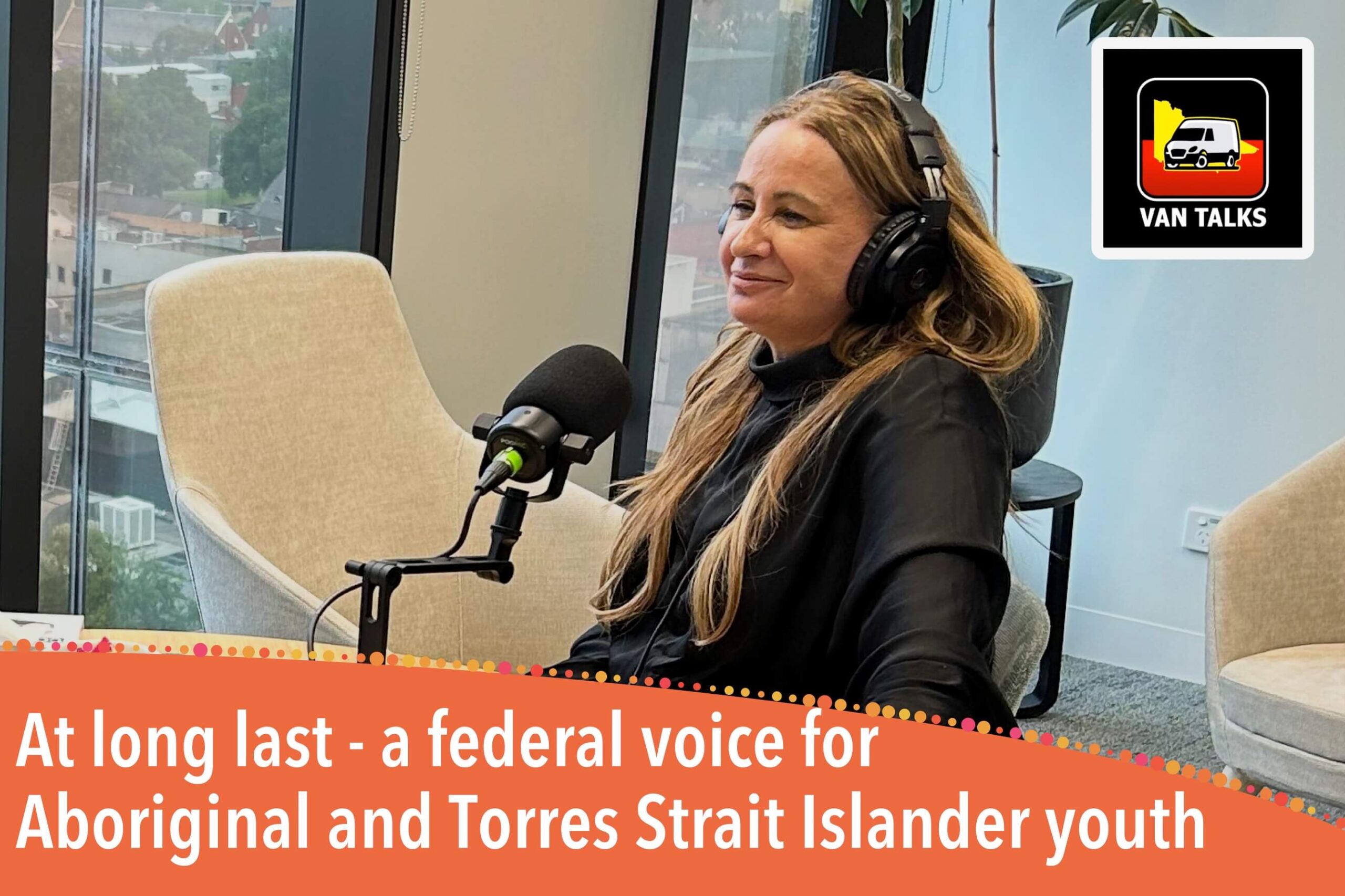
Charles Pakana: In February 2026, the Australian Government introduced the National Commission for Aboriginal and Torres Strait Islander Children and Young People Bill 2026. As we record this interview, it has already passed the lower house and now it’s before the upper house in Canberra. Joining me today to talk about this landmark bill and its impact that it will have across Greater Australia and specifically Aboriginal and Torres Strait Islander youth, is the newly appointed Commissioner for Aboriginal and Torres Strait Islander Children and Young People, Wurundjeri and Nurrai Ilum woman, Sue-Ann Hunter. Sue-Ann, thanks for joining me today.
Sue-Ann Hunter: Thanks for having me, Uncle Charles.
Charles: Before we ask Sue-Anne the very first question, though, given that we’re on Wurundjeri country, her country, Sue-Ann, I’ll just pass to you.
Sue-Anne: Oh, thanks, Uncle. Firstly, I’d like to acknowledge my people, the Wurundjeri people whose lands we’re on. But I also want to acknowledge all of Australia, and as we walk, we walk on Aboriginal land. But really, I just want to acknowledge our people that fought and still fight for our children, those that made it home, those that didn’t, those that are still searching and those that are currently in those systems and those that have left those systems, because that’s part of why this commission’s here and we’re doing the work we’re doing today.
Charles: When you took this role on, now this was before the legislation had even been finalised, preparation to go before the lower house as a bill, what was the requirement that you were expected to take on?
Sue-Anne: I thought I was walking into a commission that was already pretty much really nearly established. My predecessor, Lil Gordon, had started setting up the bones of the commission. So I walked into that, also walked into policy, because it’s going through the Department of Social Services, policy with them, and then also advocating for what we needed in policy as well as what we needed in legislation. But not doing this alone because there was consultations with community that DSS were doing alongside my advocacy internally.
Charles: But this was specifically for Aboriginal and Torres Strait Islander youth. And as you said when you came in, it was still an authority at that stage. Well away from being a commission, correct?
Sue-Anne: Yeah, that’s correct. So, just to be clear, it’s for Aboriginal and Torres Strait Islander children and young people. So that’s up to 25 years of age. So that’s a big breadth of young people and youth, and that includes everybody. So it’s a pretty big mandate when you think about it.
Charles: What are some of the key challenges that when you were given this role, that you thought, oh, my goodness, I’m going to have to be facing these particular issues.
Sue-Anne: We all know the issues. Like, let’s be really clear, this is not new. We know out of home care, we know youth justice, education, health. We know that we’re at the higher ends. I don’t want to talk about statistics because we’re talking about children, human beings, and we need the statistics to back up what we’re saying. But also, our children are struggling and we need to be human about it. And we also need to look at these systems. So this commission will look at systemic injustice, not individual cases. But in saying that those individual cases form a pattern that will help us inquire, one of the things I really love is that we’re to raise the voices of our young people.
Charles: So this essentially builds very much on the work you’re doing with the Yuruk Justice Commission, in a way.
Sue-Anne: In a way, yes. I feel like I’ve been set up really well, doing Yuruk as a commissioner and then coming across here, having that experience of being part of the whole four years of your book about setting it up, setting up inquiries, what does that look like? And I know I grew a lot in that four years, a lot in how I see and analyze and being able to bring that into this role at this point in time, really making sure the Commission’s set up so it’s solid, really solid foundation, that even after my five years, the next person who comes along, everything’s set up and they can just go for it and then build on what we’ve already done.
Charles: Did you have any reservations before taking the role?
Sue-Anne: Oh, I think if I didn’t, there’d be a problem. It’s huge. It’s really big. It’s quite daunting. But the way I work is I break things up into smaller pieces. And so although we’ve got a massive task ahead of us at this point, setting up the commission properly, getting the right resources in there, and then making sure, you know, once we’ve got legislation, that there’s no way you can pull it apart.
Charles: Yeah.
Sue-Anne: And then after that, there’s a few inquiry things that we’ve sort of started looking at that set this foundation. And one is looking at all the commission’s inquiries that have been done before that involve Aboriginal children in out of home care and youth justice, because we know there’s hundreds of recommendations, pulling those together. And what do we learn from that? And also doing some work around data from a Commonwealth level. Are we getting the correct data? What does that look like? Because all the laws and everything are different in each state and territory. So bringing that together gives us a good understanding of our children and where we are at. And I don’t think we have that at this point. It’s sort of a bit piecemeal.
Charles: If we talk about findings, the government, regardless of whether it’s conservative or Labor, doesn’t really have a good track record when it comes to actioning those items that are called forward in royal commissions and we can look at any number of those. What gives you the hope or the belief that your work as the newly minted commissioner will have any difference?
Sue-Anne: I think because we’re; one, an independent agency, we will have the voices of children and young people throughout everything we do. They will be consulted. And I plan on working collaboratively with other commissioners. Remember, we’ve got commissioners, advocates, and guardians in most states or territories.
Charles: And that’s another question I want to chat with you about in a minute.
Sue-Anne: So working with them as well as the Human Rights Commission, working with other government bodies.
Charles: Yeah.
Sue-Anne: And I think there’s power in numbers and I’ve had lots of people reach out even as allies to work with the commission. And I think collaboration is the best way. I can work across all political streams, like there doesn’t, I don’t have to work with one political party, totally independent, and I think that’s a way we can get things done.
Charles: You mentioned about your state colleagues as well, because pretty well every state and territory has a state or territory based commission into Aboriginal and Torres Strait Islander youth, that has been a bone of contention within Parliament that, ‘why are we having this federal based entity when it exists at a state level?’ So from your perspective, what is the importance of a national commissioner?
Sue-Anne: So we don’t have anyone nationally that’s dedicated to Aboriginal and Torres Strait Strait Islander children. One at a national level that can look, have a bird’s eye view of everything. At some points our powers cross over, which is fine, but then there’s points where it doesn’t. So getting those gaps is really important. It’s different at a national level. It looks different, it feels different and we’re handling the systemic injustice of these systems that aren’t working. So yeah, there is some overlap, but there’s also some differences and how we work together individually as commissioners. I just met with them last week, so I’m co-chair of the Australia New Zealand Children’s Commissioners, Advocates and Guardians and that’s where we come together and have a look nationally. So they’re having input already. They are the Aboriginal and Non-Aboriginal commissioners, so, advocates and guardians, and it’s a great forum to thrash these things out where we can do that. But we all want change for our kids.
Charles: And that does bring us to closing the gaps targets 11 and 12, which are specific to your area of operations. How do you see that the commission, once it’s formally established, assuming legislation goes through, how do you feel it will impact on those particular targets?
Sue-Anne: Well, we need to look at those two targets because they’re the most failing for our kids. How we do that is going to be a big piece of work and we need to do it with everybody. We need to do it with government, we need to do it with Commissioners, Advocates and Guardians. And we need to look at it from a different point of view because what’s happening isn’t working. And it’s very clear, like I’m not saying anything new to people. How we, I guess, attack it, or address it, is a collective effort. I haven’t set an agenda on that as yet. I know they’re the two we’ve got to look at, but I need my powers to be able to say, this is it, this is what we’re going to do and this is what we’ll look at.
Charles: What are the two things that come to mind most prominently when you consider those two targets, 11 and 12 in the CTG?
Sue-Anne: When you say it, we’re just not reaching those targets, and our kids, we’re failing our kids. One of the things we need to really look at and look, SNAICC does this anyway, but how do we do it with them, with their powers, is the Aboriginal child placement principle. If you put that into action, you can start to reduce rates, I believe.
Charles: This is addressing out of home care.
Sue-Anne: Yeah. If we look at states and territories, it’s implemented differently in each state and territory. And I think, correct me if I’m wrong, but Northern Territory is starting to roll that back and I think so is Queensland.
Charles: Yeah.
Sue-Anne: So we’ve got to look at these things that we’ve got there and how do we actually use them or what are people rolling back totally independent of any government interference we will be, is what can we get? What does that look like? These are big issues, Uncle, and I’m not going to sit here and pretend I can solve them, because I can’t alone. That foundational work about the evidence of what’s been done before is really, really important because I don’t want to come into this role and bang out another inquiry that’s not going to be listened to. And so that foundational work that we’re doing about bringing those inquiries together about out of home care for our kids and youth justice, for me, there seems to be an element that’s missing and I would say the factor of health, the social determinants of health doesn’t seem to come into play very much when we’re talking about these reports. So they might look at out of home care alone or they might look at youth justice alone. I think our kids are undiagnosed with a lot of mental health issues because there’s disparities in health. I want to look at that as well. Does that mean anything? If it does, well, how do we do that? I’ve worked with our kids on the ground for over 20 years. I think we’re under diagnosed in ADHD and autism and there’s a lot of factors in that. And then you add the trauma. What does that mean for our kids? So I’ve been reading lots of reports around that and I think there’s something in it. What that is I don’t know yet. And I think we can’t do one without the other. And I’ve seen this over the years. You remove a child from home and then you work with the child, but you want to put them back in?
Charles: Yeah
Sue-Anne: You’ve got to work with the families, you’ve got to work with the communities, you’ve got to work with the schools. This is how we get healthy kids with these wraparound services. And community says it takes a village, right? It certainly does. As a single mum, I know that.
Charles: Of course.
Sue-Anne: How do we look at the whole child so that we can not have these things happening? But in context of family and community.
Charles: A lot of what you’re talking about, because as you were explaining some things then organisations came to mind and if we’re being Victorian specific, you’re saying out of home care, so VACA comes to mind. You’re talking about the youth justice system, so VALS comes to mind (The Victorian Aboriginal Legal Service) As you’re talking about health, of course, VACHO and the various Aboriginal community controlled health organizations comes to mind. Those, though, are specifically sort of within the remit, or more general in the remit of the state and territory based commissioners. Do you see also that there’s an important part in your work to collate all this evidence that your various counterparts, the state and territories are collating, and present it to the federal government as here’s a recommendation and what we should be doing at a federal level, rather than just farming that to the states and saying none of our business?
Sue-Anne: We’re really lucky because we sit under the Minister for Social Services. So that’s Minister Plibersek.
Charles: Yeah.
Sue-Anne: She’s very much ‘whole of family’ approaches, and ‘what works?’, we want to see what works. So in saying that, I just want to say quickly, I agree with her; we need to show things that are working, not things that aren’t working, but things that are working. Can we do them in other areas if they’re working really well? Like, that’s where…
Charles: So you’re talking about plucking case studies from New South Wales that could be applied to Western Australia?
Sue-Anne: If it’s appropriate.
Charles: Yep. Sure.
Sue-Anne: Yeah. Because we know each community is different, but what does good look like? And what’s working? If there’s one thing working in a region, why don’t we have it in the whole region, just instead of one spot, so it reaches everybody? I think there’s lots to think about, I just want to say, and it’s huge, and so a lot of I’m trying to do is keep our thinking contained at this point, get a really good understanding of the lay of the land before we come out with some report or spend a lot of money on reports that may just be another report that sit on a shelf, which is not what we want. We want chain.
Charles: Yeah.
Sue-Anne: And there’s lots of people to work with. And it’s still new. We don’t even have our powers yet.
Charles: As I said, the legislation is before the Upper House right now, so we’re yet to wait and see what happens there. Let’s assume that legislation will get across the line with the upper house. There are a number of specific powers within this bill as it stands right now. And the first one that I want to have a bit of a yarn about is the Commissioner’s ability to launch an independent inquiry without needing a request or permission from the minister. So how do you see that’s going to benefit you?
Sue-Anne: Well, government aren’t setting the agenda. We are. And when, I mean, we as community or youth or children or, you know, what are the trends that are happening that we really need to look at, of course, that haven’t been done before? But there’s so much work done in this space that if we see a trend, we’re going to pull that work together, rather than starting from scratch. We can accept inquiries to do from the minister. And I’m pretty sure that the legislation says if we don’t, that’s okay, like we don’t have to, but we can report why we didn’t, that the minister requested it, and that we didn’t accept it because of this reason within our annual report.
Charles: Is that just from the Minister or from any parliamentarian?
Sue-Anne: I think we’d do that with any parliamentarian, because I think that’s a transparent process. Our accountability lies in that we have to still go to estimates. We sit under the PGPA act, you know, legal obligations that we have to. So there’s an accountability mechanism. We can’t just go and do what we want. There’s these accountability mechanisms and I think that’s great because everybody should be accountable for what they do.
Charles: One of the other powers granted to the Commission, if it gets across, is information gathering, sometimes referred to as the teeth, and that is the power to require government agencies and organisations to provide information or respond to written requests. How important is this power to you going forward if legislation does get across the line?
Sue-Anne: When legislation gets across the line….
Charles: When legislation gets across…
Sue-Anne: …Is that what you meant to say?
Charles: That’s exactly what I meant to say.
Sue-Anne: It’s really important that we get what’s required because it’s accountability as well. Again, we’re all accountable. And so that accountability measure is what is in those documents that we need to see that helps us get better outcomes for our kids. This isn’t just about, you know, shaming politicians or this isn’t working or whatever. This is actually about saving our children’s lives and making it better for the next generation. And I think this legislation helps us do that. I think every conversation we have, I bring back to our children, because that’s why we’re here. And the reason we also are here is because a lot of people fought for this, a lot of people fought for this for a very long time. And I feel totally privileged, and I remind myself every day that I get to do this work as hard as it is and as tough as it is, and there’s lots to do, but I’m honoured that I get to be the first one to really do this work.
Charles: One of the key points in the bill is that the solutions to be suggested to Parliament are community led.
Sue-Anne: Yep.
Charles: One would assume that that’s going to require not just meeting with your fellow commissioners at the state and territory level, but really getting out there a hell of a lot in community. What’s been going through your head in planning, preliminary stages right now for that, for that community driven consultation?
Sue-Anne: We’ve already been invited to a lot of places, can I say.
Charles: I can imagine.
Sue-Anne: We just have someone on board, the Director of Community Engagement and Partnerships, just come on board, who’s starting to map the lay of the land. One of the things I feel is, that gets left off; we always say Aboriginal and Torres Strait Islander.
Charles: Yeah.
Sue-Anne: But not that many people go to the Torres Strait. So one of our first visits is going to be up to the Torres Strait. They have different viewpoints, and, you know, I was talking to this young lady not long ago – God, she was amazing – talking about environmental, how the land’s sinking, but then also how that relates to family violence, like…
Charles: Who would have thought of that?
Sue-Anne: Exactly. So this is the importance of going and speaking with youth. And I want to speak with young people more than I actually want to speak to the organization. Sorry, organizations. I am coming and I’m happy to run this all past you, but I also don’t want to put another burden on our young people. So what I will be doing is going out, collaborating with organizations so that we can speak to the youth groups or the young people groups that are already there and being able to work with them because they’ve already created these safe spaces, and then work with those organisations that already have these youth groups or young people’s groups, whatever it is, and being able to consult with them and get their voices. I don’t want reports that don’t have their voices in it. I also was thinking, how do I bring them to Parliament and speak directly to parliamentarians and give them an experience they may never have? So I’ve got all these ideas. We’ve just got to get set up. But the most important thing is their voice in everything we do.
Charles: And representing the Aboriginal and Torres Strait Islander voice at the Federal Parliament. I’ve been speaking today with Sue-Ann Hunter, the newly minted National Commissioner for Aboriginal and Torres Strait Islander Children and Young people. Sue Ann, thanks for your time.
Sue-Anne: Thanks for having me, Uncle.

0 Comments