
Rueben Berg urges local governments to work together in the Treaty era
Rueben Berg returns to VAN Talks to discuss his work as a self-proclaimed "back-bencher", focusing on community engagement and non Victorian TOs in the Treaty space.
Posted by: Karina Wells
Published: 15 June 2026
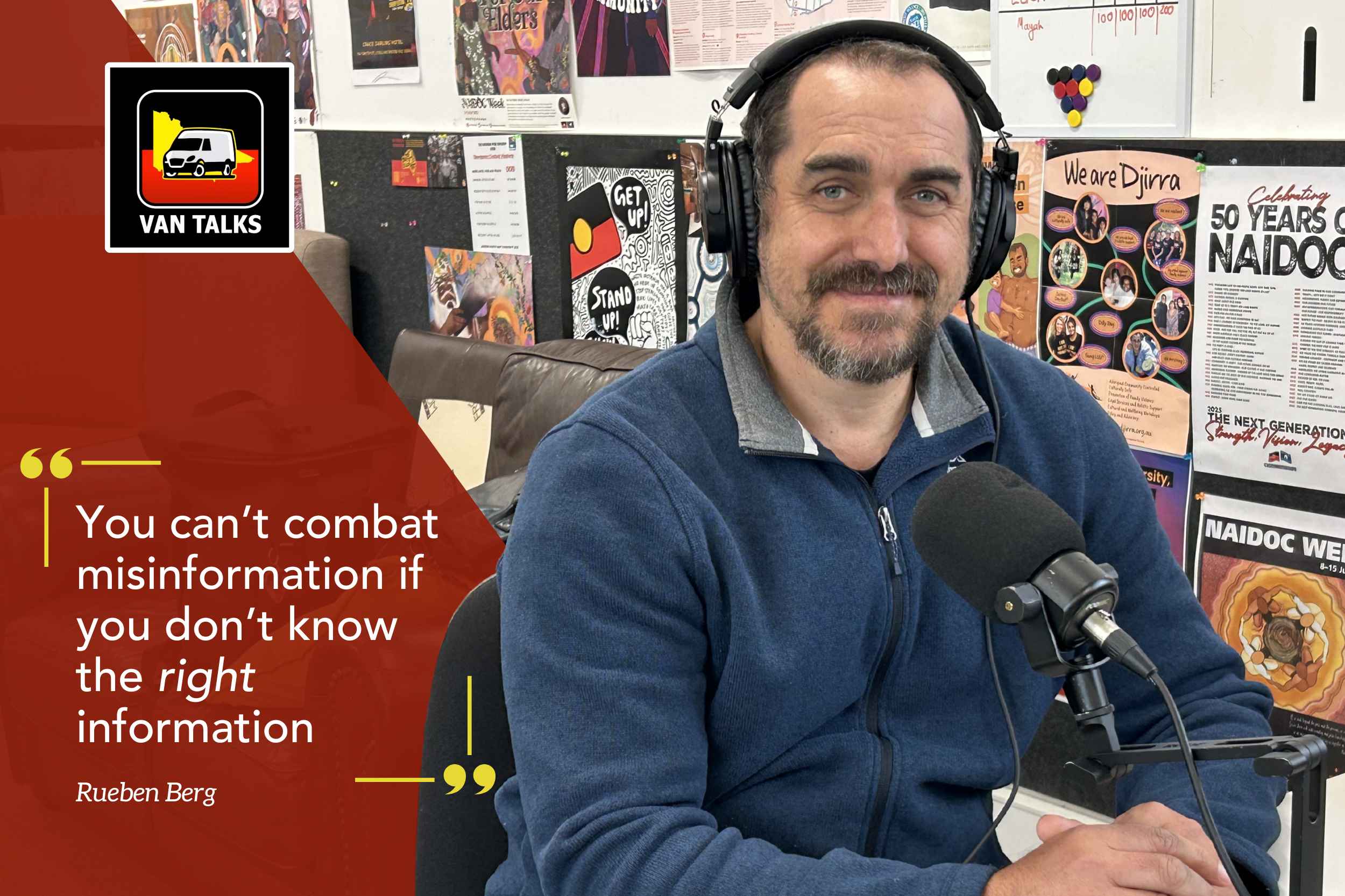
Following the historic 2025 Treaty between Victorian First Nations peoples and the state government, Gunditjmara man Rueben Berg has transitioned into a new role within the First Peoples’ Assembly Victoria.
After serving as co-chair during a grueling three-year negotiation period, Rueben made the deliberate decision not to seek re-election for the leadership role for Assembly 3.0, opting instead to serve as an active “backbencher”.
The demanding nature of leading the Treaty process took a heavy personal toll on representatives. Rueben noted the immense challenge of balancing high-level negotiations with family life. “It was just hard,” Rueben shared. “You can’t do the usual things you want to do as a dad… pick kids up from the school and drop them off and be there for their various different events”.
Beyond personal balance, the decision reflects a commitment to sustainable leadership within Mob. “I think it’s important to not just have the same people sitting in these roles. I think to see this as a role that can be passed on to the next lot,” Rueben explained.
Under Assembly 3.0, elected members must now commit full-time to their roles, an evolution Rueben believes will allow the Assembly—operating as a distinct body under Gellung Warl—to deepen its internal operations and presence on Country.
A primary focus for his current four-year term is ensuring that the voices of First Peoples living in Victoria who are not Traditional Owners of the state are formally included in decision-making.
“Negotiating Treaty, that was drawn from the inherent rights of Traditional Owners… but now that we actually have decision-making powers as Gellung Warl, those are decisions that won’t just affect Traditional Owners in Victoria, they’ll affect First Peoples from all across the state,” Rueben stated.
Looking ahead, Rueben is urging local governments to prepare for upcoming local Traditional Owner Treaties by building multi-level partnerships and combating misinformation.
For community members, his message remains clear: engagement is essential to shaping the future framework of self-determination.
Charles Pakana: In 2025, the First Peoples’ Assembly Victoria achieved something that many thought would never be achieved in their lifetime: a Treaty between the Victorian First Nations peoples and the state government. Along with fellow co-chair Ngarra Murray and a team of other dedicated people, leading the work to that was Gunditjmara man, Rueben Berg. In the lead-up to the 2026 elections for the third iteration of the Assembly, Rueben declared publicly that he would not put up his hand if re-elected to the Assembly for the role of co-chair. He joins me today, as he has many times over the years, for a frank discussion on his personal take on the Victorian Treaty process. Rueben, welcome back to the program.
Rueben Berg: My pleasure as always.
Charles: Rueben, let’s start it off with understanding the decision not to put your hand up for co-chair, which took a lot of people, including myself, by surprise. What led to that decision?
Rueben: Well, it was a pretty full-on three years, and it had been a full-on three years before that, having been involved in both iterations of the Assembly.
Charles: Yeah.
Rueben: And so when it was coming around for the election process, I had to think about whether I was going to run at all. We haven’t had a co-chair actually run again to be a member of the Assembly.
Charles: Ah, quite right, of course, yeah. I hadn’t thought of that.
Rueben: So that was the first question of, will I actually put my hand up to run again? And I decided that I did need to run again, that I wanted to be there to make sure that I could see the work that we’d done progress, but was very mindful that another time as co-chair would just be too much. It was a… it was a long, long three years, and [I] wanted to be able to spend more time with my family, but also wanted to make sure that we can continue to pass on these roles. I think it’s important to not just have the same people sitting in these roles. I think to see this as a role that can be passed on to the next lot, and then they pass it on to the next lot, and so on and so on, I think for me, that’s an important consideration.
Charles: We don’t often get into the personal lives of people, but you’re quite right. The most recent three years leading up to the signing of that Treaty was very hard on you, and I spoke to a number of the other people who were involved in the Treaty negotiations, and it was just staggering the impact it had on them. Without getting too deep, and I know you’re very, very much a family man, very involved and engaged with what your children and your family is doing, just what impact did that have on you, that three years of almost endless days and nights?
Rueben: Yeah, it was… it was just hard. You can’t do the usual things you want to do as a dad, is pick kids up from the school and drop them off and be there for their various different events. It wasn’t as easy to do all that sort of stuff. I still found some of the time to do it, but not as much as I’d like to, and now I get to do all those sorts of things and hang out with the family, and yeah, it’s… it’s fantastic.
Charles: But still, even though you’re no longer the co-chair, as we now know, all of the elected members, whether they’re from the Traditional Owner groups or they’re generally elected from the five regions, they’ve had to make a commitment where they will be involved in the Assembly full-time, which is a huge step forward. What impact does that have on you?
Rueben: It’s really important that we’re able to have this commitment to the role moving forward. It was one of the complexities last time, where we had some members being able to dedicate more time than others. Now that we have all members being able to dedicate a significant amount of time to this work, it means there’s two really important things we can do, from my perspective at least. One is we can spend more time just present with community, going to community events, being available to talk about Treaty, talk about what’s important for community, and then being able to actually do the internal work of the Assembly, of participating in committees, in working groups, of contributing the ideas we have heard from community back into the decision-making of the Assembly.
Charles: And we’ll discuss a little bit about some of the committees in a few minutes’ time, but when you talk about community, let’s just get a clear understanding of that. You’re talking about the Aboriginal community, aren’t you? Because that’s always been the Assembly’s stated focus, to engage with and inform the Aboriginal and Torres Strait Islander communities of Victoria.
Rueben: Yeah, that’s definitely the primary focus. I’m still involved in some activities that are there to support the broader ally community, but the focus is on making sure that when we do have to make decisions as Gellung Warl… as the Assembly within Gellung Warl, we need to make sure we’re doing that informed by what community’s aspirations are, informed by what our community’s needs are, and we don’t know that unless we go out and talk to community.
Charles: As the co-chair, or as the co-chairs, I should say, you and Ngarra were focused very much on a strategic, top-level approach where you had to be across pretty well everything that was going on. This now seems to afford you the opportunity where you can focus on a couple of areas or a couple of committees where you have a particular passion or drive for. What are some of those?
Rueben: There’s a couple of things I can focus on now. One is, in particular, the relationship that Gellung Warl has with the State, and all those different roles, the new responsibilities we have. I think that’s… that’s really critical, that’s outlined within the legislation what our obligations are there and the State’s obligations to us. But more broadly than that, I’m really interested in working out how can we involve more of the mob here in Victoria who aren’t Traditional Owners of Victoria. That’s been something we’ve had many conversations about in our time.
Charles: Quite a number, yeah.
Rueben: And it’s something I’m really passionate about making sure we get right, because negotiating Treaty, that was drawn from the inherent rights of Traditional Owners. That was a… a key focus of Traditional Owner rights within that, but now that we actually have decision-making powers as Gellung Warl, those are decisions that won’t just affect Traditional Owners in Victoria, they’ll affect First Peoples from all across the state, whether they’re Torres Strait Islanders, whether they’re Noongar people. We’re going to make sure that their interests are also heard and understood in this process, and so I’m really interested in making sure we can have proper conversations and get guidance from that community itself about how they want to be involved in these conversations.
Charles: You also mentioned in a previous conversation we had the important role that gathering places—and there are a growing number of gathering places being set up across the state—between those gathering places, its members—and we know a lot of them are non-Traditional Owners as well, so there’s that particular influence in there—and Gellung Warl. What are some of the key factors or even challenges that you see going forward in achieving those relationships?
Rueben: As we’ve said before, the gathering places are just so critical at that local level. I have the great fortune of going and attending lots of different events at different gathering places. You can just see the importance they have to those local communities, not just to the Aboriginal and Torres Strait Islander community within those areas, but the allies as well. I think people really appreciate being able to go some place that has a… a sense of being an Aboriginal place, and connecting with Aboriginal people, connecting with Aboriginal stories. Traditional Owner organisations don’t always provide that avenue because they’ve got a particular focus…
Charles: Of course.
Rueben: …as a Traditional Owner entity, as they should. And so gathering places provide, I think, a really unique opportunity to have different conversations. I think we need to be more involved in those organisations from my perspective, as an Assembly, and that’s what I intend to do. I think we also need to be mindful of making sure that government doesn’t see that, well, now we’ve got Gellung Warl, what do we need these gathering places for? They still play such a critical role, and I’m really interested in having conversations to make sure that local councils understand the value and the benefit of those gathering places.
Charles: So let’s look at local government, because that’s one of the focus points that we have here at Victorian Aboriginal News, is how local government relates to and with local communities. So, what are some of the achievements that you’d like to see, or some of the successes you’d like to see, without naming individual local governments, but at that local government area?
Rueben: I think there’s a great opportunity for local governments to start to get ready for the Traditional Owner Treaties. We know that we’ve had the first statewide Treaty, and that was really about systemic reform at that statewide level, but the local Traditional Owner Treaties is where I think there’s going to be much more greater engagement with local government. I think local government needs to get ready for that and have considerations about how they’re going to work with neighbouring local governments as well, because Traditional Owner groups cover a broad range of areas that cross multiple different Traditional Owner groups.
They don’t want to be having different conversations with one local government and another one with a different local government, they want to have a unified approach. And so local government needs to think about how it’s going to get ready for those Traditional Owner Treaties, but also needs to continue to think about how it’s going to be there to support First Peoples, no matter where they’re from across the country, to make sure within their community, the local government area, that they’re supported and connected to as well.
Charles: We do see though that there’s so much fear within local governments, and there’s also fear-mongering of course, but we see that right across every single aspect of First Nations, whether it’s native title, Traditional Owner Settlement Act, or whatever, and Treaty as well. So what would you say to the local governments that are really being subjected, either politically or bureaucratically, to that onslaught of misinformation and that resulting fear when it comes to Treaty specifically, local Traditional Owner Treaty?
Rueben: You mentioned that misinformation, and that’s a really key part of it, is knowing what the true information is. You can’t combat misinformation if you don’t know the right information. Members of the local community need to understand what the Treaty actually is. It’s not a hidden secret, you can go and read it. It’s 30 pages of the Treaty and 300 pages of the Treaty legislation, but it’s all there, it’s all out in the open. But read that and understand it so that when there is misinformation, you can actually combat that. We need to do that, we need to be sharing the true information. You don’t necessarily have to combat it directly, because sometimes that adds more fuel to the fire, but to make sure there’s a resource where people can get the real information about what’s actually happening around Treaty.
Charles: What about engagements with their Traditional Owner groups? You mentioned before that forming allegiances or partnerships with other Traditional Owners that may be sharing Traditional Owner Country is an important step forward. We do see, let’s talk realistically, a lot of local governments like to just keep to their own little areas and that’s it. What would you say to those leaders within local governments when it comes to shucking off this mantle of almost secrecy or individuality, and actually sharing experiences and sharing strategies in working towards Treaty?
Rueben: I’d definitely be strongly encouraging that. Understandably, local councils have to look after their local community, that’s what they’re there to do, but it benefits your local community if you’ve got better relationships with your neighbours. It’s really important, I think, to have that understanding that engaging with Treaty, engaging with Traditional Owners, engaging with First Peoples, doesn’t take away anything from anyone else. It actually adds to your community by having those strong connections.
Charles: I just want to bring it back to a comment that you said, that the information is out there, that the 30-page Treaty is out there, the 350-odd page of legislation is out there. What though when it comes to really engaging with their local communities and their local T.Os should the local governments actually be doing? Give us three calls to action, Rueben.
Rueben: I’ve seen some local councils run little events where they actually have an information session where they bring some experts along to come and talk about Treaty, and so the local community can better understand that. I’m doing one of those over in Wyndham. So I think that’s a really important initiative. I think being able to have some resources available on their websites is going to be important to be able to do as well, so that people know where to actually look for this sort of information. And I think making sure that the actual councillors have that understanding as well, because leadership comes from the top, and you need to make sure that all those members of that local council understand what the Treaty means as well because, unfortunately, we’re seeing some places, that’s where the misinformation is coming from.
Charles: What about actual direct engagement with the Traditional Owners? As you mentioned, and we’ll state it again, the T.O.s quite often, and we look at Wurundjeri where they’ve got 29 local governments in their area, that’s going to be a hard task for that full-on engagement. But what do local governments need to do, and how brave do they need to be, and is—third part of the question—is there anything to fear with reaching out directly to the Traditional Owner groups and saying, “We want to engage with you, we want to understand what your aspirations are, and we want to support or at least discuss these things with you”?
Rueben: I think it’s really, really important that local government has strong connections with the Traditional Owners across their area, and I understand that that can be challenging sometimes, but it’s important to have those relationships that are also not just based on one person within your organisation. That’s something I do see too often, is where it’s one person within the local council has a good connection with one person within the Traditional Owner organisation. And that can work fine while those two people are actually still there.
Charles: And someone leaves…
Rueben: Exactly. So you need to develop those relationships at all different levels. Hopefully, you can have a relationship where the council members have a relationship with the actual board members of the Traditional Owner organisation, where the CEO has a relationship with the CEO of the Traditional Owner organisation, and project officers with project officers. You need to have that relationship at many different levels.
That was particularly important when I was in the water space, to make sure we had those relationships with the Traditional Owners at those different levels, and I think the same thing applies to local councils. They need to be brave, they need to go out there and have those conversations, but also to know that whilst they might want to have a conversation, the Traditional Owners might have other priorities at that time. But it’s developing those relationships, participating in those Traditional Owner groups’ own events, it’s an important relationship to have.
Charles: I do want to come back to the non-Traditional Owners, as you mentioned. This is something that you and I have spoken about endlessly over the past seven, eight years, the important role that I perceive that non-T.O.s have. Within the Assembly, I recognise that there has been a degree of work done, public-facing work done, and I’m sure there’s been more work being done in the background. Now, I’m not asking you to comment on behalf of, or commit on behalf of the Assembly, but where do you see that non-Traditional Owners can benefit the Treaty process going beyond the 2025 Treaty Act?
Rueben: It’s a really important topic, and we talk about often, as you said. One of the complexities is even how you describe that community.
Charles: Yeah.
Rueben: Because for some people when they hear “non-Traditional Owners”, they… that means like non-Aboriginal people as well.
Charles: Well, we are talking about Aboriginal and Torres Strait Islander people.
Rueben: Yeah, exactly, so that’s why we’ve… we’ve had those conversations in the past about kind of “Treaty for all” is making sure that Treaty’s there for all Aboriginal and Torres Strait Islander peoples that live here in Victoria, whether they’re Traditional Owners from Victoria or not. And even, we come across issues where there’s Traditional Owners aren’t living on their traditional country, who don’t feel as engaged in the process. So we need to make sure we’ve got considerations of that. We do have obligations as the Assembly under Chapter 14 of the legislation…
Charles: Yep.
Rueben: …which talks about our answerability requirements, which means we will be guided by our community, and community is there in the broader term of First Peoples who live within Victoria, we’re guided by them about how we engage on certain matters. And there’ll be some things where, yes, it is only appropriate to talk to Traditional Owners on particular matters, but there’s a whole raft of areas where I hope we hear from community that our obligation should be to talk to all First Peoples within the state. I really can’t sit here and say what that should look like, and when I was the co-chair, I never wanted to determine what it looked like, and especially now just as a backbencher…
Charles: Laughter.
Rueben: …but I want to hear from that community, how do they want to have their voice heard into these processes? Because Gellung Warl is going to make decisions that affect all First Peoples living in this state, and we need to make sure we’re considering the views of all First Peoples in that state when we make those decisions.
Charles: So these are decisions around such issues as confirmation of Aboriginality, which is something we’ve also spoken about before, about the revamping or the taking away of the whitewash of the education system, based a lot on of the work of the Yoorrook Justice Commission. But how, then, do people actually reach out? Because I’ll be really blunt, and I’ll point the finger not at the Assembly or Gellung Warl, but at the community itself. You and I both know that there are so many people out there in our communities across Victoria who have sat down there and done nothing to actually reach out to their local members, whether they’re the T.O members or the elected members, to actually make sure their voices are heard. What do you want from those people?
Rueben: Really encourage those people to participate in the process. We do have these quite substantial obligations under this Chapter 14, I’ve mentioned it a few times, but it’s really important part of the process, that we have these obligations to develop a framework about how we engage. The Assembly can’t just go and make decisions without following that framework, and we can’t come up with that framework without engaging with community. So we’re going to have opportunities for our community to talk directly to their members, to participate in various different opportunities. Make sure you participate, have your voice heard in how that looks, and that will dictate how engagement moving forward and our obligations back to community.
Charles: And I would also point out to the audience that all of the members, the general elected members across all five regions of Victoria, have their contact details up on the Gellung Warl website, and that’s gellungwarl.org So you can find them there, you can email these people directly, and I will just speak on Rueben’s behalf and on behalf of the Assembly and say, you do not have to be enrolled in the Aboriginal electoral roll to have your voice heard, although I will say as someone who enrolled very, very early on, for God’s sake, please enroll. Elections will continue. Rueben, what else would the self-proclaimed backbencher, Rueben Berg, like to be focusing on over the next three years of Assembly 3.0?
Rueben: Four years, we’ve got.
Charles: Four years, you’re quite right, yes.
Rueben: That’s a fair amount, I think, for me to start off with, is make sure we set that relationship between the government and the Gellung Warl up in the right way, and that we’re connecting to the broader First Peoples community, either through the gathering places or through other mechanisms. That’s going to be my prime focus in terms of what I’m going to be contributing, alongside just going out there and having conversations with community. I’ve actually been doing some cool stuff in some of the gathering places. I’ve been playing disc golf with the community and talking about Treaty at the same time, so I’m more than happy to do that anywhere else across the state, to come and throw some frisbees and talk about Treaty. So, not everyone just wants to come and just talk about Treaty, want to combine it with some fun stuff, so disc golf and Treaty’s the way to go for me.
Charles: And for those of you who may not know, Rueben Berg is actually a national and international…
Rueben: Two-time national champion and silver medalist for Australia at the World Team Disc Golf Championships.
Charles: So inevitably that does find its way into our interviews, and maybe further on down the track when he’s even more relaxed than he is right now, we may even focus more on that. Rueben Berg, once again, thanks so much indeed for your time.
Rueben: As always, my pleasure.
For Radio Play:
1 - Click the Download Audio button
2 - The audio file will commence automatic play in your browser
3 - Confirm this is the file you want to use in your program
4 - Once confirmed, click the vertical elipses (3 dots) and select download
CONTACT US VIA SMS
Get in contact with us via our dedicated SMS line:
0493 222 836
5 October 2026
The revival of cultural burning practices to remediate Country and help mitigate disasters
1 October 2026
Implementing First Nations knowledge to heal country
28 September 2026
It’s time for Australia to acknowledge historic atrocities
24 September 2026
First Nations star knowledge predates Western astrophysics by millennia
21 September 2026

0 Comments