
Reflecting on the challenges and successes as VACCHO turns 30
As VACCHO marks 30 years, CEO Aunty Jill Gallagher reflects on the early struggles, the power of community-led healthcare, and the non-negotiable right to self-determination.
Posted by: Karina Wells
Published: 13 July 2026
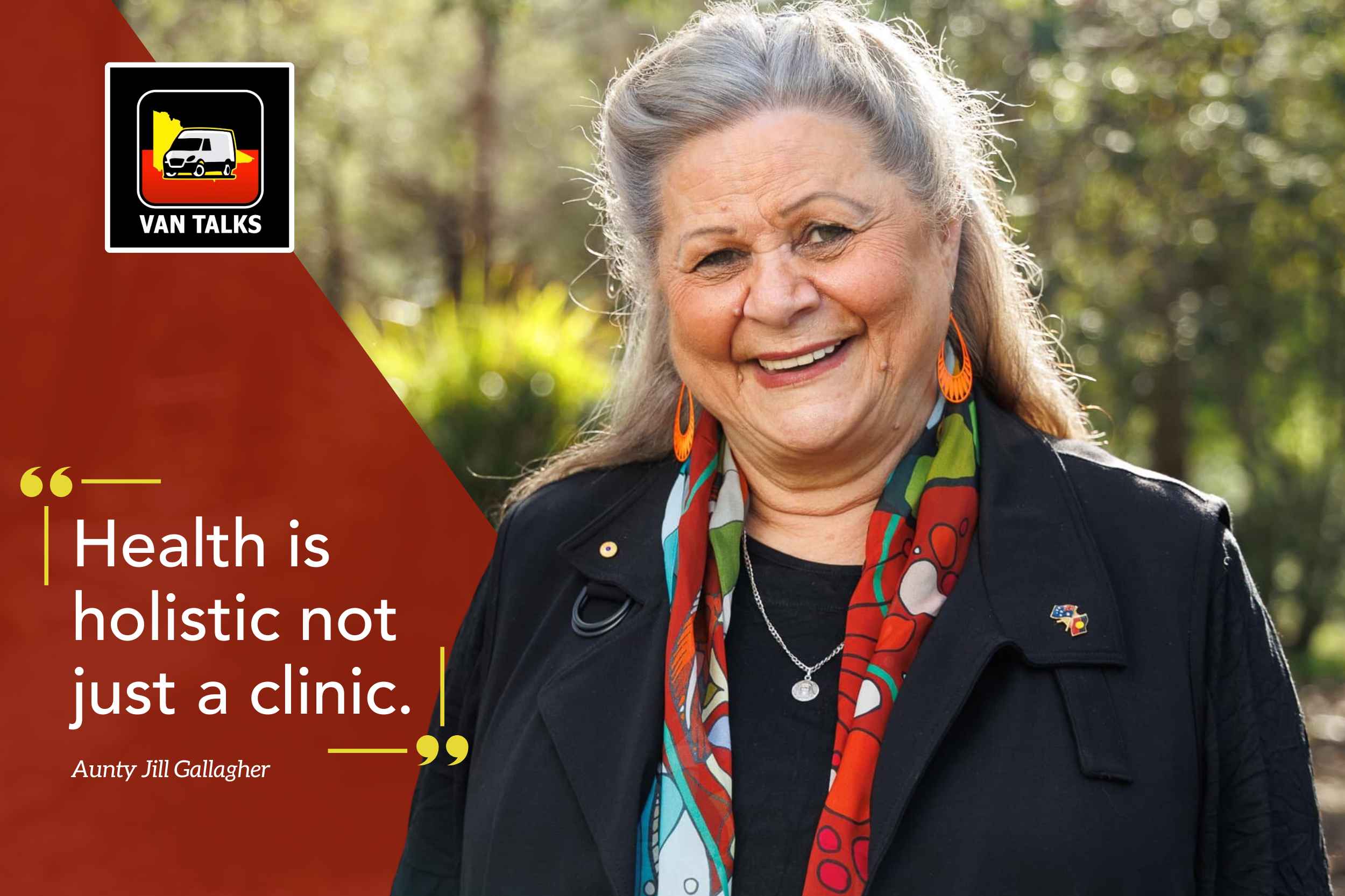
The Victorian Aboriginal Community Controlled Health Organisation (VACCHO) is celebrating 30 years of grassroots leadership in 2026, marking a powerful history of putting Aboriginal health in Aboriginal hands.
From its humble beginnings with just three staff in a run-down Collingwood facility, the peak body has grown into a formidable force, driving health outcomes across Victoria.
Gunditjmara woman and long-serving CEO Aunty Jill Gallagher joined the organisation in 1998 as a sexual health coordinator. Reflecting on the early days, Aunty Jill recalled the immense structural hurdles and the tough fight required to force mainstream health departments to respect community control.
“We had to use their policy against them and say, ‘You have a policy of self-determination, we need to be at that table. We need to be at all your tables,'” Aunty Jill said. She emphasised that Aboriginal health is deeply holistic, encompassing everything from housing and employment to connection to culture. “Our definition of health is basically, and it hasn’t changed … anything pre-conception of birth right up till the Dreamtime,” she explained.
Rather than accepting top-down government policy, VACCHO has consistently proven that Mob know the solutions for their own communities. Successful community-designed initiatives like the Beautiful Shawl Project, which saw breast screening numbers shoot through the roof, showcase this strength.
In a historic move, VACCHO bypassed standard government handouts to secure a commercial bank loan for its own building, a self-determined step that forced the state government to take them seriously. “Government weren’t going to fork out $4 million to buy the current building that we’re in,” Aunty Jill said. “So I thought, ‘Well, I’ve got a million-dollar deposit here,’ which we’d saved up. ‘I’ll go to the bank!'”
Looking to the next decade, Aunty Jill remains firmly focused on VACCHO achieving ultimate financial independence and fostering deep cultural understanding across the wider public. “I would love to see VACCHO become even more sustainable where we don’t have to rely on government funding,” she said.
Charles: Joining me today on the program is a fierce champion for self-determination and the long-serving CEO of the Victorian Aboriginal Community Controlled Health Organisation, Gunditjmara woman, Aunty Jill Gallagher. Now, in 2026, as VACCHO marks an incredible 30 years of grassroots leadership, we sit down to reflect on the early struggles of the movement, the power of community-led healthcare, and its evolution into what can be best described as a formidable peak body. Aunty Jill, welcome back to the program.
Aunty Jill Gallagher: Thank you for asking me back.
Charles: Aunty Jill, let’s head back to 1996 and reflect when VACCHO was first established. What was the landscape like for Aboriginal health in Victoria? And as you think back all those decades, what were some of the biggest structural hurdles the organisation faced just to get off the ground?
Aunty Jill: Charles, back in 1996, I actually was working for state government. Interesting, hey?
Charles: Yeah.
Aunty Jill: But, I took a package from state government in 1998, right? And VACCHO was just in its early days, two years old, right? Prior to VACCHO, we used to have what was called the tripartite agreements, where…
Charles: So, what – what was that?
Aunty Jill: That was all Aboriginal organisations and individuals coming together to try and have a voice in the Aboriginal health space.
Charles: So, so they were health-specific organisations?
Aunty Jill: No, they weren’t. They were broader than that. Okay. I was just talking to Alan Brown just yesterday about this, by the way. ‘Cause Alan was the very first CEO at VACCHO.
Charles: Never knew that.
Aunty Jill: The very first CEO at VACCHO was Alan Brown. He was part of the movement that actually transitioned from the tripartite agreement days to VACCHO. And Paul Briggs…
Charles: Yeah, of course.
Aunty Jill: …was one of the… I think the very first chairperson of VACCHO. Anyways, so I came on board in 1998. I left government, and I wanted to work in community, in with the mob. In government, you can’t, at my level at that time, by the way, you can’t make a lot of change. You can’t influence change unless you’re very senior. So, I applied for… there was a job vacant at VACCHO, and at that time, they worked up in the other end of Smith Street, in Collingwood.
Charles: Oh, of course, yeah.
Aunty Jill: Right up there. It was an old building that used to be one of the very first drug and alcohol detox facilities owned by state government. And so the government gave it to VACCHO—not title—99-year peppercorn lease, basically.
Charles: Oh Okay.
Aunty Jill: And so VACCHO lived there. And when I saw the sexual health position at VACCHO after I left government, I thought, “Oo, don’t know much about sexual health, but I think it’ll be very exciting.”
Charles: [Laughter]
Aunty Jill: So I applied for the job… [laughter] and I got it. Right?
Charles: Yeah.
Aunty Jill: And Alan was on the interview panel. Anyways, I turned up to work, and Alan gave me a credit card and said, “Go and buy your own desk.”
Charles: [Laughter] Oh my god.
Aunty Jill: And I think I was one of three staff at the time. And so, that’s a little bit of a history of where VACCHO was. The building that we lived in rent-free from government, it was a sham, really, and it wasn’t very nice.
Charles: Why do you say it was a sham?
Aunty Jill: Well, there was no maintenance done on it, and it was… the carpets were…
Charles: So, no skin off their nose to give the place to you?
Aunty Jill: Yeah, to allow us to live there rent-free. And when a building maintenance needed to happen, no one would do anything for us. So, anyways, so I first joined VACCHO team when I applied for the sexual health coordinator role, and it was amazing. I really enjoyed it. I didn’t know much about sexual health, but I soon learned. Partnered with mainstream agencies, and I had a team of two. So, we developed statewide sexual health programs and policies around sexual health and blood-borne viruses. Now, remember this is in the height of, um…
Charles: AIDS.
Aunty Jill: Yes.
Charles: Yeah, of course.
Aunty Jill: So, it was, uh, quite, uh, sensitive and and very scary. So, I’ve been there since then, and over time, VACCHO has grown and evolved. I became an interim office manager. Karleen Dwyer was the next interim CEO.
Charles: Oh, okay, yeah.
Aunty Jill: Karleen Dwyer…
Charles: Yeah.
Aunty Jill: …was the interim CEO at VACCHO, because she came down ’cause she was the CEO of Njernda, and she was on the VACCHO board. So she did an interim stint just to keep VACCHO going. And she asked me to act as the office manager for her… [laughter] and so I did.
Charles: So when was that?
Aunty Jill: Oh, jeez, Charles, you’re testin’ my memory.
Charles: I am, that’s my job.
Aunty Jill: Yeah, I know. So I started in 1998. That would have probably been about… oh, the early 2000s?
Charles: Okay.
Aunty Jill: And I became the acting office manager. And then Karleen said to the board, “I’ve got to go back to Njernda.” And so the board said to me, “Jill, will you apply for it? We have to advertise it. Will you apply for it?” And I said, “Ah, do I really have to?” ‘Cause I just wanted a cushy little job in sexy health. But they twisted my arm, and I’ve been there ever since. So, as you know, we are celebrating 30 years this year. It was tough going in the beginning. I mean, they say you should never judge a book by its cover, but VACCHO didn’t have a good home. So government didn’t take us serious.
Charles: Well, that actually brings me to the next question. So how difficult was it to actually convince mainstream health departments and governments that Aboriginal health needed a completely distinct, and importantly, a self-determined approach?
Aunty Jill: Yes. It was extremely hard. And then later on in the years, Charles, government… I don’t know when it was, I think it was around when they first started talking about Treaty…
Charles: Oh, okay. So a fair few years after that.
Aunty Jill: A fair few years after that, the government had a policy, a self-determination policy for Aboriginal communities and Aboriginal people, but they didn’t know what that meant from an Aboriginal community point of view. How do we implement self-determination? What does it look like?
Charles: Mm.
Aunty Jill: Anyways, so VACCHO, we, we grasped onto that policy, and that was part of our biggest advocacy around, “We can show you what self-determination looks like, and we can help you to do that and achieve that.” And VACCHO started to grow. We started to get involved in government, government committees and, you know, “Can VACCHO come to this? Can VACCHO come to that?”
Charles: So you had to actually sort of ask. You weren’t invited to the table, you had to ask to be at the table?
Aunty Jill: Yes, yes exactly.
Charles: Right.
Aunty Jill: We had to use their policy against them, and say, “You have a policy of self-determination, we need to be at that table. We need to be at all your tables.”
Charles: How was that received, generally?
Aunty Jill: Look, it depended on individual people within the bureaucracy. Sometimes we had some really good allies, and sometimes we didn’t. And sometimes it was a bigger fight when you didn’t have the allies internal. And sometimes you had to really… flex your muscles and go to the top.
Charles: But what were you trying to actually achieve there? Sort of being at the table, hearing the decisions, but what were some of the key, I suppose, initiatives that you wanted to ram home to the government?
Aunty Jill: Yes. So basically, what I wanted to do was to say to government that the way Aboriginal communities and Aboriginal people look at health is not the way you look at health. Our definition of health is basically, and it hasn’t changed all all these years, is anything pre-conception of birth right up till the Dreamtime. So, our organisations in Victoria started to evolve to deliver programs that address the social determinants of health.
Charles: So a more holistic approach to health.
Aunty Jill: Holistic. Health wasn’t just going to see a GP and getting my cut fixed up or having an operation. Health was also whether you’ve got a house. Health was also whether you’ve got a job. Health was also whether you got access to good services for drug and alcohol, mental health. Health is holistic, not just a clinic. And in Victoria, that’s how our members evolved to address the social determinants of health. But more importantly, having strong, healthy people, you also have to be empowered to be able to design programs that are going to make a difference on the ground. So that self-determination and that advocacy around “we need to be at the table, but not your table. You come to our table.”
Charles: I’m interested you mentioned members, and you’ve mentioned members a couple of times. Just how many members of VACCHO were there back there in 1996 or 1998 when you joined?
Aunty Jill: Yeah, now, I would have to do some research, but off the top of my head…
Charles: Ballpark figure, Aunt.
Aunty Jill: Yeah, yeah, yeah. Look, we’re now at 35 members?
Charles: Yeah.
Aunty Jill: They’re not all full members, but when I first started, I think we were 23 or 24, roughly around that number. A couple of members over the years have… fallen over, and even today we’re still trying to get one of those members back up and running, because there is a high need in that particular area. Our way of doing business, our holistic approach to health and well-being, is the only way we’re going to close that gap.
Charles: I’ve noticed, actually, that VACCHO’s involvement with its members—and I just want to stick with members for a couple of minutes, Aunt—is it’s much more than just lobbying. I noticed a post this morning, actually, on LinkedIn, where a staff member from VACCHO has gone up to BDAC as the interim CEO. So there’s that real commitment to supporting these members at every single level. So just how deep is that within the organisation? It’s not just at the surface representative, but in-depth representative and supportive of these organisations.
Aunty Jill: Well, VACCHO has evolved, evolved along the same way as our members have evolved to address the social determinants of health, not just a doctor. Okay. For many years, ever since I’ve been involved, we’ve done… but in more recent times, we’ve been able to do a lot more. So, our biggest thing is that we don’t want to lose our organisations. So, how can VACCHO build our own sustainability and capability so that when our members do experience difficulties, that we can help them?So, for example, yes, one of our… one of my senior staff has gone to fill in at Bendigo as an interim CEO. And that’s to help the board to, one, maintain the services that are currently being delivered, but also the interim CEO will be responsible to help the board to recruit.
Charles: And just for the listeners’ interest, that’s because Dallas Widdicombe, who was the CEO there, has moved on to, well, some pretty ambitious fields to be the Victorian Commissioner for Aboriginal Youth… I believe? Which is… we’ll be hearing from him later on in another program.
Aunty Jill, you spoke about sort of expanding and growing, and what’s always fascinated me about VACCHO is that it seems that the sky’s the limit, that there’s always some form of new initiative going on. Whether it’s Community Question Times when we approach local, state, and federal elections; whether it’s putting together podcasts to support kinship caring programs, there just seems to be no end to this. So, first of all, I want to ask: how is it resourced?
Aunty Jill: Well, as I said, we have for many years looked at ways of how we can build our own sustainability and capability. Government wouldn’t fund us to do anything like that.
Charles: I can’t imagine. [Laughter]
Aunty Jill: No, of course it’s not, because we might be having a go at ’em!
Charles: And that’s never stopped you, has it?
Aunty Jill: No, exactly right. So, how do we generate funding that is not tied to government funding?
Charles: Yeah.
Aunty Jill: And we’ve done that very well. We have a very smart COO who has a lot of good relationships with big corporate entities, and we have generated some funding that gives us that self-determination to help our mob have a voice in that political arena.
Charles: So, a core pillar of VACCHO, and this builds on what you’ve been talking about, has always been community control. Now, from your perspective, why is it non-negotiable that Aboriginal people make the decisions about and for their own health and well-being, rather than having these top-down policies that seem to, well, influence the rest of the country’s health systems?
Aunty Jill: Well, community control has always been a philosophy around the country, not just here in Victoria for many years. What’s that saying? Aboriginal health in Aboriginal hands.
Charles: Yeah. And nothing about us without us.
Aunty Jill: Nothing about us without us. But we know, we actually… Charles, we know what the issues are in our communities. Like, we’re currently doing this podcast at the Victorian Aboriginal Health Service. And they’re one of the very first organisations in Victoria. They are the very first Aboriginal community-controlled organisation in Victoria. And so, VAHS, and we’ll use GEGAC up in Bairnsdale they know their community, so therefore they know the solutions. They don’t have to do research to say, “Well, where are the vulnerable families?” because they know who they are. They could be their family, their friends, their cousins. And knowing how to develop those solutions… and I’ll give you an example of what I’m trying to articulate there.
The Beautiful Shawl Project. Right? We knew—this is VACCHO—we knew that Aboriginal people are dying more with cancer diagnosis, whereas non-Aboriginal people were living longer with cancer diagnosis.
Charles: Yeah.
Aunty Jill: So we knew there was an issue. The community, wasn’t just VACCHO, all our members got together with VACCHO and said, “Well, we need to design something that’s going to encourage men and women to attend screening a lot earlier than what they have been.” So, the Beautiful Shawl Project came out of that. And that was designed by local Aboriginal people from their own local areas. They put their own designs on it. And so everyone wanted a shawl. So the screening numbers across Victoria just shot right through the roof.
Charles: Wow. So obviously, the organisation is facilitating more rapid reaction to the needs of the communities.
Aunty Jill: Communities, exactly right. And even VACCHO doesn’t know it all at a local level. Our members are the experts in their local community, but we work with our experts in the local Aboriginal community.
Charles: What do you see, though, as—and this is going to be asking you to pluck essentially your favourite thing from the past 30 years—but what do you see over the last three decades, maybe one of the most momentous achievements that VACCHO has gained? And I know that’s a tough one. [Laughing]
Aunty Jill: It is, it is a tough one. Can I say, I think, and I don’t know whether I’m piddling in my own pocket here, Charles…
Charles: [Laughter] So nicely put, Aunty.
Aunty Jill: Yeah, I thought so. But, you know, to have a reputation where government now knock on your door, and they want to come to your table.
Charles: That’s a bit of a turn-around from 1998, isn’t it? [Laughing]
Aunty Jill: Exactly, where we’re knocking on government’s door. To me, that’s an achievement. It’s about how credible you are as an organisation. It’s about your reputation as an organisation. So government knock on our door and say, “Can VACCHO be involved in this? We need your expertise.” That’s an achievement.
Charles: Have you noticed it, though, to be a serious change over these decades, where rather than just ticking a box and just making sure we’ve got the Aboriginal people at the table, they’re actually listening to VACCHO? They’re taking note of what’s being said and then acting upon it.
Aunty Jill: Yes. I, I, I… yes, I, I think there is. From a Victorian governance and a Victorian Aboriginal community-controlled perspective, yes. I was part of the original campaign, originally back in 2008, to close the life expectancy gap for our mobs right across this country. We still haven’t done that. And yet we’ve got all these processes and mechanisms, and we still haven’t managed to close that gap. To me, that’s not an achievement, but what it tells me is that it takes… it takes a lot to actually bring government to your table. And that’s what we’ve got to focus on: bringing government to our table. But with state government, I think the biggest thing is that apart from all the, you know, like the… one achievement really basically, Charles, was when VACCHO didn’t put our hand out for government handout to buy our own building, VACCHO went and got a bank loan.
Charles: That’s going to dispel a lot of myths and misinformation out there. Yeah.
Aunty Jill: We… so you build it, and they will come, by the way. That, that’s my philosophy: you build it, they will come. Government weren’t going to fork out $4 million to buy the current building that we’re in. So I thought, “Well, I’ve got a million-dollar deposit here,” which we saved up. “I’ll go to the bank.” And they gave me a loan to buy the building we’re in.
Charles: So that is yours outright, that building.
Aunty Jill: We own it, lock, stock, and barrel.
Charles: That’s amazing.
Aunty Jill: But then what happened, which was even more amazing, the fact that we did that, the government then said, “Mm…” We didn’t have the money to fit it out because we put it on the deposit for the bank loan. But the government said, “Oh, that’s, that’s, that’s… that’s initiative.” So they paid out our mortgage.
Charles: Oh, really?
Aunty Jill: Yes. So that then gave us more money in the bank to fit it out to what you see today.
Charles: So let’s get into the, the wind-up question. We’ve spoken about so many of the achievements and the, the voice that you now have and the presence at the table, and the fact the government comes to you. But at 30 years, I know you to be a woman who is always looking forward, never resting on the laurels and successes. What now? For at least for the next 10 years, let’s be realistic. What is your key goal and achievements that you want to grasp?
Aunty Jill: I would love to see VACCHO become even more sustainable where we don’t have to rely on government funding. That’s what I would love to see.
Charles: How do you see that achievement coming to reality, though? That’s a big one because the organisation is not exactly four people anymore.
Aunty Jill: No, I know.
[Both Laughing]
Aunty Jill: Uh, jeez, I wish I had a crystal ball! Look, I think it’s just having the right people, the expertise that we need, the entrepreneurship that we need within VACCHO. I don’t have it all, by the way. I’m not the be-all and end-all, but we need those people in our space. And we need those people to help us get there and show us the best way to do that. But I think the most important thing, Charles, is how do we bring along, in my opinion, how do we bring along Victorians in this space? How do we, you know, because they… a lot of, a lot of negativity is out there, especially….
Charles: Yeah, of course.
Aunty Jill: Yeah. So how do we, how does VACCHO… I want to have a footprint with all Victorians. I want to be able to give Victorians an opportunity to see our culture, feel our culture, experience our culture, and understand our culture.
Charles: Aunty Jill Gallagher, thanks for your time.
Aunty Jill: Thank you.
For Radio Play:
1 - Click the Download Audio button
2 - The audio file will commence automatic play in your browser
3 - Confirm this is the file you want to use in your program
4 - Once confirmed, click the vertical elipses (3 dots) and select download
CONTACT US VIA SMS
Get in contact with us via our dedicated SMS line:
0493 222 836
15 October 2026
It’s time Australia recognised a shared history of often brutal “settlement” and expansion
12 October 2026
Start learning about First Nations cultures without the fear of offending
5 October 2026
The revival of cultural burning practices to remediate Country and help mitigate disasters
1 October 2026
Implementing First Nations knowledge to heal country
28 September 2026

0 Comments