
New study highlights connection between harmful misinformation and online hate targeting Mob
Groundbreaking research reveals a tenfold rise in online hate targeting First Nations people. Discover how digital algorithms fuel racism against Mob and what must be done to protect our community.
Posted by: Karina Wells
Published: 14 August 2026
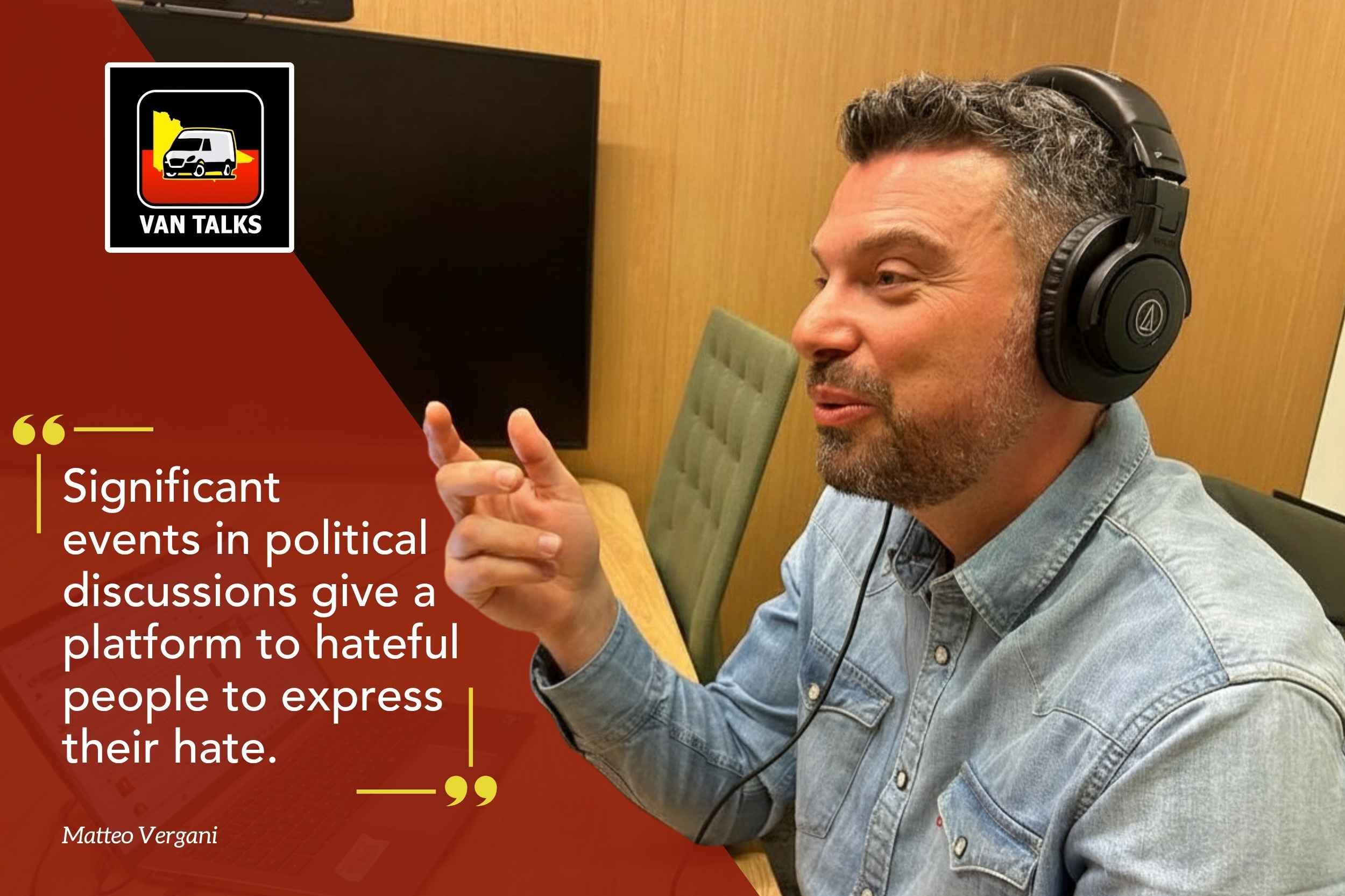
A staggering surge in online hate targeting First Nations Australians during major political events has been uncovered by groundbreaking academic research.
Analysis of over three million social media posts and news comments revealed that digital racism spiked dramatically during the 2023 Voice to Parliament referendum campaign.
Lead researcher Associate Professor Matteo Vergani explained how machine learning was used to analyse digital conversations at scale.
Matteo worked alongside First Nations researchers from the Call It Out register to train algorithms to identify subtle and explicit racial abuse accurately.
The findings showed that online hate increased more than tenfold throughout the referendum period, particularly when harmful misinformation was circulated.
First Nations public figures were also found to be targeted at disproportionately higher rates than non-Indigenous public figures with similar follower counts.
Highlighting the link between fear mongering and digital abuse, Matteo noted that false political claims often triggered aggressive online behaviour towards Mob.
“We saw clearly in the data that this type of misinformation was associated with more hate targeting First Nations people,” he explained.
Addressing why digital platforms allow hostile environments to persist, Matteo pointed to corporate algorithms that prioritise user engagement over community safety.
“Content which is contentious content is exactly the content that drives engagement on the platforms.”
Rather than attempting to remove individual posts after harm has already occurred, Matteo urged tech companies to take decisive action against repeat offenders.
“If you know that the majority of hate comes from a cluster of a hundred users and you focus on them, you are doing a huge job.”
Educating the public about manipulative online tactics remains a vital step towards mitigating harm and protecting First Nations community wellbeing into the future.
Charles: Associate Professor Matteo Vergani, Director of the Tackling Hate Lab at Deakin University, and his team recently released findings from their analysis of over three million online posts and separate news items. The team’s research directly examines online hate targeting First Nations Australians, specifically tracking patterns around major events such as the 2023 Voice referendum, Anzac Day, and fringe political rallies. Matteo, thank you so much indeed for joining me today.
Matteo Vergani: Thank you, Charles, for inviting me. I’m really proud to be here.
Charles: Matteo, before we get into some of the findings of the research, and some of the stark findings I might add, what led you to pursue this line of research, specifically from 2023 onwards?
Matteo: So, our lab studies hate online, how it develops, the main types of hate. We know hate is not one thing, but it can take place in many different ways. And we know in this context, and in this particular political time, I would say, hate targeting First Nations people is a prominent feature of Australian discussions online. Especially in relation to political events like The Voice, the referendum, but also in relation to other events. So, you said we studied conversations around Anzac Day and fringe political rallies. We actually selected two events in 2025, which we saw in the media were associated with attacks targeting First Nations people. So, we selected Anzac Day and the March for Australia in 2025 that took place on the 31st of August.
Charles: So, analysing or researching three million posts and news items, obviously, artificial intelligence was being used there, and might I say, obviously a good use of AI in contrast to much of what we’re seeing, what was involved in actually setting the tools up to find the research that you were looking for?
Matteo: A lot of the work is actually, as you say, setting up the tools. So, we used existing machine-learning classifiers, and look, basically, we are talking about algorithms which are trained with information about what constitutes hate and not hate. And the machine learns, with lots of examples, what is hateful content versus non-hateful. And it’s very sophisticated. It’s not like just telling the machine, “If you see this keyword, then it’s hateful,” because we know one term can be used in a hateful manner in one conversation, but it’s not hateful in another one. So, the machine, with thousands of examples, learns.
Charles: So, it’s all based on contextual?
Matteo: Oh, exactly. Only context. So, what we did was get in touch with Call It Out, which is the register of hate targeting First Nations individuals in Australia, based at UTS, and then we asked [for] help in identifying some community annotators, so First Nations researchers who have experience and understand all the types of hate that exist and take place in Australia, to help us annotate data. Which means we gave them thousands of examples of tweets or Facebook posts, and they helped us label them, telling us, “Yes, this is hateful. This is not hateful.” So, with all these examples, and I think we had, now by memory, three, four thousand examples, we gave all this data to the machine, and we created a custom algorithm that could replicate the decision of our First Nations annotators, and then we deployed the algorithm to annotate millions of data points. This methodology, and this is a good use of AI, because it really allows to look at hate at scale. You know that what happens in conversations happens online in millions of small conversations every day in Australia, so the only way to go through all this big amount of data is to use artificial intelligence. We cannot do it manually.
Charles: What were the findings that really struck you and the team as, “Oh my God, what’s going on?”
Matteo: Yeah, look, we found a few interesting things, okay? The first is that, and in a way, it’s not really surprising because we know, anecdotally, and we all observed how the conversation went, but throughout the campaign of the referendum, hate increased stepwise, massively. Within the conversations we looked at, from a few dozens of instances of hate to three, four thousand hateful contents per day within the conversation we looked at, which is only a portion of what happened online. So, hate increased massively. Increases were associated with key moments during the campaign, which is hardly surprising, because we know that significant events in political discussions give a platform to hateful people to express the hate.
So, when something happens, when there is a big announcement or a rally, that is the occasion for people who dislike an out-group to voice their views and their prejudice. So, this was happening. We found certain types of misinformation, especially misinformation which presents First Nations people as a threat, was associated with hate. And that is not illegal, in a way, this is the interesting part.
Charles: No, I understand that, but I’m intrigued by “the threat.” Did they give voice to exactly what the threat that was perceived is… was?
Matteo: Oh yeah, absolutely. So, we looked at very specific types of misinformation labeled as containing false claims by the Associated Press, so there is a database, and we picked all the ones associated with The Voice. To give you an example, one which depicts First Nations individuals as a threat is the one saying that if The Voice was going to win, then non-Indigenous Australians would have seen their property taken away, okay? This one.
Charles: [Groans] Oh, that’s been around for so long. [Sad laughter]
Matteo: Absolutely. And it’s… The thing is, it’s not illegal to say such a thing. I mean, it’s false, but it doesn’t break any law. However, we saw clearly in the data that this type of misinformation was associated with more hate targeting First Nations people. So, it might not be illegal, but it’s still associated with harmful language.
Charles: I’m interested also, Matteo, in what platforms you actually looked at. We’ve seen over the course of years that a number of social media platforms have become an absolute breeding ground for antagonism and racism. But what were the platforms you looked at?
Matteo: So, a range of platforms. Primarily, we looked at X for one reason: X allows [users] to geolocate precisely – users – with the metadata. So, it’s the only platform that really allows us to say, “Well, all the people we considered and studied were writing content from Australia.” In other platforms, and we did look at other platforms like Facebook, Reddit, YouTube, Instagram, but in these platforms, we have to guess based on a range of linguistic markers, so if people write on their profile, “I am from Australia,” okay, or if they talk about specific issues happening in a regional town in Australia, okay, we can assume they are, but we don’t know that they are actually in Australia. So, with X, we are sure that we looked at Australian users only. So, primary X, but we have data from, as I said, Reddit, YouTube, BlueSky, Facebook, Instagram, and also news websites, and we looked at comments to news websites. And also forums, and in terms of forums, we looked also at fringe ones, for example, 4chan or forums which have strong extremist views.
Charles: What were some of the other findings that were really prominent in this?
Matteo: So, interesting findings were that First Nations public figures, for example, were disproportionately targeted by hate compared to public figures, non-Indigenous, who have a comparable level of following. Meaning, we basically matched the following base of First Nations public figures like Lidia Thorpe or Adam Briggs to public figures, non-Indigenous, with similar following. And we looked at the difference between the amount of hate, and First Nations public figures were disproportionately targeted.
Charles: In reading a recent article about the work that you’ve done and your submission to the inquiry, I was quite interested to note that the hatred had almost evolved from hatred against the system and hatred against concepts to what you were just talking about there, which is hatred against people. If we’re talking about an increase, what sort of increase are we talking about?
Matteo: So, we can only compare data that we collected within a certain event. So, for example, we looked at all conversations on the referendum during the campaign time, and actually, we continued collecting data until December 2023, and during the whole campaign time, we collected data, all conversations that included hashtags both in support for The Voice, like #VoteYes, and also the #VoteNo ones, and we had a long list. So, we collected data with this methodology across the whole year, and we have seen that basically the increase is staggering. So, it’s like more than 10 times more. So, hate increases massively over time, and we have the first noticeable increase around April, then basically the baseline shifts and stays high, and then in July, we have another step up…
Charles: This is in 2023?
Matteo: 2023, yeah, of course, during the campaign. And then a new baseline, and then a new huge step up in September until basically the referendum.
Charles: I’m interested, was there a decline at all, or did it just maintain that crescendo?
Matteo: Well, there was a decline because, basically, people stopped using the hashtags that we were using to collect the data. So, imagine that basically, we are looking at a portion of the landscape with our machine eyes. So, within that portion of landscape, which is the one that captures conversations using the The Voice campaign hashtags, well, that type of conversation ended after the referendum. People were not using anymore hashtags like #VoteYes, okay? They were using different types of hashtags or different topics. So, we don’t know, actually, if hate continued, and I think so, just in different ways and different conversations, but within these conversations, it ended because the conversation… was finished, basically, the conversation using hashtags of the campaign. However, basically, we continued collecting data in 2025, and we basically saw, by looking at hate around other conversations and events like Anzac Day, that hate continues, it just takes a different form and different words and contents because it’s about another aspect, for example, of Indigenous identity or the place of First Nations people within Australia. So, they don’t use the same topics, but it continues in different forms.
Charles: Where does it sit right now?
Matteo: I wish we had all the money to continue doing all the research on this. Unfortunately, the only evidence we were able to collect with the resources we have, and we used mainly internal funding from Deakin to our lab, we were able to look at only these three snapshots: so, the Voice referendum, Anzac 2025, March for Australia 2025.
Charles: So, we’ve got nothing to do with, for example, what’s important here in Victoria, which is treaty or truth-telling?
Matteo: I would love to do another study on that. I would love to, yes.
Charles: What about the social media platforms themselves? And you specifically mentioned X, formerly Twitter. What do you think social media providers and platforms need to start doing to be more accountable and actually protecting users, especially young people and let’s forget about the Australian Government’s 16-year moratorium on social media? What needs to be done at that social media giant level?
Matteo: Oh, there’s a lot that should be done. So, in our recommendations, for example, we say that basically, if we know that some narratives, like spreading the misinformation that, you know, if the Yes vote wins, then the lands of non-Indigenous people will be taken away, if we know that that leads to hate, even if it’s not illegal, then platforms should at least avoid recommending that content.
So, platforms can do a lot, even without censoring per se, but at least if they avoid amplifying content that contains or fuels hate, that would be already huge. And then the other, let’s say, role that they could play is that we know, from our research, that the majority of hate is spread by a fraction of users. So, instead of continuing the current approach, which is trying to remove hateful posts one by one, it’s like emptying the sea with a spoon. But if you know that the majority of hate comes from a cluster of a hundred, 150 users, and you focus on them, well, you are already doing a huge job. So, of course, you cannot do it without the platforms, and this is the problem. They are hosted in the United States, and the administration of the United States protects them. So, even if Australia issues a fine and says, “Either you do this, or you pay a fine,” and they say, “Okay, we don’t pay,” what happens? What can Australia do?
Charles: So, it seems that whilst the Australian Government is somewhat powerless to do anything about it, if your organisation was able to develop the machine tools to detect this and detect the sources of this, it certainly wouldn’t take much for those big social media enterprises to implement a similar solution, if in fact they’re not already doing it, they’re just not acting on it. They would be able to identify this easily, surely.
Matteo: 100%! The thing is that they don’t want to do it, because that type of content, which is contentious content, is exactly the content that drives engagement on the platforms. So, they want to keep and retain people on the platform, so they actually amplify content that contains false information, hatred, because it serves the purpose of keeping people on the platform.
Charles: What can Australians and the Australian Government do then? Is there anything?
Matteo: Look, we can do a lot of things, yes. So, we can certainly continue to produce good policy and good legislation to keep these platforms as accountable as possible, and Europe, for example, has been leading on this front, requesting platforms to be transparent with their data. The Australian Government could do, for example, something similar. Of course, there are a range of other options like education programs or inoculation programs. So, for example, talking about misinformation, we know from research that instead of telling people that their ideologies are wrong, if we go and explain them, especially young people, the ways in which people try to manipulate them, to trigger their emotions, and to use misinformation as a tool to manipulate their political thinking, people become more resistant to this type of misinformation, because they recognise that someone else is trying to manipulate them, and no one wants to be manipulated. So, this is why there are specific programs which can be done and might be able to reduce or at least mitigate, not remove… I don’t think it’s possible to remove hate completely, because it’s part of how human brains are wired, in a way, but at least we can certainly mitigate.
Charles: What about at an individual level? What can individuals do?
Matteo: Look, certainly report if you see hate to the platforms, to the eSafety Commission. I mean, the current state of discussions between the government and these platforms is that the platforms say, “We remove all the hate,” and in our study, we show it’s not true, there’s a lot there. So, the best thing we can do is to expose it, so government institutions and even community organisations or individuals can say, “Hey, you haven’t removed this, you have to do it.” And they usually reactively… I know it poses a lot of burden on people, so I don’t think really it’s something that communities should do or should feel that it’s their role, but if someone wants to do something, well, it’s a good thing to do, to report hate.
Charles: Matteo Vergani, thank you for your time.
Matteo: Thank you, Charles, for inviting me.
For Radio Play:
1 - Click the Download Audio button
2 - The audio file will commence automatic play in your browser
3 - Confirm this is the file you want to use in your program
4 - Once confirmed, click the vertical elipses (3 dots) and select download
CONTACT US VIA SMS
Get in contact with us via our dedicated SMS line:
0493 222 836
17 September 2026
Media leader urges all Australians to engage with Blak media

11 September 2026
First Nations creatives given safe spaces through Blak and Bright
4 September 2026
Ipsos Indigenous Issues 2026 report reveals shift in public focus
2 September 2026
Long term economic independence at the heart of Victoria Treaty process
29 August 2026

0 Comments