
Standing up for Mob through reporting racism and demanding real accountability
Cathy Austin from the Victorian Equal Opportunity and Human Rights Commission talks about a new podcast series created in partnership with VALS, providing education on the legal tools available to First Nations people who face discrimination in any form.
Posted by: Karina Wells
Published: 24 August 2026
https://www.humanrights.vic.gov.au/resources/know-your-rights-podcasts/
The Victorian Equal Opportunity and Human Rights Commission has partnered with the Victorian Aboriginal Legal Service to launch Know Your Rights, a five-part podcast series tackling the rise in racism across the state.
Coinciding with an increase in racist attitudes and attacks against First Nations people, the initiative aims to inform Mob about legal protections and ways to address discrimination in a culturally safe manner.
Gundjtmara woman Cathy Austin from the Commission explained that the project grew out of direct community experiences across five critical areas: education, healthcare, retail, sport, and the justice system.
“As Aboriginal people, we all experience discrimination, and unfortunately it’s multiple times throughout our lives,” she said.
Narrated by Jedda Atkinson-Costa, each 30-35 minute episode features lived experiences alongside practical guidance from legal experts on reporting incidents and accessing remedies.
“There are things like you can get your job back,” Cathy said. “You can request a letter of apology, and you can request that someone does [cultural] training.”
Addressing the longstanding community distrust in government bodies, the Commission has established confidential reporting options and fast-tracked pathways for First Nations complaints.
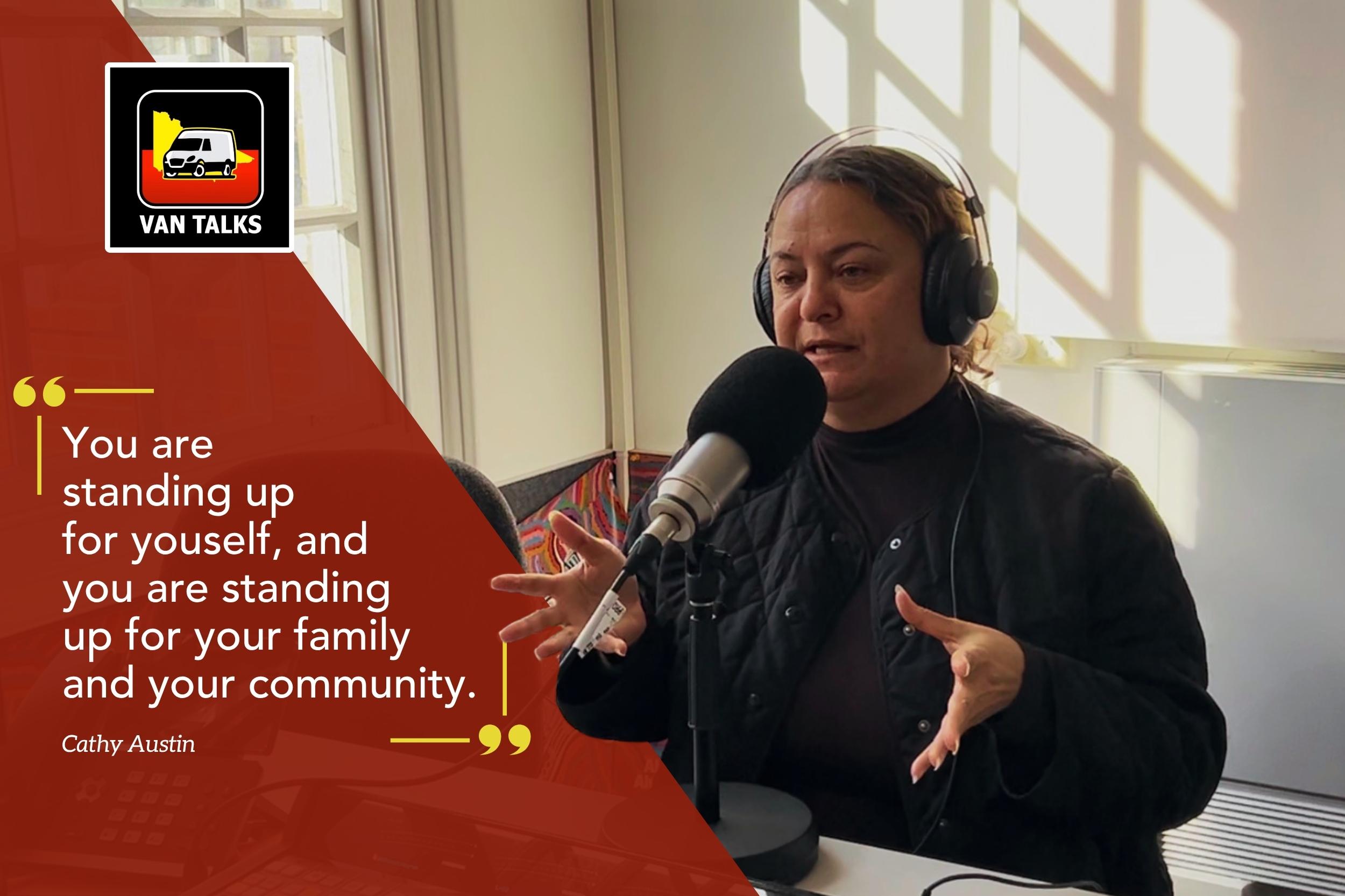
“You are standing up for yourself, and you’re standing up for your family and your community,” Cathy stated.
The series is now streaming on all major podcast streaming platforms, providing vital tools to support self-determination and protect community rights across Victoria.
Charles Pakana: Joining me today on the program, and coinciding with what we’ve seen as being a significant increase in racist attitudes and even attacks against First Nations people across Australia and indeed Victoria, we have from the Victorian Equal Opportunity and Human Rights Commission, Gunuwarra woman Cathy Austin. Cathy, thank you for joining me on the program today.
Cathy Austin: Thanks for having me, Charles.
Charles: Cathy, the reason we’re having a yarn today is because I became aware of a series of podcasts that the commission put out called Know Your Rights. And it was particularly interesting because this was all aimed at First Nations people and really, well, all Australians or Victorians, to address specifically the issue of increasing racism and what the commission could do to address and remedy a lot of these situations going on. So, can you tell us a little bit about the genesis of the podcast? Then we’ll go into what it actually is.
Cathy: Yeah, so we’ve recently developed a podcast in partnership with VALS, the Victorian Aboriginal Legal Service, and it’s a five-part series podcast. Each goes for around 30–35 minutes. Every episode, we have two guests that will be speaking, and each of the guests are pretty well known in our community. And our podcast is also narrated by the wonderful Jedda [Atkinson-]Costa—
Charles: Ex of the ABC, and now from the First Peoples’ Assembly, yeah.
Cathy: Yes, so we’re very happy. We engaged Jedda long before she was involved in Treaty, and we’re very proud of her achievements, and she’s a wonderful young, proud Aboriginal woman from our community. So, each of the podcasts, we speak to our guests about their lived experience in community. So, as you know, Charles, we as Aboriginal people, we all experience discrimination, and unfortunately, it’s multiple times throughout our lives, and same with our children. As parents, we know that it’s a generational thing, and it’s so common, as you said, and–
Both: It’s getting worse.
Charles: It really is. I’m interested, Cathy, because there were five specific areas that you looked at focusing the podcasts on, and they were schools or education, healthcare, retail—and retail and hospitality—sport, and the justice system. So, why those five areas in particular? Because there are a number of other areas that you could really focus on equally well.
Cathy: Yeah, one of the areas that we were considering as well was housing, so we know that’s another big area. But the five areas you’ve just mentioned, they’re areas that, as two agencies at the Human Rights Commission and VALS, we see a lot of our community members come in and report racism. So, our communities are experiencing high levels of discrimination in those areas. Myself, as a former netball player as well and involved in the Fitzroy Stars Football and Netball Club all my life, I have experienced, and I know our community members in sporting areas right across the state, right across the nation, are experiencing discrimination. We know that our people are so amazing at sport, so it’s really disheartening that there are these experiences of racism to our sporting people, and young people in sport as well. So all ages, all football, netball, basketball, every area, and sport being a really big part of our community. So that’s the reason we chose sport.
Charles: What did you actually want to get out of this, though? Is it just information? Is it a call to action? What were the key objectives that you had when developing the series?
Cathy: It’s definitely information and awareness, and it’s also a call to action. Each of the episodes, we listen to the lived experience, and we listen to our expert guest speaker as well, and towards the end of each episode, we hear from our legal team at the Human Rights Commission about what you can do next, and where you go next to get help, and what the outcomes of reporting discrimination can mean for you and your people.
Charles: It’s not a case, though, of requesting people simply dob someone in, is it? Because there seems to be, in the yarn we had before we pressed the record button, that there’s also something constructive required at the end. There can be remedies put in place. So let’s talk a little bit about those.
Cathy: Yeah, most definitely. I encourage people to report discrimination, and I’ve done it myself, and I’ve had to do it more than once. I think the remedies are… there are things like you can get your job back. If it’s in employment and something’s happened, you’ve left or you’ve been sacked, you can get your job back. You can request a letter of apology, and you can request that someone does training. There’s lots of remedies that you can do. And these things, they have a huge impact. If people are reporting racism, these are outcomes that you can achieve. And I feel strongly that you are standing up for yourself, and you’re standing up for your family and your community, because as we know, this is a big issue, and it’s not getting any better out there. We know that there are laws out there to protect us, and this is what it’s about. It’s about using the laws that we have in this state to protect us.
Charles: I can appreciate that the initial intent, as clearly said in the title of the podcast, is for First Peoples to know their rights. But it sounds like this particular podcast has an audience far broader than just the Victorian Aboriginal community. What would you say by way of recommending this to allies and just those people who wish to learn a little bit more?
Cathy: I recommend listening. You’ll enjoy it; it’s a yarn, and it’s hearing from First Nations people who have experienced this, how that made them feel, how that made their family feel, the experiences they’ve had in their lifetime, what it is that’s very hurtful to them to see other people experience discrimination.
Like we all know, when we see it on the news, it’s so disheartening. Yeah, and it makes you angry, this is a way to do something about it.
It’s also creating awareness in data and stats to report discrimination, because we might think that it’s a big issue, but others will say, “Well, no, it’s not.” If we don’t have the data on it, because it’s not being recorded.
Charles: So this is a way of actually keeping that data going and presenting to those who like to ignore it or pretend it doesn’t happen, “Hey, here are some real-life examples.” I just want to go back to one of the things you said, and that is you made mention of some of the potential redresses, and that is you can get your job back, you can get a letter of apology, and you can also request training for an organisation or for individuals. It made me think, how much power does the commission actually have in enforcing those… I suppose, edicts, you might want to put them as?
Cathy: So, each episode we have a legal expert from the commission that will discuss outcomes, and one of those outcomes can also be compensation, so you can seek compensation. And you can seek training, you can request training to be done, like cultural awareness training. And it’s probably the first time that someone has ever heard of that, and the first time they’ve had an opportunity to learn about the true history of our country. You can request an apology—
Charles: And so there’s legislation supporting all this, isn’t there? So there’s real powers there within the commission.
Cathy: Yes, the Equal Opportunity Act, so it is law, and the commission have remit over that law.
Charles: Talking about the people you come to, let’s be fairly frank: there are a lot of people out there in community, First Nations people, who justifiably have a great deal of reluctance in going forward to government or to government organisations, such as the commission. There’s simply no trust there. How do you go about encouraging First Nations people to take that step and come to the commission and lodge a complaint or lodge a concern?
Cathy: Mmm. You can go onto our website. There’s been a lot of work done at the commission to increase awareness for First Nations people. So when you come through to the commission, you can make anonymous complaints as well.
Charles: Right.
Cathy: So we do have a community reporting tool on our website, but you can also call up and you’ll go through to an inquiries officer. We are employing Aboriginal people in roles of inquiries team, and also conciliation. Aboriginal people that come through to the commission will be fast-tracked as well, so we don’t want any Mob that have taken that hard step to decide that they’re going to do something about it to be waiting. So you should be seen really fast when you come to the commission, and you should be able to speak to an Aboriginal person as well. All of our conciliation staff are well trained, and you’ll be treated very well.
Charles: I’m going to be fairly blunt right now, because one of the things that does come to mind as you say that is, how do you cut through some of the crap that may come in? Someone may well just have an axe to grind. Someone may just be cheesed off with their employer and determine in their own minds, “Hey, this is a culturally unsafe environment, I’m going to lodge a complaint with that.” I mean, how safe are the people who are actually being put forward as the perpetrators of these racial acts?
Cathy: When you come into the commission, you will sit down, and generally this can all be done online now, and with an experienced dispute resolution coordinator.
Charles: Right, okay.
Cathy: So, it’s similar to mediation, so you get to say your part, and then the other person gets to say their part, and it’s talked through, like mediation. We come to an agreement at the end, or you tell your side, how that’s made you feel, and the other person says, “Well, you know, I didn’t understand that, or how that would make you feel.”
Charles: So there could be misunderstandings unearthed from both sides of the coin.
Cathy: Yep.
Charles: Okay, so that’s good. Cathy, why podcasts?
Cathy: As we know, more people are listening to podcasts now—
Charles: Thank goodness, yeah!
Cathy: —yes, and everyone loves a great podcast. We just thought it’s another form of media that people can listen to our stories, and also share our stories as well, so we thought podcasting would be a good way to go.
Charles: Where can people access these podcasts?
Cathy: So our Know Your Rights podcast series is available on all good streaming services, and our Human Rights… our Victorian Equal Opportunity and Human Rights Commission website as well. So encourage everyone to have a listen. There’s also a trailer, and I’d especially like to mention that we’ve used music from amazing Elders and First Nations artists from Victoria as well.
Charles: And we’ll have links to each of those podcast episodes on the Victorian Aboriginal News website at vicaboriginalnews.com.au. Going forward from here, there’s obviously a huge demand for similar activities—you’re talking about videos, you’re talking about podcasts. What’s the next step forward beyond this? Because it’s not as if this is going to be the panacea to end all racism in Victoria.
Cathy: Yeah, you’re right, Charles. So it’s really creating awareness of the Human Rights Commission, so getting out to community, going and visiting community, creating resources and material, and it’s all about encouraging people to come and use our service. We are there to support people that are experiencing any form of discrimination, to read up on our services, to know us, to know who we are. Often when I’m out in community, and people ask me where I work and I tell them, and they don’t know what that service is. They don’t know what the Human Rights Commission is. It’s a lot of work of… getting out in community and creating awareness of our service and encouraging people to stand up for themselves, to stand up for their family and for their community in reporting discrimination.
Charles: And to know your rights, which is the name of the podcast! Cathy Austin, thank you so much indeed for your time.
Cathy: Thank you, Charles.
For Radio Play:
1 - Click the Download Audio button
2 - The audio file will commence automatic play in your browser
3 - Confirm this is the file you want to use in your program
4 - Once confirmed, click the vertical elipses (3 dots) and select download
2 Comments
CONTACT US VIA SMS
Get in contact with us via our dedicated SMS line:
0493 222 836
12 October 2026
Start learning about First Nations cultures without the fear of offending
5 October 2026
The revival of cultural burning practices to remediate Country and help mitigate disasters
1 October 2026
Implementing First Nations knowledge to heal country
28 September 2026
It’s time for Australia to acknowledge historic atrocities
24 September 2026

Thanks so much Uncle Charles and Cathy. I’ve shared this podcast episode and a link to the Know Your Rights podcast with staff at Council.
Thanks, Liz. A great initiative on the part of the Commission and VALS. Thanks for sharing the podcast and link to Know Your Rights.