
Ipsos Indigenous Issues 2026 report reveals shift in public focus
New data from Ipsos shows that while mainstream interest in First Nations issues has dropped, majority support for Treaty and truth-telling remains firm, led strongly by younger generations across Australia.
Posted by: Karina Wells
Published: 4 September 2026
Support for Treaty and structural reconciliation remains firm despite a general decline in non-Indigenous interest in Aboriginal affairs, according to the latest research.
The Ipsos Indigenous Issues 2026 report reveals that 59% per cent of non-Indigenous Australians support Treaty, while half back a Voice to Parliament.
However, general interest in First Nations issues has fallen to 45%, the lowest recorded level since 2020.
Ipsos Research Director Nonie Finlayson noted that broader economic pressures are currently dominating the public conversation.
“I think potentially what we’re seeing here is just an increasingly competitive scenario with other national concerns,” Nonie said.
The report highlights a significant false consensus, with those opposing Treaty vastly overestimating how many people agree with them.
“Only 22% of non-Indigenous Australians said that they don’t consider Treaty as important for reconciliation, but they felt that 64% of Australians probably agreed with their opinion,” Nonie explained.
This perception is compounded by an increasing prevalence of racism across digital platforms.
“We do see an increasing number of people saying that they’re hearing racial slurs and ‘jokes’ on social media,” Nonie said.
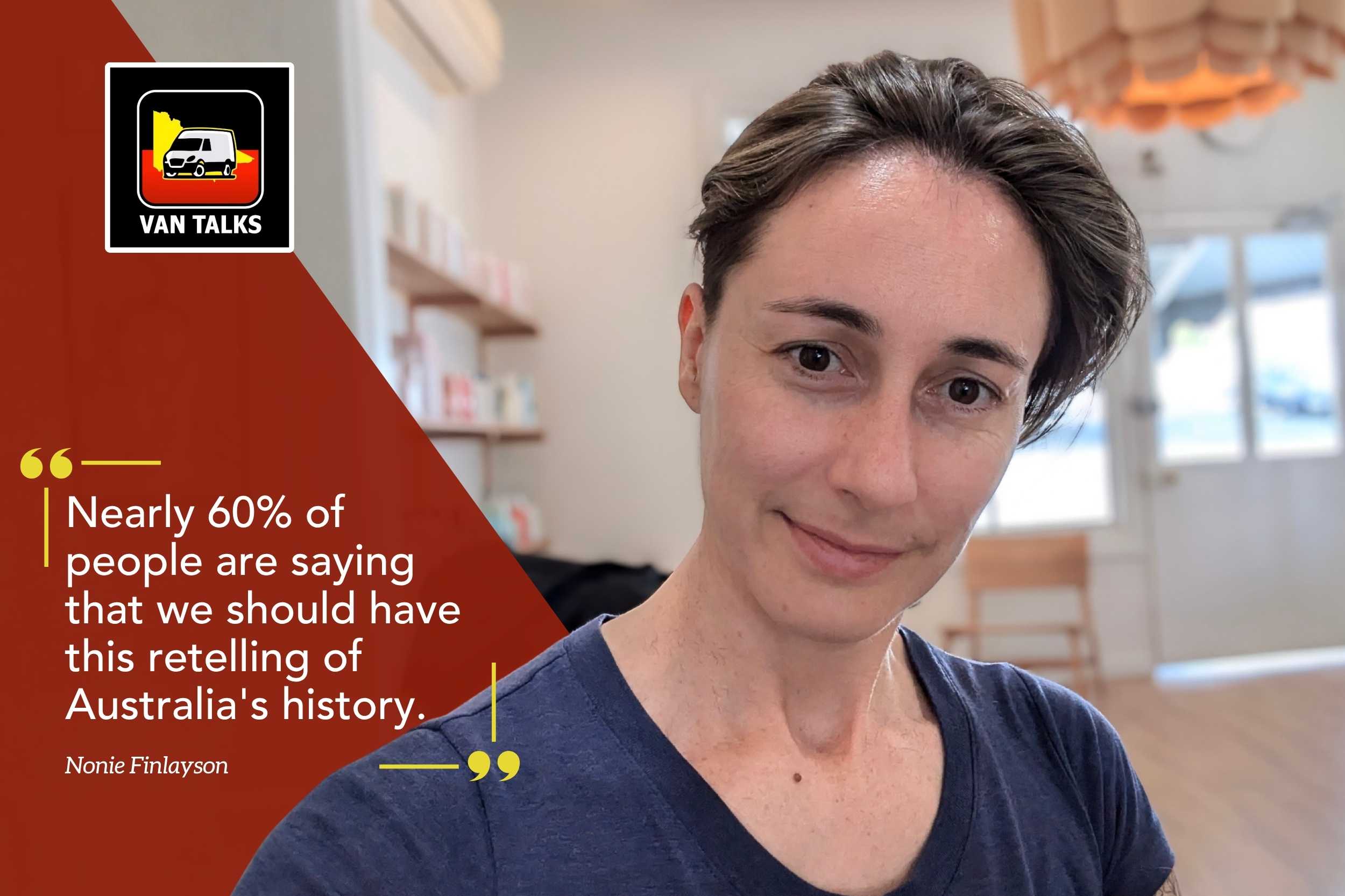
Despite these challenges, nearly 60% of respondents support retelling Australian history from First Nations perspectives, making it the most supported initiative tested.
“I think this is a really potentially easy area for the government to take action on moving forward,” Nonie stated.
The survey also showed that non-Indigenous Australians overestimate the First Nations population at 17.5%, compared to the actual figure of 3.8% as of the 2021 census.
Younger generations consistently show greater interest and stronger support for Treaty, and higher self-reported knowledge on topics such as Traditional Owners.
“I think it’s quite positive that we see the new generation coming through are potentially more supportive of change,” Nonie said.
Advocates argue that maintaining public engagement will require leveraging strongly supported areas like truth-telling and education.
Charles Pakana: In August of this year, market research company Ipsos released its Indigenous Issues 2026 report, based on research it conducted in May of this year. Key among the results was opposition to changing the date of Australia Day remaining unchanged—46% as opposed to 21% in favour of changing the date—and general interest in Indigenous issues among non-Indigenous Australians falling to 45%, the lowest recorded level since 2020. Joining me on the programme to discuss some of the research findings is Ipsos Research Director Nonie Finlayson. Nonie, welcome to the programme, and thanks for affording me the time.
Nonie Finlayson: Thanks for having me. It’s nice to be here.
Charles: Nonie, this research project wasn’t commissioned or sponsored by any government or organisation. So, before we get into some of the findings, why undertake the research?
Nonie: Yeah, that’s a good question. So, Ipsos does market research for a wide range of clients, but we feel it’s really important to do research like this every now and again so that we have a better understanding of the world around us. So, this is one of the pieces that we do to make sure that we can really understand what Australians are thinking and doing, and it helps inform Australians as well, but it also helps us better understand the research that we’re doing.
Charles: Okay. Well, it was interesting to note that even though there’s been a decline, especially since 2023, there’s actually been a stabilisation in support for treaty—59%, in fact—and a Voice to Parliament at 50%, rather than following that declining trend. So, just what does that say about the underlying support for structural reconciliation reform, as opposed to what we may be hearing in mainstream political debate?
Nonie: It is important to note that we do have a stabilisation of those data coming through. So, we have a general decline in general interest for these issues, but it’s not—so it’s a general decline in positive interest, but there’s also a small decline there in negative interest or disinterest, as it were. So, I think potentially what we’re seeing here is just an increasingly competitive scenario with other national concerns that are coming in that people are paying attention to. So, things like the cost of living, housing, broader economic concerns, really dominating that conversation. But when we drill down into it, and we ask them about these specific issues, there is still that support for reconciliation and for treaty coming through. However, of course, we do still hear about potentially negative views coming through, and I think that comes down to that minority voice still being the loudest coming through.
Charles: I’m interested, on the topic of treaty—I’m not sure how granular your research actually was—but amongst those people who were giving their opinion either for or against treaty, was any rationale from those people actually sought to justify their choices?
Nonie: Not for treaty. So, when we’re asking about whether people believe treaty is an important way forward for reconciliation, we are just asking how important. So, is it very important, slightly important, not very, slightly, or very unimportant. There are some other questions we asked in there to give their feedback about why that was the case, but not around reconciliation.
Charles: I found it interesting that when we were talking about the support for treaty, it was 64—or, I should say, people who considered treaty unimportant said that 64% of the country agrees with them, when in reality that group makes up just 22%. Is this influenced by social media? I mean, I know the answer, for goodness’ sake, but just how much influence on this does social media actually have?
Nonie: Yeah, look, I think almost certainly. We don’t have that exact data, but that false consensus is really persistent, and it’s getting worse. So, as you said, only 22% of non-Indigenous Australians said that they don’t consider treaty as important for reconciliation, but they felt that 64% of Australians probably agreed with their opinion. When you look at the reverse of that, 59% of non-Indigenous Australians do believe that treaty is important for reconciliation, but they only think that 48% of Australians agree with them. So, they think that fewer Australians are more likely to agree with them. And what we do see as well in this data is an increasing number of people saying that they’re hearing racial slurs and “jokes”, quote-unquote, about First Nations and Indigenous Australians on social media, and that has increased over time. So, I think it’s reasonably safe to say that there’s probably that large minority voice coming through affecting people’s perception of the issue.
Charles: So, that racial slurs and jokes, if I recall, is around about 70% of respondents. Is that correct?
Nonie: Yes. Yeah, so that’s 70% of people saying they’re hearing it on social media, and just under that, 68% saying they hear racial slurs and jokes in public forums. And then it kind of decreases in other contexts. So, when you’re in social contexts, that’s still around 63%, but in work and at school, that decreases to 48% and 44% respectively.
Charles: Still alarming numbers without a shadow of a doubt.
Nonie: It’s still, yeah, like half of people coming through are saying, yeah, they’re still hearing these sorts of racial slurs happening at some point.
Charles: I’m interested, Nonie, has any of your other research into other elements of the multicultural community—does this reflect on findings there?
Nonie: I can’t think of any other research off the top of my head. One thing that this research does touch on, so what we ask is a range of issues under what we’re calling kind of modern racism statements, or issues that touch on that cultural piece. And a lot of these statements are about the general cultural miasma of Australia, rather than kind of Indigenous-focused. And what we find is it is broadly across all cultural aspects. So, one of the statements that we find has increasing agreement to it is the fact that a really large portion, or 65% of Australians, believe that new migrants from any other culture should be willing to adapt to mainstream cultural views and values of Australia.
Charles: Just what does “adapt” mean, though?
Nonie: Well, that’s up to their personal interpretation, so that could be a wide range of things. Yeah.
Charles: Right.
Charles: A couple of things that really jumped out at me when I was looking over the research was that nearly 60% of Australians said they were in support of retelling history from Indigenous perspectives. Now, this was the single most supported initiative tested. How do you believe that this can be leveraged within community and government? And I realise that’s going outside your wheelhouse on this, but I’m interested in your perspective.
Nonie: Absolutely. And this is actually one of my favourite pieces. It’s not a groundbreaking piece of data, but I think when we ask in the survey about support people have for different Closing the Gap initiatives, that is the largest support that people have. And it’s really consistent. So, over the five years that we’ve been doing this research, around 60% of people are saying that we should have this retelling of Australia’s history from the Indigenous perspective. And I think that’s really positive that it has remained so high throughout all of the different things that have been going on, particularly when we saw the negative outcome to the Voice in 2023. This has remained stable. I think this is a really—potentially easy area for the government to take action on moving forward, and basically providing support and doing more for First Nations communities. I think potentially not a big piece, but an easy piece, and one that is strongly supported by a majority of Australians.
Charles: What about the number of respondents who believed that the percentage of Australians who were First Nations was 17.5%? I’ve never heard that before. How the heck did that number come up?
Nonie: So, I think this is very common just with numbers in general. Humans, we’re very bad at estimating. We’re not very good at kind of pinpointing a number unless somebody has told you what an exact number is. Generally, we kind of blow things out of proportion. So, it’s unsurprising in this instance, but what we’re seeing is that when you ask people what proportion of Australians are First Nations or Indigenous, it really is quite high. So, people are overestimating that population. When we break that down, we see—so the actual number, as of the 2021 census, so this might have changed with our most recent census, but from then, it was about 3.8% of the Australian population. And our survey, about 12% got that right. And if you include the people that said 0% to 2%, there’s another 14% there, so we’re looking at 26%. So, a quarter of Australians are in the right range. But then you go above that: 30%, or a third of Australians, are kind of saying, “Well, 5% to 10%, maybe?” So, there’s that overestimation. And then there’s still a lot of people saying 11% to 25%, or 26% to 50%. So, there really is—I think at this point, we can probably say that they’re guessing, and they have no idea.
Charles: What impact do you think that misunderstanding of the true figure has on some of the results? When you’re talking about allocation of government funds and resources, just how much of an impact do you believe that may have?
Nonie: I think it has a big impact, and I think we’ve seen over and over again that one of the best ways to start approaching this topic is education. And just providing that really basic information about: look, it’s not a large proportion of the community; they’re actually not getting—so, providing the information about the support that they’re actually getting, which is probably much less than a lot of people believe; and providing that introduction to community and way of life. It seems like that’s the best way to really broach this topic. I think it would bring down a significant portion of that negative attitude, or people who oppose these sorts of things.
Charles: Talking about negative attitudes, one of the key findings was that the modern racism indicators are largely unchanged. One of the key findings, and it goes on to say that, “attitudes associated with modern racism remain broadly stable”—not a good thing to read—”suggesting that these views remain entrenched among a minority of Australians.” Let’s talk a little bit about that. When we’re saying a minority of Australians, just what percentage are we talking about? Rough, of course.
Nonie: So, I’ll just go a little bit of detail into that scale. So, we have four different questions, statements, that go into it, asking about whether people favour laws that permit First Nations peoples to rent or purchase housing even when the property agent does not wish to sell to them. Then there’s another one that’s about it being respectful to update place names that have racist connotations. And then two more that are reverse-scored, and these are around that First Nations people should have a say in their affairs, and racial prejudice still exists in Australian society. So, these are the four statements that go into this scale that we use. And what we find is a really high score for a lot of our non-Indigenous Australians coming through. So, this is a scale that does range from 4 to 24. It’s not standardised in that sense, but we have an average of 12.2 in that. And realistically, what we need to see is 4, which is effectively 0. When in reality, what we’re actually seeing is it’s about halfway up the scale. So, there’s still a lot of agreement, a lot of kind of what would be considered modern racism out there amongst non-Indigenous Australians. And this does, of course, vary across our different demographics.
Charles: I’m interested to understand the results on those four questions, in particular number two with the place naming, I believe. Was it?
Nonie: Yes. Yes, so we’re asking: is it respectful to update place names and brands that have racist connotations or connections? This is a reverse-scored question. So, 21% disagree with this, so saying that it isn’t respectful to change these names, and that they disagree that these names need to be changed.
Charles: Good Lord.
Nonie: Yeah, so it’s—and that has been stable. So, this is, again, with pretty much all of these statements, they’ve stayed stable over the five years. We’re not really seeing any changes in people’s attitudes or opinions. Generally, we saw little dips and changes across the board in 2023 while there was so much press and news coverage of these, but we’re not seeing movement in the direction that one might hope we would see.
Charles: What were some of the most startling bits of research that came out of the report for you?
Nonie: I’ve been doing this for about five years now. None of this, unfortunately, surprised me. I think some of the things that disappoint me most is that it has—some of these, this agreement with modern racism has stayed so stable, and the fact that we’re still getting that huge false consensus. Again, this is really unsurprising given the way that social media influences people’s perception. We know that that loud majority makes people think that these issues are so much more prevalent. People listen to others within their bubbles, and so of course there’s just this echo chamber of whatever their particular views are. And I think a large portion of Australians aren’t thinking about this on the day-to-day. So, there’s a really large portion out there that aren’t mentioning it, aren’t thinking about it, probably aren’t responding when other people bring it up. And so what people hear are the vocal minority at either end. So, there’s a lot of people out there that are supporting this, but they’re probably in their own bubbles just as much as people at the negative end of this are.
Charles: Let’s understand the demographics here, especially the age demographics. If we can just look at general support for First Nations or Indigenous issues, what was the breakdown there by age?
Nonie: Now, this is a positive result, in my mind. So, we do see a clear generational divide, and this continues over the time that—there hasn’t changed too much over the five years that we’ve been doing this research. But what we find is that, generally speaking, younger non-Indigenous Australians are more interested in these issues. They tend to place greater importance on treaty, they report a stronger knowledge, things around traditional owners, and they’re also more likely to be supportive of these range of reconciliation initiatives that we see coming through. So, I think it’s quite positive that we see the new generation coming through are potentially more supportive of change. And I think on top of this, some of that other research that we do outside of this study, we see at a global scale often there’s a—there is, obviously, generational divide across any issue you’re going to look at, but what we often find is there’s actually a gender and generational divide. So, what we see is that young males are more likely to be conservative, and young females are less likely to be conservative. So, there’s a widening gap between young males and females. However, we don’t see that in this data, which I think is quite positive: that support for First Nations issues is across all of our younger generation.
Charles: Now, what about the fudge factor? Because we do know that no research is 100% on the ball. Just what sort of error do you allow in your research? How accurate really is it?
Nonie: So, we have conducted this research in May, and we did it with a thousand people—or just under a thousand Australians. We only did this research on non-Indigenous Australians that responded to our survey, so that ended up being just over 900 Australians. So, we’re extrapolating this data to Australians from 900 people, so there’s always going to be that margin of error. And what we’re looking at here is a margin of error of about 3.5 percentage points. So, any time that there’s a gap between how much people have interest, or younger and older Australians, we want to look for a gap of about 4% or more to see that difference and to understand what’s going on.
Charles: Now, we’ll provide a link to this research on our website accompanying this interview with Nonie. Before we let you go, Nonie, just how should organisations and governments at all levels utilise this research to better inform their decisions and their actions and plans going forward?
Nonie: I think the challenge for reconciliation advocates and policymakers is really going to be maintaining that public attention and engagement at a time when we’re seeing these cost-of-living pressures and those broader economic concerns really dominating the national conversation. So, we need to get people interested in this topic, and then taking those pieces of easy movement—so, looking at potentially retelling of Australian history from the Indigenous perspective; there’s a lot of support for that. And yeah, I think that’s it.
Charles: Nonie Finlayson, Research Director at Ipsos, thanks for your time.
For Radio Play:
1 - Click the Download Audio button
2 - The audio file will commence automatic play in your browser
3 - Confirm this is the file you want to use in your program
4 - Once confirmed, click the vertical elipses (3 dots) and select download
CONTACT US VIA SMS
Get in contact with us via our dedicated SMS line:
0493 222 836
5 October 2026
The revival of cultural burning practices to remediate Country and help mitigate disasters
1 October 2026
Implementing First Nations knowledge to heal country
28 September 2026
It’s time for Australia to acknowledge historic atrocities
24 September 2026
First Nations star knowledge predates Western astrophysics by millennia
21 September 2026

0 Comments