
Implementing First Nations knowledge to heal country
Holmesglen Institute and Trust for Nature offer a First Nations-led Certificate III in Conservation and Ecosystem Management, empowering mob to care for Country, restore native biodiversity, and lead environmental self-determination.
Posted by: Karina Wells
Published: 1 October 2026
A growing number of Australians are recognising that European-based land management practices do not always work ideally in this country. Bringing First Nations cultural knowledge into environmental management is now more important than ever.
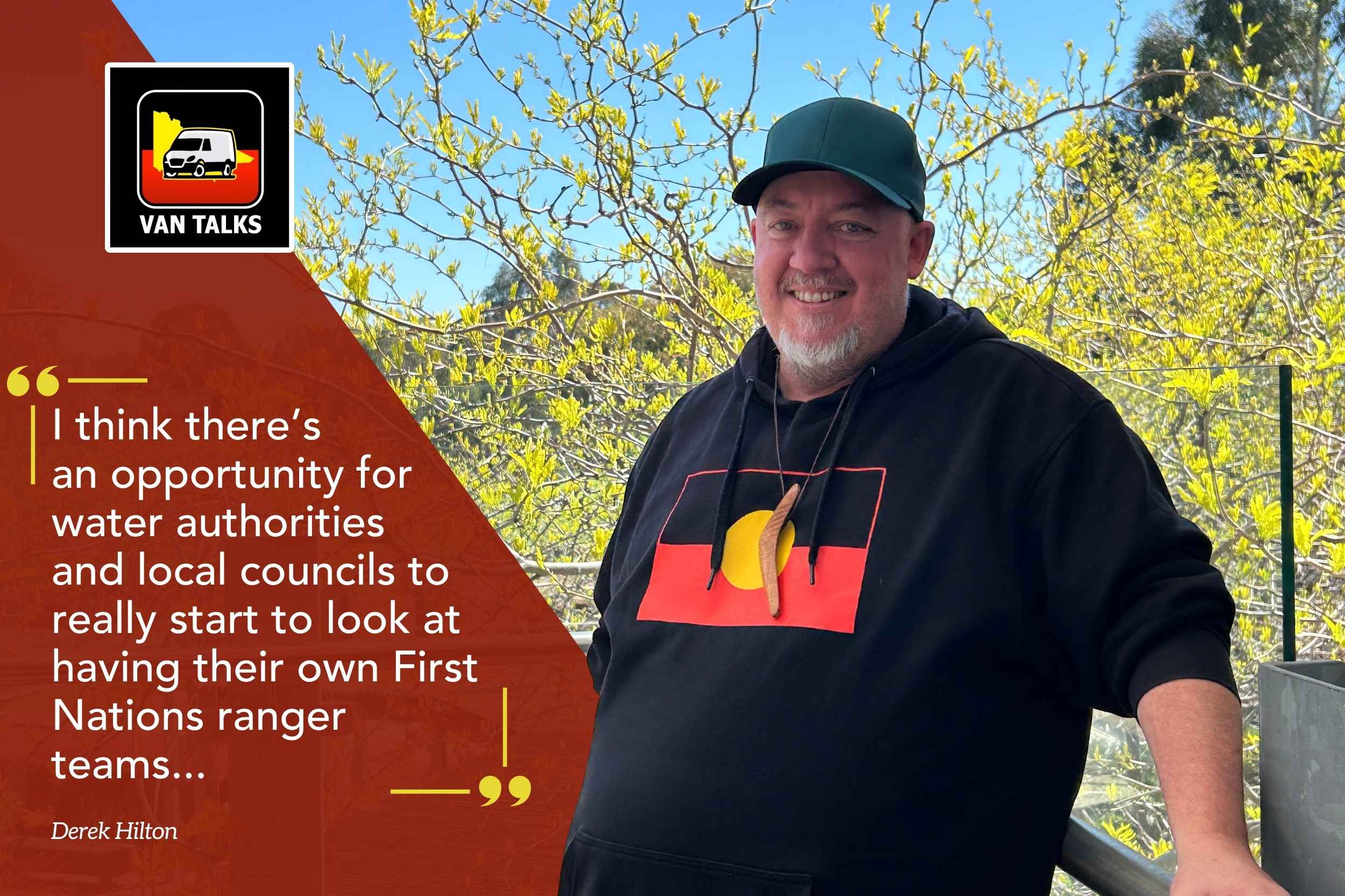
Derek Hilton, the Koorie Liaison Officer at Holmesglen Institute, spoke about the Certificate III in Conservation and Ecosystem Management delivered in partnership with Trust for Nature. “The key was that when you finished in 12 months you actually had a formal qualification from that,” Derek said.
Developed in consultation with Victorian First Nations people, namely Uncle Dave Wanden, the course has been running for over ten years. “I think the biggest thing is that it’s mob only, because we know that mob learn from mob,” Derek explained.
The program offers hands-on experience, with 50% of the learning taking place directly on Country. “We’ve got students currently going through the course that will have that qualification at the end, that leads them on to bigger and better opportunities.”
Graduates are applying their training to cultural burning, revegetation, and protecting local ecosystems across Victoria. Derek noted: “There’s a real importance in understanding what it looked like and what it was, because it was holding the soils together, it was holding the ecosystem together.”
Looking ahead, there are opportunities to expand First Nations ranger teams within local councils and water authorities. “We want to see young voices, we want to see young people coming through and we want to develop that self-determination,” Derek said.
Charles Pakana: As a growing number of Australians recognise that European-based land management practices don’t necessarily work ideally in this country, bringing First Nations cultural knowledge into environmental management is now more important than ever before.
Joining me today to talk about this is Derek Hilton, the Koorie Liaison Officer from Holmesglen Institute, which in partnership with Trust for Nature runs a Certificate III in Conservation and Ecosystem Management. It’s a course developed in consultation with Victorian First Nations people for Victorian First Nations peoples. Derek, thanks for joining me on the program today.
Derek Hilton: Thanks for having me, uncle.
Charles: Derek, give us a bit of an understanding of what this course is all about, its genesis, and then more broadly, some of the involvement from the four key First Nations Traditional Owners in developing the course.
Derek: Yeah, so ten years ago, going on 11 years ago, the course was designed through a connection with a couple of people from Trust for Nature. Uncle Dave Wandin from Wurundjeri recognised a bit of a gap in that education space as well, because he’d developed some knowledge himself and shared a bit of knowledge himself.
Charles: And of course, Uncle Dave was the founder of the Narrap team, wasn’t he, or the leader of the Narrap team, which is the rangers at the Wurundjeri.
Derek: Yeah, that’s right. Also too, Bunurong at the time was looking to improve their ranger teams and bring in some more ranger teams themselves. So they’d reached out to Trust for Nature and sort of asked how they could go about it. A couple of key people at Trust for Nature had reached out to Uncle Dave and said, “How do you think this could look?”
Uncle Dave wrote down a charter of sort of rules around that, what it should look like, and basically went back to Trust for Nature and said, “This is what I would suggest, this is how you need to run this.” And through that, Trust for Nature looked for a partner in the education space.
Holmesglen was the organisation that they’d approached, and Holmesglen jumped on board very keenly. And it ran as a three-year trial. And as I said, it’s ten, now 11 years coming on this education journey.
Charles: Just before we get onto more of the course and the genesis that was ten years ago, I’m interested to explore a little bit about this charter that Uncle Dave was involved in, because it was really quite almost unique in what it was seeking to achieve, establishing a ground level, sort of equal platform for everybody. Just share some of the information on that if you wouldn’t mind, Derek.
Derek: Yeah, so the first thing it had to be, it had to be free. And it had to be for Mob only. One of the key factors was a qualification as well. So coming out of this course, which is a 12-month course, and it’s run part-time over two days a week, the key was that when you finished in 12 months you actually had a formal qualification from that, and that’s where Holmesglen plays that part in it.
I think the biggest thing is that it’s Mob only, because we know that Mob learn from Mob. When you’re in a Mob classroom, which is out on Country 50% of the time, which is the best part of it—definitely good for me because I wasn’t a classroom kid, so I did really enjoy the fact that it was actually out on Country…
Charles: So you were a student to start with?
Derek: I was a student, that’s how I started with Holmesglen. I was doing the course and Holmesglen had a position available, and I actually took the course on because I couldn’t find anything else anywhere that was Mob only and delivered like this.
Charles: Why is it so important that it’s Mob only?
Derek: I think the big thing for me and for my understanding, and I know a lot of people that have expressed it to me, is when Mob get together and they’re in a classroom, they’re not one out, they’re not singled out, they’re not the token in a classroom, and they feel more comfortable.
We know what Mob are like when they get together, they yarn and they share and everybody learns off each other. And it is uplifting. The class that I went through, we had age groups from 20 through to a little bit older like me… I won’t say how old, but yeah, a little bit older like me. But you know, the connections that everybody built in that space, and it does help because it is a 12-month course and it’s two days a week, the connections that everyone builds in that space is just phenomenal.
I think the biggest thing’s the letdown at the end of it because everybody feels a little bit lost, they don’t have their Mob around anymore. But a lot of people are coming into that course and they’re feeling like, “I know my connections and I know my history,” but then they’re connecting with a new Mob, and they become a Mob within themselves. I’ve seen it before, I’ve done a couple of different Indigenous courses previously, and when you do it over a period of time, everybody just connects, and everybody shares and learns from each other.
Charles: I’m interested in understanding some of the content that’s currently in the course. Now I assume that’s evolved after a ten-year period now into the 11th year, but typically what are some of the key areas that are culturally based that the students would be experiencing and learning about during their 12-month course?
Derek: What it was probably ten years ago, we probably had from my understanding there was a couple of people who were involved and they were constantly reaching out to people to get involved. Now you see a list of people putting their hand up to be involved because the completion rates and the success rates of the course have been phenomenal. The students are getting so much out of it.
When you’re looking at the biosystems of different areas, when you’re looking at what the work that is going into revegetating certain areas, the understanding of cultural burns, what emphasis that has and the significance that has on the ecosystem when you’re doing it properly… You’ve got students learning about middens and midden sites, and the importance of understanding what was there and what wasn’t there, because that actually helps when you’re trying to bring it back to what it was as well.
So there’s a lot of different things in that space, but then when you’re looking at a couple of animals in particular, like the Leadbeater’s possum and the research that’s been going into that, and having First Nations connections into those environments… And then also the participation of those students as well getting involved in that, and people want to be involved in that sort of stuff. The helmeted honeyeater is another one.
Charles: What about involvement from the Traditional Owners themselves, because I believe you got four of the Traditional Owners from the Kulin nations: the Wadawurrung, the Bunurong, the Wurundjeri Woi-wurrung, and also the Taungurung. So what’s the involvement from those Traditional Owners in constructing the course itself and the content?
Derek: I would say Uncle Dave’s probably the biggest influence, to be quite honest. But then you’ve got Adam Geminis from Bunurong as well, so he does a lot of work down the Mornington Peninsula, and so he’s basically a contact from a Bunurong aspect. Taungurung, they have their own ranger teams within Parks Victoria now as well. We’ve got students currently going through the course that will have that qualification at the end, that leads them on to bigger and better opportunities within Taungurung as well.
Charles: And they’re learning things like cultural burning, you were saying, so how does that play out during the course itself?
Derek: Very carefully. Not surprisingly. Yeah, very carefully, but also too because you’ve got… typically it was always run through DEECA, so you’ve got to have the DEECA contacts as well. There is some key people above me that I’m not… haven’t been involved with, but they’ve got some connections in those spaces.
But I think Adam Geminis was one of the key ones that I came across sharing some information on sites that were previously culturally burned down in the Shoreham area, and seeing the significance of what was coming back through in that natural ground environment. So there’s a lot of that, and there’s more and more of that. Narrap’s involved a lot more, Bunurong’s involved a lot more, I’m sure Taungurung have got their own practices with Parks Vic as well, so there’s a lot of that going on now.
And there’s a lot more emphasis towards that because as we see all the changes in the climate and the climate crisis we’re going through, I think there’s a pushback to listen to Traditional Owners in those areas and what we can do a little bit better, which is only better for the environment as well.
Charles: So that brings up an important point, Derek, and that is passing this knowledge on, because I’m going to address the elephant in the room, and I’m sure it has been brought up at some stage, why is this just a free course for blackfellas, for Mob? Because it seems to me that whilst people in the background may have that whinge and moan about that, they’re not really thinking about the broader picture and the employment of these people who graduate from the course, who will then be taking that knowledge out to local governments, to Parks Victoria, and to Traditional Owners themselves. Let’s explore that a little bit.
Derek: Yeah, so the Traditional Owners obviously with Narrap and Bunurong and Taungurung Land and Waters Council, Wadawurrung with their areas, they’ve obviously got their own spaces that they look after through their funding from the state governments and different things like that. I think there’s an opportunity for water authorities and local councils to really start to look at having their own First Nations ranger teams, and looking at the biodiversity within their own areas.
There’s a great opportunity for them to actually start getting some of these graduates to come through this course and then going on to the next course, and getting that higher education. And then from there, it’s really about them becoming the leaders again and sharing that knowledge to the next generation again, and continuing in that knowledge sharing and also that education, because we want to see young voices, we want to see young people coming through, and we want to develop that self-determination. And it’s not just within councils, we’re seeing it in different areas as well.
There’s a girl that I know who did the course previously—and there’s a couple of girls actually, I should say—they’re actually running a Junior Ranger program now, Maya Koff and Karissa Watts, yeah. So they do that down on the Mornington Peninsula, and it is an amazing… when you think that we’re working with students that are 17, 18 plus up to an older age like I said before, which I won’t say what it was, but we’re now looking at early education and we’re teaching kids in primary schools about the importance of caring for Country, and understanding the ecosystem and understanding the environment and working within your natural environment as well. So you’ve got people like that out there educating at the start, it’s only going to create more education opportunities further down the track.
Charles: One of the things that I was particularly interested about is prior to pressing the record button on this interview, we were talking about the concept of knowing companion trees in specific areas, and you were talking about down on Bunurong Country, and just how important that is for the environment, for the flora and fauna itself, and for the human inhabitants. Let’s explore that a little bit if you wouldn’t mind.
Derek: If you probably tap into Bunurong a little bit, there was a lot of changes down on Mornington Peninsula, a lot of trees were taken out by settlers. They turned it into grazing land, not realising what they were taking out, and there’s a lot of trees that don’t grow without a partner tree. And there’s a lot of the ecosystem down there has had to try and find a way to bounce back.
It’s not really there, we’re really relying on intervention, so we’ve got people getting involved to try and revegetate those areas. Bunurong’s doing a fantastic job in that space, and that’s what we need more of, because we’ve got farmers down there now recognising that the land’s not what it was, and that’s happening right across the country.
So a lot of people are going back to old practices and what the land traditionally used to look like, and letting it grow naturally the way it used to be because it held the water into those areas, it didn’t just wash away quickly. We’ve got farmers talking about drought all the time, but now that we’re seeing the revegetation come back in, water’s being held in, there’s more vegetation, there’s trees which is providing shelter for animals as well.
We can keep going down that path talking about our predator animals and everything, the changes in those spaces. I think there’s a real importance in understanding what it looked like and what it was, because it was holding the soils together, it was holding the ecosystem together. We’ve stripped it out and now we’re trying to come back and we’re listening to our traditional ways of what the land really looked like and why it actually thrived so much.
Natural grasslands, everybody talks about grasslands at the moment. If you’re in an urban area, you could actually build your own urban grassland and vegetation with natural pollinators. People are looking at that in their own backyards now: “How do I get the bees in there? How come my plum tree doesn’t grow?” You know, we’ve got all these introduced species, but we need the natural pollinators, and we’ve continually ripped all that stuff out. But if we start putting that back and listening to First Nations people as to what was there previously, we can get all of that stuff back and then we can have that urban agri environment going again.
Charles: And this is the sort of things that are being taught to the students going through these courses now?
Derek: Yeah, especially when it comes to pollinators and understanding that, that urban environment as well. It’s not just about further out in Country, but if you have a look, Narrap just recently completed a project along the Birrarung, and they’ve just done a big revegetation works along there. There’s some of the councils looking at areas within their areas now getting natural grasslands and bringing back those pollinator trees and everything like that to bring those insects back and bring those pollinators back, the butterflies and the birds and the bees. That’s just going to continue to improve that environment and we’re going to stop looking at concrete jungles.
Charles: Brother, what is the future of this course? You mentioned there was further certification or further qualifications. Beyond the Cert III course that’s been going on for ten years, what is there?
Derek: Yeah, so there’s a Cert IV in this course as well, that goes into conservation ecosystem. There’s also a diploma. I would think that anyone who’s having a look at this course as that taster, whether you want to connect to Country, whether you want to connect to culture, that’s a great starting point.
If you want to be involved in that sharing of knowledge and creating the next generation of knowledge sharers, you can go on to that Cert IV and you can go on to that diploma, and you can become a team leader, you can become not just a ranger… everybody looks at this course and says, “Oh okay, that’s a step to be a ranger,” but you can actually go on to that education space and lead in those environment sectors as well.
We’re talking about waterway protection and cleaning up the waterways, there’s a whole range of different roles that are available out there with local councils in particular, Melbourne Water and all of those different water authorities—I think we’ve got seven within the metro area. So there’s a lot of opportunities to build your ranger teams and your First Nations teams around that caring for culture and improve that right across the scope. And then we can get those people into leadership positions within those organisations, and they can become the educators within those organisations as well.
Charles: Now what about sharing this knowledge, this course, with other institutes and universities? Is there scope for that, because obviously as great a job as Holmesglen might be doing, there is simply no way in the world that it’s got the capacity to thump through as many graduates as is required to address all the environmental trauma that’s going on right across this state, we need more people.
Derek: I think we need to look at some sort of national scope on this. I know a lot of the land councils up in the Kimberley area and from my Country up on Quandamooka Country as well, there’s a lot of different land councils that are involved. You get out towards western Queensland and there’s land councils out there, and there’s people that are actually doing the ranger job up there, but they’re not getting the qualification.
I think it’d be great to see this sort of qualification being taken on, and state governments could actually back this all the way to be quite honest. At the moment it’s funded through philanthropic and government grants, a lot of it’s donations, and Trust for Nature are an amazing company. They do so much work in this space and they really do understand the importance of First Nations knowledge in this area, but they also understand that First Nations impacts and what they get out of it and what they can bring to it. And I think if we could get some more of that, that’d be fantastic. I’d love to see some more of that.
Charles: Derek Hilton from Holmesglen Institute, thanks for your time.
Derek: Thanks, Uncle.
For Radio Play:
1 - Click the Download Audio button
2 - The audio file will commence automatic play in your browser
3 - Confirm this is the file you want to use in your program
4 - Once confirmed, click the vertical elipses (3 dots) and select download
CONTACT US VIA SMS
Get in contact with us via our dedicated SMS line:
0493 222 836
21 October 2026
Reconciliation in Seymour – one of Victoria’s highest recorded “No” vote regions
19 October 2026
Understanding the use – and over use – of the Acknowledgement of Country
15 October 2026
It’s time Australia recognised a shared history of often brutal “settlement” and expansion
12 October 2026
Start learning about First Nations cultures without the fear of offending
5 October 2026

0 Comments