
The revival of cultural burning practices to remediate Country and help mitigate disasters
Traditional Owners in Victoria are reawakening ancient cultural burning practices to restore landscape health, protect biodiversity, and mitigate wildfire risks through community-led land management and self-determination.
Posted by: Karina Wells
Published: 5 October 2026
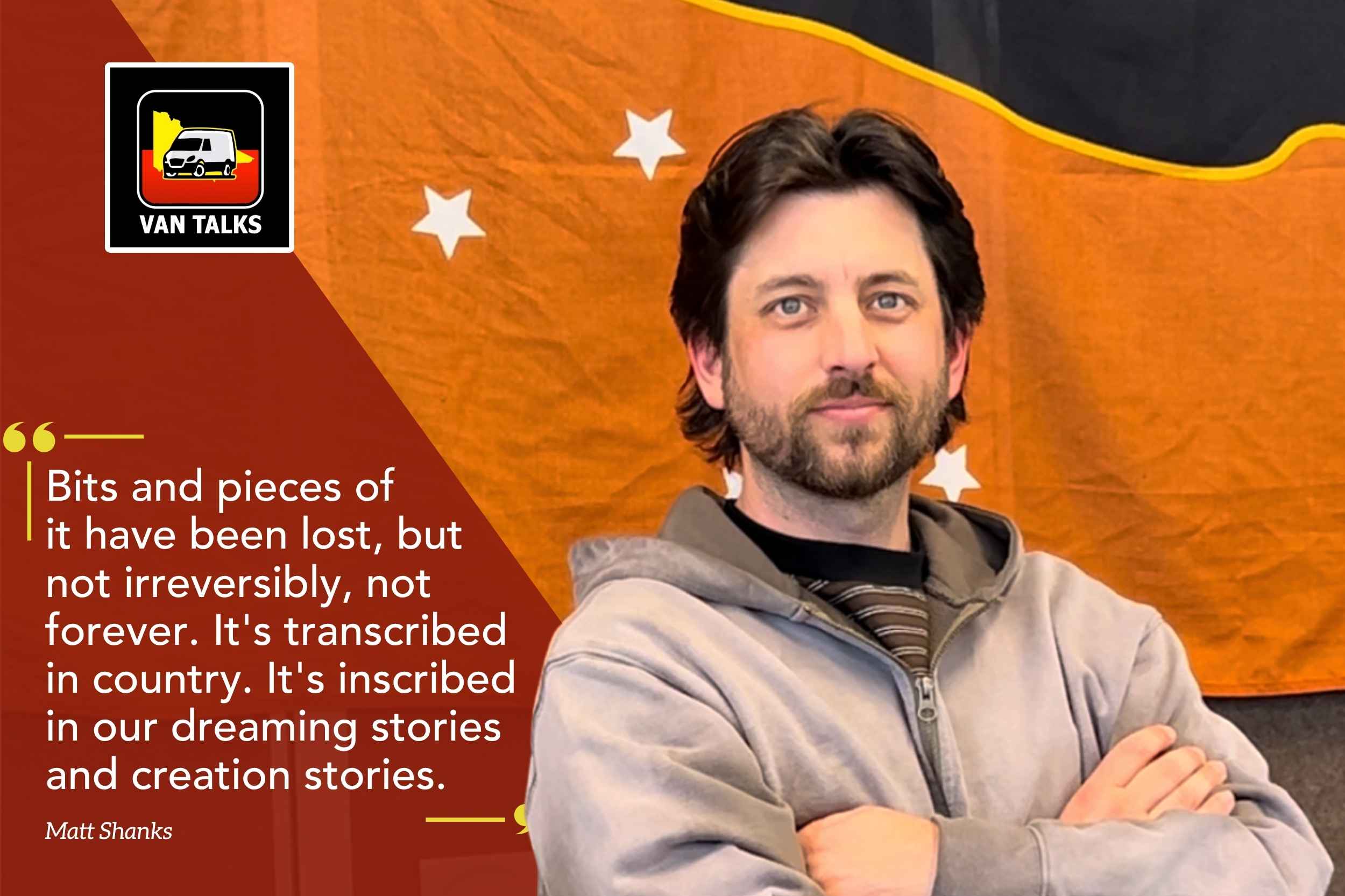
Cultural burning is a vital practice that brings healing, care, and protection to Victorian landscapes.
Traditional Owners across the state are actively working to reawaken ancient knowledge that has been carefully retained within families and communities for generations.
This reawakening fosters a deep connection to Country while addressing contemporary environmental challenges.
Matt Shanks, executive manager of biocultural landscapes at Taungurung Land & Waters Council speaks to the profound nature of this work and its relationship to the land. “It comes from what we know as Aboriginal people.”
“We’re in relationship with country, we’re in relationship with our Mother, and we respond to prompts that she gives, indicators which might be physical, they might also be spiritual and cultural, to apply fire.”
The practice goes far beyond traditional hazard reduction, incorporating ceremonial fires, habitat creation, and the revival of cultural knowledge systems.
While navigating systemic barriers and bureaucratic processes remains a challenge, the dedication of Traditional Owners continues to drive meaningful change.
Through ongoing collaboration and self-determination, cultural burning paves the way for a safer and more connected future for all communities on Country.
Charles Pakana: Just imagine, if you would, the mitigation of catastrophic wildfires and the restoration of biodiversity and soil health. These are just a few of the distinct benefits to the environment supported by cultural burning: small-scale, lower-temperature, cool fires tailored to the specific needs of the landscape.
Joining me today to discuss cultural burning is Taungurung man Matt Shanks, who is the executive manager of biocultural landscapes at Taungurung Land and Waters Council. Matt, welcome back to the program.
Matt Shanks: Thanks, Uncle. It’s great to be here again.
Charles: Matt, cultural burning is typically coined as the right fire, the right time, and the right way. To gain a better understanding, and beyond those six words, just how do you describe cultural burning to those who don’t know anything about it?
Matt: That’s a great question. It’s a big question. We describe cultural burning in many different ways, but it’s responsive to country. It comes from what we know as Aboriginal people. We’re in relationship with country. We’re in relationship with our Mother, and we respond to prompts that she gives, indicators which might be physical. They might also be spiritual and cultural, to apply fire.
It can also be ceremonial fire, campfires, keeping warm, cooking food, all of those sorts of things as well. It’s nuanced and responsive to context. So it becomes a really big conversation to pick apart. What you’re referring to, and I guess what I guess most people will be interested in understanding in a land management and a wildfire response context is how it can be applied as a tool for land management, for healing and caring for landscapes, and what role it might have in mitigating catastrophic wildfires.
Charles: And we’ll come to some of that in a short while. What I’m particularly interested in understanding right at the start is… The reality is, for most Traditional Owner groups across Victoria, indeed a lot of Australia, there was an immense loss of cultural knowledge, of lore, L O R E, since invasion.
What’s the journey been to regain, revive a lot of this knowledge? There must have been sharing, I would imagine, within Traditional Owner groups, because I’m aware that, for example, GLaWAC has done some amazing work over the years, as have other TO groups as well. So, just how has this revival come about?
Matt: I love to use the term “reawakening.” You and I both know the story of nations here in Victoria during the colonial period – we’re still in the colonial period – of survival and of retaining knowledge and information. We had to keep that secret from the authorities, however they may look like.
In more recent decades, because of the work and the fight of so many staunch Elders, it’s become, in some ways, much safer to identify as Indigenous, as Aboriginal, and to talk about our culture and our knowledge, and. So that reawakening, that reemergence, is happening in public that has been shared for a long time within families.
Some of it has been sleeping. Bits and pieces of it have been lost, but not irrevocably, not forever. It’s inscribed in country. It’s inscribed in our dreaming stories and creation stories. As you alluded to, different mobs, different nations have different parts of the stories for fire. We have been collaborating for a long time, over a decade, in really formal ways to reawaken those knowledges and turn it into policy and create agreements with the state government to start to enable and deliver, again, fire that has been so long removed and outlawed on country.
Charles: I’m interested… you mentioned working with government. Just how difficult has it been to get government, and the broader community, to understand that this cultural burning that’s been embedded within lore for so long and is now being reawakened is a real value to the land and to the entire society?
Matt: Again, with all these things, it’s nuanced. Some parts of it have been really difficult, and some parts have been really easy. There have been different conversations with government, different forms of government, and with the broader community.
With government, actually, it was quite easy to convince them, and they invested in the development of Traditional Owner Cultural Fire Strategy here in Victoria, the first of its kind, launched in 2019.
And the approach to development of that strategy was wholly Traditional Owner-led. Knowledge holders from all around the state have been delivering fire in various capacities, maybe formally as firefighters, as land managers and conservation managers, but also small-scale cultural burns on country, came together to describe the barriers to that, but also the enabling environment to that.
Ultimately, through, I think, 3 years of work and many, many conversations, visiting different burns, the different groups have delivered, learning from one another. We put forward a framework that the state can invest in and support decision-making to reinvigorate cultural fire, dependent on any group’s journey or pathway that they determine.
Conversations with the broader community were… a little bit different. Some overlapped. “How does this apply in a wildfire response or wildfire mitigation scenario?” The conversation really heated up, pardon the pun, following the summer 2020 bushfires.
Charles: Yeah.
Matt: There were various kinds of conversations about cultural fire and the role that it could play, from viewing it as a panacea (this is the answer) to this being part of the answer, to a new look, a different look, a more nuanced look at public land management, at bushfire management, at bushfire preparation. And it’s the latter, which is a nuanced understanding of engagement with fire.
Charles: Well let’s look into that. Let’s look into bushfire preparation. You mentioned it’s nuanced. Let’s explore some of those nuances then.
Matt: From a cultural fire perspective, it’s a finer scale. It’s the application of fire and other practices (that might be revegetation or retaining water in the landscape, not just draining landscapes and those sorts of things) to ultimately reduce fuel loads and flammability.
We can look to those principles that are in dreaming stories and in Indigenous understanding of country to draw land management practices today that can replicate the conditions. What I don’t mean is the exact vegetation structures, but conditions that are more aligned to what may have been found prior to invasion.
Charles: Let’s look at the practice of pre-bushfire season burn-backs that’s been practiced by bushfire brigades for decades, if not centuries. Just how close to that is this cultural burning? Are there any similarities?
Matt: It’s a great question, and so often where people start, where people that haven’t been in and around cultural fire or even sort of cultural practices—so, that’s the majority of the population, non-Indigenous people—they approach this conversation from a colonial perspective.
That’s not inherently a bad thing, but those worldviews are informed by colonial institutions and education processes, and that understanding that you build as a young fella that summer means nature burns, bushfires are a way of life in Australia, and that is accurate to a degree.
Your question, does that kind of version of back burning ahead of summer, does that connect to or replicate what cultural burning may do?
The short answer is it can in some instances. I guess the difference is not so much, or rather it’s not only in the actual physical process or representation of fire in the landscape, it’s also about the why, and how do we come to this place and apply fire?
In a wildfire mitigation, bushfire preparation situation, it’s about reducing fuel loads, reducing flammability, and trying to create conditions where wildfires aren’t going to be dramatic and expensive and dangerous, and create the risks or the issues that we see today.
From a cultural fire perspective, some of those objectives certainly exist and sit there, but it’s broader than that. It’s also about creating habitat for those animals that we might eat one day, or that we won’t eat because of their totemic associations.
That’s important because those animals and the relationships and the activities and behaviors that they display tell us how we need to exist on country and in balance. It’s also to create safe places for us to live. You know, we had villages, we had communities on country. It’s also to maintain travel routes, trading routes, songlines.
All of that and more, there can be similarities drawn to contemporary policy and priorities and objectives around land management broadly, and certainly also fire management and fire mitigation as well. And we should be thinking about that and having those conversations, not just about the practice on ground and where it should and shouldn’t be or where fire should or shouldn’t be. That’s a misunderstanding, often deliberate, by naysayers, by people who aren’t interested in Indigenous people leading or have other ulterior motives.
Charles: So just to sum up and make sure I’m heading in the right direction, where the European approach might be to burn back all that dead material in order to mitigate future bushfire and wildfire situations, a cultural burning, which is a lot more holistic, might be that, well, we’re doing a cool burn or a cool fire here, or a cultural burn in a particular area, for a purpose that is nothing to do with bushfire mitigation. Yet, as a result of that, actually ends up mitigating the bushfire. So, yes, we’re seeking to germinate seeds, or we’re seeking to create a better environment for some fauna, but you’re still burning off that, you’re still delivering that bushfire mitigation.
Matt: Yeah, it’s for multiple objectives, not for a singular objective. And again, we’re having a conversation, an overview of a plethora of practices that can be applied by, and are applied by Indigenous people and have always been applied by Indigenous people.
But starting at that point where those objectives are multiple, and certainly the primary objective is not just to respond to or prepare for catastrophic wildfires, is an important place to start and be having those conversations.
Charles: Matt, before we get to some of the positives that you’ve seen as a result of cultural burning, let’s just dive into some more of the challenges that you’re facing, either from communities—and we can speak specifically at Taungurung here—or at a government level in getting a greater acceptance and understanding and willingness to at least explore this broader concept of cultural burning.
Matt: Yeah, look, like I’ve mentioned, of course there are those people, organisations, etc., that are going to resist this kind of thing. We know that’s the way of life.
Charles: But is it for the sake that it’s, “Oh, it’s Aboriginal, therefore it’s got nothing of value to add”?
Matt: Yeah, certainly. And they’re, as we know, the minority. It’s not so much an issue for that broad agreement or interest in cultural fire, in cultural fire being reintroduced or expanded.
But we start to encounter problems when it comes to the systems. There are barriers in bureaucratic processes, in policy platforms, in the planning processes that inhibit Aboriginal people to be involved. That’s not necessarily deliberate in its creation, rather a response of the time when it was created when we weren’t present. So, a secondary result of not wanting to be in those rooms, or people not wanting us to be in those rooms, rather.
So when we look to the qualifications required, the training pathways that exist, they are all tailored towards wildfire response, remote wildfire fighting, these kinds of things, not small-scale, calm, what people refer to as cool burns, cool fires, where the risk profile is much lower.
Charles: So there’s one of the barriers. But the same standards, the same safety standards still apply, that you’ve got to jump through this hoop and then jump over that fence in order to get the qualifications before you can even set foot on country where the cool fire is happening.
Matt: That’s exactly right. And we’re all aware of those systemic barriers that exist for Aboriginal people accessing education, all of those kinds of systems that then come into play here and limit our people being involved in fire or other employment opportunities.
Charles: Well, that would also exclude elders, one would imagine, as well, who aren’t going to go through all those hoops and over fences.
Matt: Nor should they be required to, when we consider the kinds of fires that they’re going to be present for. We’ve all seen images of elders in community on a fireground delivering fire. It absolutely can be safe.
Other barriers are just in things like authorisations. There is a process for planning for burns that occurs in Victoria which is extremely detailed, as it should be. There are obvious risks and safety concerns. The Joint Fuel Management Plan is a long-term, whole-of-state system that fire managers contribute to and deliver. It’s big, necessarily.
So too are the actions and time required to engage with it and put burns up, including nominating burns, you know, sometimes 12 months, 24 months in advance of the burn being delivered.
Typically speaking—and this is a generalisation—are about planning for the delivery of fire at quite a large scale and not necessarily that small and nuanced scale that a cultural fire might be delivered at, which, when you’re having to plan so far in advance, yet you have the ability on the day to adapt where you’re going to apply the fire, those two things don’t talk to each other very well.
And Traditional Owners don’t have the authority to make that call on the day or even a week out that, “Hey, this should go ahead,” without doing significant planning for a whole number of small-scale burns that may never go ahead. This leads me into the other one, which is the access of resources. The resources aren’t there generally speaking for land management and fire management, let alone for Traditional Owner nations and communities to be…
Charles: What sort of resources are we talking about?
Matt: We’re talking about funding to support people to be on the fireground. But we’re also talking about protective equipment, small tankers, helmets, you know, simple kind of things just to get us out onto the fireground.
There’s a huge amount of mob that have gone through fire training and have worked as firefighters in communities for the longest time.
Charles: Yeah.
Matt: And a lot of them, you know, learned from their elders about cultural fire practices as well. Many of them participated in the development of the Cultural Fire Strategy.
They were able to draw comparisons between their experiences in Western fire agencies to the stories or the knowledges that their old people have told them, or just observations they’ve made on the fireground or in land management or what have you as well, and provide some of the most eye-opening observations and recommendations that really aren’t all that difficult. For example, training pathways and certifications.
Charles: Yeah. Matt, let’s look at some of the benefits that you’ve seen as a result of cultural burns taking place on Taungurung country or further afield—benefits to the land, benefits to the community.
Matt: Yeah, certainly, and this is exactly why I do the work that I do. There are a whole, whole bunch of benefits that are broader, as you’ve alluded to, than just returning health to country, to regenerating vegetation or whatever it may be, which we’ve certainly seen.
But the opportunity for young Taungurung people to be employed, to deliver practices of their ancestors under the watchful eye and guidance and, you know, the occasional correction from our elders, too…
Both laughing
…paid employment, opportunity to connect to country and do something really meaningful that is determined by community, by country, and not, you know, Western land management agencies or authorities or whatever it may be, has been a huge positive for community.
And the flow-on to that is to culture, to bringing mob together for the burn, for the preparation for the burn, and the opportunity that that has brought to have conversations about other cultural practices or knowledges, sharing of stories by elders.
Getting to witness the pride in Taungurung elders witnessing young people being empowered and standing proud on the fireground, and in the planning processes before then, you know, have a loud voice about what we should be doing. There’s a real power in community when they come together to talk about fire because it’s such an important element to our lives as cultural people, as Aboriginal people.
Like I mentioned earlier, cultural fire can certainly represent land management practices, it can also represent our ceremony fires, what we cook with…
Charles: Yeah.
Matt: …how we stay warm, how we come together and share stories. There’s all of those elements. And all of those elements are and have been for us, and other communities I know as well, present on the fireground or nearby to the fireground. We start the fire through a ceremony fire, we have our conversations around a campfire, and then we go onto country and we burn country.
Charles: What about benefits to the broader community, the non-Aboriginal community, especially coming from your country which has so recently been ravaged by wildfires? What are some of the benefits?
Matt: Yeah, and this is where the rubber hits the road for many. And the reality is, you know, like those conversations we were having in the 2020 summer bushfires, cultural fire’s not the panacea. It can make a huge contribution.
The burns that the Taungurung community have delivered and are planning to deliver, and same goes for other nations as well, and it’d be great to hear some of their stories as well…
Charles: Yeah.
Matt: …have been nearby towns. Mount Piper on Taungurung country, just out of Broadford, is where we delivered a burn last year. And whilst that was small scale, we have a landscape, a reserve that hasn’t seen the application of fire for a very long time.
Part of the objective that we had there was to see whether it could be possible to deliver smaller, finer scale fires in and around townships to potentially contribute to a safer community. Now that’s an objective that’s still under testing, it’s early days in our fire program.
But we have other burns planned around other townships in collaboration with local community groups, conservation groups, etc. And we spoke a lot with Broadford locals and conservation groups that are relevant and active in these reserves to make sure that we were delivering against all the objectives that they have as well, and they’ve been working towards.
So we want to continue that. We also want to continue delivering fire, cultural fire or fire in culturally informed ways, on private properties that we own, in collaboration with other landholders, and also on public land where it’s applicable in collaboration with Department of Environment and Parks Victoria.
These kinds of organisations, on private land, the CFA, have a really important role to play, and we have a framework in the Cultural Fire Strategy that enables and supports that role to be played.
Charles: And what’s your hope for the future, before we sign off?
Matt: My hope for the future as it relates to cultural fire, I’m actually going to echo that of Taungurung elders, knowledge holders. It’s that there are opportunities for young Taungurung people to be on country, gainfully employed, delivering against their cultural obligations—our cultural obligations to heal and care for country with fire—and therefore to be contributing to safety on country of the broader community as well.
Those are the obligations we hold as Taungurung people on Taungurung biik. We haven’t been able to activate those for a very long time, and we’re starting that now, and that’s really exciting. And I think it’s more than a hope, I think we’re going to get there.
Charles: Matt Shanks, thanks for your time.
Matt: Thanks, Uncle.
For Radio Play:
1 - Click the Download Audio button
2 - The audio file will commence automatic play in your browser
3 - Confirm this is the file you want to use in your program
4 - Once confirmed, click the vertical elipses (3 dots) and select download
CONTACT US VIA SMS
Get in contact with us via our dedicated SMS line:
0493 222 836
30 October 2026
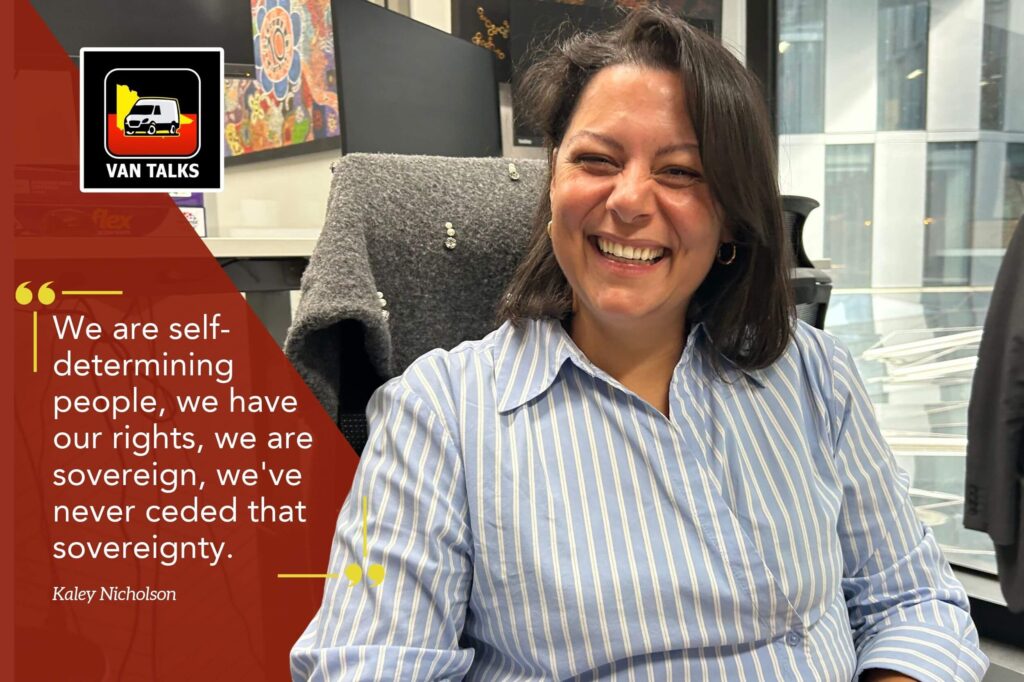
A starting conversation on UNDRIP with Kaley Nicholson, CEO of the Federation of Victorian Traditional Owners Corporation
26 October 2026
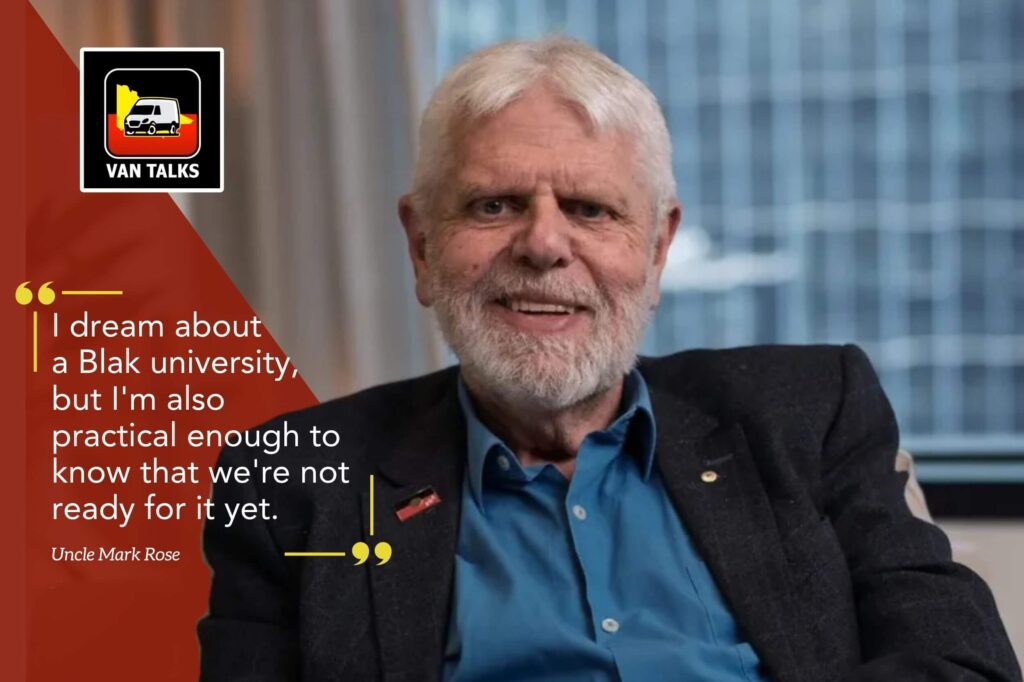
Leading the push to embed Indigenous knowledge systems in Australia’s tertiary education system
21 October 2026
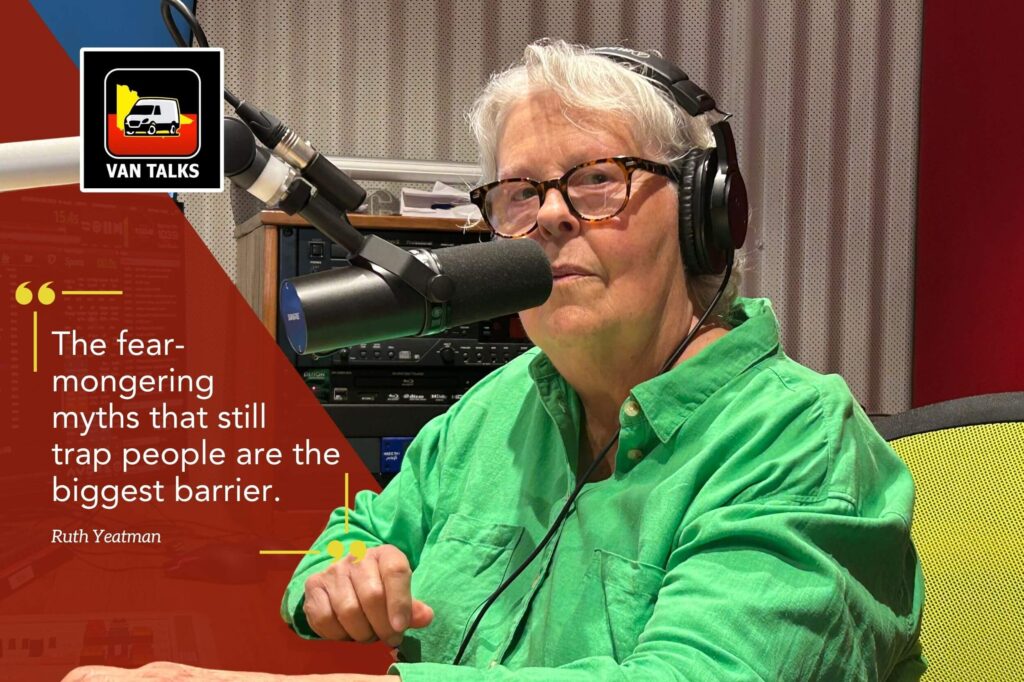
Reconciliation in Seymour – one of Victoria’s highest recorded “No” vote regions
19 October 2026
Understanding the use – and over use – of the Acknowledgement of Country
15 October 2026
0 Comments