
Understanding the use – and over use – of the Acknowledgement of Country
Wurundjeri Elder and lore man Uncle Bill Nicholson speaks on the program about the Acknowledgement of Country - its uses and occasional over uses
Posted by: Charles
Published: 19 October 2026
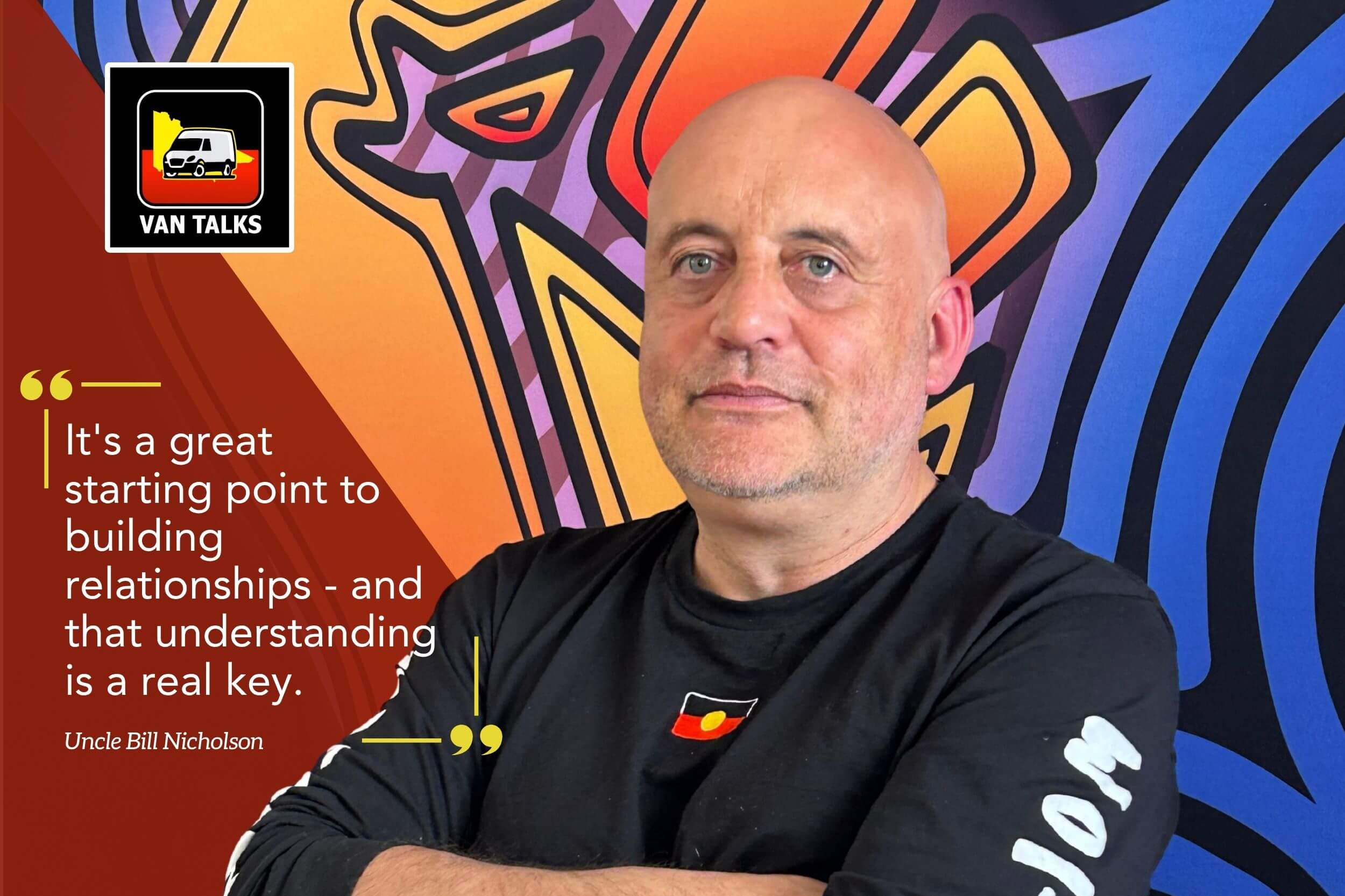
Understanding the distinction between cultural protocols is essential for genuine reconciliation. A Welcome to Country is a sovereign cultural inheritance handed down from ancestors, allowing visitors to feel culturally safe.
As Uncle Bill explains, a welcome is a law ceremony: “None of the old people of the past handed that authority, because it’s a law ceremony, it’s like a passport… handed that authority over to any other authority.”
While a Welcome to Country must be delivered by traditional elders, an acknowledgment of Country can be delivered by anyone as a vital starting point for respect and understanding.
However, rote repetition can dilute their meaning:“If someone’s saying the same thing over and over and over again… it doesn’t mean a great deal. It’s kind of like almost like a box-ticking exercise.”
Genuine acknowledgments require thought and sincerity to break down ignorance and build relationships. When organizations abandon these practices, it reflects a fundamental misunderstanding of cultural respect.
As Uncle Bill notes regarding meaningful gestures: “It came from the heart. It came from the spirit… and you could tell.”
Charles Pakana: Around about 10 months ago, I sat down with Wurundjeri elder and lore man, Uncle Bill Nicholson, and we yarned about the origins and the use of the Welcomes to Country. This has been a really popular conversation and one of the most popular ones that we’ve aired on this program. Well, today, I’m catching up with Uncle Bill again, but this time to look at acknowledgments of country. The who, the what, the when, the why, and the where for of the acknowledgments to country. Uncle Bill, thanks for joining me on the program again today.
Uncle Bill Nicholson: No problem, Uncle Charles. Great to see you again. Great to be part of VAN Talks.
Charles: Uncle, the difference between the Welcome to Country and the acknowledgment of country, let’s just understand that difference there. Who can deliver them and what are the situations?
Uncle Bill: Well, I won’t talk about the Welcome in too much detail as we’ve already spoken about it. But a welcome is what I call a cultural inheritance, a sovereign cultural inheritance handed down from our ancestors, which means that in a contemporary way, a Welcome is a ceremonial process that allows people to feel culturally safe to conduct their business when they’re visiting Wurundjeri Country.
The sovereign part is about that none of the old people of the past handed that authority, because it’s a law ceremony, it’s like a passport, handed that authority over to any other authority. So it’s been handed down through the generations to this very day. And even today, in the Wurundjeri community with mature young people, we are now allowing them to conduct Welcome to Countrys as well, without actually having eldership titles, which no doubt they will be in the future.
Charles: I’ve noticed a lot of that going on. But now, acknowledgments of country?
Uncle Bill: Now, an acknowledgment is, first of all, it’s based on respect. Now, any form of understanding and respect is a great starting point to building relationships, and that understanding is a real key to breaking down ignorance, because ignorance and fear is the basis of racism, in my mind.
So, I’ll use myself as an example. If I was to travel outside of my two home countries—I’m both Wurundjeri and Dja Dja Wurrung — and I was to do a speech, or MC, or some sort of speaking role outside of those countries, I would try my very best to do it in my own words, a statement of acknowledgment to both the people of the land, and I would try to name them, to try and show to them that I’ve put a bit of effort into knowing where I am and the people that I am acknowledging, because that means a lot, and the country itself.
And I’ll even try and find out if there’s any elders or community members that may be there, and any of their elders I might name if it was appropriate.
So, there are template acknowledgments that people can read and say themselves.
Charles: You’re smiling as you say that. You’ve got to explain that.
Uncle Bill: Well, what I mean by templates, uh, because I have heard certain acknowledgments many, many times, they’re exactly the same.
Charles: Sure.
Uncle Bill: And if it’s a starting point for whoever’s saying it, fair enough, they’ve got to start somewhere. But if someone’s saying the same thing over and over and over again,
Charles: What does that tell you?
Uncle Bill: That doesn’t mean a great deal. It’s kind of like almost like a box-ticking exercise, and it starts to lose its value. That’s why I said earlier that I always encourage people, first of all, you don’t have to do an acknowledgment. No one’s going to spew you these days. Some people might want to, but you can’t do it these days.
But if you do want to do an acknowledgment, and this is both for indigenous and non-indigenous people—as I said, I’m a Wurundjeri elder, but I would do an acknowledgment outside of my country—it’s a great starting point to show that respect, which is the basis of building strong relationships. That’s the starting point to me.
As an elder here myself, when I hear acknowledgments, I am looking to see if I can get a bit of a feel from the person saying it, whether it actually means something through their words. So yeah, so they’re the ones that really mean a lot.
Charles: So what does it mean to you, before we go on, when you you hear a an acknowledgment of country that really means to you? And I know I’ve been with you a few times at various events over the many years we’ve known each other, and you’ve reacted in a number of different ways from disdain to absolute warmth. What really floats your boat when it comes to an acknowledgment of country?
Uncle Bill: Well, I’ve always thought when I hear, as an example, when politicians do an acknowledgment to country and acknowledge us the sovereign people of the land, Yeah. I’ve always wanted to get that politician out the back, uh, not in a, in a negative way, and just ask them exactly what they meant by acknowledging us as sovereigns to the land, when they’re obviously the representation of the imposed authority on our country and have never recognized our sovereignty to our law, I guess you could say.
Charles: Mhm.
Uncle Bill: So, those sort of statements without a full explanation don’t really mean a great deal. A bit hollow, exactly.
That understanding that I mentioned earlier, when I do Welcome to Countrys today, I generally start off thanking the organisers of the event or the people that created the space for me to speak, for showing that respect and understanding. Because understanding is showing me that they recognizs that we’re Wurundjeri people are the people of the land, and we’ve always been here, and we’re always going to be here.
Also, it’s a recognition of that truth, and it’s also a confirmation of that by people acknowledging it. When it’s a really meaningful acknowledgment, you know, it carries a lot of weight that understanding has been shown and that respect has been shown. The other ones that we were speaking about, about if someone else writes it for you, for example, how much that actually means is questionable.
It just brings to mind too, some of the best acknowledgments I’ve ever heard are from younger people. Well, we’re here at Lyrique La Trobe University at the Wurundjeri classroom or learning center. The students here put on an event one night, and a group of them got up and spoke their acknowledgment, and I could tell that they spent a bit of time writing it down and conversing about it.
I guess you could say, if you’re just thinking in a general way, if a group of people get together and try and write a statement, it can take a bit of time, everyone trying to agree on what that statement Managed by committee, yeah. Managed by committee. What that statement’s going to say. So, they put a bit of time and effort behind it. I’ll put a tear in me, I’ll be honest. It was really strong and powerful what they were saying.
Charles: What was it about that that really brought that tear your eye?
Uncle Bill: It come from the heart, it come from the spirit, yeah, and you could tell. Another group, these were year 12 psychology students out at Essendon Grammar, there was about 20 of them, they all got up together. Again, it was a statement that I could tell they all worked very hard in trying to show the respect of land, and me as a representative of my people and our culture, and our people generally. So when people put a lot of effort into it, it does show and it does mean a great deal.
Charles: Now, I know people at Wurundjeri, and I’m sure you’ve received this as well, gain requests from people to, “Can you please deliver me the template for an acknowledgment of country?” Now, we touched on that a few minutes ago. Yeah. But when it comes to someone sitting down or they’re being they know they’re going to be asked in a meeting, maybe tomorrow at work, you’re going to do the acknowledgment of country.
What should they do realistically without being able to spend massive amounts of time researching?
Uncle Bill: Look, if someone came to me, I would explain what it means to us to receive it.
Charles: Yeah.
Uncle Bill: And you know, if they know absolutely nothing about Wurundjeri history or culture, or even may not even met an Aboriginal person in their life, you know, it’s going to be like I said, there’s a starting point, that template is a starting point. Yeah. But I hope people get a bit of an interest. And if you’re going to speak in public or to someone else, I hope part of your human nature is you want to learn a little bit more about what you actually do. So it might take them on a bit of a journey to learn, to learn a bit more.
Charles: What are your thoughts with regard to organizations and governments—and we’ve seen this happen across Victoria, local governments have suddenly come up and said, “No, we’re just not going to do acknowledgments of country anymore at council meetings, we’re not going to ask people to do them in business meetings.” What are your thoughts when you hear that sort of reaction from local governments and organizations?
Uncle Bill: Unfortunately, that’s the ignorance showing out. Yeah. But I’ve had many people say to me they can be overdone. My sort of response to that, again I’ll go back to the Welcome to Country, because to me they’re similar, but one’s cultural cultural sovereignty, one is sort of a modern day respectful statement. Welcome to Countrys weren’t done every time that you met someone. It was, uh, part of a ceremonial process when there was important gatherings together. Generally, if we look into all of our lives, you know, if we go somewhere we’re not accustomed to, you know, we all like to feel welcomed, or we don’t feel comfortable.
When I have groups of people here at the classroom, I say to them, um, “Look, I don’t know your business, your company, or school as much as you do. You work there every day. So, you fellows would know when the best times to do them are.” And generally, you don’t do them every smoke or coffee break, because it will lose its value. But when you have special meetings, or AGMs, or you know, special gatherings that’s important to your group, I would encourage you that would be the appropriate time to do them.
By just quitting doing them altogether, that’s that disrespect and a lack of understanding. And that’s the opposite to what I was on the thought, because that breaks relationships, it doesn’t build on them. And in our language, [language] is joint-unite peoples, and the history of this place has still created a divide to this day with Aboriginal communities and the non-indigenous communities, even though there’s many positive examples, there’s also a lot of negative examples around racial attitudes as well.
Charles: What are your thoughts with regard to someone being in a meeting, there’s already been an acknowledgment of country, maybe two or three people have stood up and they’ve given an acknowledgment of country beforehand, they might start to feel a bit uncomfortable, but they still want to do it, regardless of other people thinking, “Oh, for God’s sake, we’re really overdoing that.”
Uncle Bill: Yeah.
Charles: What are your thoughts there? What what would you suggest?
Uncle Bill: Oh look, I’ve been to a few different conferences and that, where you know, different organizations are represented, so they have different speakers. Yeah. If the speaker from an organization wants to do an acknowledgment to country, it’s a big positive, again, it’s that respect and understanding. Yeah. If there’s six different organizations speaking and they want to do six different acknowledgments, that’s fine. If it’s one organization with six speakers from that organization, well, maybe the one acknowledgment would be suitable. Because they’re it’s a blanket one, yeah. I got that. Their representation, so from that one particular group.
Cause I know there’s a lot of misunderstanding around welcomes and acknowledgments and things going around at the moment. We don’t want to devalue it in any way, but again, I’ll always go back to, you fellows figure out the right time that’s important to you, and with these gatherings that you have in your representation, whether festival, work, events, whatever. It’s up to the people to work that out themselves, and start to uh, I guess, build those relationships with the indigenous community.
Because the reason we had welcomes or tanderrums is because we’re a very inclusive mob. It was very important traditionally to build relationships with our neighbors. You know, you look at places like Europe, who didn’t really weren’t very good at that. They’ve had constant wars for thousands of years, which didn’t occur. So they didn’t get on with their neighbors too well. It was very important for us to do that. Still flaming dope, brother. Exactly, so yeah.
Charles: So let’s look at the who, and let’s just let’s be definitive on this. Most people know the answer to this, but let’s just clear it up. Who can deliver a Welcome to Country and who can deliver an acknowledgment of country?
Uncle Bill: Now, I’m only going to give the Wurundjeri example here, because part of protocol is I will never speak on behalf of any other mob. Of course. In the Wurundjeri community, you have to be, first of all, you have to be recognized as an elder in the community. Wurundjeri organization, This is for a Welcome to Country. For a Welcome to Country, yeah. Currently, I talk about the organization specifically, Wurundjeri Woi Wurrung Aboriginal Cultural Heritage Organization, currently has 32 elders. We max out at 33. There are other people out there who are claiming Wurundjeri descendancy here, which at the moment they may be recognized through the native title process, and that’s still to be seen. But uh, from an organizational perspective, the elders are able to do them, and the elders also give permission for our our younger generation to do them.
Like I’ve just had a request just this morning that one of my younger cousins is really keen to go and do welcome and smoking ceremonies at events, and I’ve seen him speak before, he’s very good speaker, but the elders just want to meet with him and have a yarn to him about it, kind of like an interview, I guess. And if he does well, he may be given permission to go out and do them. So it’s up to the elders who can do them and who can’t, so.
Charles: But it has to be the elders of the Wurundjeri, not any other mob, of course. Okay, so the acknowledgment of country, let’s just be definitive in this, who can deliver an acknowledgment of country?
Uncle Bill: Anyone.
Charles: There you go. That’s it.
Uncle Bill: Normally, what happens in a practical way is a representative lead-up of a group. So, someone is either chosen to be the leader or spokesperson, or you know, they might be a CEO, or you know, an MC, or someone who sort of leads the event in some form or another. If we had a company of 20 people and all of them did an acknowledgment, so that’s when it gets a bit weird, I guess, and they lose its value. But it’s normally a representative voice of whatever’s happening at at the time.
Charles: And it can be at any meeting, at any gathering, it’s just an event.
Uncle Bill: Yeah, again, Welcomes were a ceremonial gathering. Yeah. So, acknowledgments are normally based around gatherings of some sort or some form of statement that you you want to share to the indigenous community about showing respect to them, to country, and to the culture of the land.
Charles: Uncle, just before we go, I noticed on your notepad in front of you, you actually have resorted to writing down a dictionary definition of acknowledgment. I’m not going to let you go without you explaining that.
Uncle Bill: Yes, uh, I wasn’t too good at school with the English language, to be honest. So, I uh, I don’t mind reading um dictionary definitions on certain words to sort of break them down and what they actually mean. But generally, when it says truth, recognition, and confirmation, it’s quite empowering those particular three things. If someone acknowledges me as a representative of my people, they’re showing me that they know the truth that this is Wurundjeri land, and they’re also showing respect to me.
When I say representative, me personally, yes, but every time I’m I take the formula of education or welcome or any sort of leadership role in the community, I know that I’m representing my immediate family, my extended family, and my ancestors. So, it’s not just me. I feel like I’ve got a whole mob I’m representing, so it’s a respect to all of them as well. Obviously, that relates to recognition, so you know, Wurundjeri people are the traditional custodians of this land, and we’re still here, so that they’re recognizing that through their acknowledgment and confirming that connection to Country is being continuous and continues to be.
Charles: Now, I was hoping that we would also be able to speak about smoking ceremonies, but I think what we’re going to have to do is probably wait another six months, come back, and start yarning about that, because I know that smoking ceremonies or smokings itself can be a very multifaceted and even complex topic to cover. So, we will look at that if that’s cool in about six months time, if not beforehand.
Uncle Bill: Yes, that’s fine. Um, it’s a very important part of making people feel culturally safe or welcomed. So.
Charles: Uncle Bill Nicholson, thanks for your time again, Uncle.
Uncle Bill: Yeah, no problem. Yeah, thanks Uncle Charles. Good to see you.
For Radio Play:
1 - Click the Download Audio button
2 - The audio file will commence automatic play in your browser
3 - Confirm this is the file you want to use in your program
4 - Once confirmed, click the vertical elipses (3 dots) and select download
CONTACT US VIA SMS
Get in contact with us via our dedicated SMS line:
0493 222 836
24 November 2026
The crucial role of Victorian Aboriginal Legal Service in the lives of all Victorians
21 November 2026
AI posing threats to teachers under pressure to meet curriculum requirements for First Nations content
17 November 2026
Victorian Elder advocates for greater First Nations involvement in the electoral process
14 November 2026
Real changes needed in the current Reconciliation Action Plan program
11 November 2026
0 Comments