
Building self-determination on air through independent Aboriginal media
3KND General Manager Grant Hansen has a yarn with us about spending 25 years building independent Aboriginal radio in Melbourne, amplifying community voices, championing local music, and driving genuine self-determination across the airwaves.
Posted by: Karina Wells
Published: 21 August 2026
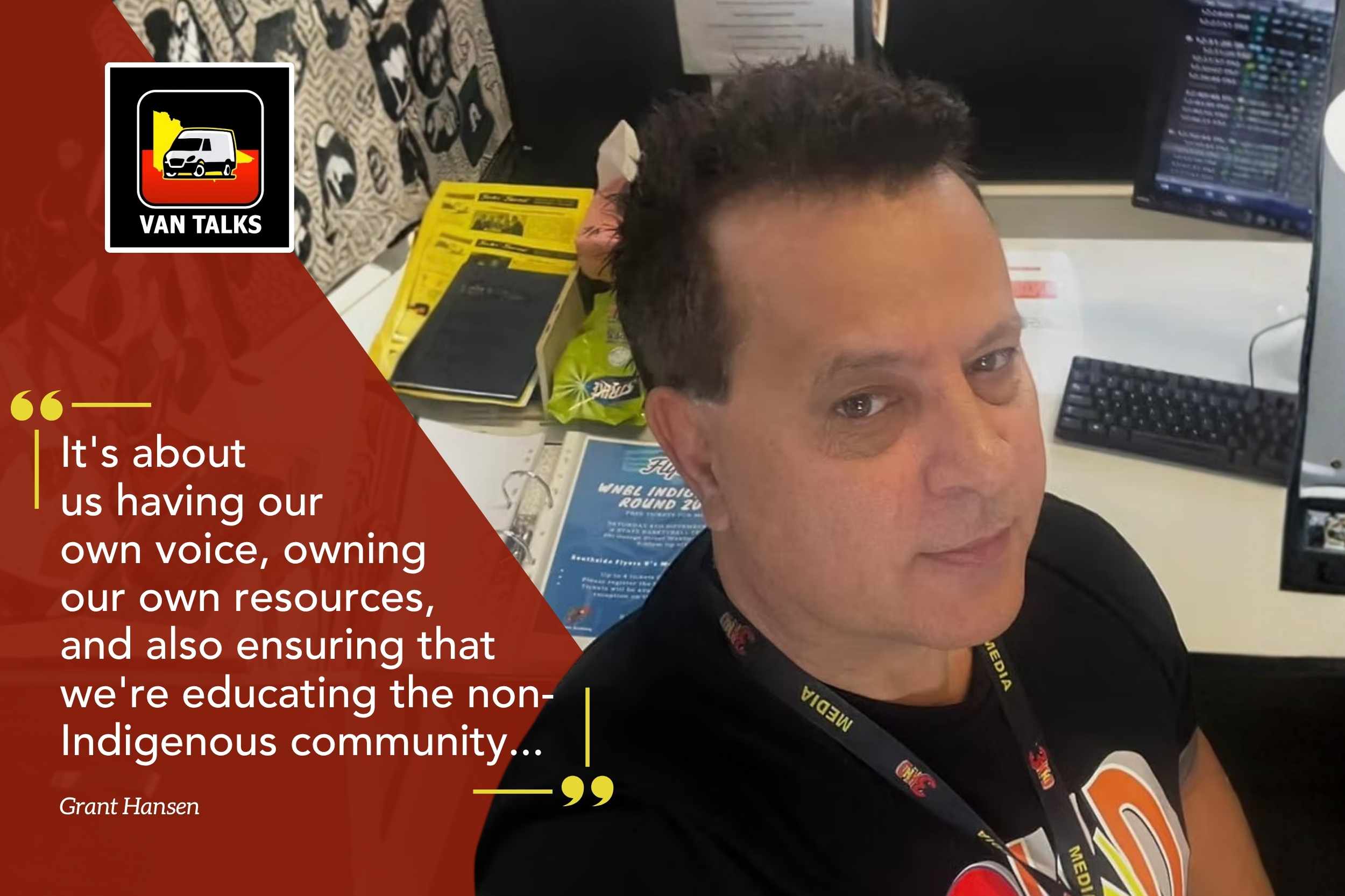
3KND general manager Grant Hansen has reflected on nearly a quarter-century of independent First Nations broadcasting, highlighting the station’s vital role in self-determination.
Starting in 2003 as the South Eastern Indigenous Media Association, the station emerged from a deep community need to establish a dedicated, Aboriginal-run voice across Naarm.
“We just realised that there was a great need, particularly to get our message and our voice out there, and our side of political issues,” Grant recalled.
Beyond political commentary and current affairs, the station was created to ensure local First Nations musicians received the airplay denied to them by commercial networks.
“We can’t do more than enough for our Indigenous artists,” he noted, pointing out that mainstream commercial stations play very little new local music.
Community radio provides a platform where Mob can speak freely without their perspectives being diluted or filtered by commercial constraints.
“It’s about us having our own voice and owning our own resources,” he, adding that the station also serves to educate non-Indigenous listeners seeking an unbiased perspective.
While the station has launched many successful media careers, maintaining a voluntary broadcast team and securing adequate funding remain ongoing hurdles.
“When you do get government funding, like a lot of Aboriginal organisations, it’s not enough,” Grant observed, noting the sector operates under significant resource constraints compared to mainstream outlets.
Despite these financial challenges, 3KND maintains a strong community-first ethos that extends from behind the scenes to every broadcast.
“At the end of the day, our mindset here is that we’re working for the community,” he emphasised.
Looking ahead, the station aims to adapt to rapid technological shifts while expanding its audience and training opportunities for future generations of broadcasters.
Through dedicated community partnerships and unwavering grassroots support, 3KND remains a powerful pillar of cultural continuity and independent journalism.
Charles Pakana: As we continue our interviews with leaders in Australian Blak media, I’m joined on the program by Taungurung man Grant Hansen. Grant was one of the original committee members of the South Eastern Indigenous Media Association, otherwise known as SEIMA, which was the precursor to 3KND Kool and Deadly, Victoria’s only Aboriginal-run radio station, and a station on which he is now the general manager. Grant, thanks for joining me on the program today.
Grant Hansen: Thanks, Charles, and it’s so good to be here.
Charles: Grant, the station kicked off in 2003. We’re closing in on 25 years, which is a hell of a hallmark, and becoming the first Aboriginal radio station in Melbourne. Back then, back in 2003 with SEIMA, what were the aspirations you and the others had about the impact of 3KND?
Grant: Well, look, we knew that the community needed a radio station that was a Blak one. A number of people had worked at different organisations, like 3CR and SBS. There were some people like myself and Cheryl Vickery and a few others that were doing programs there. And we just realised that there was a great need, particularly to get our message and our voice out there, and our side of political issues, and also to be able to promote Indigenous music, which wasn’t getting much airplay on any mainstream radio stations. So, they were the main reasons, basically to have something to call our own.
Charles: But what about conflicting views? Because we do know that especially in this… interesting, shall we say, Aboriginal community of Melbourne, there are so many conflicting views. There are so many really staunch people. How do you balance that when it comes to providing commentary, current affairs, and balancing news?
Grant: Yeah, look, I think it’s a bit of a quandary sometimes, but it’s a fine balance. So, we try not to talk about people’s names, because a lot of people have been working in the Aboriginal affairs community for many, many years and have done some wonderful things. So, you don’t want to try and shoot people down and forget about some of the good work they’ve done. But, you know, now and again there might be some issues with some organisations, and we just handle it with a lot of sensitivity.
Charles: How important is it, though, to have an organisation or radio station like this which is run by Aboriginal people, all the people on air are Aboriginal people, and it has a primary focus on Aboriginal current affairs, commentary, and music, of course?
Grant: Well, it all falls into line with self-determination. It’s about us having our own voice and owning our own resources and also ensuring that we’re educating the non-Indigenous community, because some people don’t have any contact with Indigenous folks. So, listening to the radio station and hearing our views on, as you said, political issues, current affairs issues, whether it’s the Treaty, whether it’s the Referendum, whether it’s the Voice, you know, it’s a format and a place where people can actually tune in and hear another side of the story that they normally wouldn’t hear, and that’s very powerful.
Charles: It’s interesting to understand your audience itself. Now, you and I have discussed this several times, because a lot of the callers who do call into the radio station during programs, they’re non-Indigenous people. Has that surprised you and the broadcasters?
Grant: Not really. I think some people are very clever and wanting to know two sides of the issue—you know, both sides of the story, so to speak. So, listening to us and hearing what we’re talking about and hearing our views really helps educate them and gives them a more balanced view, perspective, of issues that are out there at the moment. And there’s a lot of Aboriginal issues right out there right now.
Charles: Oh, yeah.
Grant: And people are really tuning in to hear what we’re talking about—the treaty, where that’s at, you know, the referendum, we seen that happen a little while ago, the Voice, all those sorts of things. And as I said before, you’d get an unbiased view from this station in terms of what the issues are really about.
Charles: You’ve come from also a background of television, of course, with The Marngrook Footy Show and other ventures. How important do you see that radio, and Blak radio, is in the entire Australian media landscape?
Grant: It’s a vital cog in our system of things and organisations because, as you mentioned, I was in TV, but before TV, I was at 3CR as one of those young Koorie blokes. And there was a lot of people like Gilla McGuinness, Lakes, Joel Wright was there for many, many years—
Charles: Yeah, that’s right.
Grant: —Lisa Bellear, Tony Lovett, myself, Kelly McGuinness, Bradley Brown, Anthony Brown, Calvin Onus, Joey Bellow, there were so many Koories from Fitzroy community that went through 3CR. And that was where I started doing a Koorie music show, then 12 years of doing the Marngrook radio show with the Gold Logie winner Sam Pang and Terry Wheeler, which was a very successful format, and it won a couple of awards during that time. And then that was the precursor for us launching into television.
So, radio is a vital thing. It provides opportunities. And sometimes you might get better opportunities through working here at 3KND—you might get a job at the ABC, which some people have, you might become a general manager of another radio station.
So, there’s lots of perks and things that you can gain from working at 3KND. And also connecting people to community as well. Some people that come here are obviously Indigenous, but they don’t have a strong connection to the community, so they get to learn the community and the families and how we think and how we work.
Charles: You made mention of the fact that 3KND and community radio as a whole can sometimes function as a launching pad into a greater career in radio and other media. Have you found it frustrating, though, when you have lost people who really establish themselves, they’ve got a presence, they’ve got a following on 3KND, and all of a sudden they come in and say, “Hey, Uncle Grant, sorry, but I’m off to greener pastures”?
Grant: Well, that’s right, and that has happened. But you’ve got to look at the big picture and think about the individual themselves as well, besides the organisation. And it’s like a win-win sort of, sometimes, and a win-loss, but I’m always happy to see other people excel in other areas, and have been working through 3KND to be able to get that opportunity.
So, that’s a plus for us, and it’s also a plus for them that they’re able to work—you know, we’ve had some people go to the ABC that have worked here and have done really, really well for themselves. And we’ve had people here as production assistants or technical people that have gone on to other radio stations and gone into other areas and other facets of the media. So, you’ve sort of just got to balance it up and think that we’re here to provide opportunities. They stay a long time, that’s great. They stay a short time, well, that’s okay, too.
Charles: Grant, one of the challenges, again, that you and I have chatted about over the years is actually getting on-air talent. There is at 3KND a hard and fast rule that you have to be a First Nations person in order to take to the microphone and broadcast a program. Just how difficult is that in presenting a challenge made by yourself in getting people on air?
Grant: In this day and age, it’s very difficult to get people to come in to do broadcasting, and I think a lot of radio stations, particularly community radio stations, have that problem because people aren’t paid, it’s all voluntary.
Charles: Yeah.
Grant: And some people work during the day, and on the weekends they’ve got children or sports activities, so that stops them from coming in as well. But also, you’re correct in saying that it’s an Indigenous broadcaster, but you can do a show with a non-Indigenous person as long as there’s an Indigenous person on the panel.
Charles: Right.
Grant: So, you can do shows, and that has happened in the past, and that’s worked very, very well. So, I guess basically that it’s good for people to come through 3KND and just to experience what it’s like to be on radio and to play records and play music and have an opinion about political issues. I think that’s a good thing. That’s part of people’s development.
Charles: What about the freedom of community radio? Because we do know that community radio has a lot more freedom of editorial content and editorial opinions than the more commercial organisations. Just how important is that to you and to the people who broadcast on this station?
Grant: Well, I think it’s a great thing because, as I said before, the stories that you may discuss on your program and other programs that are similar would not be getting that same airplay on a mainstream radio station.
Charles: For sure.
Grant: And they’d probably be edited, a lot of the stuff that they’d be talking about. So, as I said before, I can’t stress how important it is that people that come in here are pretty much free, as long as within the legal realms, to basically have their opinion on the issues that are current of the day. And we support that sort of stuff because we want people to be educated from an Indigenous perspective. And if you put too many restrictions around people and what they can and what they can’t say, you know, you’re not going to really get a strong message out there, you’re just going to water it down. So, we want to hit people right between the eyes when the issue arises so that they do know what our feelings are on certain matters.
Charles: Let’s talk challenges now. We’ve talked about the challenges of actually getting people on air. What about other challenges, financial challenges, challenges in just keeping the doors open? What are some of the key ones you’ve come across over the years?
Grant: That’s correct. Well, we just spoke about how people are unpaid, they’re just voluntary broadcasters.
Charles: Yeah.
Grant: So, that is an issue. And radio’s not as popular as what it was say 30 years ago when I was, or 40 years ago when we first started doing radio. It was an exciting thing to do, because we were responsible for playing people like Archie Roach and Blackfire and Tiddas and Djaambi and Peter Rottum and Joey Geia, Richard Frankland, you know, all those pioneering sort of artists in Melbourne here. They wouldn’t have been getting airplay as much on other radio stations and probably just on a few different community mobs.
So, I guess the challenges also here is that you talked about funding, and you’re never sure with government funding from one election to the next, and depends on who’s in power how the money’s going to trickle down to us. And obviously we do get some government funding and it keeps our doors open, but it’s not a lot of money. We don’t have a profit every year, and we have to use our money wisely, and a lot of our people do more than the one job that’s on the paper when you walk through the door, and it’s part of the team environment that you need to do. And basically at the end of the day, our mindset here is that we’re working for the community, you know, and everything’s about the community. So, if Grant has to go outside and throw out the rubbish bins or clean the company cars, I’ll go out and I’ll do that as well. So, it’s all about doing what you can for the mob.
Charles: What about partnerships? I know you’ve got a very strong partnership with Darebin Council, for example. They’ve done amazing work with you guys. Just how important are partnerships, whether they’re corporate or government, to the overall operations and success of 3KND?
Grant: Well, it’s vital. And the City of Darebin, as you pointed out, have been really fantastic over the years and very, very supportive. We’ve had some good support from time to time, depending on who the minister of Aboriginal Affairs Victoria is.
Charles: Yeah.
Grant: And just different politicians that I’ve met and greeted and seen out and about. Only last week I ran into three different politicians at a function that I was at, and they were happy to talk to me about 3KND and couldn’t get over to me quick enough to talk about how we’re going and that sort of stuff.
Charles: Did they sign cheques for you?
[Both laughing]
Grant: No, not yet. I asked them if they brought their chequebooks, and I realised it was a bit dated to say that. Probably, “Did you bring your cash card?” or something like that, your credit card.
Charles: [laughing] Yeah, exactly.
Grant: So, look, it’s always a struggle. It is. It’s a struggle. You know, when you do get government funding, like a lot of Aboriginal organisations, it’s not enough. We work on the smell of an oily rag. Probably the wages that our staff get here aren’t really equivalent to what the mainstream is, so it becomes a bit of a love job as well.
Charles: You mentioned music before, and you reeled off a whole stack of names, of course—Blackfire, Uncle Richard. Just how important is this station in the world of promoting First Nations music? Because there’s not a lot of broadcasters out there who say, “Yep, look, here’s a young and up-and-coming First Nations singer-songwriter. Let’s give them a bit of airplay.”
Grant: We can’t do more than enough for our Indigenous artists. On the same token, they need to be able to reach out to the radio station and come in, let us know who they are and what they’re up to, so that we can arrange interviews for them and that we also can play their music. The way that stations receive music now is a lot different than the old days of getting a cassette or getting CDs or even a record, right? So now it’s all digital.
Charles: Yeah.
Grant: So, that’s probably one of the issues that—I’m glad you touched on that—in the industry right across the board, right around Australia, because we need to work out a system where we can get all the new released music downloaded and that people know exactly where to get it, and people know where to send the stuff so it does go on to that system. Without Indigenous radio, people like, you know, as I mentioned, a lot of those artists that I reeled off before—Blackfire and Tiddas and Archie Roach and Ruby, and—they got their first airplay at 3CR.
Charles: Mm.
Grant: And then 3KND opened up, a whole lot of other different artists got their turn in being promoted and publicised and getting on bigger events that Songlines had ran or 3KND had ran. So, it’s a terrific resource to have to know that if you’re Indigenous that you can get some airplay, because that’s the most difficult thing when you do do a recording: How are you going to get airplay? Particularly in today’s world. Would you believe, Charles, that 15% of Australian radio is Australian music? 10% of that is golden oldies, like Snooze FM—I mean, Smooth FM, I was going to say—Smooth FM and Gold FM. A lot of those, you know, playing the Cold Chisels and Dragon and all that sort of music, which I love too, no doubt about that, but that’s only 5% of new Australian music getting played on commercial radio in Australia.
Charles: That’s on commercial radio.
Grant: Yeah, yeah, and probably a greater amount of independent artists get played on community radio. That’s the great thing about community radio. It gives people from all walks of life an opportunity to be played on radio, even if it is community radio, because, you know, nothing to be sneezed at. We have an audience of over 500,000 a week, and a lot of the stations like Triple R and all those other stations in Melbourne, Joy FM, they have big audiences. So, it’s nothing to be sneezed at if you’re getting airplay on them, because people will get to hear you and they’ll be able to download your product.
Charles: Let’s look at Aboriginal media as a whole. What more is needed, and what’s missing?
Grant: If we’re to be competitive with the mainstream, we need the money and the resources that equate to equality so that we can be as good as everybody else. So, you’ll find organisations like NITV—and I was a founding member of NITV and the vice chair for 5 years—that was underfunded and still underfunded, and I still believe that it’s got the same amount of money as what it did when it first formed.
So, we’re behind the eight ball all the time as far as resources and money are concerned, because we could do a lot more, we could employ a lot more people, and we could do a lot more stories. And so, the media as a whole—radio, television, print media, I mean, Koori Mail have been fantastic for many, many years, they’re awesome, and of course a little bit later on along came the National Indigenous Times, and they do a good job as well. So, we have two national papers and do very good stories and have very good journalists that write stories in there, and they’ve been very popular in the Aboriginal community. So, I mean, we have the remnants of being able to produce some wonderful, wonderful stuff, but we do need that money and we need resources, and we need more money to be able to expand to make things bigger and better. And also we need to get our voice out not only here at a national level, but also internationally.
Charles: We spoke about editorial freedom, so I’m going to give you an opportunity right now for some editorial freedom. What would you say to those people in the community and in politics who may say, “Oh, my god, here’s someone asking us for more money for a First Nations media support package”? What’s your comment to them on that?
Grant: Well, if you compare our moneys that we get in our sector to mainstream, well, we’re really behind the eight ball, aren’t we? We’re very under-resourced, so an argument that really—you can’t argue about really, is it? You know?
Charles: You’re being more diplomatic than I expected, Grant.
Grant: But we are, but we are deserving of that money, and we should get more. And people can have issues about Indigenous organisations and that getting funding from government, but, you know, it’s a fallacy to think that Aboriginal people don’t work and contribute to the economy and pay taxes. We do that. I’ve never got a free house, I’ve never got anything free from the Aboriginal community like a lot of people seem to have that perspective.
So, I think that we’re still under-resourced, and that’s always been about Aboriginal communities. I think if you go to any places, health services, VAHS, Aborigines Advancement League, you know, all those places could do with an injection of cash to do things so much bigger and better.
And, you know, our life expectancy and our health issues and all that, you know, they have a heavy effect on our community. And a lot of our people, Charles, don’t even get to our age that we are now. That’s frightening as well. And we have a lot of health issues in the community, and we have a lot of children still being taken away from families and put into foster homes and institutions. And we’re seeing the treaty process with the commission there going through about children being stolen and police. And they’re still issues that are very relevant and ongoing today in our communities and still affecting a lot of people, and there’s a lot of mental health issues as well. So, you know, being able to have radio at times and playing music, for instance, is great because it just takes people back to a time where they can escape, perhaps, in their mind and go back to having fun times in the Indigenous community. I think that’s important. And then there’s other people that are Indigenous that haven’t got their heads around all the political issues either. So, listening to shows and hearing Aboriginal people talk about issues also educates our own mob.
Charles: What about the future, Grant, for 3KND? What do you see for the next, say, 25 years?
Grant: It’s just hard to keep up with the modern age because technology is moving so fast. And when you get your heads around some things, it moves quickly again, you know? So, it’s hard to keep in front of the game. I’m one of those people that like to think ahead and try and think about where will we be in 5 years? Where will we be in 10 years?—I’m renowned for that sort of thinking. And I would like to see us obviously grow and get bigger and get a much more bigger radio audience, get more people trained up in media—television, radio, print, all those sorts of things—but just being able to contribute to the national collective as well as something that we hold closely to our hearts here at 3KND, because we’ve been on a lot of the committees over the years: AICA, NIMAA, First Nations Media. So, we’re all about not just helping our own mob, but helping out other mobs from different states and country areas, regional areas.
Charles: Grant Hansen, general manager of 3KND, brother, thank you so much for your time.
Grant: Good on you, Charles. Thanks, mate.
For Radio Play:
1 - Click the Download Audio button
2 - The audio file will commence automatic play in your browser
3 - Confirm this is the file you want to use in your program
4 - Once confirmed, click the vertical elipses (3 dots) and select download
CONTACT US VIA SMS
Get in contact with us via our dedicated SMS line:
0493 222 836
21 September 2026
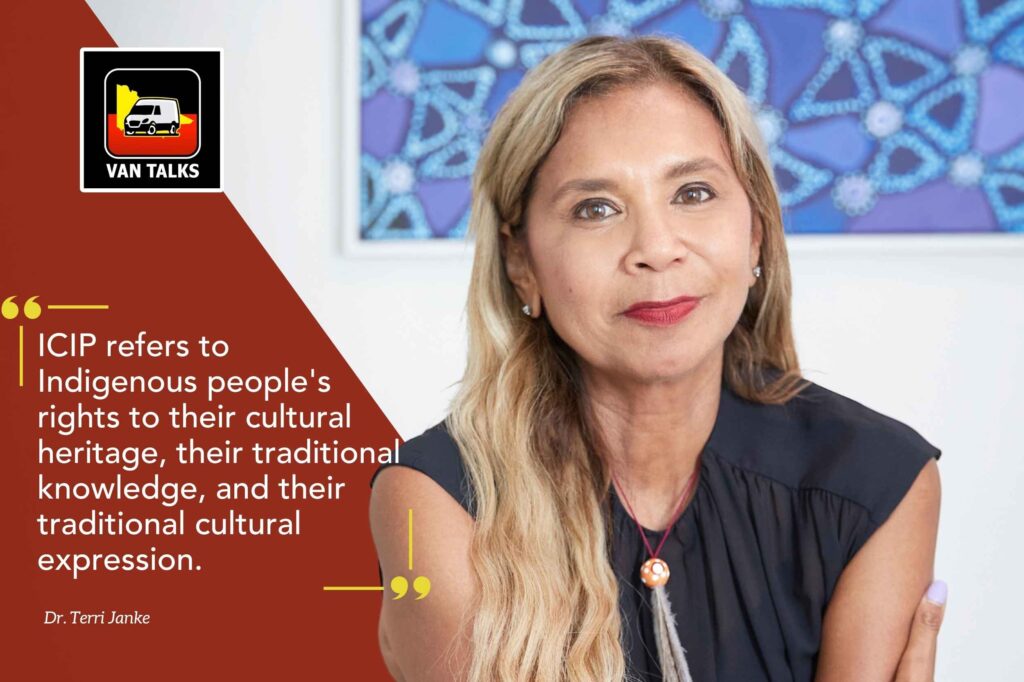
Reclaiming cultural heritage through proper consent frameworks
17 September 2026
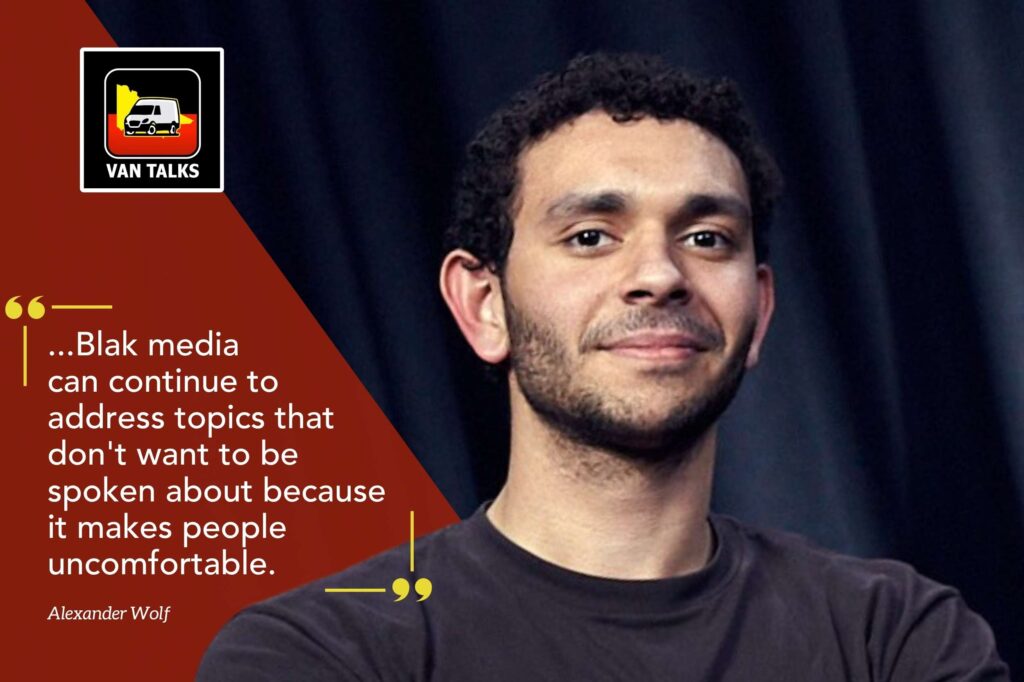
Media leader urges all Australians to engage with Blak media

11 September 2026
First Nations creatives given safe spaces through Blak and Bright
4 September 2026
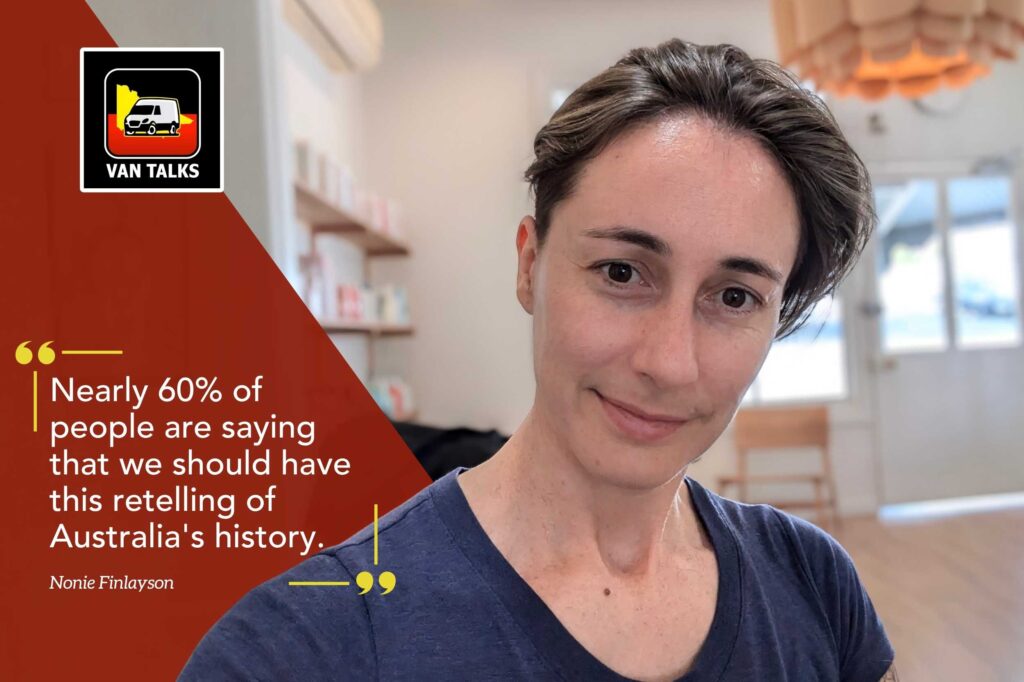
Ipsos Indigenous Issues 2026 report reveals shift in public focus
2 September 2026

0 Comments