
Start learning about First Nations cultures without the fear of offending
Cultural educator Thane Garvey explores the complexities of shared Australian culture, addressing non-Indigenous fears, the importance of respectful engagement, and the vital role of education in preserving First Nations heritage.
Posted by: Karina Wells
Published: 12 October 2026
Growing interest among non-Indigenous Australians to engage with First Nations cultures is often hindered by a fear of causing offence or a lack of accessible guidance.
Cultural educators emphasise that overcoming these barriers relies on respectful communication, thorough research, and a clear understanding of protocols.
Discussing the concept of a shared cultural landscape, Wurundjeri cultural educator Thane Garvey noted, “A shared culture… the word yarn is a perfect example.”
He added, “It is quite common, and I would say that’s a shared part of culture in this country, because even though the origins of it definitely come from Indigenous language and communities, it is used everywhere now.”
When approaching Elders or cultural educators, experts advise individuals to be mindful of heavy cultural loads and to conduct background research beforehand. Thane explained, “We just want to make sure that we are heard in a respectful way, and it is done in a way that is appropriate.”
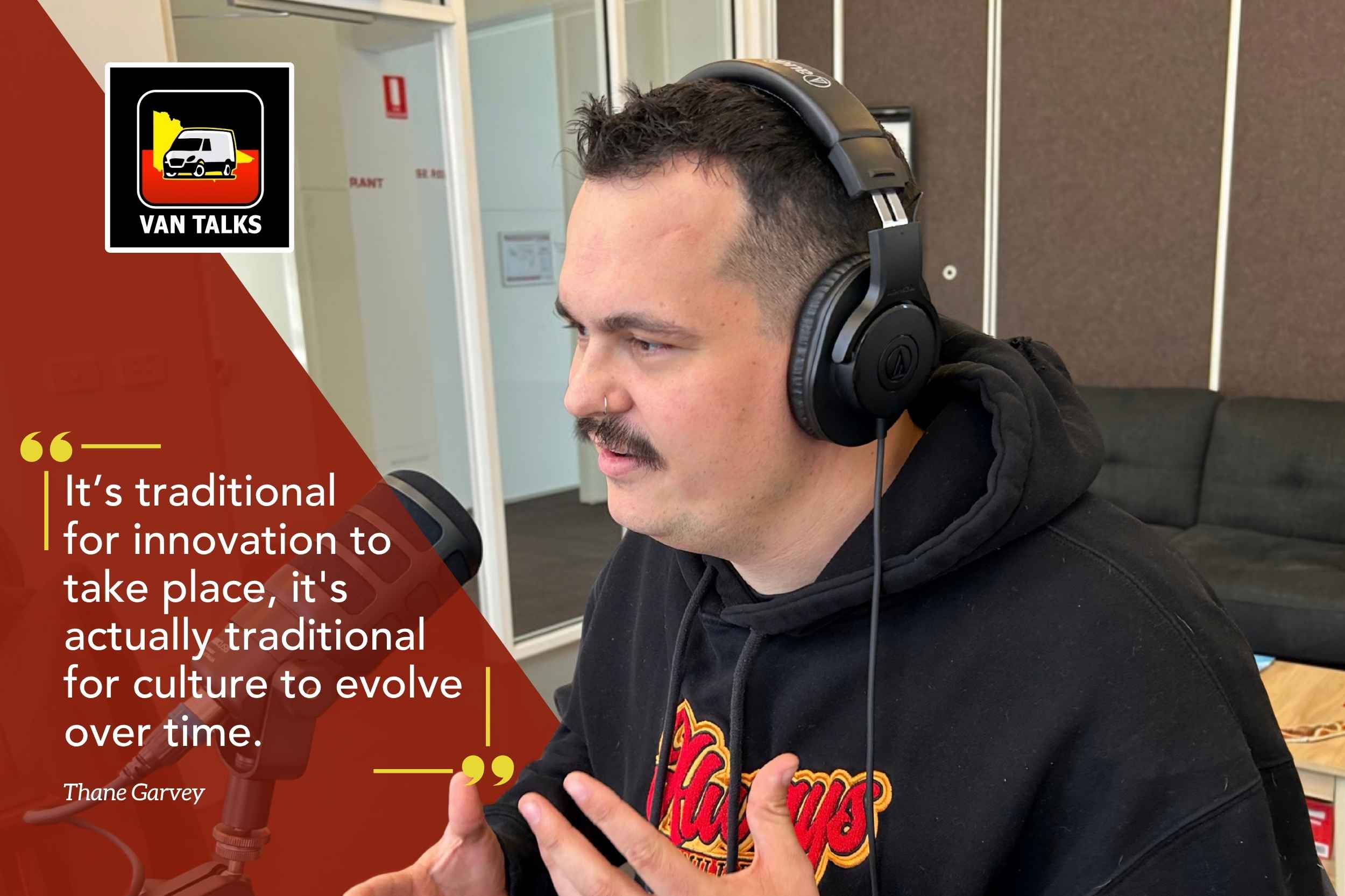
Regarding the evolution of traditions such as Welcome to Country ceremonies, Thane emphasised that cultural adaptation is enduring. “It’s traditional for innovation to take place, it’s traditional for culture to evolve over time,” he noted, highlighting the resilience and adaptability of First Nations communities in preserving their heritage.
Charles Pakana: Increasingly across Australia, there is a desire from many non-First Nations people to understand just what it means to live in a country that is home to the world’s longest living continuous cultures, that’s cultures, not just one.
A sticking point for many though is that while there is a desire to understand aspects of those cultures, there is either a fear of offending First Nations people, being held to ridicule by friends and family members, or simply a lack of understanding of where to go, who to trust, and what to ask.
To help us unpack some of that, joining me on the program today, almost two years to the day after we last spoke together on air, is Wurundjeri cultural educator Thane Garvey.
Thane, welcome back to the program.
Thane: Yeah, thank you, Uncle. It is a real privilege to be back, and I cannot believe it’s been 2 years already. That has gone so fast!
Charles: It has gone incredibly. Lots of things have happened, mate, without a shadow of a doubt.
Thane: It definitely has. No, it definitely has. Lots to talk about.
Charles: Thane, let us start the groundwork by understanding what is meant by many people when they say Australia has this shared culture, because for people that tends to be confusing and can also establish a bit of a… a lack of boundaries to overstep; “Well, if that is a shared culture, maybe I can do a welcome to country.”
Thane laughing
Charles: So all sorts of confusion. So what is meant by shared culture?
Thane: It is actually interesting, because I would say that shared culture is actually another representation of multiculturalism, in a way.
Charles: Oh, yeah.
Thane: A shared culture… the word yarn is a perfect example.
We see a lot of non-Indigenous people, even people on the other side of politics that might not be as progressive or aligned with Indigenous values, but I see nearly everyone in Australia using the word yarn.
It is quite common, and I would say that’s a shared part of culture in this country, because even though the origins of it definitely come from Indigenous language and communities, it is used everywhere now.
And I think that is a perfect example of how we do share culture and how it overlaps in different ways and how we can all be proud of shared culture to some degree.
Charles: I think also you can extend that to embrace yarning circles. I see a lot of organisations, especially, and I am really pleased to say, in local governments, where people will set up and just have yarning circles where there is no table, it is just a circle of chairs, they may even have a talking stick, which is quite common in many First Nations cultures, and affording every single person the opportunity to speak without a hierarchy established. Would you say that is another form of… well, progressively inclusive shared culture?
Thane: Yeah, yeah, definitely.
I think when we look at the way that we behave as humans, we come together to share knowledge, perspectives, listen to each other.
Well, hopefully, you know, that’s what we would like to see.
And I think all people from all different communities and backgrounds and perspectives would agree with that to some degree. You cannot expect people to have an understanding without the information, and to gain information we need to talk to each other.
Charles: Which brings us to the next point, and that is; talking to Elders, talking to cultural educators, talking to other First Nations peoples.
Now, there’s a lot of things we need to speak on that particular thing, but if we look at some of the things that are holding people back from finding out information to see what they can participate in when it comes to this shared culture, there seems to be a degree of fear.
If you go to a Welcome to Country, and there is an Elder there, “Well, oh, you know, can I actually go and speak to that person and ask them this question, because it may demonstrate my own ignorance, it may offend the person.”
How do people, non-Indigenous people, actually approach Aboriginal people and start to learn firsthand?
Thane: Yeah, look, I would actually say that the fear around this is pretty valid, and I can completely understand why people have this approach and why they have these fears.
Because, look, at the end of the day, we do talk quite often about the fact that cultural load is so significant within our communities.
And a lot of these Elders, like myself, have done lots of welcome to countries before, and I have been asked many questions, and so I can completely understand that it can be a lot sometimes. And so maybe people are aware of that, and so they want to avoid putting too much on one person in particular.
But I would say that at the same time, while that is being said, it is really important to remember that Indigenous people want to share culture with something they are actually pretty proud about. We just want to make sure that we are heard in a respectful way, and it is done in a way that is appropriate.
Now, I think that is where people can get a bit caught up and not know how to go about that in the right way. Now, what I would say is that it is really important to make sure that you educate yourself on who it is you are talking to.
So, for example, when we go out to a community event, or if we listen to someone talk, or if we are listening to someone engage with the community, we normally have a pretty good idea of who that person may be before we ask the questions, because we want to make sure that the questions are relatable.
I think it’s one thing that we can really focus on here is the fact that we shouldn’t generalise all Aboriginal people and expect them to all know the same information.
Charles: We were talking about this before, yeah.
Thane: Yeah. So, it is really important to say, okay, well, you know, there might be Wurundjeri Elders, lots of different Wurundjeri elders just for an example, that do Welcome to Countries. But that doesn’t mean they will have the same expertise, and this was the same, you know, in days before colonisation took place.
We all had different roles and different knowledges.
And so, I would do your best to understand who it is you are talking to, if you can, whether that is just looking, finding a bit of knowledge online or maybe work that this person has done in the past, so that your questions will stick and they will be able to actually answer them instead of putting them on the spot and making them feel like they might not have the answers that you are looking for, and that might feel like it is an attack on their integrity or an attack on their generalised knowledge.
Charles: And also a bit of a shame job that that person, well, they don’t know that knowledge, therefore there is a possibility they are going to be a bit shamed as a result of that, because I know that happens or has happened in the past when it comes to language, for example.
Thane: Yeah.
Charles: So, and this is of course, as we know, it is a result of ongoing acts of genocide that have been inflicted on First Nations people here.
Let me challenge you a little bit, Thane, because if, for example, you were doing a Welcome to Country, and I know you have got a breadth of knowledge which is constantly growing because you are one of the few cultural educators within Wurundjeri.
But aside from actually doing some deep searching on what this person knows, there is always going to be that doubt in the person’s mind, you know, am I going to embarrass this man or this woman or this Elder if I ask a question and they don’t know the answer? Is it a case of fortune favours the brave?
Thane: I think this kind of comes down to basic communication skills, because really you can learn how to approach someone and ask a question and maybe say, “hey, look, I completely acknowledge that I might be a bit ignorant and maybe not everyone does know the answer to this question, but if you do that it would be wonderful and I would just like to ask…”. It’s really not hard to approach people in this way.
But I find that in my experience most people just come up with the questions fully loaded and ready to go. And I love the enthusiasm and the charisma around her. I love that people are so excited to come up and have these conversations. That’s great.
But at the same time, yeah, it is really not hard to just approach with a little bit more caution and understanding because, like you’ve said, I am an educator, so I have the confidence to answer a lot of these questions and the knowledge that backs it up.
You know, some Elders haven’t even spoken publicly before. So, they might feel completely different to how I feel and how comfortable I am in these positions.
Charles: Now, there are obviously various areas across Australia and in Victoria, where there is always a presence of Elders and resources.
We know up in Taungurung they are doing amazing work up there, here in Naarm with the Wurundjeri Woi-wurrung, further south with the Bunurong, and there is lots of stuff happening right across.
But, similarly, there are many, many areas where people with that thirst to understand this culture, to understand the nuances of that culture, what they can and what they can’t do, they don’t have access to people such as yourself.
What then for these people who want to know?
Thane: Again, even I get stuck doing this all the time where I am like, oh, I really wanted to know something about a certain mob, or maybe I wanted to do some research on something and I don’t have any access to people.
So, I have done it before where I have looked online and tried to find knowledge, and I have always felt very frustrated in a way, but also I am always so skeptical about what I read online.
Charles: Justifiably so.
Thane: Yeah, yeah, so I think we all have that experience, so I really try my hardest to educate myself on the credible sources and the credible people that supply these sources, because it is not a basic yes or no, is it okay to get stuff from the internet or is it not, it’s really about who you are trusting on the internet.
There’s a lot of misinformation out there, so we have to be proactive in making sure that we can filter that type of stuff out. But we also need to remember that there’s lots of credible sources out there, like VAN Talks.
Charles: Thank you so much.
Thane: And many other credible sources, where you can find this information out. It is going to be tricky because there’s multiple things that I have just mentioned that you are going to have to navigate while looking at this information.
But if you want the information and you want to find it and you want to make sure that it is right, then there are types of things that you might have to do.
And at the end of the day, it’s not really like you have to travel all the way down to your local library and sort through, hundreds of books and pages.
Charles: Times have changed, brother, times have changed.
Thane: So, you know, we just have to put effort in in different ways to make sure that we get the right information.
Charles: And one of the things you were saying before the interview was that if you find something online, you are not too sure about the… validity of the resource, that you should actually go and check multiple resources and see if you can find the same explanation, the same rationale, and argument.
So, just how important is that to broaden the research beyond just, maybe a single Instagram post?
Thane: Yeah, no, look, I think that is really important. Cross-referencing data or information is actually how we narrow it down and make sure that it’s correct.
We do this with a lot of documentation from the 1800s, for example, or in the 1700s, all the way through to the early 20th century. We have to be really thorough in cross-referencing different perspectives from different people.
And even when we are looking at old records from colonial days and the days of the missions, we are constantly looking at the type of person that wrote this type of stuff and what their character was like as well.
Charles: Yeah, if there were ulterior motives.
Thane: That’s right, because we need to know what this person was like and what their perspectives were like before we go reading everything that they’ve jotted down.
Charles: Yeah.
Thane: The reason being is because bias plays a huge role in how history is documented.
So, we need to make sure that if we are going to get [the] right perspectives and the right information, then we have got to understand who it is we are listening to.
Charles: Welcomes to Country. Now, I have spoken previously to Uncle Bill about this, and we are also speaking very, very soon with Uncle Bill about acknowledgements of country, but when people go to a Welcome to Country, and it is a really educational one, because I know a lot of Elders right across the country, when they deliver a Welcome to Country, they see it as an opportunity to educate, and I have got to say, one of your mobs, Uncle Andrew Gardner, is incredible at doing a Welcome to Country, because it is for him an opportunity to stand there and educate community, whether it is about Treaty, whether it is about history, anything.
It is a great opportunity.
What typically should people be looking to take away from a Welcome to Country?
Thane: I love this topic. I think it is something I could talk about for a very long time, because a Welcome to Country, if we look at what a Welcome to Country was – you know, before we were colonised – we would do a Welcome to Country in a way that was vastly different to how it is conducted today.
The traditional ceremony is pronounced Tanderrum Naji.
And when we did this ceremony, we would come together and have discussions around respect and purpose, but we would always do traditional dances as well and we would drink from something called a tarnuk or a tarnook.
Now, I am just giving a brief description of what this ceremony was, but you can really see that these types of ceremonies were there to make sure that we respected our neighbours, we respected each other, we understand why purpose and respect was so important, because it was really based around a whole belief structure, and our whole belief structure was really based around creating meaningful and sustainable connection to country.
So, when we are having these discussions within our community, especially when we are having visitors come, we were having these discussions because it helped to pass these morals on to our future generations. It is something that is so embedded within our culture, and our identity, that it really is an integral part of us managing the morals that are vital in being passed on in order for us to live sustainably. And we were able to achieve this for thousands of generations, and if we are going to make sure that we achieve this moving forward, we have to find a way to spread this type of morals within our community and society today.
And we make up less than 1% of the population here in this state of Victoria. Don’t quote me on that exact percentage…
Charles: It fluctuates, it fluctuates, brother.
Thane: But it is, yeah, it is low. The point is that if we are going to have the same impact on country that we have always had here, the positive impact, and achieve what it is that we have always achieved here. Then we have got to make sure that these morals are also shared with the wider community.
So, when we look at Welcome to Countries today, they are done in a very different way, but that is because we are still trying to make sure that our ceremonies, and our traditions have this impact on country. And we want to share that perspective and that knowledge with the wider community so they can also take that on board.
Now, I might just add that sometimes people question the integrity behind our traditions, because they will say; “This ceremony isn’t done in the same way that it was traditionally done, how can it carry any weight, how can I have the same integrity?”
And I always use that word, ‘traditional’ to kind of challenge that narrative, because that word ‘traditional’ is constantly used to attack our integrity, and it is actually traditional for innovation to take place, it is actually traditional for culture to evolve over time. And that is a huge part of our culture.
And so when people say, “oh, but what is traditional?” It’s traditional to change. It is traditional for things to move. And you can look at anyone in society and ask them, do you live the same way as your grandparents did? And they will also say, “No.”
They will also say, “Oh, I remember when my grandparents did this and it was a completely different way, I remember when the milkman used to collect the glass bottles every day!”
Charles: Back in the good old days, I remember that.
Thane and Charles laughing
Thane: So, you know, we all live differently, we all change, and it seems to be only Indigenous people that have their integrity questioned when we change the way that we do things.
Charles: Why is that? From your perspective, why is that, just out of interest?
Thane: Look, I think it is… unfortunately, I think there is an underlying racism there, if I am being honest. But I also think it is because people do not have the knowledge or the information to completely understand ‘what is Aboriginal culture’ and what it consists of.
I think it is really important to remember that as we seem to be educating the wider communities and society as a whole, we are seeing perspectives change towards Indigenous people. So, when we provide the education, when we provide the knowledge, when it is accessible through curriculum and mainstream education, it actually becomes more evident that people don’t find it so hard to understand.
Charles: I am interested just before we go, Thane, in gaining an appreciation of the pressure that is on you. Now, I have spoken to other Elders from different mobs across the state on the pressure they feel. It is almost as if they are working against time to revive culture before it is totally lost, and we know that some of it is lost. Just what is the pressure on you, other educators, and other Elders right across the state?
Thane: Look, the pressure is significant, because we have a huge amount of knowledge that needs to be passed on, and we only have such a short period of time to do this, especially when you look at the average lifespan of Indigenous people. We are not living as long as the normal Australian citizen is.
I think it is really important that we somehow break the generational trauma, then become educated, then get culturally engaged, and then pass on knowledge, and do this all in a way that upholds our integrity within, you know, a lifespan of sometimes I think the average is 58 years or something for an Indigenous male.
It is a hard thing to challenge. No, it is a hard thing to juggle, I should say.
But I would say that our motivation and our drive easily outweighs the pressure and the weight that we have to carry.
And I always think back to, you know, my Elders that have had to survive throughout the mission era and the frontier wars.
And I think that the responsibility that I have here is minuscule compared to some of the things that my people have had to go through and the challenges that they have had to overcome.
So, I really am actually quite proud that I just get the opportunity to be one, someone that does get to pass that knowledge on, rather than looking at it like it is some type of weight that I have to carry or an extra load that is on my shoulders.
I think life is all about the way that you perceive things, and if you can perceive things in a more optimistic way, then maybe it will not feel like such a burden and it might feel more like a privilege.
But with that being said, I would also say that we do have to acknowledge that there is cultural load and there is a lot of stress within the community, because it is something that would be catastrophically damaging to our communities if we were to lose any more culture.
Charles: Yeah, without doubt.
Thane: Especially in an era when we are actually allowed to practice it now, and engaged to some degree.
I completely understand that, you know, that is definitely limited by how much access we have to country and stuff like that, but you know what I mean.
Charles: Thane Garvey, thanks for your time.
Thane: No worries, Uncle Charles, thank you very much.
For Radio Play:
1 - Click the Download Audio button
2 - The audio file will commence automatic play in your browser
3 - Confirm this is the file you want to use in your program
4 - Once confirmed, click the vertical elipses (3 dots) and select download
CONTACT US VIA SMS
Get in contact with us via our dedicated SMS line:
0493 222 836
5 October 2026
The revival of cultural burning practices to remediate Country and help mitigate disasters
1 October 2026
Implementing First Nations knowledge to heal country
28 September 2026
It’s time for Australia to acknowledge historic atrocities
24 September 2026
First Nations star knowledge predates Western astrophysics by millennia
21 September 2026

0 Comments