
Reconciliation in Seymour – one of Victoria’s highest recorded “No” vote regions
VAN Talks welcomes reconciliation activist Ruth Yeatman, who talks about championing reconciliation in one of Victoria's highest recorded "No" vote regions.
Posted by: Charles
Published: 21 October 2026
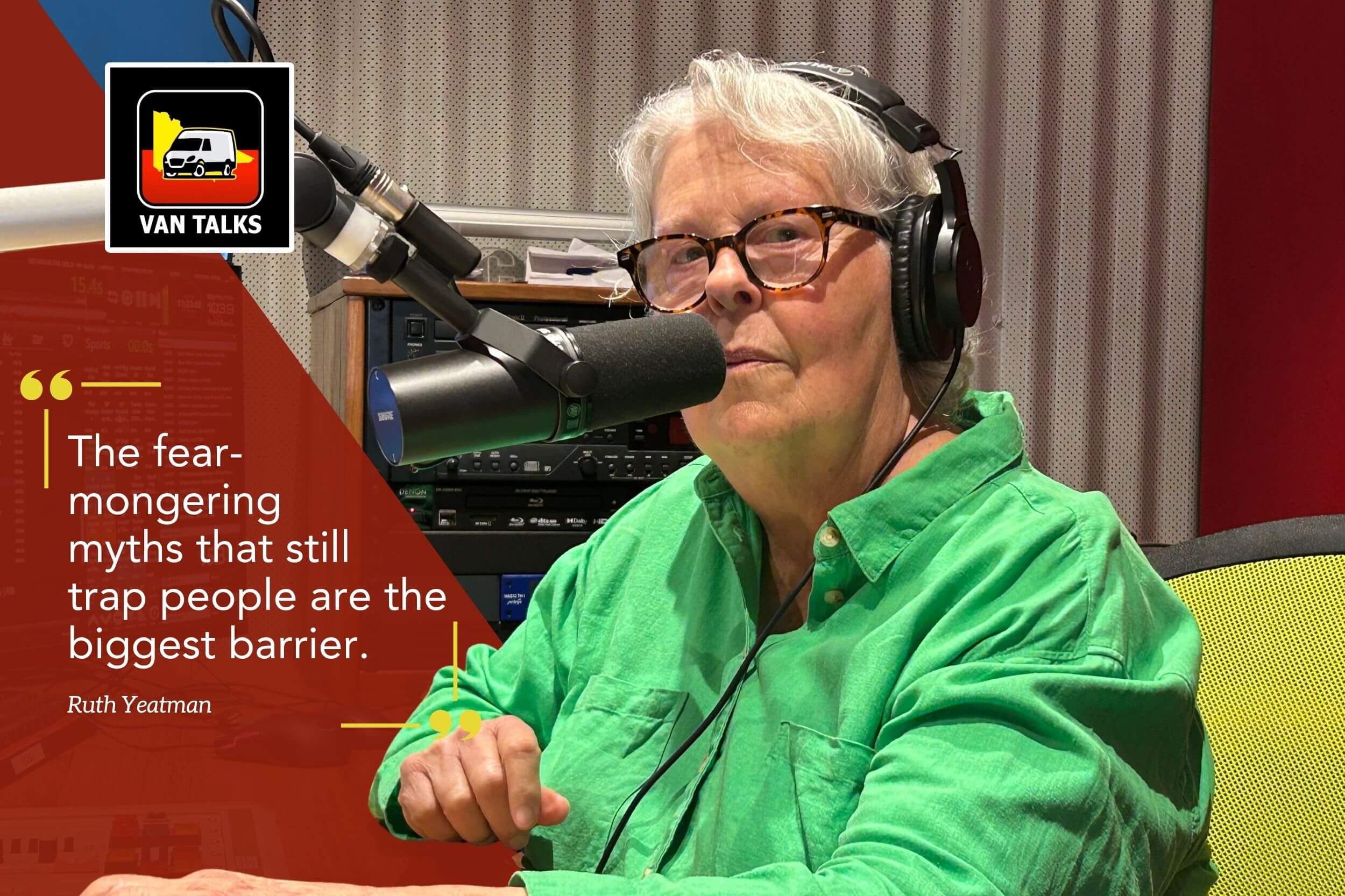
In regional Victoria’s federal seat of Nicholls, the 2023 Voice referendum delivered a resounding 75.24% “No” vote—the highest in the state. Yet on Taungurung Country, local reconciliation advocates refuse to back down.
Allies Supporting Treaty Seymour continues to push for First Nations treaty, truth-telling, and reconciliation across central Victoria. For primary contact Ruth Yeatman, walking away was never an option.
“We all feel so deeply that this is about unity, this is about self-determination, this is about acknowledging the truth of what’s happened in this country,” Yeatman said. “Once you’ve turned toward that and faced that, there’s no turning back as far as we’re concerned.”
Campaigning in an ultra-conservative electorate brought steep hostility, especially on the hustings. But Yeatman chose dialogue over division. “Let’s at least try and have a human-to-human relationship,” she recalled telling her team. By referendum day, opposing volunteers were even sharing barbecue sausages.
Today, the grassroots group’s work reaches far beyond monthly meetings. Collaborating with Mitchell Shire, Reconciliation Victoria, and the Taungurung Land and Waters Council, the group uses Seymour FM broadcasts and podcasts to dismantle stubborn misconceptions surrounding First Nations rights.
Relying on an agile “calls-to-action” model rather than rigid meetings, Yeatman stresses that community radio and persistent outreach remain vital.
“It’s not a job that you leave for the week,” she said. “It’s always in the psyche… It just doesn’t stop until we can create this change.”
Charles Pakana: In the regional areas of Victoria, groups of community members advocated for a Voice to Parliament during 2023, and they often experienced severe antagonistic pushback from people within their own communities. As these groups continued to advocate for treaty, truth-telling, and reconciliation post-referendum, that pushback continues, particularly in what is arguably a significantly right-wing emboldened society.
Now, one such group, operating on Taungurung Country to the north of Melbourne, is Allies Supporting Treaty Seymour, and that group falls within the federal electorate of Nicholls. And this is particularly noteworthy given that Nicholls recorded a 2023 “No” vote of 75.24%. That gives it the dubious honour of being the highest “No” vote electorate in Victoria, and nationally, ranked in the top 10 “No” vote electorates.
Despite all that, Allies Supporting Treaty Seymour continues to function and advocate strongly across the region. Its primary contact is Ruth Yeatman, and she joins me today on the program to share experiences and, importantly, challenges and learnings in this area.
Ruth, thank you so much for your time today.
Ruth Yeatman: Oh, you’re welcome.
Charles: Ruth, the start, foundation of this group—take us back to the who, what, when, where, why, how.
Ruth: Well, it really began, I think, primarily because I was connected to a social change group venue, which is just outside of Seymour, called Commonground. And one of the founders was particularly active in supporting First Nations people. We both were on a committee for Goranwarrabul House, which was a gathering place in Seymour, which sadly has closed now. And so there were regular meetings as Friends of Goranwarrabul House with mob, and just one thing led to another.
I was also involved with the BEAM Mitchell Environment Group, and we have a radio program that goes to air every Tuesday and then becomes a podcast. So it seemed to be welcomed by that group that we were providing a radio space for them.
Charles: Now, when was this?
Ruth: It’s at least five years ago now.
Charles: So this was before the referendum, well before the referendum.
Ruth: It was before the referendum.
Charles: But obviously the referendum and the campaign seem to have reinvigorated, or invigorated, the group specifically in this area. So step me through what happened in the lead-up to the 2023 referendum.
Ruth: By that time, we kind of knew who each other was in the region that we could call on. We knew who were the people who were going to care about the things we care about. And so we just essentially assembled a small group of around about six to eight people to say, “Look, we need to think about the referendum. We need to be on the hustings for the 10 days leading up to the actual date, and leafleting Seymour, and getting corflutes, and doing whatever we can.” And everyone just said, “Right. Okay.” And they came together to do all of that. And we had radio programs as well, on EarthChat.
Charles: It must have been somewhat harrowing, though, given the enormous “No” vote that resulted in the area.
Ruth: I don’t think we quite experienced that until we were on the hustings, because, you know, you’re leafleting, and mostly you don’t see people when you’re leafleting. And you know, the odd person might be outside, but they were always polite. But on the hustings, it was a different ballgame. And the “No” people were very suspicious of us.
And we’d been counselled by the campaigners to not engage in any kind of difficult conversations. We just had to listen to people when they abused us, and: “We hear this is your perspective. We have a different one, and these are our reasons.” And they either stood around to hear that, or they just walked off. But it was very clear during the hustings that we had a very “No”-voting population.
Charles: You mentioned that it was a small team of only six to eight people. How tough was it for you? Not the result of the referendum, but that campaigning, especially on the hustings.
Ruth: Yeah, the process. It was kind of sad to be in a space with your neighbours, and there being this kind of impasse. I found I couldn’t just not engage. So I thought, “No, we’re going to be on the hustings together for 10 days, for God’s sake. Let’s at least try and have a human-to-human relationship.”
And we were able to cultivate that. So by the end, they would have a barbecue, and they’d even offered us a sausage! You know? So at least there was some kind of civilised humans being together around it.
Charles: Post-referendum, the decision was obviously made to keep the organisation going. This time, it seems to be focusing on treaty. What motivated you to keep the fires burning?
Ruth: Treaty, we’d already formed to support treaty anyway. We all feel so deeply that this is about unity, this is about self-determination, this is about acknowledging the truth of what’s happened in this country. And once you’ve turned toward that and faced that, there’s no turning back as far as we’re concerned. I mean, we just have to keep going. And hopefully we’ll see something before we fall off the twig! But you know, it doesn’t matter whether we do or not.
It’s a little bit like I was saying to these young Friends of the Earth people on the weekend, who were saying, “Has it always been this terrible?” And we were able to talk and say, “Look, this has happened, this has happened, this has happened in our lifetime that have made life better.”
Charles: Ruth, I’ve noticed, though, that over the past couple of years in particular, you’ve undertaken a number of fairly bold initiatives in this region, and this is all post-referendum. And most notably, there’s been a collaboration with the Municipal Association of Victoria, Mitchell Shire, and Reconciliation Victoria to advocate for treaty awareness in council and in the community. And of course, you’ve advocated for my own organisation, Victorian Aboriginal News, content to be carried on the local radio station, Seymour FM, where many people are listening to this interview right now.
How important is it to think outside the box and do more than just, “Let’s have a monthly meeting and share some learnings”?
Ruth: Look, it’s critical, really. I mean, if your heart’s really in this, then it’s daily. You don’t turn off. It’s not a job that you leave for the week. It’s always in the psyche. It’s certainly in mine. And the people I’m thinking about who are part of the group, I know it’s part of their ether. It just doesn’t stop until we can create this change.
Charles: How do you come up with these ideas, though? Is it constantly just looking for opportunities and jumping on them?
Ruth: Look, I think the radio program’s been helpful for me, because in the preparation of programs, I have to do research. And that includes becoming more and more aware of what impact has treaty had on other countries where they have got treaties. And yes, it’s probably ongoing work for them too, but it’s at another level. At least the treaty is signed. And yes, the effect of that treaty will be influenced by whoever’s in power, but it’s there, it’s signed, it’s actually not going to be thrown out.
And when I talk to people—I’m in a climate group with some New Zealanders who we regularly meet, they also support treaty in New Zealand—and they all say that the difference they experience is one of greater unity, that we’re in this together, there isn’t a them and us anymore.
Charles: You have the advantage in that you have a long-standing relationship with Seymour FM. You used to be a president of the organisation here. How important do you consider community radio, community broadcasting, to the reconciliation movement in regional areas across Victoria?
Ruth: Look, I think it’s really important. You know, especially when you’re in as conservative an area as we are, for people to hear voices on the radio that are talking about treaty in a very different way, talking about the Voice to Parliament in a very different way. And we take on the responsibility of doing that in a way that is a communication that is about reaching out, to say, “Hey,” you know, not to spell this out, but, “Hey, listen to this as a possibility. Please consider this. Don’t just dismiss it out of hand.” And we still have gaps that need to be filled for our First Nations people, and that’s not okay for any country.
Charles: Let’s just stick on community radio right now. What advice would you give to other groups out there operating across regional Victoria in regard to connecting with local radio stations and starting to broadcast key messages or advocate, at least, for not-so-ultra-conservative viewpoints to be aired on local radio?
Ruth: I can just say, do it. I encourage you wholeheartedly. If you’ve got a community radio station near you, reach out. If there’s stuff that you care about and you feel the community isn’t caring about it or needs to know more about it, it’s a perfect way to get some ideas across. Which is why we’ve gone into podcast as well now.
Charles: Yeah. So podcasting is obviously an important platform as well?
Ruth: Well, we’re getting a lot of hits. There are people who regularly listen to Seymour FM, but I think a percentage of those people have it on in the background. But there are more people just over time saying to me, “Oh, I listened to EarthChat the other day.” So it’s on the rise that people will listen to what is a slightly progressive, so-called, or slightly left-leaning program, because of course we’re advocating for environmental care as well. But it’s a perfect medium.
Charles: You’ve never been backwards in stepping forwards and approaching people, and before we pressed record on this episode, we were having a talk about you reaching out to the First Peoples’ Assembly of Victoria prior to the formation of Gellung Warl, and actually establishing relationships with members in this North East regional area. Tell me how that played out, and the response you got, and any of the challenges that you had as a result of that.
Ruth: Well, the First Peoples’ Assembly of Victoria, you could sign up as a friend, I think initially, then an ally. And then through that process, I was then receiving notification of their fairly regular webinars. And it was through that that I was then introduced to the North East reps. And then I thought, “Right, we’re in the same region, we need to at least offer the radio program to them if they would like that.” And they took it up.
Charles: So who was that in particular?
Ruth: Leanne Miller was the main rep at that point, and Levi Power was an engagement officer at that time.
Charles: That’s right, yes.
Ruth: And so she initially did the programs with us, and then she brought in Levi, so he accompanied her. And they were terrific programs, and it was so delightful to have a relationship growing with First Peoples, because I was still finding my way with trying to meet First Peoples. It’s been ever since, and so at least three or four times a year we do a treaty program.
Charles: So that’s an important thing, because quite often I hear, and I’m sure you do as well, from members of the community who’ll say, “Well, look, how do we get in contact with Traditional Owners, or members of the Assembly, or just other Aboriginal community members?” But it seems to me that the best approach is to just get out there and establish contact somehow: make a phone call, send an email.
Ruth: Reach out, reach out. I mean, it helped that we had Goranwarrabul House as a gathering place in Seymour for many years. In fact, Rebecca Welsh, who’s one of the senior engagement officers for the North East, created Goranwarrabul House—
Charles: Okay.
Ruth: —in 2010 or 11. So it was going all that time until just recently where funding got stopped, etc., which is very sad. But that was really helpful for me too, because I met mob who were either off Country or from Taungurung through that.
Charles: Actually, well, you mentioned Taungurung. So what have been some of the challenges you’ve had, and how have you overcome them, in connecting with the Traditional Owners, in this case the Taungurung?
Ruth: They’re pretty busy, the Taungurung Land and Waters Council. So we have invited them onto EarthChat. They haven’t actually come very often, but Matt Shanks, who’s one of the environmental—
Charles: A great bloke, yep.
Ruth: He—BEAM members, so members of BEAM Mitchell Environment Group, of which EarthChat’s part of, meet with Matt Shanks and others in a regular way in the Tallarook Ranges. We’re looking at coupes, we’re looking at greater glider numbers, we do walks in the Tallarook Ranges to look for numbers of greater gliders. And so where they have time—and recently there’s another kind of project that’s been created by Taungurung Land and Waters Council, where that we’re being invited to join, it’s a different one, it’s an engagement in the Strathbogie Ranges.
So again, over time—I’ve also had connections through the Arboretum in Euroa with the Taungurung, who have been very supportive of the Arboretum and have really counselled them, and… Also, one of the great learnings for me has to be has really to honour the amount of work they’re trying to do.
Charles: Yeah. What about the local council? What about the relationship with the local council?
Ruth: I think the administration, there are members of the administration who are very supportive of Indigenous people in this region.
Charles: Yeah.
Ruth: And I think because it’s such a conservative part of the world, of course their councillors are a mix of pretty conservative folk. And so the administration have to juggle that.
Charles: But how important is it for you to, and for your group, to have that relationship, or at least reach out to the council itself and say, “Hey, look, this is what we’re doing, we’re operating in the area, and we want some support if it’s available”?
Ruth: I think it’s really important. And again, we have to weigh up what they feel they can do, because, as I say, they’re juggling a whole range of different viewpoints in their councillors, so sometimes there isn’t the support for the work we’re trying to do. But we keep each other posted.
Charles: Ruth, looking at the regional context, what would you say are the biggest misconceptions that people have about implementing reconciliation initiatives at a local level?
Ruth: Unfortunately, the kinds of myths that were dispelled during the “No” campaign leading up to the referendum are the sort of fear-mongering myths that still trap people. So they worry about losing their backyards. I mean, there’s still something that people think is going to happen. There’s a really big one around Aboriginal people get all this welfare money, much more than we do, and we’re also on the breadline, and so the preoccupation with cost of living feeds into that perception.
Charles: So battling misinformation is one of the biggest challenges, it seems.
Ruth: That’s absolutely one of the biggest challenges. For people to feel confident to trust us, those myths have to be dispelled at a political level. While those myths are being touted out there, this is the biggest, the biggest barrier.
Charles: With what you’ve learned over the years through your reconciliation work, through your environmental championing work, and through your community work, if you were to be dropped into a new regional area right now, what would be some of your first calls to action to yourself and to those around you, if you were to start up another reconciliation initiative or group?
Ruth: Well, first of all, I’d find out who’s doing what already, and connect with them pretty quickly, and see what they’re up to, what else we could actually do, put forward ideas of where else we could be making a difference to those people. Find out what the energy is, the capacity, and then just see what—what, what’s the work that actually needs to be done for us to do something meaningful.
Charles: Before I let you go, you mentioned what’s the energy level. Let me ask you this last question, and that is: how do you maintain the energy level within the group itself, given the constant knockbacks, especially in this particular area?
Ruth: With our particular group, it’s important that people can—that it’s free-flowing. We know each other’s politics, we know each other’s capacity, and we know each other’s energy. So we respect that. And so we don’t have regular meetings, we don’t need to; we have calls to action. And that’s the best way of managing this particular group.
Because in between, like one of them’s been up in Mulan, building houses with an Aboriginal community, he’s just come back. There are others doing all sorts of other things around. But if I put an email out and say, “Hey, we need help, this is happening, this is the idea, if you’ve got a better idea let me know, but we need to do something about it,” and they will sort of come together on a needs basis.
Charles: Ruth Yeatman, thanks for your time.
Ruth: No worries. Thanks for having me.
For Radio Play:
1 - Click the Download Audio button
2 - The audio file will commence automatic play in your browser
3 - Confirm this is the file you want to use in your program
4 - Once confirmed, click the vertical elipses (3 dots) and select download
CONTACT US VIA SMS
Get in contact with us via our dedicated SMS line:
0493 222 836
30 October 2026
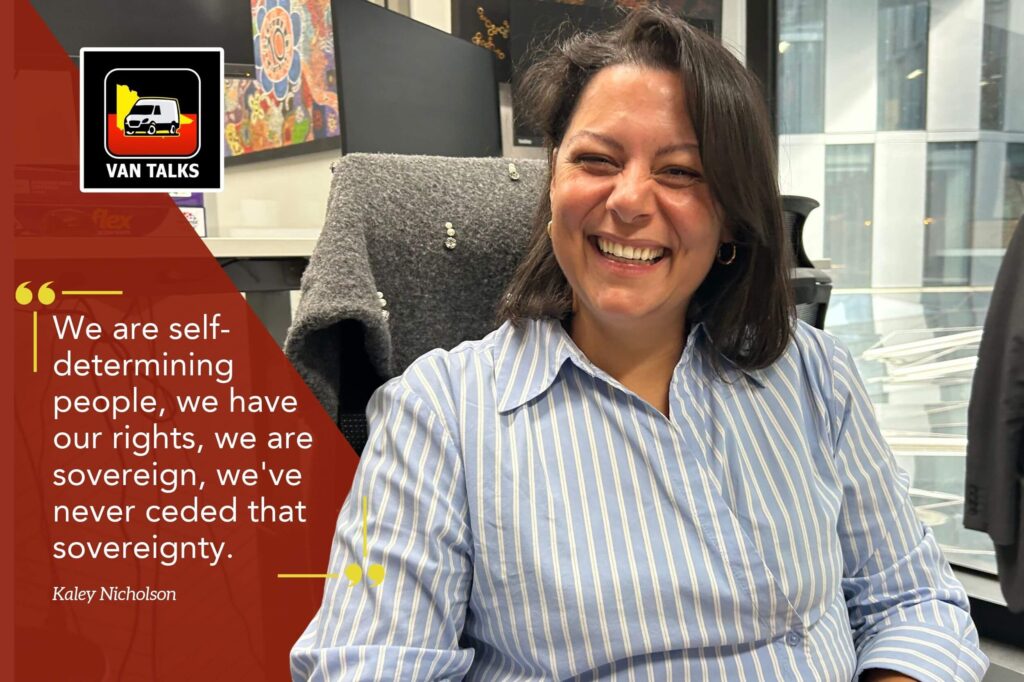
A starting conversation on UNDRIP with Kaley Nicholson, CEO of the Federation of Victorian Traditional Owners Corporation
26 October 2026
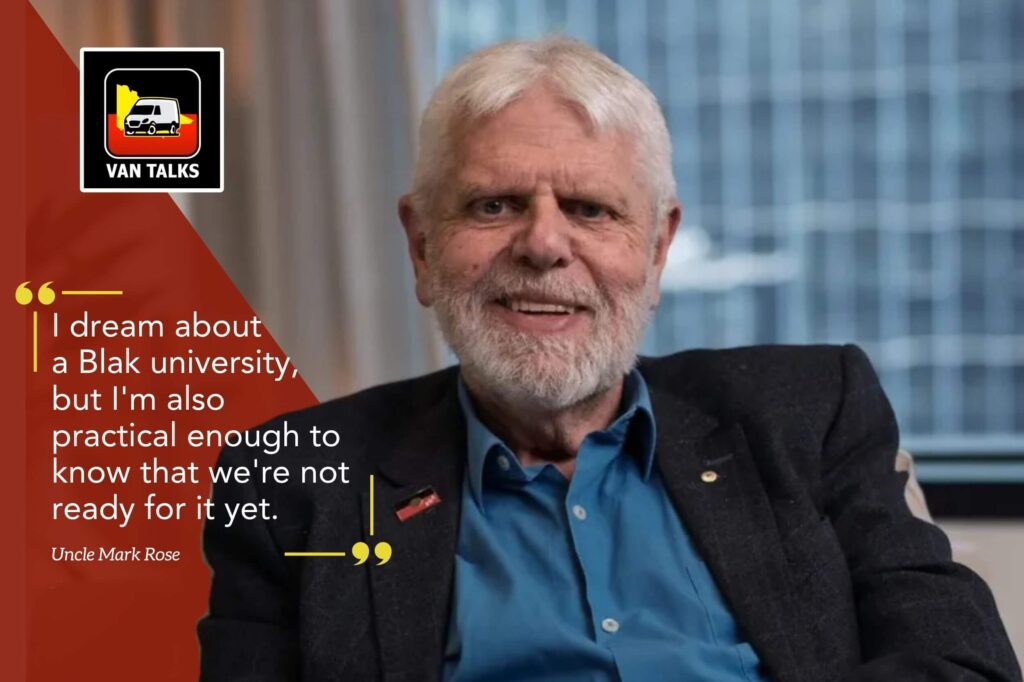
Leading the push to embed Indigenous knowledge systems in Australia’s tertiary education system
19 October 2026
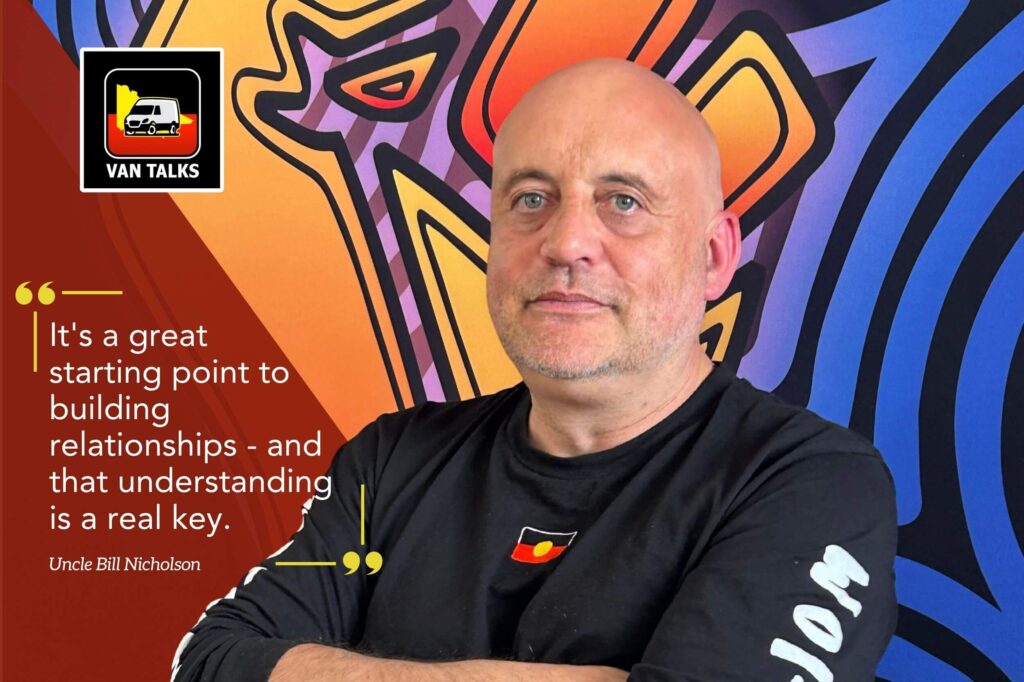
Understanding the use – and over use – of the Acknowledgement of Country
15 October 2026
It’s time Australia recognised a shared history of often brutal “settlement” and expansion
12 October 2026
0 Comments