
Gellung Warl commits to community accountability and answerability on Treaty process
Gellung Warl's Aunty Esme Bamblett and Uncle Michael "Mookeye" Bell talk openly about the organisation's commitment to answer and be accountable to community.
Posted by: Charles
Published: 11 November 2026
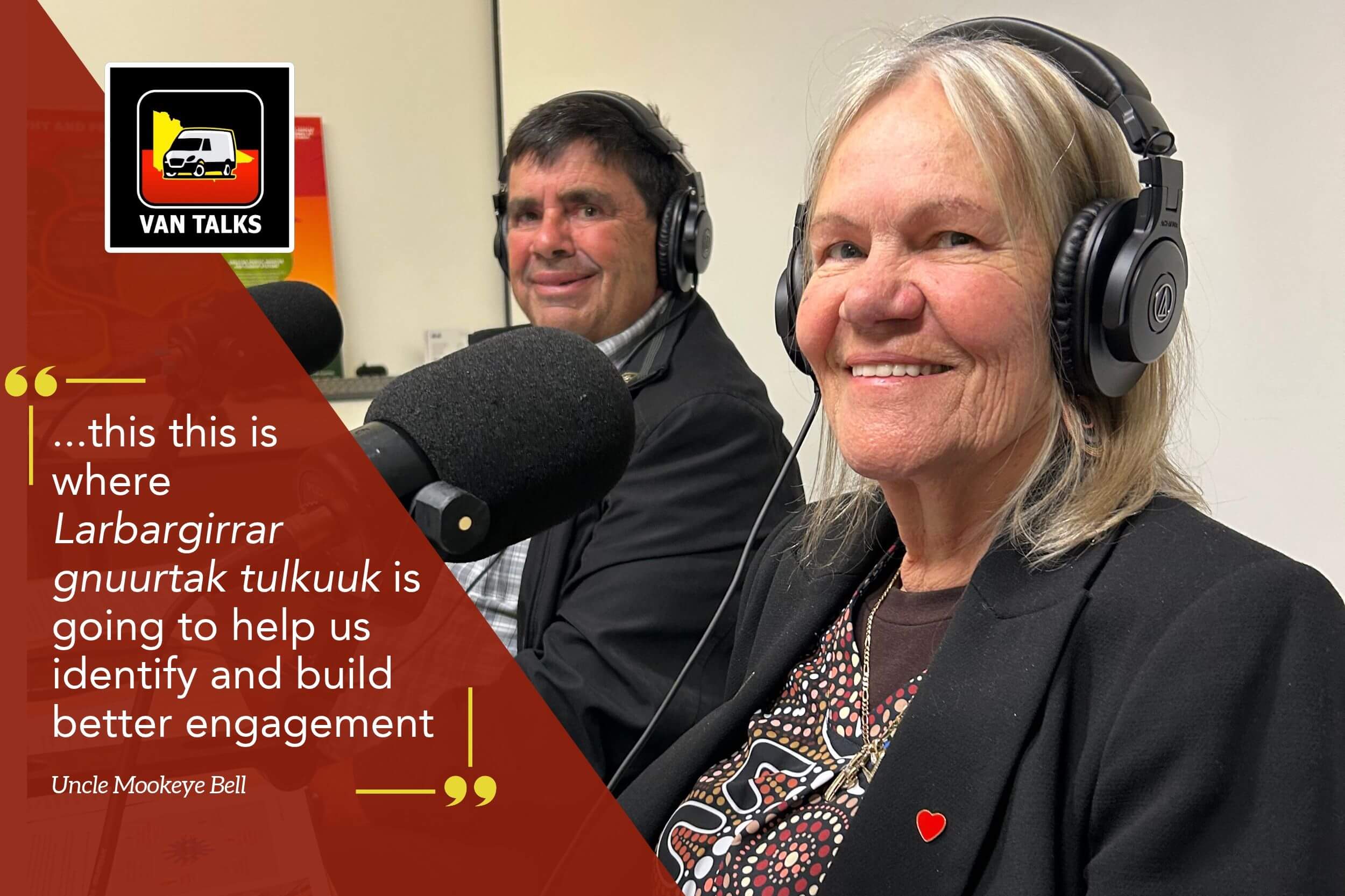
Members of Gellung Warl have voted to adopt a ground-breaking community governance and accountability framework, known in the Djabwurrung language as Larbargirrar gnuurtak tulkuuk.
Developed over six months, the framework ensures operations are firmly guided by Aboriginal lore, law and cultural authority.
Aunty Esme Bamblett highlighted the extensive community consultation behind the framework, noting that it builds upon a decade of feedback.
“We have taken into account all the feedback that the members in the community have given us over the last 10 years,” she explained.
Emphasising the commitment to transparency, she added, “We are very concerned and make sure that community know everything that we’re doing and why we’re doing it”.
With elected members transitioning to full-time roles, regional accessibility and engagement are stepping up significantly.
Uncle Mookeye Bell pointed out that increased visibility across regional Victoria helps bridge gaps and connect grassroots communities. “The Torres Strait and the non-traditional owners have got a big role to play in where we’re going as a mob in Victoria,” he said.
He further stressed the foundation of their work, stating, “We’ve got to make sure that the mob have got capacity… cultural governance and respect is the main part, and that’s the strength that’s got us here today”.
Charles Pakana: In the Victorian Treaty Act of 2025, part 14, explicitly placed on Gellung Warl the requirement to develop a community governance and answerability framework, that framework to ensure the operation of Gellung Warl would be guided by Aboriginal law—that’s L-O-R-E and L-A-W—and cultural authority in its answerability to community and secondly to promote the fulfilment of its cultural obligations and responsibilities as determined by community.
On the 23rd of October this year, members of Gellung Warl voted to adopt the Larbargirrar gnuurtak tulkuuk, meaning community reckon count truth in Djabwurrung language. Joining me today to talk about the new framework are Aunty Esme Bamblett and Uncle Mookeye Bell, two members of Gellung Warl who’ve spearheaded the work in developing the new framework. Uncle Mookeye, welcome to the programme.
Uncle Mookeye Bell: Thanks, Charles.
Charles: Aunty Esme, and welcome back to the programme.
Aunty Esme Bamblett: Thank you.
Charles: Aunty Esme, we’ll start with you, and it’s on the matter of transparency, and it’s carried right throughout, this is a common thread in the framework. And the framework has a commitment to facilitate input and participation in ways that are relevant and appropriate to all community. So what are some of the initiatives currently being planned to ensure this transparency of pretty well every aspect, bar a few, of Gellung Warl’s ongoing work?
Aunty Esme: I think that includes really making sure that community have access to Gellung Warl whenever they need it, to go out to community. We are planning, like, yarning circles, planning for our community to be able to approach us at any time. In the regions, we have regional representation, so our regional reps are going out and speaking to the community in the regions. We do have an elders’ voice that is part of Gellung Warl, and that will be established. We’re in the process of really establishing the group, the Mandeepa [sp] group now.
So that will be established, so the elders will be able to find out information about Gellung Warl and take that back out to community, because they’re in all the regions of community. We also have a youth voice that is in the process of being planned. We are going to have meetings with the ACCOs and meetings with people throughout the community. Community transparency is really important to us. It’s really important to the plan, and we are very concerned and make sure that community know everything that we’re doing and why we’re doing it. So transparency is top of the list.
Charles: It does sound though that a lot of what you’re speaking about there really was in the previous iterations of the Assembly itself, that there were the community representatives, that was always been since 2019 and the first elections, and there’s always been yarning circles, but what specifically new initiatives do you see as being introduced to help facilitate that transparency?
Aunty Esme: Well, we’ve always had the website, so people can go into the website and get information at any time.
We have community surveys, we have a QR code on the website for community surveys so people can actually put anything in the survey they want to know about us. We go around the state and visit communities. We have a lot of opportunities for community to come. We, have been around a few times since we’ve started, and so we will continue to do that. I think the most important way that community can actually access what we’re doing is all the information that we’re putting out constantly to community, all the activities that we have that community can come to. So, I think there are plenty of ways for community to find out what’s happening with Gellung Warl.
I think probably the best way is to access the website, because we put up all the activities that we’re having on the website, and it’s open for anyone to access. They can also call any of their regional members and ask them what’s happening, and they can call the office and find out what’s going on.
Charles: And that’s an interesting change with this iteration of the Assembly, in that every single elected member is now full-time, rather than just what it was in the first two iterations of the Assembly where there were many of them just part-time. Uncle Mookeye, just on that issue, back to you, coming from the southwest of Victoria, a fairly remote area right across your region. Just what impact do you see that this will have on the members of the southwest area?
Uncle Mookeye: Yeah significant. Now that, like you mentioned, Charles, we are full-time as members, and that means we should be more accessible to the community for communication. And since restarting on the 1st of May, we have been engaging with our communities across the region, across the state. We see that regularly as a collective, you know, our chamber meetings. We’ve had them in different locations in Victoria.
You know, our contribution to the state is big to the Victorian economy. It never gets recognised, Charles, what we give to the community. Not just us as Gellung Wall, but our First Nations mob. Their contribution is quite significant. So just to be out there, we’ve been to the carnivals, we’ve been to the football and the netball carnivals recently, which is quite significant. Ballarat, they’re in our region, Ballarat and Geelong recently. Great turnout. Just being present is really important. Mob are coming up, having a yarn. There’s still a lot of mob don’t know the impact of treaty, you know, they’re still working it out a bit, getting more education. So the grassroots stuff we’ve still got to do a lot more work in, and this this is where Larbargirrar gnuurtak tulkuuk is going to help us identify and, uh, build better engagement.
Charles: It’s interesting to note that you’re saying help us to build greater engagement models and practices. I did note in reading this document that this is the first iteration of this particular document, that it is an ongoing evolution in this. I just want to take us back to 2019 and 2018 when Aunty Jill was the Victorian Treaty Advancement Commissioner. I’m sure everyone’s well aware of the furor within community when many were saying, “We don’t have an opportunity to engage.” And that carried through on the previous two iterations of the assembly, whether rightly or wrongly, I’ll point out. How much work in developing this framework has been based on the learnings you’ve gained since 2018-2019? Aunty Esme, we’ll pass to you on this one.
Aunty Esme: All of it. I just say all of it. So we have taken into account all the feedback that the members in the community have given us over the last 10 years.
It is not just the feedback from now. We’ve had to do this plan in 6 months because we’re a new statutory authority. It’s a new ball game now, it’s not the same, and there are some things we can and can’t do, but we’ve had 6 months to do the plan, but we’ve taken into account everything we’ve heard from community. Now, it is true that some community members might not have their voice here because they haven’t participated. They didn’t know what was happening, it was a new to them, even treaty itself was new to everybody.
So there are people out there that have not had their voice heard, but they have the opportunity now, Charles. They can contact us at any time. They’ve got members in every region, members are accessible to community. If they need to tell us anything, we’re quite willing to meet with them. That’s the truth. In every region, we’ve had queries from community wanting us to talk to groups of people, and we’ve gone out and talked to them, and we’ve been talking to a lot of groups since we’ve started, and we’ll continue to do that. So if they want to get a group together and have us come out and talk, we’re quite willing to do that.
Charles: Thanks, Aunty Esme. Uncle Mookeye, I want to come back to you and look at one of the, the core principles in the framework, which was representation. And this is something that I’ve spoken to various members of the Assembly about over the past nine or so years. Because the document states and I’ll quote: “Community representation and connections are diverse, inclusive and reflective of all affected First Peoples in Victoria.” End quote. With that in mind, Unk, can you comment on what’s being done to support the visible representation and voices within Gellung Warl of Torres Strait Islanders and Aboriginal people who are not Victorian traditional owners?
Uncle Mookeye: Yes, Charles. Everything impacts on First Nations people. When I talk about contribution, it’s the contribution of all First Nations who live in Victoria. I think that’s the strength of Victoria. I mean, I’m not telling anybody any history lessons here, but, you know, the park up in Gertrude Street wasn’t just traditional owners from Victoria.
Charles: Yeah.
Uncle Mookeye: It was a melting pot. It was a coming together. The innovations that come out of the park, where we see Aboriginal medical services all around Victoria, they weren’t just done by TOs, they were done by all people who were impacted. Out of home care, Stolen Generation mob were all big parts of that. They really set the foundation of where we sit today. The Torres Strait and the non-traditional owners have got a big role to play in where we’re going as a mob in Victoria.
We talk about economic prosperity in the future. We need everybody to be on board. We’ve spoken to Kinnaway. We’ve had their meetings with them. They’re not all TOs. They’re all individual little businesses that are up and about and trying to build their capacity and build capacity of koories in Victoria. So it’s really important that when we do have our communication, it’s strong. A significant thing that happened over the two terms, Charles, and you’re being a big part of it, is our cultural governance.
Aunty Esme, when we call it [language] today inside, uh, Gelling Warl, and it’s really about being respectful, that your voice will be heard, and that others, you know, you’ll have your time to talk and your time to communicate is really important. And you should feel safe. Charles, you know yourself, many times your voice gets drowned out. Gellung Warl is bringing a voice for everybody to be a part of.
We wouldn’t have got treaty done if we didn’t have a strong cultural governance. And that is the strength of what’s bringing us together for a statewide treaty, Charles. That’s the strength that brought us here today, and that’s got to continue. We understand there’s there’s groups that aren’t getting that voice. When we look at our investments with SDF, we’ve got our RAPs, Registered Aboriginal Parties, about 12 of those on the books with SDF, but there’s another 30 groups. We haven’t seen that movement, Charles, for ACCOs or LACGs across Victoria. This is significant. This is one of the biggest movements we’ve had, and we’re building capacity. When we’re talking to the SDF, we’re going, well, we’ve got to keep sure that the mob have got capacity. My days of Winda Mara, when we were very micro little organizations,
Charles: Yeah.
Uncle Mookeye: We’d attach to Ballarat and District and Gunditjmara Co-op, and then the collective through Vatcho. Being a little fish in the big fish when you’ve got Rumbalara and that, you just learn so much from these guys. So it’s really important that collective comes together, whether that’s through local treaties or local aspirations around economic development and things like that, is really important. We come together, but cultural governance and respect is the main part, and that’s the strength that’s got us here today.
Aunty Esme: And can I say, Charles, that any Aboriginal person living in Victoria can come to any of our meetings, not the Gellung Warl, if you’re not a member there, but the meetings we have around the state with community, anyone is welcome. We’ve had people who’ve come who aren’t traditional owners in Victoria.
They still have a voice and they still can come and tell us what issues they want to discuss, and they’ve done that. The treaty is for all people.
Charles: And I just want to follow through on what you said then, because I did note, and correct me if I’m wrong, in the framework that parts of the chamber meetings will be open to community.
Uncle Mookeye: We used to do live streaming, and only just recently at a chamber meeting we’re talking about the first two iterations, we did have a live stream in those first two. We haven’t picked it up just yet, but it’s definitely on the cards. Aunt [Esme] and I have been a part of the three iterations, and this third term under Treaty [Act] is different. We’ve got to understand our roles and build that capacity even more so that we do set a strong foundation, one of our favorite sayings is we stand on the shoulders of those before us.
Created a new governance. We’re starting from a very low level, but we’ve got to make sure it’s strong and the accountability factors that we’ve got to build in, such as the financial management Act and other requirements, which are quite strong, and the good thing about it, it’s self-governing, our cultural governance is self-governing and it should be enough to where we don’t have to have multiple layers of government oversight. We’re accountable to the Parliament as it is.
Charles: Aunty, I just want to come back to you with something that Uncle Mookeye mentioned a few minutes ago when he spoke about Winda Mara and that is the involvement of the ACCOs because inherent within the involvement of ACCOs are that voice of non-Victorian traditional owners, as Uncle Mookeye made mention. You, as the ex-CEO of the Aborigines Advancement League, that’s really in your wheelhouse. So when it comes to this new framework, just what is the voice of the ACCOs?
Aunty Esme: Well, the ACCOs are in the legislation. The ACCOs are very important. They’ve been around like the Aborigines Advancement League is 70 years old next year.
She’s the mother organisation. And she’s been around for that long, and it’s really important for us to listen to those voices, because they have been there and done that. They have gone through the hard yard. They’re actually the reason we’ve got Treaty. ACCOs are the reason. So we’re here today because they’ve fought hard, it’s been the self-determination of all peoples in Victoria, not only our mobs that are from here, but the mobs that aren’t, as you said before.
We have some great allies that have come interstate and have worked really hard for our communities. So, this is a community answerability. We came up with this. We’ve done this. This is in the legislation because of us. We’ve said we need to be answerable to community. We need the community to tell us what they need and when they need it and however we can help. We need them, and that’s every single person that’s in our communities, and there’s a lot of out of state people that are there. Every single one of them’s important for us. That’s what this is all about. It’s all about who we are as a people, and culturally, we do not leave anyone behind, anyway. We don’t.
Charles: Thanks, Aunty. I realise that we’re approaching end of time, and I do want to wind up with one question and it actually falls a bit outside of the framework, and that is to do with Nyerna Yoorrook Telkuna, which is the commitment from the assembly, from Gellung Warl to establish ongoing truth-telling, but this time, place-based truth-telling. So, I’m just wondering what impact this framework will have on the continuation of Nyerna Yoorrook Telkuna, and making open the evidence and submissions that are received by that soon-to-be-announced body.
Aunty Esme: We see it as very important to continue truth-telling for a couple of reasons. One is that it really does help us in what we do. The wider community don’t know a lot. That’s one thing, we need to let them know what it is. We want it taught in schools, we have to have information for that to happen. We know that there were some of our mobs who didn’t have the opportunity to attend Yoorrook, and they need their opportunity. So, it’s part of who we are. That’s part of where we’re going.
Charles: Uncle Mookeye?
Uncle Mookeye: Really important, Charles, glad that, you know, you raised that question. The importance of an ACCO, the importance of the peak bodies we have in Victoria, their stories have got to be brought out even more, so because that’s the foundation that we sit on today, even the framework and the truth-telling, is that when you review and assess and you make change, you know, it’s not like the Australian Constitution that you can’t change, and people try to do that.
Charles: As much as it’s tried, yeah, exactly.
Uncle Mookeye: But, but it’s the importance that we do review and assess, and I know many of the ACCOS out there today, they’re registered as a community support organisation. Guess what they’re doing? And they’re delivering medical services. They’re reviewing and assessing and making better. We could go back to the ATSIC days when funding got cut, 90% of the ACCOs from Brisbane to Adelaide, administration got taken away. There’s a good chance that about 90% of those ACCOs are still operating today, Charles, because of strong governance, strong cultural, uh, practices. So, it’s really important those stories are brought out, that many of the ACCOs are turning up and their partner organisations who work in partnership with us, they’re coming to tell these stories because if we didn’t have them, and I mean Aunty Muriel always talks about 80% of us doing okay,
Charles: Yeah.
Uncle Mookeye: You know, so we want to build that, you know, we want to close that gap right up, because there is a lot of deadliness out there in our communities, but we need to assess all these good things that we’re doing together and, you know, across the state, make better outcomes.
Charles: Thanks for that. Just before we close, we will have a link on our website at vicaboriginalnews.com.au to the framework where you can download it directly from Gellung Warl. There is, as Aunty and Uncle have said, a growing wealth of information and it’s only set to grow even more on that particular website. Until next time, and I know there’s always lots to talk about, Uncle Mookeye, thanks for your time.
Uncle Mookeye: Thank you, Charles. Appreciate it.
Charles: Aunty Esme, thank you as always.
Aunty Esme: Thank you, Charles, and I just want to say, treaty is transformative.
For Radio Play:
1 - Click the Download Audio button
2 - The audio file will commence automatic play in your browser
3 - Confirm this is the file you want to use in your program
4 - Once confirmed, click the vertical elipses (3 dots) and select download
CONTACT US VIA SMS
Get in contact with us via our dedicated SMS line:
0493 222 836
9 November 2026
Bendigo community and environment clearly benefiting from Dja Dja Wurrung cultural knowledge
3 November 2026
Exploring the beauty of the Yidaki with internationally acclaimed Ganga Giri
30 October 2026
A starting conversation on UNDRIP with Kaley Nicholson, CEO of the Federation of Victorian Traditional Owners Corporation
26 October 2026
Leading the push to embed Indigenous knowledge systems in Australia’s tertiary education system
21 October 2026

0 Comments