
Demand for true accountability in Indigenous Procurement Policy
Principal lawyer and founder of AMK Law, Matthew Karakoulakis, unpacks critical new updates to Australia’s Indigenous Procurement Policy (IPP). He looks past the percentages on paper to explore why true First Nations economic self-determination relies on 'effective control' and accountability.
Posted by: Karina Wells
Published: 30 June 2026
Recent changes to Australia’s Indigenous Procurement Policy (IPP) have introduced stricter compliance measures, including raising the minimum Aboriginal ownership threshold from 50 per cent to 51 per cent and increasing procurement targets to three per cent for the 25-26 fiscal year, on a path to four per cent by 2030.
But do these policy shifts do enough to protect genuine First Peoples’ enterprises from “blak cladding”?
Speaking on the latest episode of VAN Talks, Kokatha and Narungga man, Matthew Karakoulakis, principal lawyer and founder of AMK Law, argues that a mere 1% shift in ownership misses the core issue.
“If somebody was served with a sour pudding, and they could have a 50 per cent share of the sour pudding or a 51 per cent share… it’s still a sour pudding,” Matthew says. “What really matters is those critical points of decision-making, control of the business, control of the company, and the real identity and the way things are done as an authentic Aboriginal business.”
For corporate and government procurement teams, identifying authentic First Peoples’ businesses requires looking beyond checklists and registry listings. While organisations like Supply Nation and state-based chambers are primary reference points, Matthew warns that “blak-cladded entities slipping through the cracks” remains a serious issue.
“We need proper levels of accountability. We also need to ensure that these targets are reached through authentic Aboriginal business engagements, not an increase in expenditure to blak-cladded entities,” Matthew stresses.
Despite these regulatory gaps, Matthew remains optimistic about the sector’s capability to meet the rising demand, pointing to blak excellence as a driving force.
“Yes, there is responsibility upon government, but I believe that there’s also responsibility upon Aboriginal business owners… to really stand strong, deliver, and continue in this excellence,” he says. Ultimately, he advises First Nations business owners to look beyond symbolic Reconciliation Action Plans (RAPs) and focus on building genuine, values-aligned relationships with corporate and government partners.
“Business is about people,” Matthew reflects. “As Aboriginal people, we understand relationships very well.”
Charles Pakana: Today on the program, we are unpacking the crucial new update surrounding Australia’s Indigenous Procurement Policy and what they mean for First Nations businesses nationwide. Joining us to break down these changes is Kokatha and Narungga man Matthew Karakoulakis, a principal lawyer and founder of AMK Law, who has been a leading voice in the battle against procurement fraud and blak cladding. We’ll be discussing how these stricter compliance measures and higher targets aim to protect genuine Indigenous enterprises and reshape, if possible, the ethical contracting landscape. Matthew, welcome back to our program.
Matthew Karakoulakis: Thank you for having me back on your wonderful podcast, Uncle Charles.
Charles: Matthew, let’s talk about the 50 to 51% ownership jump that was introduced in these changes. In a recent LinkedIn post that you made, you stated that the real issue was never 50% versus 51%, it was mostly about effective control. So, let’s dive into that. How do we determine a business’s First Nations effective control?
Matthew: Yeah, I think that’s a really good question because I think if somebody was served with a sour pudding, and they could have a 50% share of the sour pudding or a 51% share of a sour pudding, it’s still a sour pudding.
Charles: It’s not gonna make a lot of difference.
Matthew: That’s right. And I think it’s the same thing when we look at combating blak cladding. If we’re going to have a sour company that is blak cladded at a 50% threshold or a 51% threshold, it’s still that sour, blak-cladded entity. The real point has to be about who’s making the decisions. And when we speak about effective control, it goes beyond a mere percentage point. It goes more into who’s making the decisions. How is the business and the entity run? Who has control of the finances? How are day-to-day operational decisions being made? And so, if you’ve got somebody that has a 51% shareholding but their class of shares actually says they don’t have very much voting power at all… information, it’s key.
Critical information to do with the business, to do with the company’s operations, and that information is withheld. It doesn’t really matter the percentage of shareholding. What really matters is those critical points of decision-making, control of the business, control of the company, and the real identity and the way things are done as an authentic Aboriginal business.
Charles: So, the people making the purchasing decisions, whether in government or corporate enterprises, are still faced with that same challenge then, of how do we determine that First Nations effective control. Are there any ways in which that can be determined, ascertained?
Matthew: Absolutely, and I think in some ways the mistake can be made of trying to overcomplicate things. I think if you look at it this way, procurement teams, whether they be from government or whether they be from corporate, are very well-rehearsed at finding out who has the skill sets, who has the resources, who has the ability to deliver on key contractual requirements, and they make decisions based on that. And sometimes a lot of that decision-making comes down to relationships. And I think, fortunately, these days we do have a lot of amazing people that work within corporate and government procurement teams, and sometimes the confusion that’s out there can make them feel like things are more difficult than what they really are. And so, when we look at that question—how do we see a real, authentic Aboriginal business? How can those decision-makers within corporate and government procurement teams properly identify and decide upon an authentic Aboriginal business?—I think that sometimes we can remove the smoke and mirrors. It goes down to relationships, it goes down to reputations, it goes down to, of course, doing due diligence, checking who the Aboriginal people are beyond the sheets of paper and the ticking of boxes, the superficial checking, but into really understanding who is the business, who’s deciding and making decisions in the business, and what is their position and standing in Aboriginal community… [do they have] decision-making power within that business.
Charles: Okay, that makes a fair bit of sense. Now, one of the other interesting things that came about with this revision of the Indigenous Procurement Policy was the increase in procurement targets for government to 3% for the fiscal year 25-26, and aiming with an increase of 0.25% per year for the next four years for a 4% target by 2030. What are your thoughts on that?
Matthew: I want to answer this question with a question, Uncle, as cheeky as that might sound. But this is also a question for listeners, because I think that you get a lot of Aboriginal people in community, and it was probably a year or two ago that NIAA came out asking for people’s opinions on change. The question is, I wonder how many of those opinions were properly responded to? I wonder whether there was an appropriate level of addressing of opinions, or whether decisions were then just made behind closed doors without a proper response back into community as a result of those opinions that were expressed.
Charles: Well, let me ask you this then, Matthew—I’ll continue asking you questions, brother—if you had been one of those people that the NIAA, the Federal Government, had been speaking to, would you have advocated for this immediate 3%, up from 2.5%, and then up to 4% by 2030? Or would you have advocated for something different?
Matthew: Awesome question, Uncle. And the reason why I asked that with a question was because I think it’s the ethos that really matters, right? I think that people listening to the question that I just presented probably would be thinking within themselves, “Ah yeah, there probably wasn’t a proper response back.”
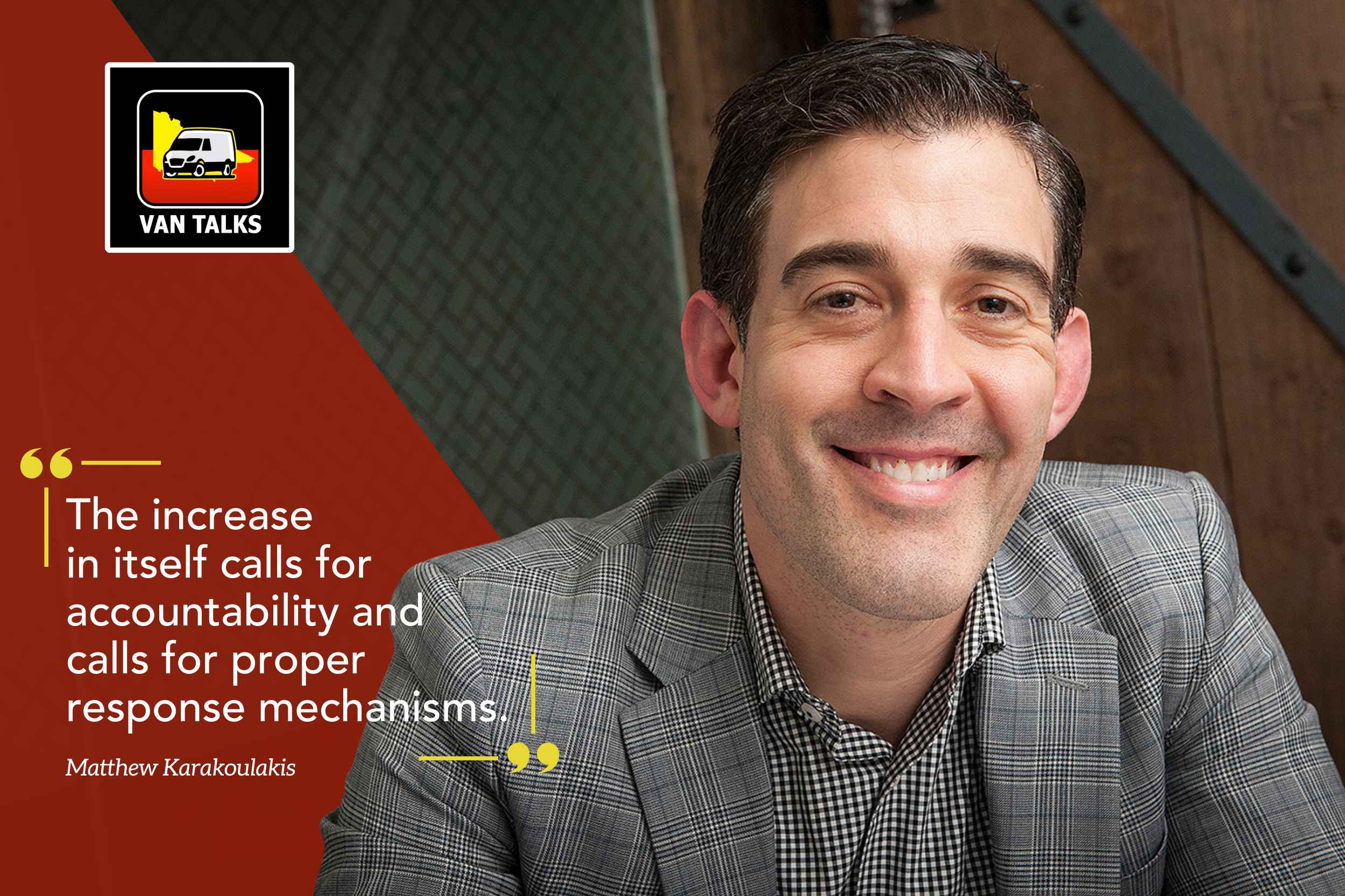
This is the same reason why I think that the increase, in itself, calls for accountability and it calls for proper response mechanisms. I think that it’s all well and good having the change, and in short, the change from 3 to 4% is a good thing. Just like the change from 50 to 51% is a good thing. The more the merrier, right? But the point that I’m really trying to say here is accountability.
And so, if we have the increase of 3% to 4% but we don’t have proper levels of accountability, we just have pie-in-the-sky type stuff, then it doesn’t make a massive difference.
So, the first thing I’ll say to this is we need proper levels of accountability. We also need to ensure that these targets are reached through authentic Aboriginal business engagements, not an increase in expenditure to blak-cladded entities.
So, I think that with proper levels of accountability, proper levels of transparency, proper respect for actually what’s going out there in community, then any increase can be a good thing. You have to also ask is 1% increase enough over a four or five-year period, or should this increase really be greater?
Charles: Well, that brings up another issue, and that is the business capability within this country of blak businesses. So, if we’re looking from a 2.5%, which it was recently, up to a 4%, it’s a substantial jump.
Do you think that the government is doing enough to support and build the blak business capability and infrastructure in this country? Because there’ll be a lot of demand, almost sort of enticing organisations to say, “Look, there’s opportunities there. Let’s just try and fly under the radar on this.”
Matthew: I think that in time, there can be some really amazing, positive outcomes through Aboriginal business overall. I mean, if we look at the way that business can positively impact Aboriginal families, can then positively impact kids going to schools and getting proper educations and going out there into the workforce and having family members to inspire them. I think that overall, the increase of expenditure can have positive impacts into Aboriginal businesses, positive impacts into families, and capability can be developed to deliver upon this.
Another thing that I would like to also say is I truly believe in the ethos and the principle of blak excellence. And I believe that in this spirit, yes, there is responsibility upon government, but I believe that there’s also responsibility upon Aboriginal business owners and Aboriginal business people, leaders in their own businesses, to really stand strong, deliver, and continue in this excellence in the spirit, in the development.
And I think that through the positive, step-by-step approach that blak excellence embarks into, capability continuously gets developed. And I believe that there is the strength, the know-how, the desire, and overall the business acumen amongst amazing Aboriginal businesses to be able to deliver.
Charles: Yeah. Yeah, I hear what you’re saying and it is up to us as Aboriginal people to build our own capabilities. No doubt about that. We see it happening right around Australia, and so much of it is actually being supported by Traditional Owner groups and small organisations that are just given a break and given that opportunity, and certainly, we can only hope that this will be the case with this increase in percentage under the IPP.
One of the things we spoke about, must have been about 12 months ago when we last interviewed you on this program, Matthew, was the penalties that would potentially face these organisations that were truly disingenuous, and they were really… guilty of misleading conduct.
As a legal practitioner, what are your thoughts on the regulatory bodies? Do they have sufficient clout to investigate and penalise those organisations that engage in misleading conduct under this new policy or revised policy?
Matthew: I think that there is already legislative powers that government departments have that go beyond policy framework into legislated law. I think that this is one of the reasons why often places like Supply Nation will get a tough wrap because they’re sometimes used as scapegoats for responsibility and accountability, and almost like toothless tigers without having the proper level of legislative power to really enforce legal change and the penalties that really need to accompany situations of blak cladding.
I think that on a positive note, there has been some steps that have been taken. So, for example, one of the cases that I recently posted about on LinkedIn was to do with the ACBF funeral plans and Newport case. And in that particular case, the Federal Court ordered that there was misrepresentation in terms of the insurance company presenting itself as being Aboriginal owned when it wasn’t. And a $3.5 million penalty was imposed.
This came about because of appropriate government intervention, appropriate steps having been taken by ASIC in terms of imposing the legislated requirements. So, the bottom line is, in addressing blak cladding, the current existing government entities, places like ASIC and ACCC from that commercial perspective… I don’t do criminal law, but I think even places like federal police and other criminal-based entities probably also would have powers.
I think that really it’s about governments putting their hands up and saying, “You know what, we’re going to do something about this,” using the powerful laws that are already there and stepping forwards.
With that in mind, there’s also a case… for respect of those people that were involved, I’m not going to name the particular case because I don’t have permission from the Aboriginal business leader in that case. But there was a case that actually settled, but in the process, there were some decisions that were made and some publicly available decisions that specifically refer to the term “blak cladding” in the context that’s known by the Latin phrase of obiter dictum, the non-central themes of the case but that were important to determining the judgment. And those sorts of comments and lines of thinking, when made in cases, when courts look at these kinds of new concepts in passing through judgments, they can sometimes be then picked up upon by legislation, in time, according to the proper processes.
But what I’m really saying here is there’s been obiter dictum referring to blak cladding. And beyond the existing, currently existing government powers, there could also be specific laws legislating against blak cladding with blak cladding being a proper legal principle. But time will tell on that.
Charles: Yeah, well this is something that you did mention last time we spoke. But you also made mention of Supply Nation, and I do want to just look at Supply Nation and ORIC and other state-based Indigenous chambers of commerce.
I mean, how effective, from your perspective, are the audit processes for those organisations when it comes to verifying actual control by First Nations? Because this is the first port of call for a lot of organisations who are looking to engage with a First Nations business: Are they Supply Nation registered? Are they ORIC registered? Are they on the Kinaway Chamber of Commerce list of approved businesses? So, let’s just look at, from your perspective, the audit processes of some of those organisations.
Matthew: The first downfall of these processes is the reliance and weight that government and corporate teams, and also people out there in community, place on the existence of a particular business being on the register. Sometimes that’s taken as being the be-all and end-all. “Oh, they’re listed with a state chamber so they must be an Aboriginal business.” Or, “They’re listed with Supply Nation so they must be an Aboriginal business.” I think in an ideal world, it would be fantastic if there could be that point of call and that level of 100% guaranteed reliability.
But when you know something isn’t right, and you keep treating it as if it is 100% accurate, then you’re probably making a mistake in terms of that level of reliance that you’re placing.
So, there is that level of responsibility that I think goes into decision-makers’ mindsets. With this in mind, there’s also instances of blak-cladded entities slipping through the cracks. There’s instances of perhaps state chambers and Supply Nation not having done their job perfectly. I don’t really know what happens behind those doors because I’ve never worked directly as an employee or anything like that at a place like Supply Nation or a state chamber.
A lot of the people working in those places, I think, do have the right, proper intentions. Are there processes not treated as seriously as what they should be, or is there the element of human error? I don’t really know, but those mistakes do happen.
I’ve heard of an instance, as an example; I was working on a matter that we had to address in a pretty serious way where an entity had been listed as being an Aboriginal business only because it had an Aboriginal director and shareholder that owned 51% of the company. And so was able to then say, “Yep, we’re an Aboriginal business.”
But then when attempts were made to try and reach out to this Aboriginal business owner, this person couldn’t be reached. Followed by another attempt, followed by another attempt. And then eventually they were reached, and it was found out that this was a man living in a remote Northern Territory who had signed some papers to be listed as the director and shareholder, not having any input in the company at all, not receiving any benefit, not having any capability, fulfillment, any capacity, deliverables, or anything at all to do with this particular company. He was just an Aboriginal man named on a piece of paper. That was a shocking instance.
Sadly, I think that’s probably not the only occasion where something like this has happened. So, overall, these mechanisms need to be made better. Overall, the checks and balances need to be made greater. And overall, we need to see government and corporate procurement teams with better, stronger, more powerful ways of determining and making decisions when working with Aboriginal businesses in all the appropriate, proper, truthful, genuine ways.
Charles: Let’s flip the coin then, Matthew—and we’re just about to run out of time, but I do want to ask you this all-important question—because we know that there are organisations that use purely symbolic reconciliation action plans alongside IPP contracts to boost their public image. There’s no secret to that.
Do you have any thoughts, though, on how First Nations businesses themselves can more readily identify those genuine corporate and local government partners who are really committed to economic self-determination?
Matthew: Absolutely, Uncle Charles. I think this comes down to relationship. I think that through building relationships and understanding who is on the other side of the engagement, who are the people that are making decisions within these corporate and government teams, and making decisions based on the values being in alignment, not merely on broken promises that are set out in documentation like reconciliation action plans.
I think that business is about people, and I think that as Aboriginal people, we understand relationships very well. We understand connecting very well. And I think that it’s implementing those community-based values and really being able to reach out, connect with people within those government and corporate procurement teams, and ensuring that those proper, authentic relationships are developed. So that way, there can be those collaborations with companies and government organisations that business leaders within Aboriginal business really want to be working with.
I’ve heard of instances where Aboriginal business people have been asked to respond to requests for tenders or provide a whole heap of documentation, going into potential subcontractor arrangements that can be very time-consuming and, in fact, exploitative of private information in some cases as well, to then end up nowhere.
And I think that there also should be a level of responsibility upon people in developing relationships and ensuring that requests, communications, discussions regarding collaborations are all authentic, are all done properly in win-win basis terms. And this also does call for proper respect, appreciation for the blak excellence that’s brought through authentic, genuine Aboriginal business into these engagements as well.
Charles: Well, Matthew, we’ve run out of time unfortunately. We will be catching up again in less than 12 months’ time, because I’ll be interested in seeing, from your perspective, what changes these modifications to the Indigenous Procurement Policy are actually making on the ground as you see it. So, Matthew Karakoulakis from AMK Law, thanks for your time.
Matthew: Thank you for your time as well, Uncle Charles, and I look forward to having our yarn where we flip our roles and change our seats, and when you’re coming onto the Rolling Through Negotiations podcast where I can ask you some pretty amazing questions about the work you do out there in community as well. So, I always love connecting with you and thanks for the yarn.
Charles: Cheers, brother.
For Radio Play:
1 - Click the Download Audio button
2 - The audio file will commence automatic play in your browser
3 - Confirm this is the file you want to use in your program
4 - Once confirmed, click the vertical elipses (3 dots) and select download
CONTACT US VIA SMS
Get in contact with us via our dedicated SMS line:
0493 222 836
12 October 2026
Start learning about First Nations cultures without the fear of offending
5 October 2026
The revival of cultural burning practices to remediate Country and help mitigate disasters
1 October 2026
Implementing First Nations knowledge to heal country
28 September 2026
It’s time for Australia to acknowledge historic atrocities
24 September 2026

0 Comments