
Media leader urges all Australians to engage with Blak media
National Indigenous Times COO Alexander Wolf discusses expanding into Victoria, combatting online misinformation, protecting First Nations journalists, and why mainstream engagement with Blak media is vital for community self-determination.
Posted by: Karina Wells
Published: 17 September 2026
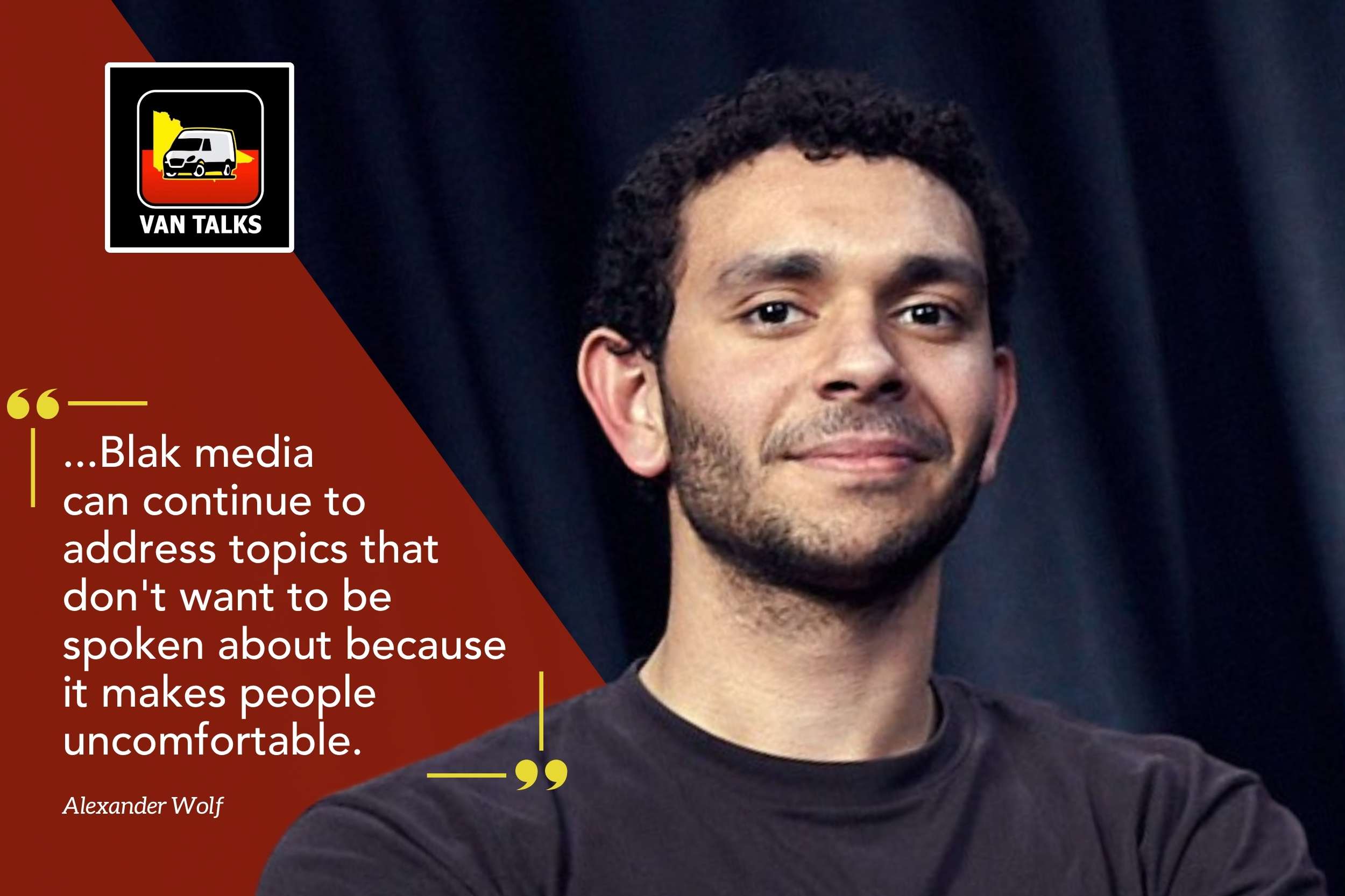
National Indigenous Times (NIT) has expanded its presence into Victoria to cover the state’s progressive First Nations movements in real time.
Chief Operating Officer Alexander Wolf recently relocated from Western Australia to establish a permanent operational base in Naarm.
“I think we’re entering a very tricky spot politically,” Alexander said.
“For us to see everything happening in real time on a progressive level… seemed like a no-brainer for us to really have a base operations out of here.”
The publication aims to document key developments, including the Treaty process, while strengthening relationships with local Aboriginal corporations and universities.
Alexander emphasised the critical role young First Nations people play in driving community awareness and combating online misinformation.
“The amount of misinformation that was going around during that time… affected me deeply,” Alexander said, referring to the 2023 referendum.
He noted that Blak media outlets carry a distinct responsibility to provide factual, grounded reporting that uplifts communities.
“The obligation that Blak media companies have is just to provide the facts of everything,” Alexander said.
“To really lay a groundwork and a foundation in which not only is there a level of accountability, but a level of uplifting.”
Addressing the racism and online abuse targeted at First Nations journalists remains an ongoing challenge for the organisation.
Alexander stressed that mainstream audiences also share a responsibility to engage meaningfully with independent First Nations reporting.
“There’s just this willingness to really get a message out there and really empower our people,” Alexander said.
National Indigenous Times will celebrate its 25th anniversary next year as it continues expanding its national footprint.
Charles Pakana: As we continue our series of interviews with leaders in First Nations media, we’re very fortunate to be joined today by the Chief Operating Officer of National Indigenous Times, Alexander Wolf. Alexander, thank you so much indeed for joining me on the program today.
Alexander Wolf: Thank you very much for having me, Charles.
Charles: Alexander, you are a recent arrival in Victoria, having come across from Western Australia. What was the main reason for coming across here in that position and building up, it seems, the footprint of National Indigenous Times in this state?
Alexander: Well, I think we can both agree, Charles, that at this point and stage of the country, I think we’re entering a very tricky spot politically.
So over in WA, for us to see everything happening in real time on a progressive level that’s happening over in the eastern states—specifically Victoria—seemed like a no-brainer for us to really have a base of operations out of here and really start to have feet on the ground and get a rapport going with a lot of the Aboriginal corporations and universities and things like that over here.
Charles: So what’s the main, I suppose, editorial goal over here? Obviously, we’ve got Treaty; we’ve just come off the Yoorrook Justice Commission, which went for four years, Australia’s longest-going royal commission. What are some of the editorial focuses that you’re looking to really get down on?
Alexander: Overall, I think just to really show the level of progressiveness that’s happening over in Victoria and the movement that’s happening in real time—whether that comes at a political level, a corporate level—but just to see how it’s all unfolding and the willingness of change that’s happening from a lot of mob around here and a lot of the institutions that are really pushing that message. So as long as we can have a foot in the door with that and really get to know these institutions that are really pushing that message, that’s our goal, editorially.
Charles: What about staff-wise? Now, I know I’m sort of probably scratching the surface where I shouldn’t scratch, but I want to regardless. I believe you’ve already got two journalists that work across Victoria. Are you looking to build that presence?
Alexander: I think we are. I think, you know, I never want to say never when it comes to that sort of thing, and we are always hungry for new journalists, even on a contributing level. I think that’s why another big part of us really having something more permanent out of here, so we can build these relationships with Indigenous student faculties at universities, so we can really get an insight into the people who want to contribute on an editorial level and put that out on a national level.
So for us, yeah, we would love to really expand that, and I think if we can get a good rapport going with a lot of these organisations, that opens the door for us and for them to really get a message out there.
Charles: Now, you made mention of faculties and universities then, and before we pressed the record button on this interview, we were talking about the importance of youth, both in the media and within the general movements across the state and, indeed, the country. So, as a youngish man yourself, just what is your perspective on youth playing an important part in promoting First Nations awareness in the broader community and also the causes?
Alexander: You know, to answer that question, I would also like to think of National Indigenous Times as a real champion of the people when it comes to the stories that we cover. We work with a lot of Aboriginal corporations, and especially rurally, their struggle with a lot of things is with youth.
And especially if you look at the referendum in 2023, the amount of misinformation that was going around during that time, and the way that affected the youth—and me being a young Aboriginal man, that affected me deeply.
So, I think the way it plays into the youth is by just making sure that information is there for them. And I think telling a story that could be at the very top of the pile, or something as grounded as, you know, a night space in Fitzroy Crossing.
So, to have those two levels, it provides information for the youth, which not only can benefit them in the future for a certain path that they want to take in any sort of career, but to also just have that simple point of education to be more proud of who they are and be more aware of everything that’s happening in the country.
Charles: You mentioned misinformation, and we can’t let that one go through to the keeper without addressing that, and probably addressing it in a degree of detail. Just what role do you see that National Indigenous Times, NIT, and other Blak media outlets have in dispelling or at least dismantling some of the growing amounts of misinformation and disinformation that exist out there in Australia?
Alexander: I mentioned earlier, we’re in a tricky position politically for the country. There is always a rhetoric whenever we enter these tricky positions, and especially when the referendum rolled around, that information was pushed out there, and people were believing it. And to me, personally, that’s a scary thing for the country, and especially for mob, and especially for young mob.
So, I think the role that and the obligation that Blak media companies have is just to provide the facts of everything, to really lay a groundwork and a foundation in which not only is there a level of accountability, but a level of uplifting—really uplifting, especially for people like myself.
So that’s what I think the role we have to play is, and especially as we move forward. You know, there are people in very high positions who are preaching very scary things.
Charles: You can name names; that’s okay.
Alexander: Yeah, yeah, I know. I know. I want to keep it a clean fight for now.
[Both Laughing]
Alexander: But, yeah, people are in positions where they’re saying scary things, and they don’t even sit in parliament. Sometimes they sit behind a desk recording themselves and wanting to inflict pain on us. And it’s terrifying that we now live in a certain point in time where that is forgotten about by tomorrow.
So I think that’s where organisations like NIT and the Koori Mail and everything else really step in to really make people have empathy for these sort of things.
Charles: A lot of what’s required in order to maintain that approach is building trust within the various communities. We are not, regardless of what state or territory you’re operating from, one homogeneous community, as people seem to think quite often. But trust does need to be built up, and especially with the media, whether it’s Blak media, white media, or multicultural media, no one’s really going to talk to a journalist or to a reporter unless there is that degree of trust. Just how difficult is that for National Indigenous Times given that you have an Australia-wide remit?
Alexander: You know, it is difficult for us, and I think there is a certain reputation that you need to build before you even approach these communities and these community initiatives. And we’re lucky enough to sit in a position where we really take time to listen and give perspective on these stories from two sides of that coin and really let the reader decide.
But I think, when it comes to us approaching Aboriginal corporations that spearhead these community initiatives, at the end of the day, they just want certain issues to be addressed and to be put out there on a national level. But, you know, it’s really about just listening.
In the Kimberley, in Fitzroy Crossing, for a long time there were a lot of problems there, and that wasn’t being addressed by the state government and certain organisations. So when we approached them and spoke to them about some of the issues they had going on, the list was long. So for us to really sit down, be with them, and walk through these stories, and really address some of the issues that they wanted to bring up, to me, that’s what a lot of them want—to be heard.
Charles: How do you balance, editorially, the challenges of presenting news as it happens, because that’s an important part of it, and then taking time to sit back, reflect on all the misinformation that has gone on, and then provide educational pieces? Because that’s a luxury in order to do that when the main focus is on what’s happening at a local, state, and federal level.
Alexander: I think… we just stick to the entire facts of everything. I think not making the reader decide on what they should think about a certain issue. I think that’s something our journalists do an incredible job of, especially when it comes to politics. You know, there could be something hateful that comes out from a certain party, and then for us just to continue to tell these factual sort of things, it really gives us a moment to calibrate what NIT is truly about. And we’re lucky enough to have a reputation now where the stories are truth-telling, and they really provide those grounded sort of points.
Charles: Now, NIT is, if I look at this—I haven’t got it in my notes here, but I believe it’s 24 years this year, and 25 years next year. What can we hope to see in 2027 to mark 25 years of National Indigenous Times?
Alexander: I think just to continue to celebrate mob and continue to celebrate those good stories. 10 years ago, you couldn’t really find any good stories about an Aboriginal business owner succeeding. For us now, we really crossed that threshold of what more can be done, not only for community, but for the view of Aboriginal people.
For us to really come up on 25 years, it proves that blak media can still thrive. And blak media can continue to address topics that don’t want to be spoken about because it makes people uncomfortable. But for us to continue to tell those stories at a grounded sort of level and continue to push a certain message out to the wider public, to me—and I’d like to think I speak for the other members of the team—but that’s the only thing, to us, that matters.
Charles: Let’s look now at the dark side of things, and, of course, that peaked during 2023, and that’s all the hate that comes the way of Blak media. And I assume—I know that you would have received that, because if we received it, especially in 2023, you guys would have received it in spades. How do you go about managing that and managing the welfare of your journalists and staff who will be constantly barraged by this crap?
Alexander: It’s incredibly difficult. For our social media and marketing team to really read through these comments, especially in 2023, and the reaction to some of our stories… people can be as strong as they like, but they’re lying if they say it’s not hurting them. Because these people are saying disgusting things, and they’re wishing ill upon our people, and it’s incredibly, incredibly hurtful. And it almost makes you see a side where you want to resent certain things, but you can’t.
So for us, looking after the welfare of our journalists when these pieces are put up is incredibly important to us. One of our—she’s not with us anymore… in terms of not being employed by NIT anymore, but Leanne Dolby, she recently got in front of the racism inquiry with our managing director, Reece Harley. She addressed some of the disgusting things that were said to her and the impact that it’s had on her, which… It’s terrible. It’s a terrible thing.
So to really navigate that point in the dark is difficult, but at the same time, it reinforces the idea that the work that we’re doing is on the right track. And it reinforces the idea that, like I said before, Blak media is going to continue to thrive. It’s going to continue to survive, and the people who leave these disgusting sort of comments and have these disgusting perspectives, they will come out of the woodwork.
Charles: They will be held to account one day; one can only hope. What about some of the other key challenges being faced by NIT as an organisation and on the ground? What are some of those key ones that you, as COO, are constantly hearing about and having to address?
Alexander: I think one of the challenges that we do have is the unpredictable nature of which we see everything heading on a political scale. On one hand, in the 2023 referendum, a lot of wind was taken out of all mob throughout the country. And then for the federal election to happen, it seemed to me that there was still a bit of empathy left in the air.
So for us to really try to read the play, it’s becoming more and more unpredictable. Because people are starting to sway towards a political party like One Nation, and you think to yourself, “How? How is this happening? In what world are people starting to become more confident in being hateful?” And I don’t want to say that One Nation’s completely hateful, but the rhetoric that they put out sometimes is quite scary.
Charles: Does that motivate the team or does it scare the team? How does it impact…?
Alexander: It does all those sorts of things, but I think, most of all, like I said before, they know they’re on the right track, and they know they’re doing a good thing. So for us, it is scary when certain groups really get a spotlight that have a damaging reputation, but as long as we can continue to cover the cold, hard facts about these cold, hard situations, at least we know the message is getting out there. And it can be hard, but it’s necessary.
Charles: It can be bloody tough, without a shadow of a doubt! What about collaboration with other Blak media? Because we have some really—I’ve got to say, over the past 20-plus years, there’s been some amazing success stories, and we’ve highlighted a lot of those here on the program. NITV, of course, with SBS; the Koori Mail, you made mention of them before; various community radio stations as well. What do you see the role of—or the importance, I should say—of collaboration between Blak media outlets going forward?
Alexander: I think it’s incredibly important. You know, you and I spoke about it before we started. I think because we are in such a tricky position right now in this country, I think it’s needed more than ever that Blak media really work together to reach that end goal, because we all have the same destination, but we all have different ways on how to get there. Ours is different than the Koori Mail‘s, and the Koori Mail‘s is different to ours.
So when you look at all these stories, whether it’s from us, or from the Koori Mail, or from NITV, they all cover a different level of things, but you’ll notice the temperature is the same. It’s either mob trying to make a difference or good stories about mob. And I think you didn’t see that 10 years ago, but now you’re seeing a push for it more than ever. And, you know, you and I spoke about it before, how there’s just this willingness to really get a message out there and really empower our people, and really push just a sense of being ever so comfortable with wanting to see your people succeed.
There is no better time than now, in my opinion, to really get that out there. And that goes back to your point before on youth. I think youth play a very big part in that. But to answer your question, yeah, I think Blak media is—it’s more important than ever, and I think there’s a real accountability element to it now.
Charles: Okay, let’s wind up with this one question, and that is—I’m going to base it on an observation that I’ve made over the years, and that is that so many non-Aboriginal people regard Blak media as, “That’s for the Aboriginal and Torres Strait Islanders.” What’s your comment on that? Your face says it all!
[Both Laughing]
Alexander: Well, it’s like… come on. What’s the point of asking for a seat at the table anymore?
I mean, the media is the media, and the news is the news, and it just so happens that most of the news you see sometimes is the hardship that mob are enduring—
Charles: The deficit model.
Alexander: Yeah. Why is it up to Blak media to cover these stories when they’re ever so prevalent in our country?
And it goes back to my topic about empathy and accountability. There needs to be now this serious look at these serious problems. And if mainstream media isn’t covering things like this, then that is a part of the problem.
Charles: And it seems also to be a responsibility of all Australians to start paying attention to Blak media, because if that’s where the truth is, if that’s where we also break away from the deficit model as well, then it’s on all Australians to start diving into this.
Alexander: It is, definitely. And I think there’s almost an obligation these days to really not ignore these issues anymore. You can see the people who try to make excuses or justifications about not paying attention to these issues, and you can see why they have a thought process the way they do that just… it doesn’t make sense.
Charles: Alexander Wolf, thanks for your time, brother.
Alexander: Thank you very much for having me.
For Radio Play:
1 - Click the Download Audio button
2 - The audio file will commence automatic play in your browser
3 - Confirm this is the file you want to use in your program
4 - Once confirmed, click the vertical elipses (3 dots) and select download
CONTACT US VIA SMS
Get in contact with us via our dedicated SMS line:
0493 222 836

11 September 2026
First Nations creatives given safe spaces through Blak and Bright
4 September 2026
Ipsos Indigenous Issues 2026 report reveals shift in public focus
2 September 2026
Long term economic independence at the heart of Victoria Treaty process
29 August 2026
Marcia Langton talks about truth-telling, culture in education…and racism
24 August 2026

0 Comments