
It’s time Australia recognised a shared history of often brutal “settlement” and expansion
Filmmaker Rachel Perkins unpacks Australia’s brutal frontier wars, revealing how a foundational conflict over land and resources shaped the nation. She discusses historical archives, government complicity, and the path toward national truth-telling.
Posted by: Charles
Published: 15 October 2026
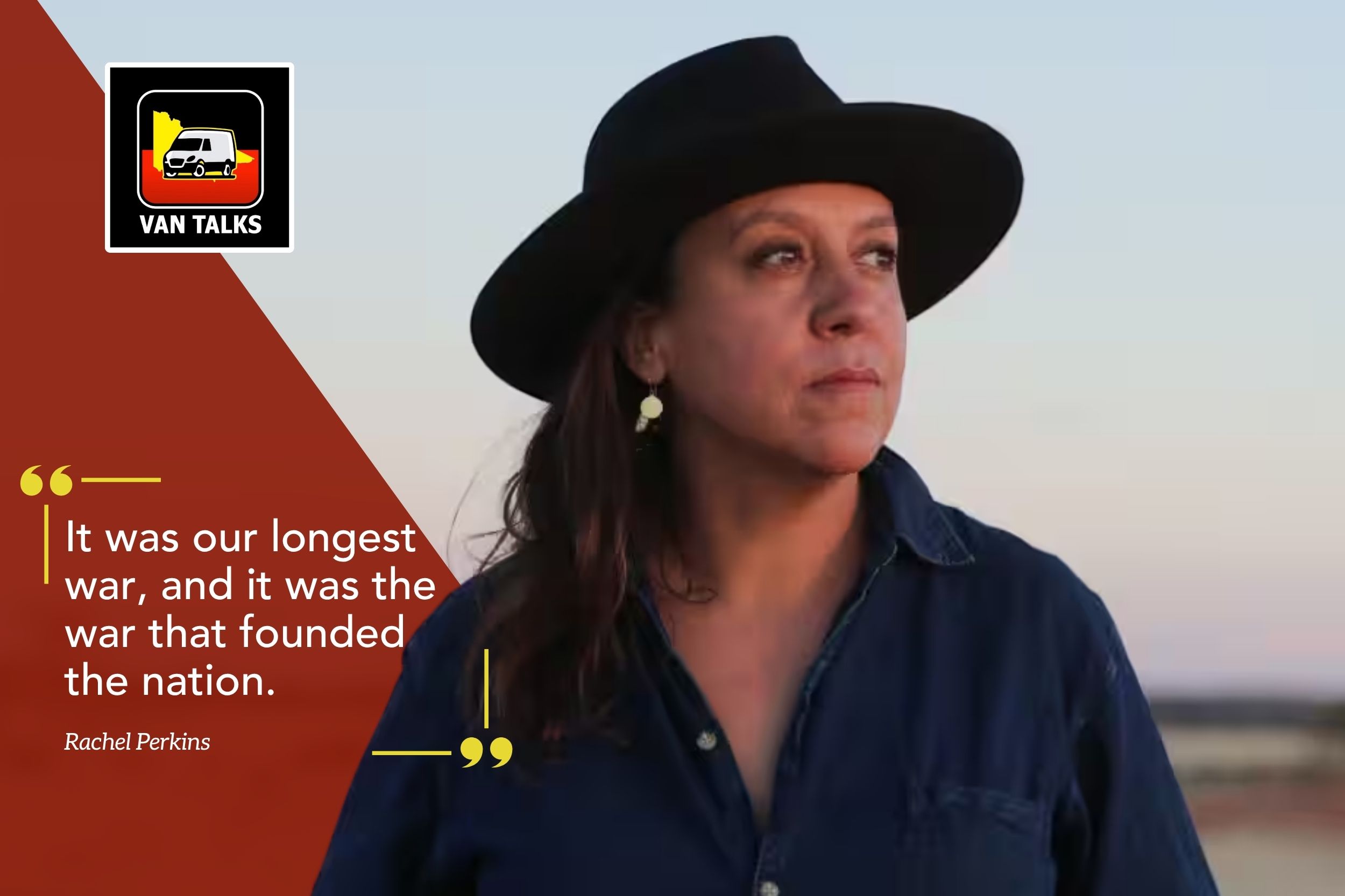
Australia’s foundational narrative of peaceful settlement is a myth that falls far short of reality. For decades, the brutal truth of the country’s Frontier Wars has been pushed into the shadows.
Renowned filmmaker and storyteller Rachel Perkins has spent years working to bring this hidden history into the open. Spanning generations and covering the entire continent, the frontier conflict was our longest war.
“It was our longest war, and it was the war that founded the nation,” Perkins said.
The scale was epic. It was fought over land, water, and resources. Indigenous populations resisted waves of settlers, troopers, and military-style campaigns.
While colonial governments often paid lip service to the rule of law, systemic violence went largely unchecked. Records were sparse, and in places like Queensland, critical Native Police archives vanished.
Yet, a modern renaissance in historical research is changing the landscape. Scholars, archives, and massacre maps are confronting the past.
Resistance to these truths still exists, often driven by a fear of blemish or accountability. But understanding the shared history is essential for a mature nation.
Curriculums are slowly shifting. New South Wales has introduced mandatory frontier history units, and other states are weighing similar paths.
Rachel believes everyday Australians can drive change through education and conversation. Word of mouth remains a powerful tool.
“Become an advocate if you’re interested, educate yourself first, and then… share these stories with others,” she said.
Charles Pakana: For far too long, the foundational story of Australia has been told and taught through a lens of peaceful settlement. It’s a narrative that falls far short of reality. Joining me on the program today is one of Australia’s most influential storytellers and filmmakers, Arrernte and Kalkadoon woman Rachel Perkins.
Through her landmark work, such as The Australian Wars, she’s done much of the hard work required to drag this country’s hidden history out into the open. An understanding of this shared history isn’t just an academic exercise, it is essential to how we move forward together as a mature nation. Rachel, welcome to the program.
Rachel Perkins: Thank you for having me on, Charles.
Charles: Rachel, I’d like to kick it off by gaining an understanding of the scope of the frontier wars, because they weren’t isolated when you consider the Hawkesbury and Nepean wars in New South Wales in the 1790s and 18 up to 1816, the Black War in Tasmania, the Bathurst war of 1824, and the Queensland conflicts. What actually was the scope if we can get an understanding of that?
Rachel: Well, we’ll never know the number of lives. We know that the number of non-Indigenous people who were killed on the frontier, but of course, people didn’t keep concise records and often those memories were hidden or not talked about in the open. So, we’ll never know the numbers in the way that we know and we’re counting those Australians who died in, you know, the First World War, Second World War, etc., other wars. So, it’s not a precise way to imagine it.
But in terms of scale, it went for a very long period. So, as you said, it began surrounding Sydney and then expanded out as settlers occupied more and more country. So, it happened per territory, as Indigenous people encountered settlers, often there were initial friendships and trade and all of those sorts of relationships until it became a battle over resources and who would actually control the land.
So, it spread over a period from, say, 1789 through to the 1920s and 30s up in the northernmost reaches of the Kimberley and the Northern Territory. So, it was over a very long period and importantly, over the whole continent. So, in scale, in terms of time, the period that it covered, and in terms of the geography it covered, it was very significant.
But I think, as Henry Reynolds says, it was a very significant war, not because of how it was fought in terms of perhaps the numbers and the style of fighting that we’re more familiar with, but what it was fought over, which was the continent.
Charles: So it was resources, wasn’t it? Land, water.
Rachel: Yes, absolutely, and often women as well, access to women and children. Those were often triggers for the violence. So, in scale, it was epic. It was our longest war, and it was the war that founded the nation.
Charles: I’d like to chat with you a bit about the involvement of government, because a lot of the naysayers out there will simply lay claim to the fact, or the misinformation, that it was simply a series of skirmishes over one or two particular issues. But there was a degree of sanctioning from governments, and this I believe was particularly in Tasmania and in Queensland. Can we talk a bit about that to gain some understanding?
Rachel: Yeah, look, it’s a complex discussion and often at times it feels like you’re in some sort of Monty Python movie because there’s all these sorts of contradictions. And it begins with the great contradiction that Aboriginal people were deemed by the Crown to be British subjects at the moment that the east coast of Australia was claimed.
Now, of course, Aboriginal people didn’t either consent to that or weren’t even aware of it. But that sort of basis of saying, “Oh, they were British subjects, so therefore, you cannot have a war between British subjects, Aboriginal people, and settlers, or mounted police, or military units.” You cannot call that a war.
So, I mean, that is the great contradiction that underpins people who try and use that logic to say that it wasn’t war.
Charles: I’m interested to understand what would they call it then? A massacre is a massacre by anyone’s terms, surely. Or would we just…
Rachel: Well, this is this thing that, I mean, Henry Reynolds again, I refer to, often because he was one of the foundational writers on this. And he says, “Well, if you don’t call it a war, then they’re just murderers.”
Charles: Yeah.
Rachel: So, but from the Aboriginal point of view, of course, and I can see it from that point of view, and so can many other people who aren’t Aboriginal—I have mixed heritage, I’ve actually got Irish heritage as a result of my great-grandmother surviving a massacre, but anyway, that’s another story.
But from the Aboriginal point of view, of course, how could you not see it as anything but a war if people are coming into your country, taking over your land, often taking your women, sometimes using your children as slave labor, and you’re fighting for your very existence and often defending yourself against significant military-style campaigns against you?
I mean, that is what we call warlike operations against Aboriginal people, which they resisted, as we know, right across the continent.
Charles: Let’s look at how it’s accepted now across Australia, because along with your works, there’s really a strong body of work that demonstrates the truth of Australia’s history since 1788. You mentioned Henry Reynolds, one of the great innovators when it comes to researching this. There’s John Connors, Raymond Evans, and I think notably the University of Newcastle’s Colonial Frontier Massacre map.
So, when you look at the public response to the truth, where do you see the old narrative still clinging on, and where is it decisively giving way to the truth?
Rachel: Well, I think there was, in the 90s, people—your listeners might remember the sort of what was called the History Wars. And Keith Windshuttle wrote a book called The Fabrication of Aboriginal History. And actually that got a lot of attention, it got him a spot on the ABC board and a few other things.
But actually what it did was spawn a whole series of next-generation historians to go back to the archives and surface these records that reveal the extent of the violence. So, actually, there’s been a renaissance, I think, in history writing.
You’ve mentioned some of them. It’s not a huge amount of scholars because most of this work is done voluntarily, people spending decades, often their lifetimes, going into archives revealing this material and representing back to us. But there is a significant body of work, particularly in Tasmania, and Queensland, and New South Wales. Other areas, there needs to be more work done, but the archives, they are significant.
And I think what’s important for people to understand is that these are archives that have been created by non-Indigenous people. So, people writing letters to the paper at the time or their relations over in England, or keeping diaries, or newspapers, and these are not constructed by Aboriginal people. These are constructed by non-Indigenous witnesses at the time.
Charles: And what about the records that were kept apparently quite fastidiously up in Queensland?
Rachel: Yes, there’s a very significant body of work in Queensland. But unfortunately, inexplicably, the substantial records from the Native Police have disappeared. Now, we don’t know whether that was intentional or not because the Native Police forces, we know, went for more than five decades. And the men in charge of the native police units were required to write records of their daily activities, but the bulk of that is gone. It would have been a substantial archive.
But we have enough to put together where they were. And we also in recent times, there’s been great work looking at the archaeological record and putting that together with photographic records and other government records, that we do also have the inquiries in Queensland into the native police. There were two inquiries and they were both very explicit in terms of what was happening there with the native police, what dispersal actually meant, and how the native police was being used to support the continued expansion of pastoralists into Queensland, which was one of the fastest occupied areas of land ever in the world. It was just a massively rapid expansion into Queensland.
Charles: How many years are we talking about?
Rachel: It’s sort of really from around the 1850s, because there was a small convict outpost up near Brisbane for quite a while before it expanded significantly. So, it didn’t accelerate initially, but once Queensland separated in the 1850s, then it really took off. With really within a 30-year period, most of the Queensland was taken up, and the gold rush up in Cape York then assisted in that with thousands and thousands of men seeking their fortunes.
So, Queensland was a particularly violent frontier, also because the weaponry had really accelerated. So, it wasn’t just single shots anymore, they had repeater rifles and you can see, as Lyndall Ryan outlines in her work on the massacre map—the one that you mentioned, Newcastle University—that the numbers significantly spike as we get later into the period of these rifles becoming more sophisticated.
So, her map quantifies—massacre must be six people or more of undefended people killed, either non-Indigenous or Indigenous. But once you get into the later 1860s, 1870s, 1880s, you’re seeing sometimes hundreds—not all the time, but 50, 60, 70 people at a time—just because of the capacity for these repeater rifles and also the fact that people are now on horses and they can outrun, you know, Aboriginal people who used to have the advantage in their own country, but no longer.
Charles: What observations have you made over the years in your research and your work regarding government or governments’ involvement and even sanctioning of these wars and these conflicts?
Rachel: And as I said, in Queensland there were two inquiries, and it was very clear that the native police were doing significant damage to Indigenous people. But, you know, there was no decision to reduce them, or stop them, or control them. So, government was very aware. It was an open secret what was happening in Queensland.
Certainly where you see in other colonial governments—because it was the colonial government sort of responsible for the administration in their regions at that time—you see that there’s a lot of this sort of double-speak. So, “We must treat them as British subjects,” you know, that sort of language is being issued in notices from the governors.
But on the ground, we know that’s not happening. And then when an occurrence of someone is killed or something comes to the intention of the colonial administration, you find that they just never follow through with any sort of conviction. It gets to court, it’s thrown out, the jury is non-Indigenous settlers, they just throw it out.
And so, you know, we find very few rare examples of where massacres of Indigenous people are ever dealt with by the courts. I think the exception is the Myall Creek massacre in New South Wales, of course.
Charles: I just want to come back to a question I asked a bit earlier and that is around about where you see the old narrative still clinging on, but more importantly, where do you see this acceptance of this being a shared history being accepted?
Rachel: Look, I think more and more we are accepting that it was a violent settlement. And I think most people sort of agree and understand that it was. Of course, in these frontier situations, there’s always a mixture of experiences, you know. It’s not always violent. And so, in like Melbourne, in Naarm, where you are, it was relatively peaceful occupation of the country, but at the same time, you’ve then got the sort of civil rights movement, land rights movement that William Barak and Simon Wonga led to try and get some land there.
So, it was never not contested. The level of violence really depended on the environment and the circumstances, but I think that we are getting to the point now where modern Australia is accepting that it was violent, because of course back in the period, everyone knew it was violent. It was called a war by governors.
Governors often led, like in Western Australia, Governor Stirling led one of the largest massacres in Western Australia called the Battle of Pinjarra, which was basically a massacre, and he threatened to wipe out the Noongar. Back then, people knew what they were doing. They knew that Aboriginal people were resisting access to their land, and they knew that they were engaged in a very violent experience.
I think it was really towards Federation that we sort of constructed this myth that, you know, Australia was just a peaceful, fabulous settlement, and it was fabulous in many ways, but it was not the greatest experience for Indigenous people at the time.
Charles: Why do you think it’s so important that this shared history be really highlighted and introduced into the curriculum so that our young people and all Australians know exactly what happened?
Rachel: Well, I think there’s many reasons. I remember growing up as a child playing cowboys and Indians, I don’t know, did you?
Charles: Of course. Of course.
Rachel: So many of us did, right? That was a game we played, we learned it from Hollywood movies where you’d see the Native American people on horseback fighting, whoever it was, and or being killed by whoever it was.
That is part of the narrative of the establishment of the United States of America. Now, when I was at school, I didn’t learn anything about this frontier history. I just heard what happened in my own family history, that my great-grandmother was chained to a tree and raped. I knew that we were called the fighting Kalkadoon for some reason, I didn’t know why. My dad told me that they pushed Aboriginal people off the cliffs in Tasmania, so I had these shards of oral history, if you like, but I didn’t have the full picture.
So, I think it is important for Australians to just understand the history because they need to know that Aboriginal and Torres Strait Islander people have this historical burden that they are carrying of this truth that we are holding and that’s never really been acknowledged by the Australian people.
I mean, imagine if we decided we weren’t going to acknowledge the First World War, the Vietnam War, or those things. Like it’s just part of our story as Australia. So, this bizarre way of trying to pretend it didn’t happen, it’s just ridiculous. It’s defying your own intelligence, and it just shows that we’re maturing as a nation if we accept it.
I think that probably people are worried though that there’s going to be reparations and those sorts of things by Aboriginal people, and indeed that’s what land rights is about. Sure, acknowledging people’s connection to their country, that it existed before Europeans arrived and continues to exist, and I think that’s where you see some reluctance from more of the hardcore conservatives.
I mean, one other thing is I think, you know, veterans who we respect in our dialogue, and we don’t mean to take away anything from any theatre of war that any Australian has participated in and the sacrifice of their lives. Of course. But I think that there’s some reluctance, say, for people to acknowledge this frontier warfare alongside that other warfare, because I think they feel that it’s a blemish and they want to talk about Australians’ experience of war with some pride, and they view this violent period as a blemish on the Australian story, and in some ways it is.
Charles: Where have you seen that there is a glimmer of hope? And I know, of course, that there’s work being done at the Australian War Memorial under Uncle Michael Bell there, there’s a lot of work happening. Are there other areas, and I’m particularly looking at curriculums across the country, where this is starting to make its way in to the educational system?
Rachel: In New South Wales and it’s being introduced as a mandatory feature of the history curriculum next year, I think, 2027, so congratulations New South Wales. As part of the truth-telling process in Victoria, one of the recommendations is to introduce these stories into the curriculum in Victoria. That’s right. We’ll see how far that gets with the election coming up.
But I think there’s much hope that we will embrace this history. We’re seeing more and more monuments across Australia where these things occurred. We are seeing, you know, more books published on these subjects. I don’t think it’s something that Australians are widely embracing by any means, but I think that shows like yours and other things that we make to try and share this history is happening more and more, and I think we see that there is a demand for these stories from audiences who want to know more about their history.
Charles: Well, talking directly then to the audiences, what calls to action would you deliver to the individuals out there who want to know more, share with their family, share with their communities the truth of this country’s expansion?
Rachel: Yeah, well, I think that we can all do our part in small ways. The thing that we have to keep in mind is that the people in our circle, they trust us more than they do, you know, a journalist or newspaper or filmmaker, and if you decide that you are going to educate yourself on the subject, so you might read a book like one of Henry’s, or one from your local region or state—there’s plenty of books that have regional histories on this content—you could read that and then become an advocate and just tell your friends and your family, “Oh, did you know that this happened here or have you heard about that that happened here?” and just sort of spread the word, really.
I think that’s so important. Word of mouth is still our most compelling way that we get information and learn outside of the education system. So, I think just become an advocate if you’re interested, educate yourself first, and then, you know, without becoming an utter bore, you can keep share these stories with others, and that can be really powerful.
Charles: Rachel Perkins, thanks so much for your time.
Rachel: Pleasure.
For Radio Play:
1 - Click the Download Audio button
2 - The audio file will commence automatic play in your browser
3 - Confirm this is the file you want to use in your program
4 - Once confirmed, click the vertical elipses (3 dots) and select download
CONTACT US VIA SMS
Get in contact with us via our dedicated SMS line:
0493 222 836
12 October 2026
Start learning about First Nations cultures without the fear of offending
5 October 2026
The revival of cultural burning practices to remediate Country and help mitigate disasters
1 October 2026
Implementing First Nations knowledge to heal country
28 September 2026
It’s time for Australia to acknowledge historic atrocities
24 September 2026
0 Comments