
Yoorrook evidence and submissions being made open and available to the public
We catch up with Professor Peter Radoll and explore how the massive amount of Yoorrook evidence and submissions will never be relegated to sit on the shelf and gather dust.
Posted by: Charles
Published: 16 April 2026

Over four years, the Yoorrook Justice Commission gathered extensive evidence, including over 1,300 submissions and formal testimony from 250 witnesses.
Today, this vital record of Victoria’s true history is finding a permanent, accessible home at the State Library of Victoria.
Anaiwan man Dr Peter Radoll, who bears ultimate responsibility for housing the archive, explained why the library was selected.
“The idea was that the library had wonderful infrastructure… but also, one of the things that the Yoorrook Commissioners wanted was this information to be made public,” Peter said.
To protect Indigenous data sovereignty, an autonomous Aboriginal space outside the general state collection was created.
Governance is held entirely by First Nations representatives from the First Peoples’ Assembly of Victoria and the Victorian Indigenous Research Centre.
“There are four Aboriginal people… who take care of all the governance and all the decision-making over all of those materials,” Peter noted.
This marks a historic shift, as it is the first time a royal commission’s official public record is accessible through a public institution rather than locked away in state archives.
Community control remains central to the archive’s design, ensuring individuals maintain ownership over their personal evidence and testimonies.
“If someone wanted their submission to be withdrawn… that submission would be hidden from view, and then the governance committee then would decide,” Peter explained.
Currently, about 30 per cent of the digital archive is catalogued, with the remaining records actively being processed by the state government.
Educators across Victoria are already reaching out, eager to embed these primary, lived accounts of history directly into classroom curricula.
Beyond immediate educational value, the long-term vision focuses on creating lasting systemic and social change across sectors like healthcare, justice, and policing.
“When people are better informed, they just do a better job,” Peter said.
“Wouldn’t that be amazing if everyone knew what colonisation did… that there might be a rectification at some point.”
Victorians can now access the public archives directly via the State Library of Victoria website.
Charles Pakana: Over the course of four years, the Yoorrook Justice Commission delved into the true history of Victoria since colonisation. And during that period over 1,300 submissions were received from individuals, elders and organisations. Over 250 witnesses gave formal evidence and over 7,000 documents were produced by the state government. And the Commission itself engaged with approximately 9,000 First Peoples through over 400 separate events. So what happens with all that evidence that’s been collected by Yoorrook over that extended period? Well, today I speak with Anaiwan man, Dr. Peter Radoll, who’s borne ultimate responsibility for ensuring all that evidence finds a home in the State Library of Victoria. Peter, thank you so much indeed for joining the program today.
Peter Radoll: Thank you very much, Charles.
Charles: Peter, what was the rationale behind choosing the State Library of Victoria as home for the Yoorrook evidence and the submissions?
Peter: Yeah, well, the idea was that the library had wonderful infrastructure. It actually naturally takes care of archives and other material, both physical and digital material. They’re experts at this. But also one of the things that the Yoorrook Commissioners wanted was this information to be made public. And of course libraries are good at making things public.
Charles: What about cultural appropriateness with this? Because people look at the State Library of Victoria, recognise that it’s a state government run organisation – not necessarily the most culturally appropriate place, one would argue?
Peter: That is definitely a big consideration. When I did my consultation with the commissioners and others about how we should do this and go about actually ensuring that we had cultural governance, or control over the material, there were a couple of things we put in place. So one of them was to go to the State Library Board and request that we create an autonomous Aboriginal space outside the State Collection. So the State Library would take care of the materials and in custodianship for the community. So the community still owns the materials through the First People’s Assembly, but the State Library would all use all their materials, or expertise, to make sure that those materials were kept like any other material would be kept in the State Library.
Charles: I would assume then that if there is this First Nations specific space, as you’ve called it, then there has to be First Nations oversight. So how is that actually working and how will it work in the future and how can it be guaranteed to continue to work?
Peter: Again, very good question, Charles, because we do have- So the State Library now has an MOU with the State Library and the First People’s Assembly. There are two representatives from the Victorian Indigenous Research Centre, that’s the Aboriginal Centre that Aunty Maxine [Briggs] currently runs at the State Library Victoria. And then there are two representatives from the First People’s Assembly as well. So that autonomous Aboriginal space that’s outside the state collection, there are four Aboriginal people, two from the State Library, two from First People’s Assembly, who take care of all the governance and all the decision making over all of those materials.
Charles: So when you’re saying “decision making and governance”, does that include things such as what’s to be made accessible and by whom? And to whom I should say?
Peter: Exactly right. All of the submissions that you will see right now open on the website, they have got permission directly from the people who actually have said, “it’s okay to make that public.”
Charles: Sure.
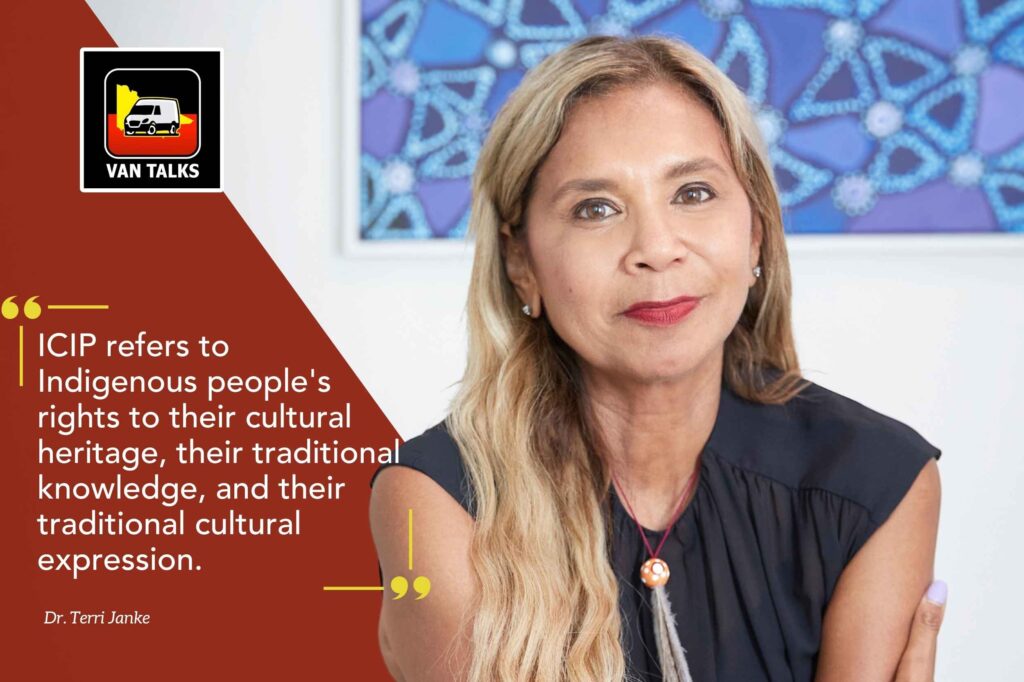
Peter: If you don’t want it to be public anymore – because there’s a concept called Indigenous Data Sovereignty and of course Indigenous Cultural Intellectual Property rights. So that is embedded in the system right now. So say, for example, if someone wanted their submission to be withdrawn, you can actually contact the library today and that would be hidden, that submission would be hidden from view and then the governance committee then would decide on – liaise with the person who wants it removed, will decide; does that evidence then be hidden forever, or is it given back to the community or the person who wants it back, or are they happy for some of that submission to be publicly available? So there are a lot of protocols put in place. It’s taken, you know, it’s taken 12 months to get all this done and there’s still a little bit more material to come still. So some of that material, so the library currently holds about 30% of the digital archive and the Department of Government Services is still currently cataloguing the other 70% of the digital.
Charles: So that includes, we know, the submissions and the evidence that was given at the hearings, but what about those 7,000 odd pages that were actually given to Yoorrook from the state government? Are they also being made public?
Peter: Yeah, so everything that was earmarked to be made public will be made public indefinitely. So there’s thousands and thousands of pages of material. A lot of those are digital pages still being catalogued. But yes, they’ll be made fully available to the public. And you have to remember too, Charles, one of the things quite unique about this, not only is it the first truth-telling, comprehensive truth-telling, which is significant in itself, it’s the very first time that a Royal Commission has had what they call the official public record made public through a public institution like this. Normally, a Royal Commission would go to P.R.O.V, the Public Records Office of Victoria, and then you would have to bring your ID, and you would sit down on one PC and that sort of thing.
Charles: Yeah.
Peter: But this one is completely accessible, so everyone can actually – look, it doesn’t mean that it’s available for everyone to download and reuse, because that’s not the idea of the material necessarily. On a personal level, you can use it, but if you want to use it for research or for other aspects, you’re going to use it for other elements other than for personal use. Then again, there’s a protocol where you would have to go through the governance committee to say, “we want it for this, want it for that, and what are the restrictions, or what are the restrictions placed on the material from a governance perspective?”
Charles: And we’ll definitely dive into the fair use of the content a little bit later on. What I’m really keen to explore right now is; you’ve previously suggested that truth telling often gets stuck in reports and hearings. Now, in your view, why does so much information typically die on the shelf of a government library or a Royal Commission report? What are the main problems?
Peter: Well, even though everyone likes a good report, but politics moves on so quickly.
Charles: Is there such a thing as a good report, really? I mean, come on.
Peter: There have been a lot of Royal Commissions. Look, my perspective is that politics have a very short lifespan. People get interested in things, and then they move on very quickly because there’s other priorities. But what I really, really love about the vision that the Yoorrook Commission has put together was this open, official public record that everybody gets access to in perpetuity. And the good thing about this is it’s not controlled by the state government, it’s not controlled by the library, it’s controlled by the Aboriginal community, for the Aboriginal community. And only Traditional Owners are actually making those decisions. Victorian Traditional Owners are making those decisions. There’s no outsider, it’s just Aboriginal Victorian people making the decision on who gets access and why and how.
Charles: Let’s talk about, now, the use of this by the education system. Because one of the things that I discussed with you prior to this interview was something in the letters patent which always interested me; way back in 2021, when Yoorrook Commission was formed, was that part of its requirement was to provide information that would essentially overhaul the Victorian education system. So, where do you see this playing a role in changing the education system nowadays and being used by schools and students?
Peter: Yeah, well, I think Victorian students are really lucky, I think, to actually have Yoorrook available. It is, for the very first time, real Aboriginal voices, live voices, and that in time, we’ll be able to download every single one of those testimonies for the school curriculum, you’re going to hear from primary sources telling you the truth about what happened here in Victoria. That’s never happened before. And we can see the impact of that now, even before we get that material into the classrooms. You can see the impact of what’s happening with the Treaty process.
But also, if you look at Travis’s walks, both the one for Yoorrook, but also now the national Walk for Truth as well, and the impact and the following he has, because it’s time that we actually have some truth-telling. These stories are grounded, they’re real, they’re people who have told these stories. They’re very personal. You can see people- incredible emotions, as you go through that process. So it’s not just telling the story about what actually happened, but also tells the story about the impact of what colonisation really happened. I mean, that disconnection from community, disconnection from country and the first white fellows that came to Victoria, the impact on the environment. And there’s, of course, Coranderrk and then that wonderful book about the rebellion at Coranderrk and the history associated with that. I mean, that is an incredible, rich and powerful story.
Now, reading a book about it definitely has an impact, but could you imagine what it’s like to be in the classroom having that voice, community after community, person after person telling you the impact this has had on communities, families, health, education and things like prison rates? I mean, the lack of education, the lack of English, the lack of opportunity to go to work, the racism in every aspect of life for an Aboriginal person. So this is not about reading about a textbook. You’re getting this firsthand.
Charles: How do we then, though, go about ensuring that this really is starting to be embedded within the education for our young Victorians? Because, yes, the resource is there. Let’s be really frank. A lot of people just steer away from calling on the resources of libraries. Do you see any initiative underway that could be brought into place that would really encourage, if not force, but encourage schools right across the state to start using this information, these resources, and bringing them into their curriculums?
Peter: Absolutely. Already, the library receives an enormous number of inquiries at the moment. Unfortunately, we still haven’t got the position to delve out the material just yet.
Charles: So, demands outstripping supply.
Peter: Absolutely.
Charles: Excellent.
Peter: And there’s a lot of people out there who just want the material so they can understand.
Charles: Yeah.
Peter: And the teachers want to know what’s going on as part of the Treaty process. You would know yourself that this material will be part of the curriculum going forward. But the most exciting thing for me is the amount of people who actually ring and contact the state library and say, “Can we get access to material? Because I want to teach my students what happened here in Victoria.” But the beautiful thing about Yoorrook, it’s not just about Melbourne. It’s about every aspect, every corner of Victoria. It’s an incredible, rich… history, I guess, or… story. But one of the really good things is, remember, Gary Foley always talks about; the victor always writes the history, but this is the opportunity where the Aboriginal community gets to write the real history.
Charles: Yeah. You mentioned previously that currently only 30% of the evidence and submissions was actually available or had been catalogued within the library. When’s the rest of it due? Because that’s what people are going to be wanting to know. When can they access the full resource?
Peter: The full resource has been going now for the best part of just over 12 months now. They’ve been actually cataloging it. So I’d say there’d be at least another. I want to say, you know, soon.
Charles: Be optimistic.
Peter: Well, I reckon it’d be 12 months before…
Charles: Now, be realistic.
Peter: Now maybe 18 months.
Charles: Okay.
Peter: Because there’s only so few people who have got the expertise to take material off a hard disk and then catalogue it, geotag it, or give it metadata and then pop it into a database format where it can be used. So it’s going to still take a little while yet. However, that material will be actually there… yeah, soon, soon. And the government’s put a lot of effort into making sure this has happened. The First People’s Assembly have been encouraging the government to hurry things up a little bit as well.
Charles: Well, that, of course, does bring up the issue of the forthcoming state elections here in Victoria. Do you see that if there were to be a change in government, that that would create a threat to the ongoing work here?
Peter: Yeah, one of the things that I wanted to try and do is to try and protect that. There’s been precedents in Australia, not necessarily in Victoria, but definitely in Australia, where another government’s come in and things change.
Charles: Yeah.
Peter: And not only do they change, but priorities change. So things like getting access to Royal Commission or archival information through a state library institution, the government has control over that. Now, one of the things that we tried to do is trying to prevent that, if we could, by creating this autonomous indigenous space outside this collection, like I talked about, and having indigenous governance over that. I’m hoping that that will actually ensure that that material is available forever. There’s no guarantees in life, of course, because there’s legal processes, I suppose, that different organisations can do. The opposition here in Victoria has made it very clear that the treaty will not go ahead. But whether the truth-telling would stay there, I think it would.
Charles: You did mention before that there were going to be several levels of access to information. You mentioned that some would be or could be requested to be fully hidden, some could be used in a teaching resource. There are obviously other considerations as well. Can we just get a bit of an understanding of what they are?
Peter: Yeah, well, I’m only going to guess I don’t know yet, because the material hasn’t been used for everything and all things just yet. So I guess I would suspect that if I was a Traditional Owner in Victoria, I’d be using that material for family history archives. I’d be using it for probably native title claims as well, probably looking at different aspects of the community. There’s a lot of material there, and we haven’t seen all of it just yet. No one’s had the luxury except for the commissioners, of course. No one else has seen it in its entirety. So there’s still a lot of work to be done to go through and see what is the value besides the education value, self-informing, the truth telling. There will be an enormous number of other opportunities, I would imagine.
Charles: What’s to stop someone coming in and exploiting the collection to create a documentary, for example, without giving fair tribute and fair acknowledgement of the sources and just exploiting that content that’s there?
Peter: There are mechanisms in place to ensure at least the policies and processes, and to date it’s worked fairly well. To the best of our knowledge, we haven’t seen a breach of those policies yet in terms of using material for the wrong purposes or purposes that weren’t sanctioned by the policies or the governance committee. Look, you can’t guarantee anything in the world. I mean, it’s one thing I’ve learned, especially when you digitise something, then it becomes everybody’s material, not just yours. Having said that, to this very day, there are Creative Commons licenses in place to ensure in most places, most people, most organisations, particularly journos and documentary makers, they will actually abide by those. Not restrictions, but those expectations that you’ll come and ask for permission to use the different materials. It’s a long-winded way of saying fingers crossed, but there’s no guarantee.
Charles: Peter, how are we going to know if this initiative has been successful? So what does in your eyes, real impact look like in 5, 10, 20 years’ time?’
Peter: Yeah, one of the things I’ve learned in my time is that we… we overestimate the impact that we have in two years, but we underestimate the impact we have in five.
Charles: Oh, okay, interesting.
Peter: And that’s something. You might look at that now and think, how much impact have you had in the last five years? A lot more than you think, I can guarantee you that. But, so real impact in 5 or 10 years time will be making sure that everybody knows what the truth is. The impact of colonisation, where things could have been done differently.
Charles: Yeah.
Peter: And for the life of me, and I say this with a heavy heart and with some aspiration and hope that we don’t make the same mistakes again. And there’s more people out there that understand that the impact of colonisation. We talk about it a lot, but the reality is how it destroys and keeps destroying families. And how do we address that? People who are better informed just do a better job. So people in the health sector, in the prison system, even the police, once they’re better informed, they do a better job, and they have a better outcome for our community. So that’s my aspiration. Wouldn’t that be amazing if everyone knew what colonisation did? And then we make sure that there was something put around the community to make sure that this not only didn’t happen again, but it might be a rectification at some point.
Charles: Systemic and social change is what you’re hoping for.
Peter: That’s exactly right. Gee, I wish I had a PhD and did say something like that, Charles. Be fantastic. Systemic, systemic cultural change. And I think it will happen. I do, honestly do.
Charles: Last question, Peter. And something that I think is close to a lot of people’s hearts; from your own experience in dealing with the evidence, in dealing with a lot of the First Nations people who’ve given voice to their own trauma and transgenerational trauma, what do you think that it means to these people that their evidence, their thoughts, their experiences are going to be kept in the State Library [of] Victoria, in that First Nations area, and kept in perpetuity?
Peter: I’ve had the great privilege, Charles, to actually talk to a few people who have had their submissions put into the State Library. Initially, there was a bit of apprehension about what this looked like. But once you explain what we’ve done in terms of making sure that Victorian Traditional Owners have control over the data and the fact that they have control over their own data still forever, and their families can have control over that in the fullness of time. But by and large, the bulk of the people that I’ve spoken to are not only excited by the opportunity for it to be out in public, but are very glad that these stories are made public and they’re accessible for every single Victorian. But not only that, I mean it’s open to the whole world. The whole world can get access to this material. Both sides of Parliament reflect on these materials. I’ve seen both sides of Parliament come together. I’ve seen, I wouldn’t say both sides, there’s lots more than just two parties, but I’ve seen all parties come to support it, and community organisations. It’s just been an incredible journey to watch from nothing to where it is now and the impact that we’re at least potentially going to have. But most people absolutely love the idea that their material’s there and then the rest of Australians can learn from it.
Charles: And where can people access this, Peter?
Peter: Yeah, if you want to come and have a look at it, head over to the State Library of Victoria website, which is slv.vic.gov.au and search for Yoorrook. And that material now is housed on the server, not in the cloud, it’s actually housed on a special server that the State Library purchased to make sure that that material is here, accessible, but actually physically sits here in Victoria.
Charles: Indigenous Data Sovereignty. Peter Radoll, thank you so much indeed for your time.
Peter: Thank you very much, Charles. Appreciate it. Thanks to your listeners as well.
For Radio Play:
1 - Click the Download Audio button
2 - The audio file will commence automatic play in your browser
3 - Confirm this is the file you want to use in your program
4 - Once confirmed, click the vertical elipses (3 dots) and select download
CONTACT US VIA SMS
Get in contact with us via our dedicated SMS line:
0493 222 836
5 October 2026
The revival of cultural burning practices to remediate Country and help mitigate disasters
1 October 2026
Implementing First Nations knowledge to heal country
28 September 2026
It’s time for Australia to acknowledge historic atrocities
24 September 2026
First Nations star knowledge predates Western astrophysics by millennia
21 September 2026
0 Comments