
Taungurung signifies intent to commence local Treaty negotiations
Charles Pakana yarns with Taungurung CEO, Matt Burns, to discuss the historic steps being taken by the Taungurung people toward Treaty negotiations with the state government. Matt talks about the community’s journey toward independence through the Victorian Treaty pathway.
Posted by: Karina Wells
Published: 27 April 2026
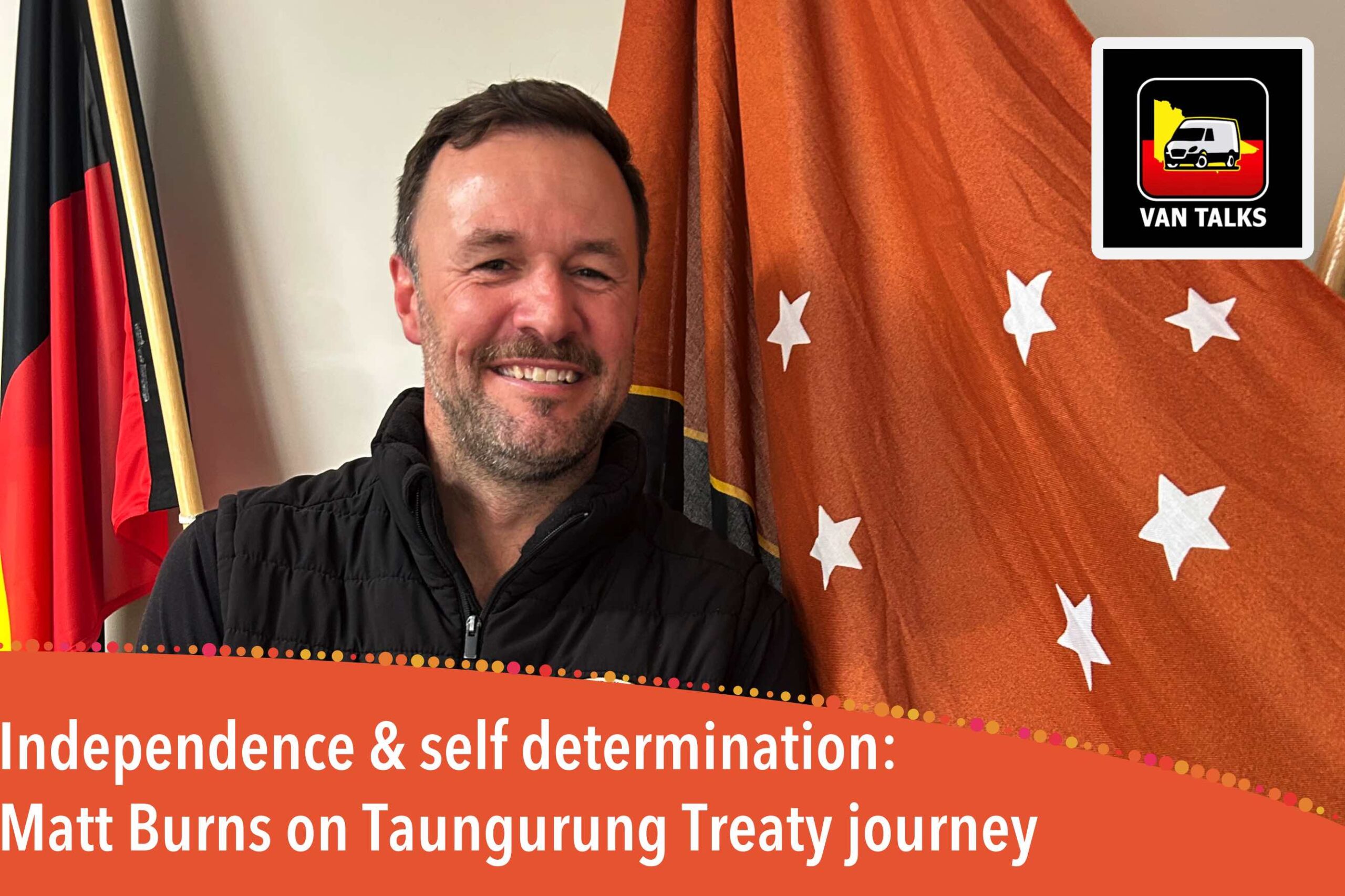
The path toward self-determination north of Naarm (Melbourne) has taken a significant step forward, with the Taungurung people officially launching their local Treaty journey.
Following a full group meeting on 1 March 2026, the community collectively resolved to enter into historic Treaty negotiations with the Victorian Government.
Weeks later, on 25 March, the Taungurung Land and Waters Council officially submitted its minimum standards to the independent Treaty Authority.
This milestone represents a profound shift from traditional, state-controlled parameters to a community-led model.
Matt Burns, a Taungurung man and CEO of the Taungurung Land and Waters Council, explained that fulfilling these minimum standards required the collective group to clearly articulate their profound relationship with the landscape, their inclusive community governance structures, and their leadership continuity.
“I say that deliberately, instead of rights to,” Matt emphasised regarding the text submitted to the Treaty Authority. “We have to describe the land and waters of which the Taungurung people have obligation and responsibility to.”
The road to this alignment was not without severe operational hurdles.
The Taungurung nation had to carefully navigate complex, overlapping family structures within a concurrent federal Native Title claim.
Furthermore, systemic barriers emerged when the state’s Self Determination Fund severely underfunded the council, providing only an eighth of the anticipated resourcing. This fiscal restriction forced the team to radically overhaul their community consultation strategy, relying heavily on digital spaces to preserve grassroots engagement.
Despite these setbacks, the community remains unified by a strengths-based, intergenerational focus. Matt recalled a powerful decision made years prior by the group’s apical ancestors to look past immediate internal friction.
“While we all might not like each other, we’re not here for ourselves. We’re here for our grandchildren, and we want to make sure our grandchildren’s lives are better,” Matt shared.
Now moving steadily into the delegation phase, the council has already interviewed potential leaders to form a structured negotiation team.
While unresolved border overlapping with neighbouring nations like the Yorta Yorta may require future Treaty Authority mediation to find common ground, the overarching vision remains firm.
Looking ahead, Matt confidently dismissed colonial fear-mongering regarding locked-out state forests or private property seizures. Instead, he affirmed that Taungurung self-determination is designed to foster a healthy, reciprocal relationship that protects the natural landscape for all Victorians.
“We’ve got obligations and responsibility for health, well being of all people, all guests or visitors on country,” Matt concluded. “And through Treaty, we’ll look to do that.”
Charles Pakana: On 1st March 2026, a full group meeting of the Taungurung people north of Naarm, or Melbourne, was held to discuss and make decisions about Taungurung Treaty making. At that meeting, it was decided that the Taungurung would take the first step towards entering into Treaty negotiations over Taungurung country with the state government. And as a result, on 25 March, it submitted what is referred to as its minimum standards to the Treaty Authority. Joining me today and welcoming back to Victorian Aboriginal news to talk about this process and the Taungurung aspirations is the CEO of the Taungurung Land and Waters Council, Taungurung man, Matt Burns. Matt, thanks for joining us again today.
Matt Burns: Thanks, Unc. Happy to be here.
Charles: Matt, just what does submitting the minimum standards actually represent to the Taungurung and the state government, of course, with regards to the Treaty aspirations and journey of the Taungurung people?
Matt: I think, fundamentally, what it means is that the Taungurung people as a collective are willing and interested to enter into Treaty negotiations with the state government. In terms of, I guess, practicality, there’s a certain kind of threshold that you need to meet as a Traditional Owner community to say that you are representative of your people and you are ready to move through a process. In this instance, over the years, Taunurung have been involved in… I guess, government-led processes, whether that be that’s been to become a registered Aboriginal party to be responsible or a statutory decision maker for Aboriginal heritage on Taunurung country, or whether that be the Recognition Settlement Agreement process, they were all processes that were designed and developed and kind of controlled by government. Whereas the Treaty pathway is run by an independent body, and that independent body is led by the Victorian Aboriginal community. So, in this, this process is a bit more independent for us. And from a minimum standards perspective, both Taungurung as a Traditional Owner community and the state government of Victoria have the same obligation to meet minimum standards to be able to negotiate a Treaty at a local place-based area.
Charles: So what were those minimum standards? What were you required to prove to the Treaty Authority in order to get onto the register?
Matt: Mmm. In Taungurung’s context, we are a Traditional Owner group that already has existing status, for want of a better term. And that meant that as a group we already met the minimum standards on a technical level, but in process we still have to submit those requirements and meet a certain threshold. And what that means is we have to describe the land and waters of which the Taungurung people have obligation and responsibility to. I say that deliberately instead of rights to.
Charles: Obviously. Yep.
Matt: A community, so who are our community and how do we, as a Taungurung community, represent the Taungurung community, whether that be as a Traditional Owner organisation or whether that be community governance around how do we make decisions as a full group? So, being able to describe how we make decisions, there’s also inclusivity. So, how are we making sure that we include all ancestors, so all of those old people, to make sure that they’re all included and all of their descendants are included in decision-making, or at least invited to be part of that decision-making around significant decisions like Treaty, for example, and whether we’re interested in going in there. And I guess the other thing is leadership. How do we govern at the moment, and how do we have processes in place to make sure that that governance will hold true as we work through the negotiation phases? How do we make sure that those negotiators are accountable to their community, and how do we make sure that community feel like they’re in control of what it is that we’re trying to negotiate for as a community?
Charles: I’m interested, because the… the general consensus among a lot of community was that Taungurung would have registered much earlier than it actually did. Now, aware that DJAARA came onto the database, or the register, in 2025, were there particular challenges that you had to face and deal with prior to getting to this point? And if it’s culturally appropriate – and the smile on your face is telling me there were some challenges – can you share some of those?
Matt: Yeah, there were some challenges. There’s just been lots of things happening concurrently. So Taungurung are in the same process of recognition through a Native Title claim at the moment. You mentioned previously some Native Title claims. Tunurung’s claim is registered on the Native Title Tribunal and was registered on 31st March as a registered claim. So we’ve been, over the last year or so, working through the Native Title process concurrently while preparing for Treaty readiness. And there were some really big and difficult community questions that need to be faced around group makeup and who are Taungurung people and who are not. And I’m not going to go into how that…
Charles: That’s internal politics.
Matt: Yeah. That was a really challenging process that happened over the last year and a half. And that meant that, how do we navigate those two processes when there are some significant questions that need to be answered as part of a Native Title process? And then also, I guess, the other challenge that we had, without being overly political, is that we had some challenges with the Self Determination Fund around funding and how funding was allocated in accordance with how we were going to do community engagement. So we mapped out a roadmap to say this is where we are, and this is where we want to be in order to have community buy-in involvement around being ready to say that we want to negotiate a Treaty as the Taungurung people. And we mapped that all out in line with the funding parameters of the Self Determination Fund. And then long story short, the Self Determination Fund probably funded us for about one eighth of the amount that was otherwise allowable. And that meant that we had to change our whole consultation plan with community and all the engagement activities we were planning to do to get real buy-in became really challenged, and we had to do different things online and other things to try and build community support for the big decision, as you said, that was made in March this year.
Charles: So, having gone through what you’ve gone through, and there’s obviously a fair bit of pain and angst for you, the staff here at the land council, and obviously the community; what are the recommendations that you’d be going out for… well, we’ll start with the Self Determination Fund and also to other Traditional Owner groups? What are the lessons you’ve learned and the advice you could give?
Matt: Oh look, the lessons that are being learned, I mean, at a Self Determination Fund I know that they’re consciously learning from those things because I am now a board member and one of the co-chairs of the Self Determination Fund that was appointed after some of the challenges that had been identified is that we are looking to work hand-in-glove and really closely with the Treaty Authority. So their thresholds around how groups move through the Treaty Authority delegation process are firmly aligned with the amount of funding that will be allocated to make sure groups are seamlessly allowed to work through those different phases. So there’s going to be a change of approach to make sure that the funding is aligned with the types of activities that need to be done by a group to be ready. So that’s something that’s being done at a pragmatic system level to make sure the whole Treaty architecture works the way that it should be. So that’s something there. In terms of community being ready, I think where possible, bringing community together to really understand the minimum standards, understand what Treaty is and what Treaty isn’t. I think there’s probably still some work to be done around communicating what is a negotiable when it comes to groups that already have existing status and other groups that are claiming similar areas of country and what that actually means in practice.
Charles: And that gets to the delegation, which we’ll get to in a few minutes.
Matt: That gets to the delegation, yeah. You know, it’s a really challenging space. I mean, any Traditional Owner community, whether they’ve got, you know, status and recognised status or whether they don’t, it’s irrelevant. They all have equal rights to move through a process…
Charles: Yeah.
Matt: …and to have their community represented or considered to be represented as part of the Treaty process. Really, it’s really important to engage through the resources that are available, and that’s the self-determination fund, in order to come together as community and start to, I guess, consider. Because a lot of the challenges for groups that don’t have status, it comes down to inclusivity and who’s part of a community and who’s not part of a community and how all that works. And that can be really challenging for communities to kind of… face and be willing to engage in and kind of work through those processes. So I think, as Traditional Owner communities, one of the fundamental things is to try and be inclusive, and embrace all apical ancestors and all family. As Aboriginal community, there’s probably people in everyone’s family that we don’t necessarily get along with, but at the same time we need to work together because Traditional Owner communities are one large family that are trying to pull in the same direction. And some of those things are really probably the things that have held up communities from time to time. And I think it’s really important to kind of have the resourcing to come together and work through, how is it that we’re going to represent our nation as a community, noting that we don’t all necessarily like each other. And I think from a Taungurung perspective, many years ago, which I think was a really powerful thing, was that Taungurung community came together from different apical ancestors. And there was a lot of tension and history…
Charles: Yeah.
Matt: …around people’s families and everything like that. The decision that was made was, while we all might not like each other, we’re not here for ourselves; we’re here for our grandchildren, and we want to make sure our grandchildren’s lives are better. And we’re consciously going to make decisions as a community that will benefit our grandchildren and that really bound community together to focus on the future rather than focusing on the politics of here and now and the issues that we have. And that really set us up to take, I think, some big strides in the right direction over the last decade or so.
Charles: I mentioned earlier that we would talk about the country that Taungurung covers. What is that? If you can just describe it?
Matt: Sure. If I were to describe – the easiest part to describe is the southern boundary with our neighbours, the Wurundjeri people – The Wurundjeri Woi Wurrung people. If you think about the Great Dividing Range, if it’s raining on the Great Dividing Range and the rain, or the water, runs off the range and goes south to Port Phillip Bay, that is Wurundjeri country. And if it flows north, moving towards the Murray River, it’s Taungurung country. So, thinking about the southern border of Taungurung and the northern border of the Woi Wurrung people, that is a very simple kind of cultural way of identifying country from the Great Divide. In the west of Taungurung country, our western boundary with the Dja Dja Wurrung people was negotiated based on mutual agreement because there’s a lot of history of Taungurung people moving further west and also concurrently Dja Dja Wurrung people moving east.
Charles: Yeah.
Matt: So it was very hard to work together around how do you create a boundary in a modern context. And what we did was agree to the Campaspe River being the western boundary or the eastern boundary for the Dja Dja Wurrung people, with some rites of passage and cultural rights of passage each way. So Taungurung people have ceremonial rights to Mount Alexander, which is, you know, now in recognised Dja Dja Wurrung country, Dja Dja Wurrung people have recognised rights to Mount Camel in Taungurung country. So while there’s a boundary there, we made a conscious decision as community to kind of provide for cultural rights, but also have the boundary at the Campaspe River. The northern boundary is largely the native title claim of the Yorta Yorta people in the 90s. And after the determination that happened, which was really, you know, disastrous for the Yorta Yorta people…
Charles: Yeah, very much.
Matt: …the state provided RAP status, the Registered Aboriginal Party status for the same area. That didn’t work out well in the Native Title claim. That isn’t necessarily a traditional boundary, and there is still work to be done between Taungurung and the
Yorta Yorta people around a future boundary. And I say that noting that our recognition and settlement agreement confirms that there’ll be transfer of land parcel in the future to Taungurung once the boundaries change further north. So the state have made it very clear to the Yora Yorta people that future agreements will only be agreed to if there’s a new boundary between the Taungurung and the Yorta. Yorta. Because Taungurung boundary needs to move further north.
Charles: Well, let’s, let’s bypass that because that then opens up a Pandora’s box of issues. What about on the eastern boundary?
Matt: The eastern boundary is the Ovens River.
Charles: Right.
Matt: So if you’re south of Wangaratta, there’s a place called the Oxley Plains.
Charles: Yep.
Matt: The Oxley Plains. Moving through that area is where you’ll find the northeast part of Taungurung country. You hit the Ovens River, and you travel through places that people will be familiar with, which is Mount Buffalo National Park, Bright, Harrietville, and the high country, so the Great Alpine Road on the other side of the Ovens River is Duduroa country. If we move south, we’re moving up to the Great Dividing Range again, and then we hit country where the Gunaikurnai people hold Native Title rights. And we, as the Taungurung people and the Gunaikurnai people, have… well, we have a boundary in the Alpine National Park, but we also have a mutual agreement where we’ll do things together to fulfil our obligations and responsibility for managing country and the Alpine National Park together. And to give any listeners an understanding, I think Mount Hotham is Gunaikurnai country. The very base of Mount Hotham is where the Taungurung Country ends. And then as you move up into the mountain of Mount Hotham, that’s be where it becomes Gunaikurnai country.
Charles: Now, from a layman’s perspective, or from, let’s look at it from a colonial perspective, let’s put it that way, I believe there are what, 13 local governments that exist on Taungurung Country. Is that correct?
Matt: Correct.
Charles: How’s the relationship been with those? I know we’ve spoken about it previously on this particular program, but when it comes to the matter of Treaty and all issues to do with Treaty, has there been much conversation with the local governments, and how are the relationships standing when it comes to those?
Matt: Lots of conversation – I wouldn’t say there’s lots of conversation. There certainly are conversations. Unc, you’ll know that Taungurung, a little while back, established a local government forum.
Charles: Yep.
Matt: Where Instead of having 13 conversations, we wanted to have one conversation. So we created a forum where the CEOs and the mayors of each 13 councils can come together in a forum, and we can collectively have conversations, hopefully minimising double handling of resourcing and other things to advocate together and to make decisions or agreements around how things happen on Taungurung country and they happen at all council areas. So, all of Taungurung country, the same processes occur. So from a practical perspective, that’s land use agreement, that’s settlement agreement stuff, that’s other things that happen under the Local Government Act, for example. But now we’re talking about Treaty as well. So there are regular conversations at the local government forum around what is Treaty and what does this mean in practice. So there’s a lot of hypotheticals around what it may or may not be. And really, the conversation will come down to what the Taungurung community is interested in to the future. It may or may not involve local government having particular responsibilities. That’s all yet to be determined. But there are certainly questions, and there is interest from local government agencies around what this actually means in practice.
Charles: Now, we also mentioned delegations; that being the next step forward, according to the Treaty negotiation framework. So, can you explain to the listeners just what does it mean by forming a delegation, and where does that fit into this jigsaw puzzle that eventually leads to the point of sitting down with the state government and negotiating Treaty?
Matt: Sure. So, forming a delegation, in the simplest form, if we were to kind of be really simple about it, it’d be Taungurung community or Taungurung community governance structures making decisions around who of their people are going to be negotiators forming a delegation. So that might be five people, that might be 10 people, that are going to be the leaders of a negotiation with the state government of Victoria. Now, we can choose at a Taungurung level about how we might form a delegation and how our negotiators might be ready. But there is some nuance to that, and that is that other parties who feel as though the other Traditional Owner community, whether they’re recognised or unrecognised, have the ability to say, “hey, I’ve got an interest in this part of country. I don’t think it’s Taungurung country,” or “I think the rights in this area are a little bit different to what is being described in the minimum standards from the Taungurung people. And therefore we should be part of the delegation as well.” So, in terms of the simplest form, is that let’s assume Taungurung say that we’re ready to negotiate with the state. Here’s our delegation, our community governance structures in detail. Our community governance structure was the full group approved, a committee of Elders and other community to make the appointments on who will be the negotiators. So there’s a committee that were given the responsibility to call for Taungurung community who want to be negotiators. And they submitted their credentials, their experience, their cultural experience, their work experience and leadership experience. And a committee of Elders and other community were making the decision around who are those people that are going to represent the Taungurung nation in negotiations. So that – that’s already happened. I don’t think the appointments have happened, but the interviews have happened. And let’s say really simply, they get appointed, no other community says they’ve got an interest in Taungurung country, then the Treaty authority can say, “Right, you are the delegation. Let’s move forward to negotiations with the state.”
Charles: Realistically, when do you think that might happen?
Matt: If there was no contention around other groups saying that they might have an interest in Taungurung country…
Charles: We can always be optimistic.
Matt: Yeah, of course. Well, if there was no contention, it would happen inside three months.
Charles: Right.
Matt: But realistically, and I don’t think Taungurung are unique in this. I think every part of Victoria – what is now Victoria – there are Traditional Owner groups who have recognition, don’t have recognition, or whatever else that still have unresolved areas of country where their neighbours either have status, not status. You know, when I spoke about the Dja Dja Wurrung/Taungurung arrangement, where we’ve got a boundary that says the Campaspe River is our modern boundary, but we’ve got cultural rights to Mount Alexander, Taungurung might join the Taungurung as a Dja Dja Warrung negotiation, not to negotiate anything, but just to make sure those cultural rights are preserved and respected as part of the Treaty process, for example. So there could be other groups that kind of flag an interest in country, and it might be as simple as ceremonial rights. They might say, “Look, we respect that Taunurung are the custodians for the land and we understand that, but our people have always had cultural rights to this place, and we want to make sure that that’s protected.” Or there is also space for alternate views on the extent of country, where there’s another group that says our country extends further, and we disagree, and therefore we want to have a conversation or a mediation, and the Treaty Authority have the responsibility to try and work with potentially multiple groups to kind of mediate. And I think their phrasing is to find common ground, to try and find common ground to be able to move forward. So in the simplest form, one Traditional Owner group could kind of form a delegation. Where it becomes complex is there can be a delegation where Traditional Owner groups from across the state could come together as a collective for a common issue. It could be leases and licences, and compensation for payments for Crown land leases and licences across the state. Every Traditional Owner group can say we want to form a delegation collectively because we think we’re stronger together to be able to negotiate a share of lease and license revenue. And that can be a delegation as well. But that’s a more complex conversation.
Charles: Yeah. And well beyond this interview. Matt, just to wind it up, one of the things we’re always trying to get across in this program is giving the broader community an understanding of just what Treaty does and doesn’t mean to them. In a very, very simple point, what would you say are going to be some of the most scaremongerish sort of things that are coming out, and what would you say to address those?
Matt: I think the scaremongering from my perspective is a lot of the same things that we’ve heard over decades, which is coming after our backyards or locking us out of state forests, national parks and all of those kinds of things, which I think that’s coming from a non-Aboriginal, white, power, kind of thing; wWho holds the power and authority, you know. Whereas, from a Taungurung perspective, in terms of the counter to that is that Traditional Owners have an obligation and responsibility to care for country and care for those that exist on country. And the easiest way that I describe what our obligation means is that every person, whether you’re Aboriginal or non-Aboriginal, has connection to country. And that might be controversial in a way because Traditional Owners have a much deeper connection to country.
Charles: Mmm.
Matt: But all people are human beings and exist on planet Earth, and we’re all connected to country in a particular way. In my view, it doesn’t matter who you are, when you’re a human being, and you’ve had a bad day at work, or you’ve had a bad day with your family, and there’s been issues in your family. People tend to get out on country to think, to process, whether that’s by a waterway, on a mountain, in the bush. They need to connect to country, to process and to work through some of the challenges that they’ve got in their life. What I say to farming community is that our obligation as Traditional Owners is to make sure those places are healthy for your grandkids to have that connection as well. And we, as Traditional Owners, through the Treaty process, want to be able to take on the responsibility to make decisions about country to ensure that it’s healthier for all people. That kind of counters the locking up and trying to take your backyard. That’s not the approach that we take. We’ve got obligations and responsibility for health, well-being of all people, all guests or visitors own country. And through Treaty, we’ll look to do that. And in terms of goals and aspirations, I think we had a conversation for a piece that we did on Taungurung Treaty a little while ago. And my dream is we’re in a position as a community to be able to play a direct role in the lives of our children in their schooling journey and in their cultural journey. And having resources negotiated at a Treaty to put us in a position to really influence the lives and outcomes of our children and our cultural journey for our children is something that I think would be an amazing outcome of the Treaty process.
Charles: Matt Burns, CEO of the Taungurung Land and Waters Council, thanks again for your time, brother.
Matt: Thank you. Appreciate it.
For Radio Play:
1 - Click the Download Audio button
2 - The audio file will commence automatic play in your browser
3 - Confirm this is the file you want to use in your program
4 - Once confirmed, click the vertical elipses (3 dots) and select download
CONTACT US VIA SMS
Get in contact with us via our dedicated SMS line:
0493 222 836
26 October 2026
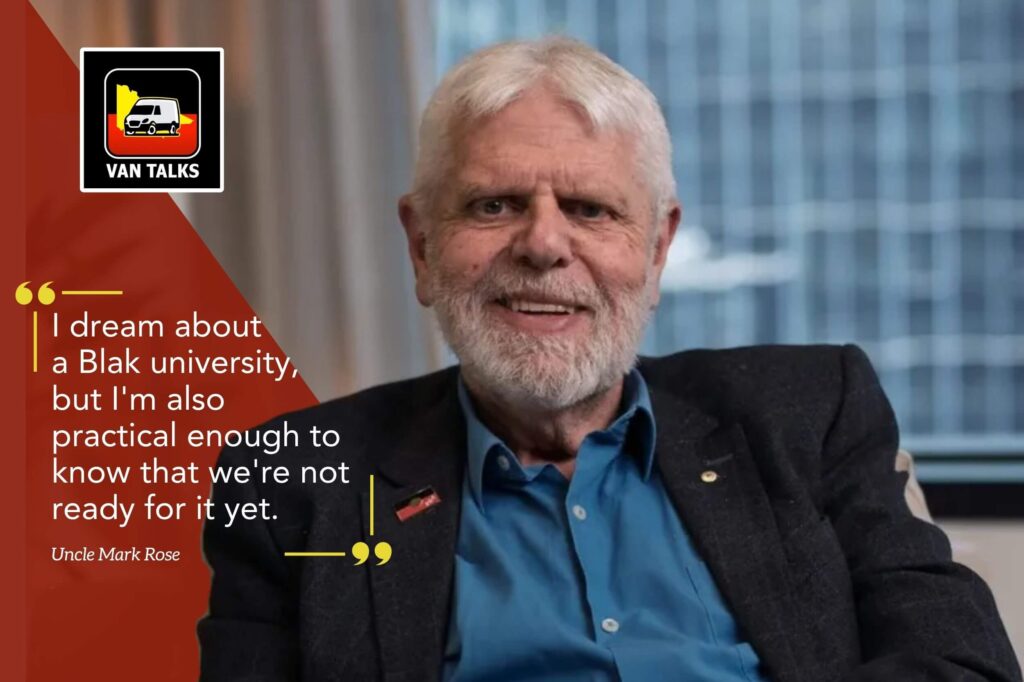
Leading the push to embed Indigenous knowledge systems in Australia’s tertiary education system
21 October 2026
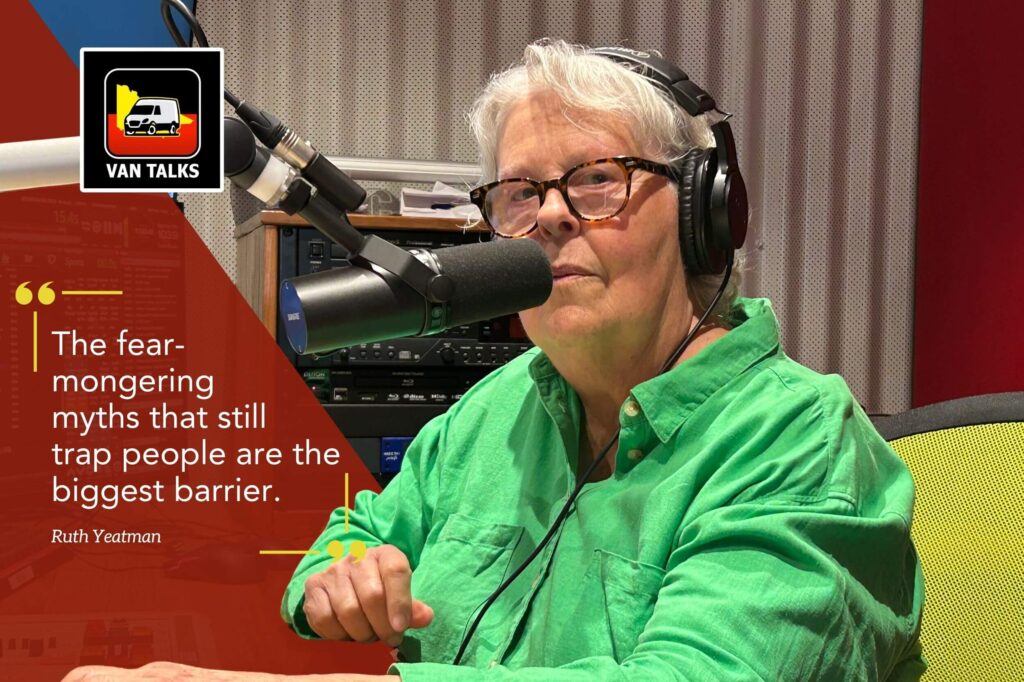
Reconciliation in Seymour – one of Victoria’s highest recorded “No” vote regions
19 October 2026
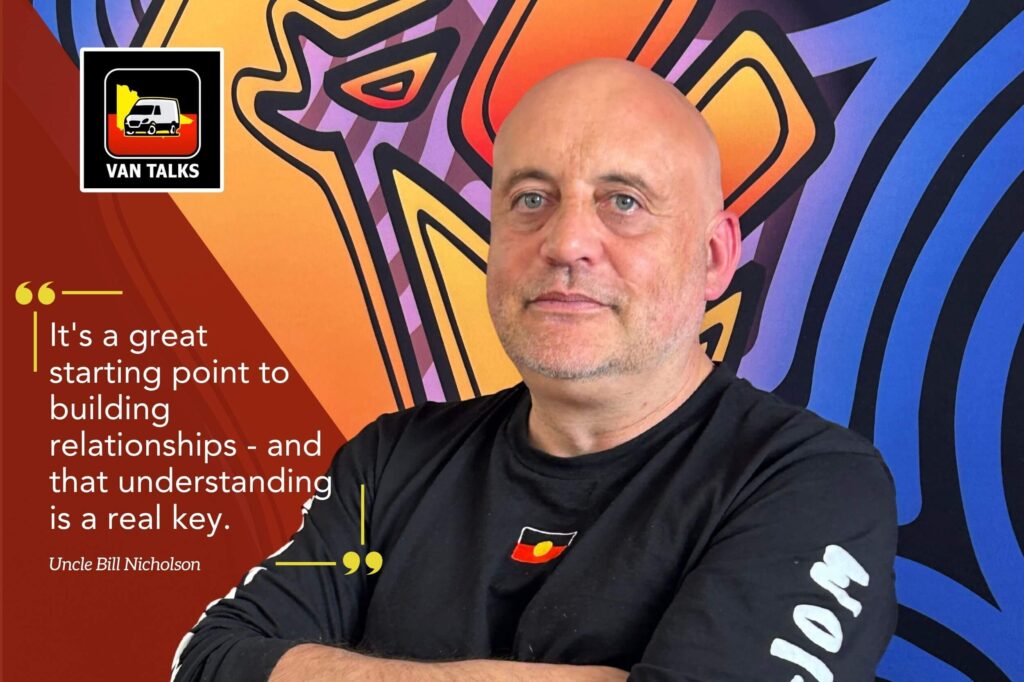
Understanding the use – and over use – of the Acknowledgement of Country
15 October 2026
It’s time Australia recognised a shared history of often brutal “settlement” and expansion
12 October 2026
0 Comments